Building consistent meal planning habits without support or grocery guidance feels confusing and repetitive for people who never learned to cook. Most existing sites either focus only on one-way recipe delivery without real interaction or lock grocery checklists and chef guidance behind higher tier plans. This comparison covers recipe support, community access, and pricing at four leading meal planning communities so you can pick one that matches your style.
Table of Contents
Adulting With Food

At a Glance
Founding members can lock in a lifetime price for the membership. The program pairs a physical Adulting With Food Starter Pack with weekly recipe drops, grocery store checklists, and ongoing chef support. The focus is on simple recipes and hands-on skill building for people who never learned to cook.
Core Features
Adulting With Food delivers weekly recipes with grocery lists and clear instructions that teach practical skills like seasoning, sauce making, and meal prep. Members get direct access to the founder chef for questions and guidance and receive a starter pack that outlines kitchen basics and essential tools. The teaching style breaks skills into repeatable steps so you can practice and gain kitchen confidence.
Key Differentiator
Ongoing founder-chef support plus a lifetime lock-in price for founding members makes this offering unique in the comparison set. The model pairs accessible lesson pacing with sustained human help so beginners do not get stuck on a single technique. That combination keeps learning affordable and supported for people building basic cooking habits.
Pros
The membership teaches practical, beginner-friendly cooking education that targets real grocery habits and tool choices. Weekly recipe drops and grocery lists remove decision fatigue and make shopping predictable. Direct chef support answers technique questions and clarifies steps when a recipe does not behave as expected. The founding membership price reportedly locks members into a lifetime rate, which lowers long term cost for people committed to learning. The program prepares beginners to cook more independently by focusing on repeatable skills rather than one-off dishes.
Cons
- Limited information about advanced cooking techniques or gourmet recipes compared with courses aimed at experienced cooks.
Who It's For
People who were never taught to cook and want step-by-step lessons will get the most from Adulting With Food. It fits readers who need grocery guidance, clear checklists, and straightforward recipes they can repeat each week. Those who want to stop relying on delivery and learn reliable home cooking skills will find the structure helpful.
Unique Value Proposition
Weekly recipe drops with five new recipes, grocery checklists, and a physical starter pack create a predictable practice loop you can follow every week. That routine, combined with founder-chef support, shortens the time you spend guessing which tool or ingredient to buy. The lifetime founding membership price reduces future cost uncertainty and makes ongoing practice less expensive for people planning to stick with learning.
Real World Use Case
A person who has never cooked regularly buys the starter pack and follows the five weekly recipes and grocery lists. They ask the founder chef a question when a sauce splits and get a practical fix. After a few weeks they can make the core recipes from memory and use the grocery checklist to plan one shopping trip for two or three meals.
Website: https://adultingwithfood.com
FoodSocial
At a Glance
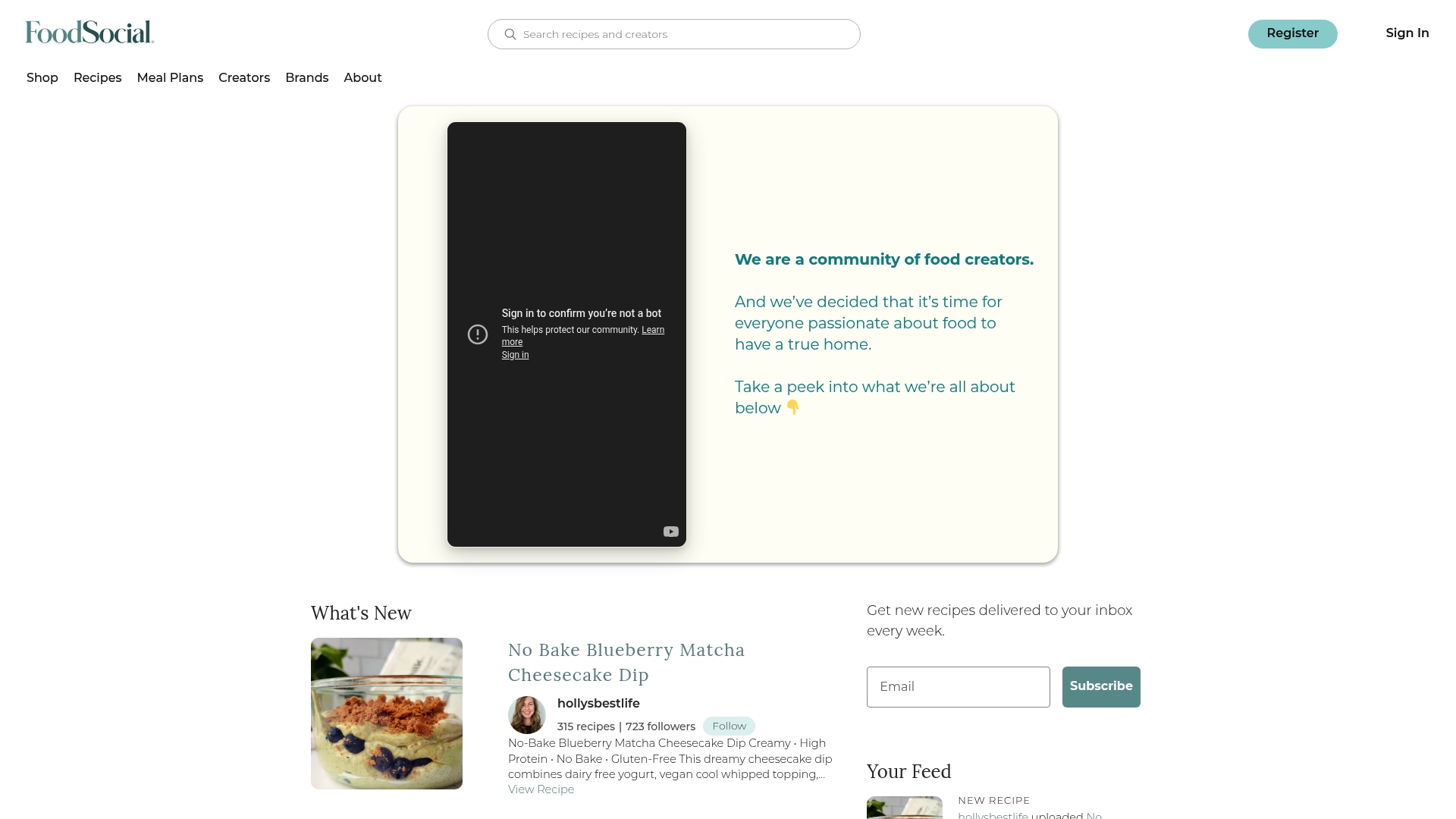
The platform includes a marketplace where you can buy ingredients and creator curated products from independent cooks. It pairs recipe sharing with community profiles and a weekly recipe newsletter that highlights new drops. Filtering options let you find recipes by dietary preference or meal type quickly.
Core Features
Members create profiles to post recipes with photos, ingredient lists, and step by step instructions. Followers can comment, save favorites, and follow creators to see new posts and marketplace items. Search supports filters for dietary preferences and meal types, and the newsletter links directly to fresh recipe drops and creator storefronts.
Key Differentiator
FoodSocial focuses on creator support by tying community profiles to a built in marketplace. That connection lets fans discover recipes and purchase ingredients or creator products in one place. The emphasis narrows the platform toward creators who want direct audience interaction and a place to sell small batch goods.
Pros
A supportive community gives smaller creators a place to grow an audience and get feedback on recipes. Diverse dietary filters reduce time spent hunting for gluten free, vegetarian, or specific meal type recipes. The marketplace provides a direct way for followers to buy ingredients and creator curated products, giving creators a straightforward path to earn. Regular recipe updates and the weekly newsletter keep discovery active and bring steady attention to creator pages.
Cons
- Limited information on creator tools beyond posting and community features.
- No public details about premium plans or advanced monetization options.
- Primarily focused on recipe and community sharing, with less emphasis on detailed creator commerce features.
When It May Not Fit
Creators who need built in monetization tools or detailed seller controls will find FoodSocial limited. Teams seeking advanced creator analytics or enterprise commerce features should look elsewhere. If you want a platform with full storefront management and creator payout options, this platform may not meet your needs.
Who It's For
Food bloggers, home cooks, and food enthusiasts who want to share recipes and build follower relationships will fit this platform well. Creators who value audience interaction and want a simple way for supporters to buy products will benefit from the marketplace. Casual cooks seeking recipe discovery by diet or meal type will also find useful filters and community recommendations.
Real World Use Case
A home cook creates a profile, posts original recipes, and answers follower questions in comments. She tags recipes as gluten free and uses filters so interested cooks can find them quickly. Supporters purchase her homemade spice blends through the marketplace, while the weekly newsletter brings new readers to her page.
Website: https://foodsocial.io
Weekfeast
At a Glance
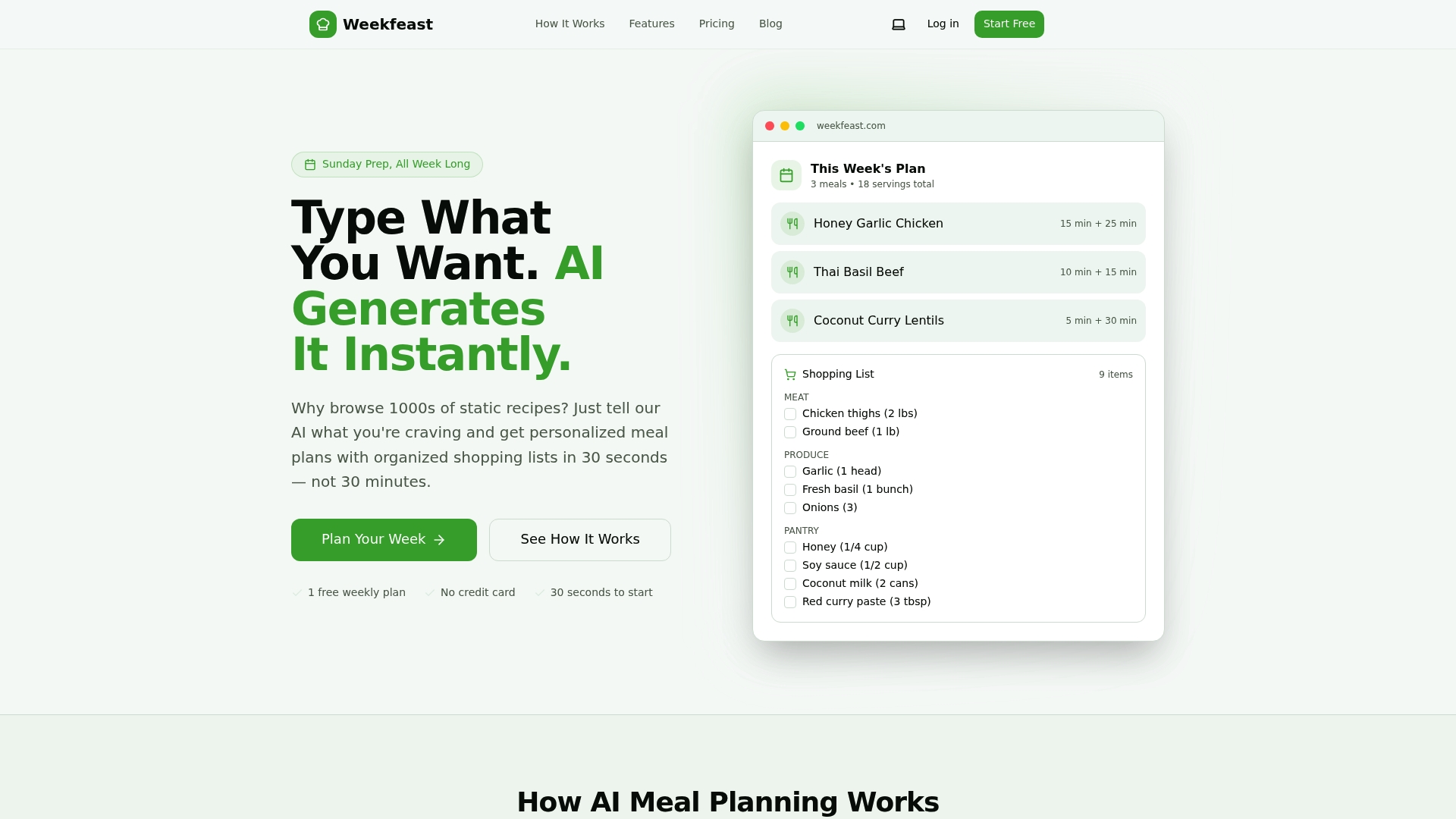
Weekfeast's marketing materials say it delivers personalized meal plans in 30 seconds. That claim highlights the app's focus on speed for busy weeks. The product targets people who want quick meal planning and fewer trips to takeout.
Core Features
The app uses AI to generate instant recipes from your inputs and turns those into categorized shopping lists organized by store section. It also provides step-by-step cooking instructions and batch cooking options to plan several meals for the week. Pro subscribers get unlimited recipe tweaks for repeated menus.
Key Differentiator
Weekfeast positions its AI as producing customized meal plans and shopping lists instantly. That positioning centers the product on time savings and waste reduction rather than on advanced diet management or grocery integrations.
Pros
Weekfeast shortens planning time dramatically when the app matches your inputs. That time claim means you spend less time browsing recipes and more time cooking. The shopping lists reduce back-and-forth in the store by grouping items by section. Clear step-by-step directions improve confidence for cooks who are learning techniques. Batch cooking support helps you prep several meals in one session, which saves leftover waste and evening stress. The free plan allows trial use before committing.
Cons
-
Some third-party reviews say recipes may lack variety after heavy use, which could make weekly menus feel repetitive.
-
The free plan restricts advanced features, so long-term meal preppers will likely need the paid plan.
-
The app depends on accurate user input for the best results, which adds a setup step for new users.
-
People with highly specific diets or multiple allergies may find feature gaps unless the app explicitly supports those needs.
When It May Not Fit
If you need strict clinical nutrition tracking or medical diet management, Weekfeast is not a good match. The app also falls short for cooks who demand broad culinary variety without repeating recipes. Finally, if you want deep grocery chain integrations or automated cart checkout, Weekfeast does not advertise those capabilities.
Who It's For
This app fits busy professionals, parents, and home cooks who want fast, tailored plans and tidy shopping lists. If you value batch cooking and fewer takeout nights, Weekfeast is a practical tool. It works best when you can provide clear preference and pantry input.
Real World Use Case
A working mom uses Weekfeast to create a week of family meals that reflect simple tastes and ingredient availability. She runs the plan, prints the categorized list, and completes grocery shopping in one trip. Batch cooking on Sunday cuts nightly prep time during the workweek.
Pricing
A basic free plan is available for light use. The Pro plan costs $8/month and unlocks unlimited meal plans, shopping list organization, and unrestricted recipe tweaks.
Website: https://weekfeast.com
Sous Chef
At a Glance
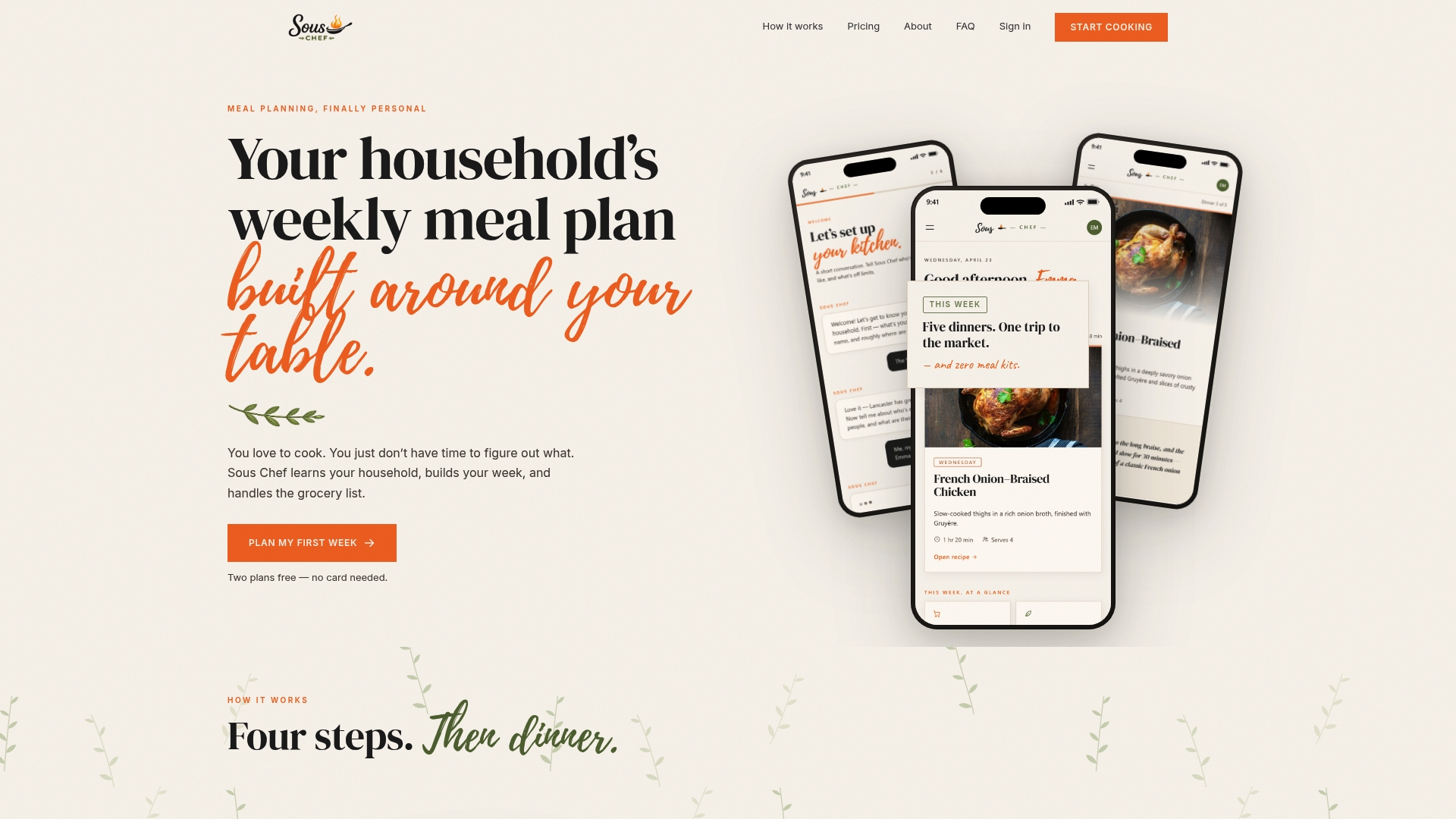
Two free meal plans are available with no credit card required to start. Sous Chef builds weekly lunch and dinner plans around household preferences, dietary restrictions, and daily schedules. It converts plans into aisle organized grocery lists and photo rich recipes so cooks spend less time guessing what to buy and how to cook.
Core Features
The app personalizes weekly menus by learning each household member's likes, dislikes, and dietary limits. It creates a grocery list sorted by aisle and an ingredient efficiency map to reduce waste and duplicate purchases. Recipes include photos, nutrition details, and clear step by step cooking directions, while planning adapts in real time when you update schedule or preferences.
Key Differentiator
What sets Sous Chef apart is its household first approach, not a static recipe library. The app learns which meals people in your home actually enjoy and avoids repeating disliked dishes. That focus keeps weekly plans varied, tailored, and aligned to real family routines.
Pros
Personalization adapts quickly when you enter household tastes and restrictions, so menus match how your family actually eats. You can sample two free meal plans before subscribing, and the service runs on web, iOS, and Android for cross device access. Aisle organized shopping and flexible store choice make grocery trips shorter and reduce impulse buys.
Cons
- Pricing may matter for long term use; the ongoing subscription adds up compared with a one time planner.
- The app depends on thorough user input to reach peak personalization, which takes time at setup.
- No built in grocery delivery. Shopping remains a do it yourself task.
When It May Not Fit
If you want grocery delivery from the same app, Sous Chef will not provide that service. If you prefer to skip a setup step, the requirement to enter household details might feel time consuming. People who expect fully hands off shopping will need a separate delivery or pickup workflow.
Who It's For
Families, couples, or individuals who enjoy cooking , but lack time for meal planning will get the most from Sous Chef. It suits households with dietary restrictions that need reliable tracking and varied menus. It also fits cooks who prefer to shop in person and want an aisle organized list.
Real World Use Case
A family of four with picky kids and multiple dietary restrictions uses Sous Chef to produce a weekly dinner plan. The app flags kid friendly options, consolidates ingredients, and creates a single grocery list for the local store. The family spends less time deciding meals and more time cooking together.
Pricing
Subscription costs start at $12.99/month billed monthly or $99.99/year for an annual plan, which the vendor lists as 36% savings. The first two meal plans are free to try, and no credit card is required to start.
Website: https://meetsouschef.app
Comparison of Alternatives
Each meal planning service analyzed approaches the goal of simplifying meal preparation uniquely, catering to diverse cooking habits and preferences. By examining distinctions like personalized teaching support, household-specific adjustments, and community-driven tools, we identify the strengths and trade-offs of each platform.
Practical Teaching and Skill Building
Adulting With Food focuses on hands-on cooking development, emphasizing foundational skills. The lifetime lock-in pricing model fosters sustained access to resources, accompanied by founder-chef support for real-time queries. Alternate options, like Sous Chef, adapt plans around household preferences but lack the emphasis on teaching repeatable skills. For readers who benefit from structured learning with direct mentorship, Adulting With Food delivers an combination.
Speed and Community Engagement
Weekfeast excels in streamlining the meal planning process with AI-driven recipe generation completed in seconds. Its fast outputs suit readers seeking rapid solutions to organize grocery shopping and reduce preparation time. FoodSocial, conversely, integrates cooking with an engaging community and marketplace tools, promoting diverse recipe discovery and creator interaction. Both cater to unique preferences, but for readers focused on immediacy, Weekfeast presents a clear advantage.
Best Fit
- Readers needing hands-on cooking support and structured practical skills should try Adulting With Food.
- Experienced cooks valuing marketplace tools and community engagement may prefer FoodSocial.
- Busy individuals prioritizing instant grocery solutions can rely on Weekfeast.
- Families seeking tailored menus with child-friendly dishes could explore Sous Chef for varied, personalized weekly plans.
Our Pick
Adulting With Food stands out due to its focus on skill development and continuous support. The founder-chef accessibility and practical starter pack offer a distinct advantage for beginners learning essential cooking techniques. Although competitors excel in niche features such as marketplace or AI-driven plans, Adulting With Food remains when prioritizing foundational cooking confidence with integrated support mechanisms.
The table below provides a concise overview of cooking membership services, each chosen for its unique approach to culinary skill building and meal planning.
| Service | Key Feature | Ideal Audience | Pricing | Limitation |
|---|---|---|---|---|
| Adultingwithfood | Weekly recipes with direct chef support | Beginners seeking hands-on guidance | Price not published | Limited information on advanced cooking techniques |
| FoodSocial | Recipe sharing with community marketplace | Creators and community-focused cooks | Price not published | Limited creator monetization tools |
| Weekfeast | AI-driven personalized meal planning | Busy individuals needing quick plans | $8/month | Recipes may lack variety after extended use |
| Sous Chef | Family-tailored meal plans | Families with dietary restrictions | $12.99/month or $99.99/year | Requires manual grocery shopping setup |
How Can Beginners Find the Best Meal Planning Service That Builds Real Kitchen Confidence?
Many people new to cooking feel stuck choosing the right recipes, tools, and groceries. The challenge is often not just meal planning but learning to cook simple meals with confidence. Adultingwithfood meets these needs by offering a step-by-step approach designed for people who never learned to cook and want to stop relying on drive-thrus or delivery apps.
With the Adultingwithfood Starter Pack, weekly recipe drops, grocery checklists, and direct chef support, you gain practical skills and clear grocery guidance. This membership lets you lock in your price for life while building lasting kitchen know-how. Visit Adultingwithfood to start cooking meals you are proud of and build your kitchen confidence today.
FAQ
How does Adultingwithfood support beginners in meal planning?
Adultingwithfood delivers weekly recipes along with grocery lists and easy-to-follow instructions for meal preparation. It focuses on hands-on skill building, helping people who never learned to cook, which encourages them to develop kitchen confidence. Start using their resources to enhance your cooking skills today.
What is the difference between Weekfeast and Adultingwithfood?
Weekfeast is great for busy individuals as it generates personalized meal plans in 30 seconds, making it ideal for those who need quick solutions. Adultingwithfood provides a more supportive, ongoing experience aimed at teaching fundamental cooking skills through direct chef assistance and structured weekly recipes, which is beneficial for long-term skill development.
Which platform is best for ongoing chef support?
Adultingwithfood offers direct access to the founder chef for questions and guidance, ensuring that members receive personalized help as they learn. This support is vital for beginners who might struggle with cooking techniques and requires clarifying instructions. Take advantage of this unique feature to build your cooking skills more effectively.
Can I learn advanced cooking techniques with Adultingwithfood?
Adultingwithfood primarily focuses on beginner-friendly recipes and practical skill building rather than advanced cooking techniques. While it pairs simple lessons with continuous support, those looking for gourmet recipes may want to explore other platforms. Start your cooking journey with Adultingwithfood to build a strong foundation first.
What features does the Adultingwithfood Starter Pack include?
The Adultingwithfood Starter Pack contains essential tools and outlines kitchen basics that beginners need to get started cooking. This pack is designed to support users as they embark on their cooking experiences, helping them become more independent in the kitchen. Begin your culinary adventure by utilizing the starter pack today.