
Easy dinner recipes for family are meals that take 30 minutes or less to prepare, use a short ingredient list, and appeal to both adults and kids. The goal is simple: get a real, satisfying meal on the table without stress, without a delivery app, and without spending your whole evening in the kitchen. Planning 5–6 dinners weekly is the most realistic target for most families. It leaves room for one or two takeout nights without guilt, and it keeps your plan from falling apart the moment life gets busy.
1. How themed meal nights simplify family dinners
Decision fatigue is the main barrier to consistent home cooking. When you stare at a blank weekly calendar every Sunday, the mental load alone can make you reach for your phone and order pizza. Themed meal nights solve this by removing the daily "what's for dinner?" question entirely.
The framework works like this: assign a loose theme to each night of the week, then rotate recipes within that theme. You are not locked into the same dish every Tuesday. You are just locked into a category.
Common theme nights that families enjoy include:
- Taco Tuesday: Ground beef tacos, chicken fajitas, black bean burritos, or shrimp tacos all qualify.
- Pasta Monday: Spaghetti with marinara, baked ziti, or pasta primavera with whatever vegetables you have.
- Stir-Fry Wednesday: Any protein over rice with a quick soy-ginger sauce.
- Soup or Sandwich Thursday: Grilled cheese with tomato soup, or a hearty chicken noodle.
- Sheet Pan Friday: Toss protein and veggies on a pan, roast, and done.
The real advantage is flexibility within structure. Your family gets variety. You get a decision already made. Themes lower mental load and increase how often families actually stick to their meal plan.
Pro Tip: Rotate themes seasonally. In summer, Sheet Pan Friday might feature zucchini and chicken thighs. In winter, swap in root vegetables and sausage. The theme stays the same; the ingredients shift with what is fresh and affordable.
2. Top 7 easy dinner recipes for families that require minimal prep
These seven recipes are the backbone of any solid weeknight rotation. Each one is beginner-friendly, kid-approved, and fast enough to fit a school night.
-
Sheet pan meals. Toss a protein (chicken thighs, sausage, shrimp) with chopped vegetables, olive oil, and seasoning. Roast for 25 minutes at 400°F. One pan, bold flavor, minimal cleanup.
-
Stir-fry with rice. Cook rice in a rice cooker or pot while you stir-fry sliced chicken, beef, or tofu with frozen vegetables and a store-bought sauce. Dinner is ready in under 20 minutes.
-
Scrambled eggs or omelets with sides. Eggs are one of the fastest proteins you can cook. Pair a loaded omelet with toast and a simple salad for a complete meal that costs almost nothing.
-
Pasta with jarred or quick homemade sauce. Jarred sauces and pantry staples deliver speed without sacrificing quality. Brown some ground beef or Italian sausage, stir in marinara, and serve over spaghetti. Add a bag of salad and you are done.
-
Sandwiches, wraps, or grain bowls. Use pre-cooked proteins (rotisserie chicken, canned tuna, leftover steak) with whatever grains and toppings you have. These meals assemble in minutes and work well for picky eaters because everyone can build their own.
-
Soup from broth and add-ins. Start with a quality chicken or vegetable broth. Add frozen dumplings, canned white beans, or leftover rice. Season with garlic and herbs. A filling soup comes together in 15 minutes flat.
-
Simple casseroles or one-pot meals. Combine a starch, a protein, and a sauce in one baking dish or pot. Think chicken and rice baked in broth, or a ground turkey and pasta skillet. These meals reheat well, which means leftovers handle tomorrow's lunch.
Each of these recipes works because the ingredient list stays short and the technique stays simple. You do not need culinary training. You need a few reliable recipes you can repeat with confidence.
3. Meal prep and grocery shopping hacks to speed up weeknight dinners
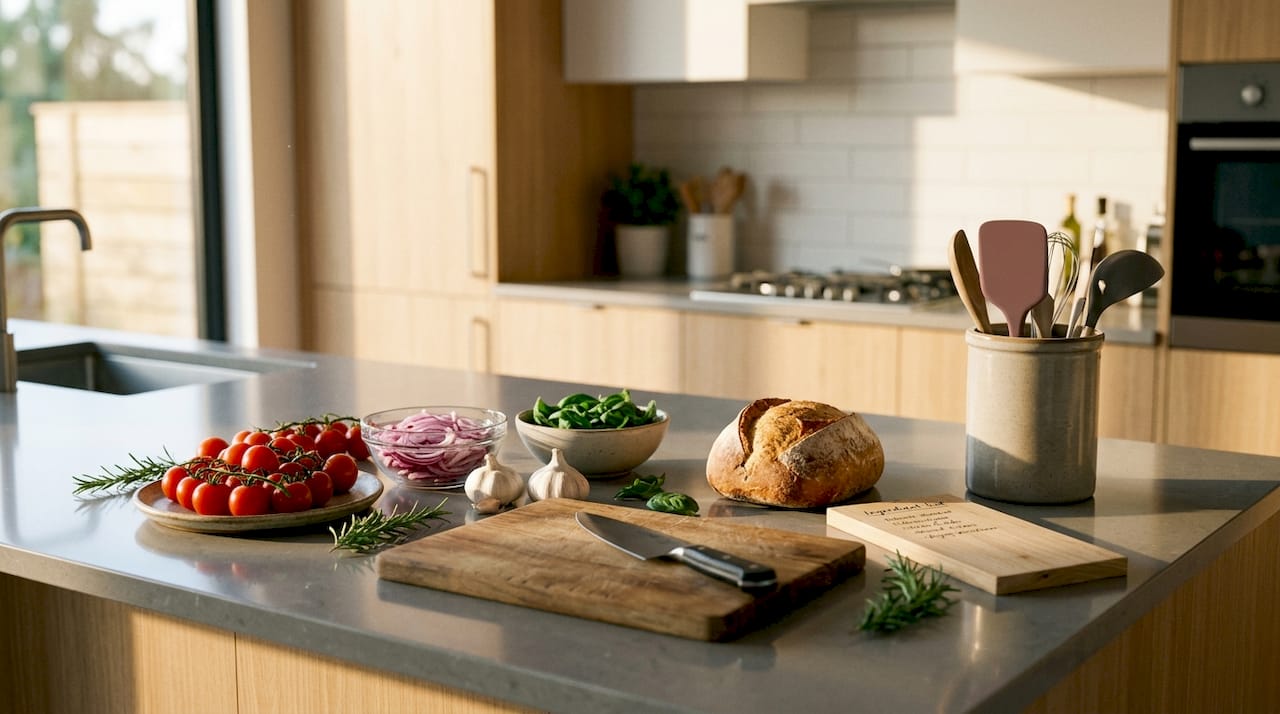
Component meal prep is the single most effective way to cut weeknight cooking time. The idea is to prepare individual building blocks on the weekend, not full meals. Cook a batch of proteins, grains, and washed produce separately. 60–90 minutes of weekend prep can reduce weeknight dinner assembly to just 10–15 minutes.
Here is a simple weekend prep routine:
- Cook one or two proteins. Bake a tray of chicken thighs. Brown a pound of ground beef. Hard-boil a dozen eggs. These become the base for multiple meals.
- Cook a large batch of grains. A pot of rice, quinoa, or pasta stores well in the fridge for four to five days.
- Wash and chop produce. Pre-cut bell peppers, broccoli, and carrots. Store them in clear containers so you can grab and cook without thinking.
- Portion sauces and condiments. Measure out jarred sauces into smaller containers. This speeds up assembly and reduces waste.
- Check your pantry staples. Canned tomatoes, beans, broth, and dried pasta are your backup plan when the week goes sideways.
Organizing your grocery list by store layout cuts shopping time by 15–20 minutes. Group produce together, dairy together, and proteins together. You move through the store once instead of backtracking.
Pro Tip: Always select your recipes first, then build your grocery list from those recipes. Reverse-engineering a plan from random ingredients you already own tends to produce poor results and leads to wasted food.
4. Strategies to build lasting family cooking habits and reduce takeout reliance
Building a cooking habit works best when you start small. Transitioning from takeout to home cooking should be gradual to avoid burnout. Begin by cooking three nights per week. After two weeks, add a fourth night. By the end of the month, five or six home-cooked dinners per week feels normal instead of exhausting.
Repetition is your friend, not your enemy. Families succeed by relying on a small rotating set of favorite meals rather than chasing daily novelty. Anchor meals are the three or four dishes your family already loves and requests. Build your weekly plan around those first, then add one new recipe per week to slowly expand your repertoire.
"Rigid plans that demand a new recipe every single night tend to collapse by Wednesday. Anchor meals keep the plan alive and keep your family fed."
Involve your family in the process. Let kids pick one meal per week from a short list of options. This reduces picky-eater pushback and gives everyone a sense of ownership over the dinner table. Adults in the household can take turns on one night each, which spreads the load.
Keep your plan realistic by including a leftover night and one flexible night. A plan that accounts for real life is a plan you will actually follow.
Key takeaways
The most effective approach to easy weeknight dinners is combining themed nights, component prep, and a small set of anchor meals that your family already loves.
| Point | Details |
|---|---|
| Plan 5–6 dinners weekly | Leaves room for takeout nights and prevents plan abandonment when schedules shift. |
| Use themed meal nights | Assign a loose category to each night to eliminate daily decision fatigue. |
| Prep components on weekends | Cook proteins, grains, and produce ahead to cut weeknight assembly to 10–15 minutes. |
| Start with anchor meals | Build your plan around three or four family favorites before adding new recipes. |
| Organize your grocery list | Sort by store layout to save 15–20 minutes per shopping trip. |
What I have learned from years of cooking for families
The biggest mistake I see families make is trying to cook something new every single night. It sounds exciting on Sunday. By Thursday, it feels like a part-time job. The families who stick with home cooking long-term are the ones who embrace repetition without shame.
Themed nights changed everything for me personally. Once I stopped treating every dinner as a creative project and started treating it as a system, the whole process got easier. Sheet pan Friday became something I could execute on autopilot. That mental freedom is worth more than any new recipe.
The other thing I will say: component prep feels like extra work until you do it once. The first Sunday you spend 75 minutes prepping, then sail through a 12-minute Wednesday dinner, you will never go back. The time investment pays off immediately.
Do not aim for perfect. Aim for consistent. A simple pasta dinner you made yourself beats a takeout order every time, not because it tastes better (though it often does), but because you built something. That confidence compounds over weeks and months into a real cooking habit.
— William
How Adultingwithfood helps you put dinner on the table
Getting started is the hardest part. Adultingwithfood is built specifically for people who want to cook real meals at home but are not sure where to begin.

Members get the Adulting With Food Starter Pack, weekly recipe drops with five new family-friendly recipes, grocery store checklists, and direct support from a real chef. Every recipe is designed to be quick, beginner-friendly, and genuinely good. You also get access to the Adultingwithfood store for tools and resources that make weeknight cooking faster and less stressful. If you are ready to cook more and order out less, this is where to start.
FAQ
What counts as an easy dinner recipe for families?
An easy family dinner recipe takes 30 minutes or less, uses a short ingredient list, and appeals to both adults and kids. Sheet pan meals, pasta dishes, and stir-fries are the most common examples.
How many dinners should I plan per week?
Planning 5–6 dinners per week is the most realistic target. It accounts for one or two takeout nights and prevents your plan from collapsing when the week gets unpredictable.
What is the fastest way to cut weeknight cooking time?
Weekend component prep is the fastest method. Cooking proteins, grains, and produce separately on Saturday or Sunday reduces weeknight dinner assembly to 10–15 minutes.
How do I get picky eaters to accept new meals?
Let kids choose one dinner per week from a short list of options. Giving them a voice in the decision reduces resistance and makes them more likely to eat what is served.
Do I need to cook something different every night?
No. Repeating a small set of favorite anchor meals is normal and effective. Families who rotate 8–10 reliable recipes consistently outperform those who chase daily novelty.