
Gluten free substitutions are blends of flours, starches, and binding agents designed to replace wheat-based ingredients without sacrificing taste or texture. The internationally recognized safety threshold for gluten is less than 20 ppm, which means every ingredient you choose matters. Successful gluten free cooking depends on three core elements: base starches for lightness, protein-rich flours for structure, and binders for cohesion. Get those three right, and you can make bread, pasta, cakes, and sauces that taste like the real thing.
1. Gluten free substitutions: understanding flour blends
The single most important thing to know about gluten free baking is that single-grain flours seldom work alone. Almond flour, coconut flour, and rice flour each have strengths, but none of them mimics wheat on their own. You need a blend.
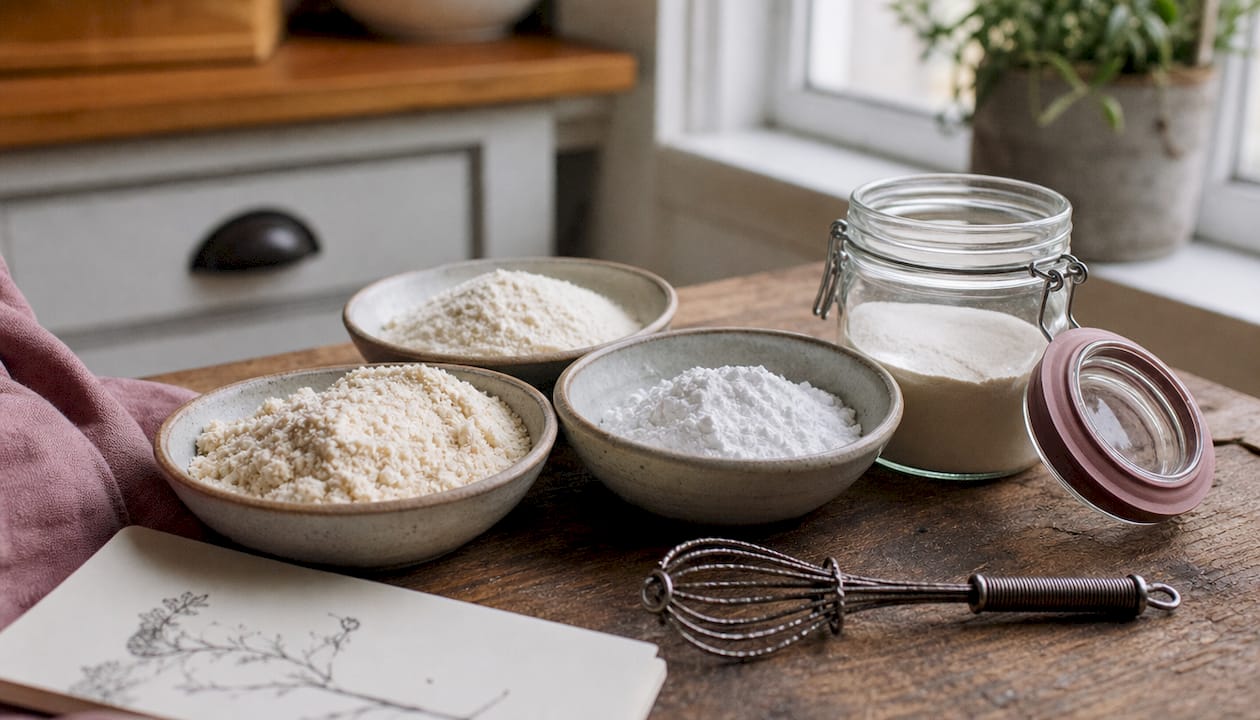
A well-built gluten free flour blend has three components:
| Component | Role | Common Examples |
|---|---|---|
| Starch (30–50%) | Lightness and tender crumb | Tapioca starch, potato starch, arrowroot |
| Protein flour (15–30%) | Structure and density | Sorghum, chickpea, buckwheat, oat flour |
| Binder | Elasticity and moisture retention | Psyllium husk, xanthan gum |
For bread, a strong blend includes sorghum flour, buckwheat flour, tapioca starch, and psyllium husk. For cakes and cookies, white rice flour, oat flour, and xanthan gum produce a lighter, more tender crumb. The ratio matters as much as the ingredients themselves.
Pro Tip: Not all rice flours are equal. Superfine ground rice flour produces a smoother texture in baked goods than standard rice flour. Look for it at Asian grocery stores or specialty baking shops.
2. Choosing the right binder
Binders are the glue that holds gluten free baked goods together. Without them, your bread crumbles and your cookies fall apart. The two most common binders are psyllium husk powder and xanthan gum, and they are not interchangeable.
Psyllium husk powder forms a gel-like network that traps gas during fermentation, giving yeast breads their rise and chew. Xanthan gum works better in cakes and cookies, where you need cohesion but not the same level of elasticity. Using the wrong binder for the wrong recipe is one of the most common mistakes beginners make.
Use psyllium husk for any yeasted bread recipe. Use xanthan gum for cakes, muffins, and cookies. When in doubt, start with the smaller amount and adjust from there.
3. Gluten free soy sauce and liquid condiment swaps
Soy sauce is one of the most overlooked sources of gluten in everyday cooking. Standard soy sauce contains wheat, which makes it off-limits for anyone avoiding gluten. The fix is simple.
Tamari and coconut aminos are both 1:1 substitutes for soy sauce. Tamari is brewed without wheat and has a slightly richer, less salty flavor than standard soy sauce. Coconut aminos are milder and slightly sweeter, making them a good choice for stir-fries and marinades. Both work in any recipe that calls for soy sauce.
Check the label on tamari before buying. Some brands add small amounts of wheat, so look for a certified gluten free label to be safe.
4. Pasta and noodle alternatives
Gluten free pasta has improved dramatically. You no longer have to settle for mushy rice noodles that fall apart in the pot. The options now cover a wide range of textures and nutrition profiles.
- Rice noodles: Light and neutral in flavor. Best for Asian-style dishes, soups, and stir-fries.
- Chickpea pasta: Higher in protein and fiber than rice pasta. Holds its shape well and works in any Italian-style dish.
- Lentil pasta: Dense and filling, with an earthy flavor that pairs well with bold sauces.
- Spiralized vegetables: Zucchini noodles and sweet potato noodles are naturally gluten free and add nutrients. Best for lighter sauces.
- Shirataki noodles: Made from konjac root, nearly calorie-free, and very low in carbs. Works in soups and Asian dishes.
Cook gluten free pasta one minute less than the package suggests. It continues cooking after you drain it, and overcooking is the main reason it turns mushy.
5. Gluten free grains for bowls and sides
Replacing wheat-based grains opens up a category of ingredients that are often more nutritious than what you were using before. Quinoa, buckwheat, and millet are not just safe alternatives. They provide complete protein and fiber that many wheat-based grains lack.
Quinoa works as a base for grain bowls, a side dish, or even a breakfast porridge. Buckwheat has a nutty, earthy flavor that suits savory dishes like salads and pilafs. Millet is mild and fluffy, similar to couscous in texture. Cauliflower rice is the fastest swap for white rice and works well in stir-fries, burrito bowls, and fried rice.
Pro Tip: Toast quinoa in a dry pan for two minutes before adding water. It deepens the flavor and reduces the slightly bitter aftertaste that some people notice.
6. Breadcrumb replacements
Breadcrumbs show up in more recipes than you might expect: meatballs, coatings, casserole toppings, and stuffing. The good news is that gluten free breadcrumb swaps are easy to find and easy to make at home.
Crushed gluten free crackers work as a direct 1:1 replacement in most recipes. Almond flour creates a golden, slightly nutty crust on chicken and fish. Crushed rice cakes or gluten free cornflakes work well as a casserole topping. For meatballs and meatloaf, rolled gluten free oats or cooked quinoa bind the mixture and add moisture.
The texture of the swap changes the final dish slightly, so choose based on what you want. Almond flour gives a richer crust. Crushed crackers stay crispier longer.
7. Thickeners for sauces and gravies
Wheat flour is the traditional thickener for gravies, sauces, and soups. Replacing it is straightforward once you know the technique. The key is mixing your thickener with cold liquid before adding it to a hot pan.
Cornstarch and arrowroot are the two best gluten free thickeners. Mix either with cold water to form a slurry before adding it to your sauce. Adding starch directly to a hot liquid causes clumping. Cornstarch produces a glossy, clear sauce. Arrowroot is better for acidic sauces like tomato-based dishes, since cornstarch can break down in acid.
Use 1 tablespoon of cornstarch or arrowroot for every 2 tablespoons of wheat flour a recipe calls for. Stir constantly after adding the slurry and bring the sauce to a brief boil to activate the thickening.
8. How to adjust recipes for gluten free baking
The biggest mistake in gluten free baking is a straight 1:1 flour swap without binders or extra liquid. The result is dry, crumbly baked goods that fall apart. Gluten free flours absorb liquid differently than wheat flour, and they have no natural elasticity.
Follow these adjustments every time you convert a recipe:
- Add a binder. Use 1 teaspoon of xanthan gum per cup of flour for yeast breads. Use ½ teaspoon for cakes and cookies.
- Increase liquid by 10–20%. Gluten free flours absorb more moisture. Add the extra liquid gradually and stop when the batter looks right.
- Rest the dough or batter. Let it sit for 10–15 minutes before baking. This gives the binders time to hydrate and improves texture.
- Measure by weight, not volume. Gluten free flours pack differently in a measuring cup. A kitchen scale gives you consistent results every time.
- Lower the oven temperature slightly. Gluten free baked goods brown faster. Reduce heat by 25°F and check for doneness a few minutes early.
Adding 1 tsp xanthan gum per cup of flour for yeast breads, combined with a 10–20% liquid increase, is the standard starting point for recipe conversion. These two adjustments alone fix most gluten free baking failures.
9. Choosing the right swap for your recipe type
Not every gluten free substitute works in every situation. Matching the right swap to the right recipe saves you time and wasted ingredients.
- Yeast breads: Use a blend with sorghum, buckwheat, or chickpea flour for structure. Add psyllium husk as your binder. Commercial blends often underperform for yeast breads without added protein flours.
- Quick breads and muffins: A commercial "measure for measure" blend works well here. Add xanthan gum if the blend does not already include it.
- Cakes and cookies: White rice flour or oat flour blended with tapioca starch and xanthan gum gives you a light, tender result.
- Pizza dough: Tapioca starch is the secret to a chewy crust. Combine it with sorghum flour and psyllium husk for the best texture.
- Savory cooking: Quinoa, millet, and buckwheat add nutrition to grain bowls and salads. Use tamari instead of soy sauce and cornstarch instead of flour for sauces.
- Budget-friendly everyday cooking: Rice noodles, canned chickpeas, cauliflower rice, and cornstarch are all affordable and widely available at most American grocery stores.
The goal is to match the texture and function of the original ingredient, not just avoid gluten. Think about what the ingredient does in the dish, then find the swap that does the same job.
Key takeaways
Successful gluten free cooking requires the right blend of starches, protein flours, and binders. No single ingredient does the job alone.
| Point | Details |
|---|---|
| Blends beat single flours | Combine starch, protein flour, and a binder for proper texture and structure. |
| Binder choice matters | Use psyllium husk for yeast breads and xanthan gum for cakes and cookies. |
| Hydration is non-negotiable | Increase liquid by 10–20% when converting any recipe to gluten free. |
| Everyday swaps are simple | Tamari replaces soy sauce 1:1; cornstarch replaces wheat flour as a thickener. |
| Nutrition can improve | Quinoa, buckwheat, and millet offer more protein and fiber than many wheat-based grains. |
What I've learned from years of gluten free cooking
The most common frustration I hear from people trying gluten free baking for the first time is that their bread comes out dense and their cookies crumble. Almost every time, the problem is the same: they swapped the flour and nothing else. No binder, no extra liquid, no rest time.
The fix is not complicated, but it does require a shift in how you think about recipes. Gluten does three jobs: it builds structure, traps gas for rise, and holds moisture. When you remove it, you have to replace all three functions deliberately. That is why a single flour swap never works.
My go-to bread blend is sorghum flour, tapioca starch, and psyllium husk. It produces a loaf with real chew and a crust that actually cracks when you cut it. For cakes, I reach for oat flour and xanthan gum every time. The texture is lighter than most commercial blends, and the flavor is cleaner.
The other thing I want you to know is that the options available now are genuinely good. Chickpea pasta holds up in a bolognese. Buckwheat pancakes taste better than their wheat counterparts. Quinoa grain bowls are more filling and more nutritious than white rice bowls. You are not settling for less. You are cooking differently, and in many cases, cooking better.
Experiment with your ratios. Keep notes on what works. The first batch might not be perfect, and that is fine. Every cook who gets good at gluten free baking has a drawer full of lessons learned.
— William
Gluten free cooking made easier with Adultingwithfood
Learning to cook gluten free at home is one of the best investments you can make in your health and your wallet. The substitutions in this article work, but knowing which products to buy and how to use them together is where most people get stuck.

Adultingwithfood gives you weekly recipe drops, grocery store checklists, and real chef support to help you cook with confidence. The Adultingwithfood store carries curated tools and resources that make gluten free cooking less guesswork and more enjoyment. If you are ready to build real kitchen skills and stop relying on takeout, this is the place to start.
FAQ
What is the best gluten free flour substitute for baking?
A blend of sorghum flour, tapioca starch, and a binder like psyllium husk or xanthan gum produces the best results. Single-grain flours like almond or coconut flour seldom work alone.
How much xanthan gum do I add when substituting gluten free flour?
Use 1 teaspoon of xanthan gum per cup of flour for yeast breads and ½ teaspoon for cakes and cookies. Always increase liquid by 10–20% at the same time.
Is tamari a safe gluten free substitute for soy sauce?
Yes. Tamari is a 1:1 gluten free substitute for soy sauce, but always check the label for a certified gluten free designation, since some brands add small amounts of wheat.
What can I use instead of breadcrumbs in gluten free cooking?
Crushed gluten free crackers, almond flour, and rolled gluten free oats all work as direct breadcrumb replacements. Choose based on the texture you want in the finished dish.
Can I use cornstarch instead of flour to thicken sauces?
Yes. Mix 1 tablespoon of cornstarch with cold water to form a slurry, then stir it into your hot sauce. Use half as much cornstarch as the flour a recipe calls for.