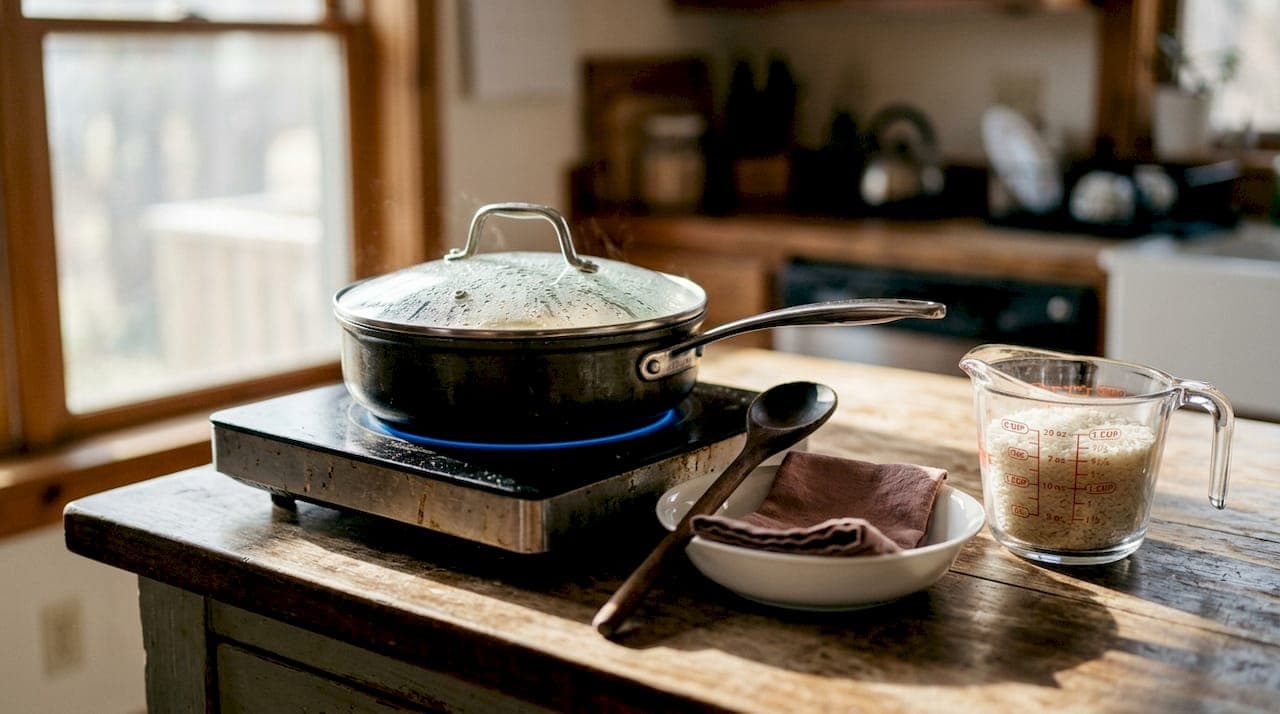
Stovetop rice cooking is defined as the absorption method: you cook dry rice in a measured amount of water over heat until every drop absorbs into the grain. Learning how to make rice on a stove top is one of the most useful skills you can build as a new cook. Get the water ratio right, rinse your rice, and manage your heat, and you will have fluffy, separate grains every single time. The absorption method requires no special equipment, no rice cooker, and no culinary training.
What basic tools and ingredients do you need for stovetop rice?
The right setup makes stovetop rice cooking far easier. You do not need a lot, but what you do need matters.
Tools:
- A medium saucepan (2-quart works well for 1–2 cups of dry rice)
- A tight-fitting lid (this is non-negotiable)
- A fine mesh strainer or sieve for rinsing
- A liquid measuring cup
- A fork for fluffing
Ingredients:
- Long-grain white rice (the most forgiving variety for beginners)
- Cold water
- Salt (optional, but recommended)
- Butter (optional, adds flavor and prevents sticking)
Long-grain white rice is the best starting point for new cooks. It cooks predictably, separates well, and works in almost every meal from stir-fries to burrito bowls.
Pro Tip: Use a pot that feels slightly too big for the amount of rice you are cooking. A wider base distributes heat more evenly and reduces the chance of scorching the bottom layer.
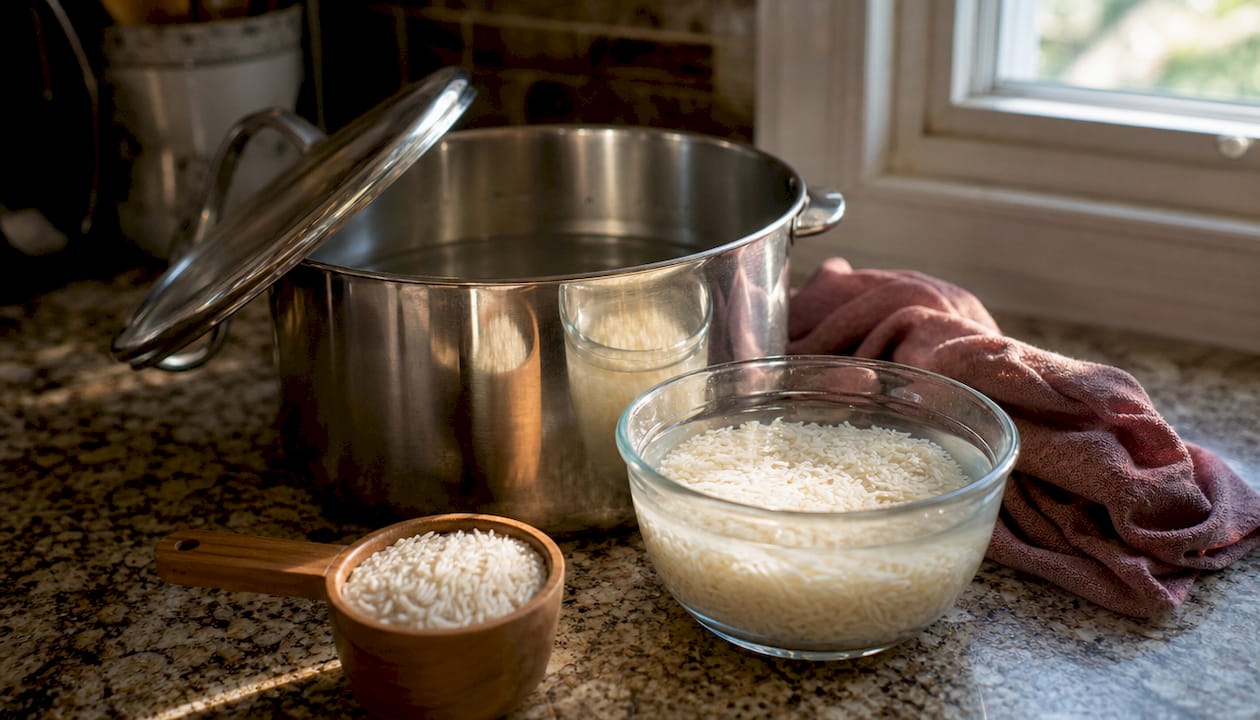
The lid matters more than most beginners realize. A loose lid lets steam escape, which throws off your water ratio and leaves you with undercooked, crunchy rice. If your lid does not fit snugly, place a sheet of aluminum foil over the pot before setting the lid on top.
How to prep rice and measure water correctly before cooking
Good prep is what separates fluffy rice from a sticky, clumped mess. Two steps define this phase: rinsing and measuring.
Rinsing your rice
- Place your dry rice in a fine mesh strainer.
- Hold it under cold running water.
- Swirl the rice gently with your fingers.
- Watch the water draining out. It will look white and cloudy at first.
- Keep rinsing until the water runs mostly clear. This takes about 30–60 seconds.
Rinsing removes excess starch from the surface of each grain. That surface starch is what causes rice to clump together and turn gummy in the pot. If you plan to make fried rice later, rinsing is especially critical because separated grains fry better than sticky ones.
Measuring your water
The standard water-to-rice ratio for long-grain white rice is 2:1. That means 2 cups of water for every 1 cup of dry rice. One cup of dry rice yields about 3 cups of cooked rice. Two cups of dry rice yields about 6 cups cooked. That is enough to feed four people as a side dish.
Cooking a smaller portion? A half cup of dry rice uses 3/4 to 1 cup of water. Smaller batches absorb water slightly differently, so starting with 3/4 cup and adjusting next time is a safe approach.
Pro Tip: Water-to-rice ratios are a starting point, not a law. Ratios shift based on your stove's heat output, your pot's lid tightness, and whether you prefer softer or firmer grains. Keep notes after your first few batches.
The most common prep mistake is skipping the rinse and eyeballing the water. Both choices lead to predictable problems: gummy texture and inconsistent results. Measure with a proper liquid measuring cup, not a coffee mug.
What are the step-by-step stovetop cooking instructions for perfect rice?
This is where the process comes together. Follow these steps in order and resist the urge to improvise.
-
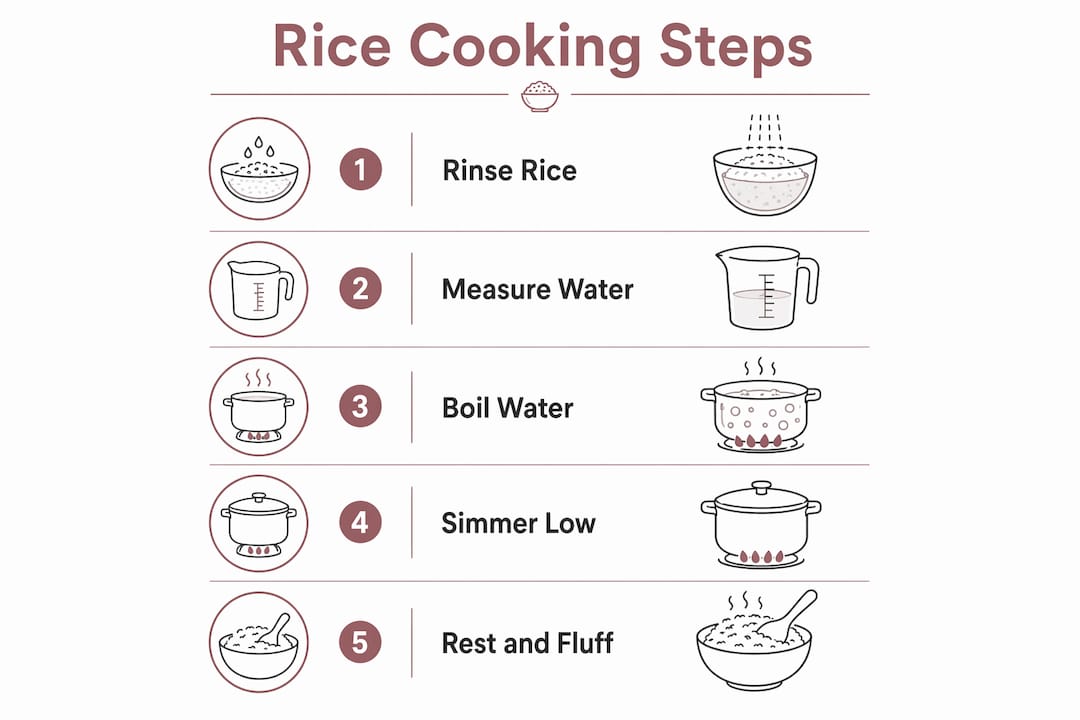
Combine rinsed rice and cold water in your pot. Add a pinch of salt and a small pat of butter if you like. Both are optional but improve flavor.
-
Bring the water to a full boil over medium-high heat. Watch for large, rolling bubbles across the surface. Do not walk away during this step.
-
Stir once, then reduce heat to the lowest setting your stove allows. One stir prevents the rice from sticking to the bottom before the water absorbs. After that, put the spoon down.
-
Place the lid on tightly and do not lift it. Lifting the lid releases steam and disrupts the cooking environment inside the pot. Uneven steam means uneven cooking.
-
Simmer for 15–20 minutes. For 1 cup of rice, start checking at 15 minutes. For 2 cups, give it the full 20 minutes. Cooking time stays in the 15–20 minute range for most standard white rice portions.
-
Watch for visual cues near the end of cooking. Steam holes forming on the surface of the rice and no visible bubbling water are signs the absorption is nearly complete. These cues work alongside your timer, not instead of it.
-
Remove the pot from heat. Do not open the lid yet.
The biggest mistake at this stage is cooking on heat that is too high. High heat burns the bottom layer before the top layer cooks through. Low and steady wins every time. If you hear aggressive sputtering or smell something burning, reduce the heat immediately and add a tablespoon of water without stirring.
How and why to rest and fluff rice after cooking
Resting is not optional. It is the step that actually finishes the rice.
What to do during the rest period:
- Keep the lid on tight after removing the pot from heat.
- Let the rice sit undisturbed for 5–10 minutes.
- Do not stir, peek, or shake the pot.
Resting allows residual moisture to redistribute evenly through every grain. The steam trapped inside the pot continues cooking the rice gently. Skipping this step leaves the top layer dry and the bottom layer wet.
After the rest period, remove the lid and use a fork to fluff the rice. Use a light, lifting motion rather than pressing down. You are separating the grains, not mashing them. Work from the edges toward the center.
Pro Tip: Place a clean folded kitchen towel between the pot and the lid during the rest period. The towel absorbs excess steam and prevents water droplets from dripping back onto the rice, which can make the top layer soggy.
Common errors at this stage include opening the lid too early, using a spoon instead of a fork, and skipping the rest entirely because the rice "looks done." The rice is not done when the timer goes off. It is done after it rests.
What are common stovetop rice cooking mistakes and how to fix them?
Every new cook makes at least one of these mistakes. Knowing them ahead of time saves a lot of wasted rice.
Too much water: The rice turns out mushy and wet. Next time, reduce water by 2 tablespoons. If it happens mid-cook, remove the lid and let excess moisture evaporate on low heat for a few minutes.
Too little water: The rice is hard and crunchy in the center. Add 2–3 tablespoons of water, replace the lid, and cook for another 5 minutes on low.
Lifting the lid too often: Steam escapes every time you peek, and the water ratio shifts. Trust the process and use your timer.
Skipping the rinse: The rice comes out sticky and clumped. Rinsing until the water runs clear is the single fastest fix for gummy rice.
Heat too high: The bottom burns before the top cooks. Always drop to your stove's lowest setting after the boil.
Pro Tip: If your rice consistently burns on the bottom, try the pasta-style method. Boil rinsed rice in salted water for 12–13 minutes like pasta, drain it through a strainer, then return it to the pot off heat for 3–5 minutes to steam. This method is more forgiving and prevents scorching entirely.
Troubleshooting rice gets easier with repetition. After three or four batches, you will know exactly how your stove behaves and which adjustments your setup needs.
Key takeaways
Perfect stovetop rice requires the 2:1 water-to-rice ratio, a tight lid, 15–20 minutes of low simmering, and a mandatory 5–10 minute rest before fluffing.
| Point | Details |
|---|---|
| Use the 2:1 ratio | Measure 2 cups of water for every 1 cup of dry long-grain white rice. |
| Always rinse first | Rinse rice until water runs clear to remove starch and prevent gummy texture. |
| Keep the lid on | Never lift the lid during simmering; escaping steam causes uneven cooking. |
| Rest before fluffing | Let rice sit covered off heat for 5–10 minutes so moisture distributes evenly. |
| Adjust for your stove | Track results and tweak water amounts by 2 tablespoons if rice is too wet or dry. |
Why stovetop rice was the skill that changed everything for me
I burned rice more times than I care to admit before I figured out what I was actually doing wrong. The problem was never the recipe. It was that I kept treating rice like something that needed constant attention. I would lift the lid, stir it, turn up the heat when I got impatient, and wonder why it came out wrong every single time.
The shift happened when I stopped trying to control it and started trusting the process. Low heat, tight lid, timer set, hands off. That is genuinely all it takes. Once I internalized that, rice became the easiest thing I cook.
What I tell every new cook is this: stovetop rice is a skill that rewards patience more than technique. You do not need to be a great cook to make great rice. You just need to follow the steps and resist the urge to intervene. The Adultingwithfood approach to cooking is built on exactly this idea. Learn the fundamentals, practice them a few times, and confidence follows naturally.
Rice is also one of those skills that unlocks a dozen other meals. Once you can make reliable rice, you can build grain bowls, fried rice, rice and beans, and weeknight stir-fries without thinking twice. That is real kitchen confidence.
— William
Build your cooking skills with Adultingwithfood
If stovetop rice is your starting point, there is a lot more waiting for you on the other side of this skill.

Adultingwithfood is built for people who are done relying on takeout and ready to cook real meals at home. Members get weekly recipe drops, grocery checklists, and direct support from an executive chef who actually answers your questions. The Adultingwithfood Starter Pack covers the tools you need, the groceries worth buying, and the foundational recipes that make everyday cooking feel manageable. If you want to keep building on what you just learned, that is exactly where to go next. Check out the beginner kitchen tools available in the shop to set yourself up right from the start.
FAQ
What is the correct water-to-rice ratio for stovetop white rice?
The standard ratio is 2 cups of water for every 1 cup of dry long-grain white rice. This yields about 3 cups of cooked rice.
How long should you cook white rice on the stove?
White rice simmers for 15–20 minutes on the lowest heat setting after reaching a boil. Smaller portions like a half cup take closer to 15 minutes.
How do I cook 1/2 cup of rice on the stove?
Use 3/4 to 1 cup of water for a half cup of dry rice. Simmer covered on low heat for 15–20 minutes, then rest covered for 5–10 minutes before fluffing.
Why is my rice sticky and clumped together?
Sticky rice is almost always caused by skipping the rinse. Rinsing dry rice under cold water until it runs clear removes the surface starch that causes clumping.
Can I open the lid while rice is cooking?
No. Lifting the lid releases steam and disrupts the water balance inside the pot. Keep the lid on from the moment you reduce the heat until the rest period ends.