How much oil should you use for 2 cups of rice?
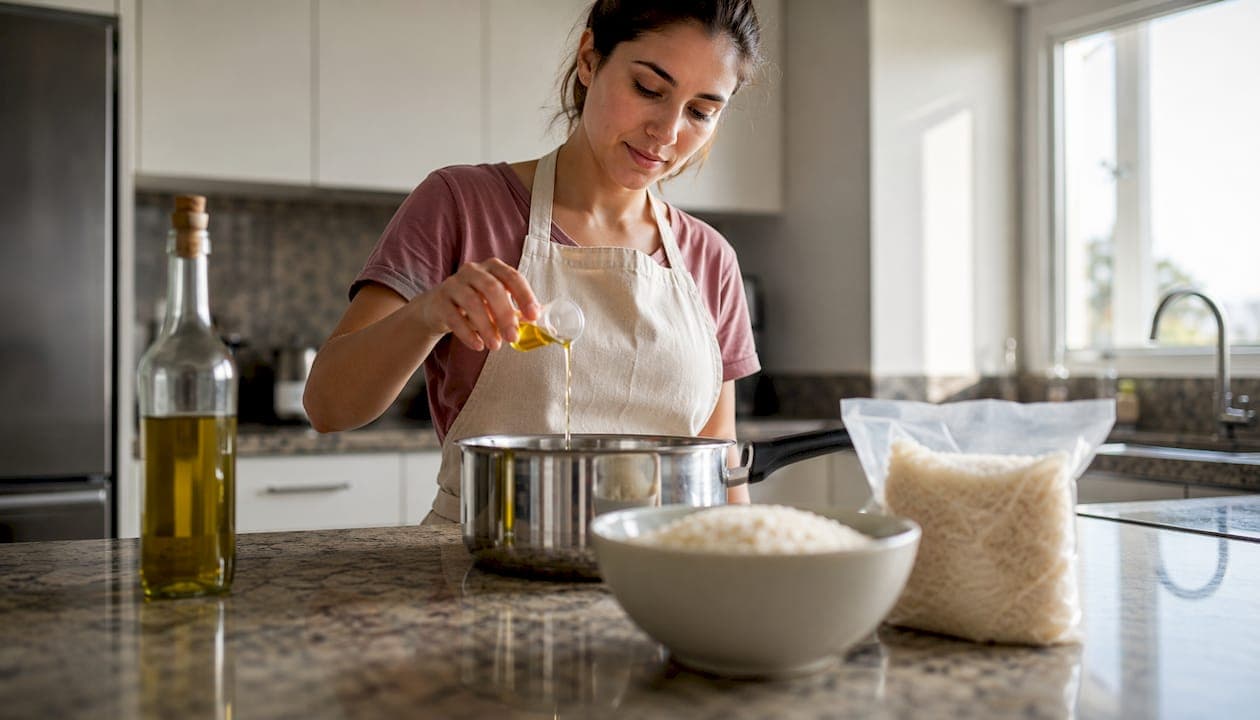
Use oil in a moderate amount for 2 cups of uncooked rice, enough to coat every grain and prevent sticking without greasiness. That amount is enough to coat every grain and prevent sticking without making your rice greasy or heavy.
Here's a quick reference:
- 2 cups of rice: 1 to 1.5 tablespoons of oil
- 1 cup of rice: 1 to 2 teaspoons of oil
- Water ratio: 4 cups of water for 2 cups of rice (the standard 2:1 ratio)
- Rice cooker: ½ to 1 teaspoon of oil per cup works well too
Starting with a moderate amount is safest for beginners. You can gradually adjust after seeing how your rice turns out.
Why adding oil to rice actually makes a difference
Oil is not required to cook rice, but it does make a real difference in how your rice looks and feels on the plate. When you add oil to the cooking water, the fat coats the starch on the outside of each grain, which keeps the grains from bonding together as they cook. The result is fluffy, separated rice instead of a sticky clump.
Beyond texture, oil adds a subtle richness that plain boiled rice just does not have. Even a small amount makes the grains glisten and gives the dish a more finished, restaurant-style feel.
- Prevents grains from sticking together
- Creates a glossy, separated texture
- Adds mild richness and flavor
- Acts as a barrier between grains and the pot
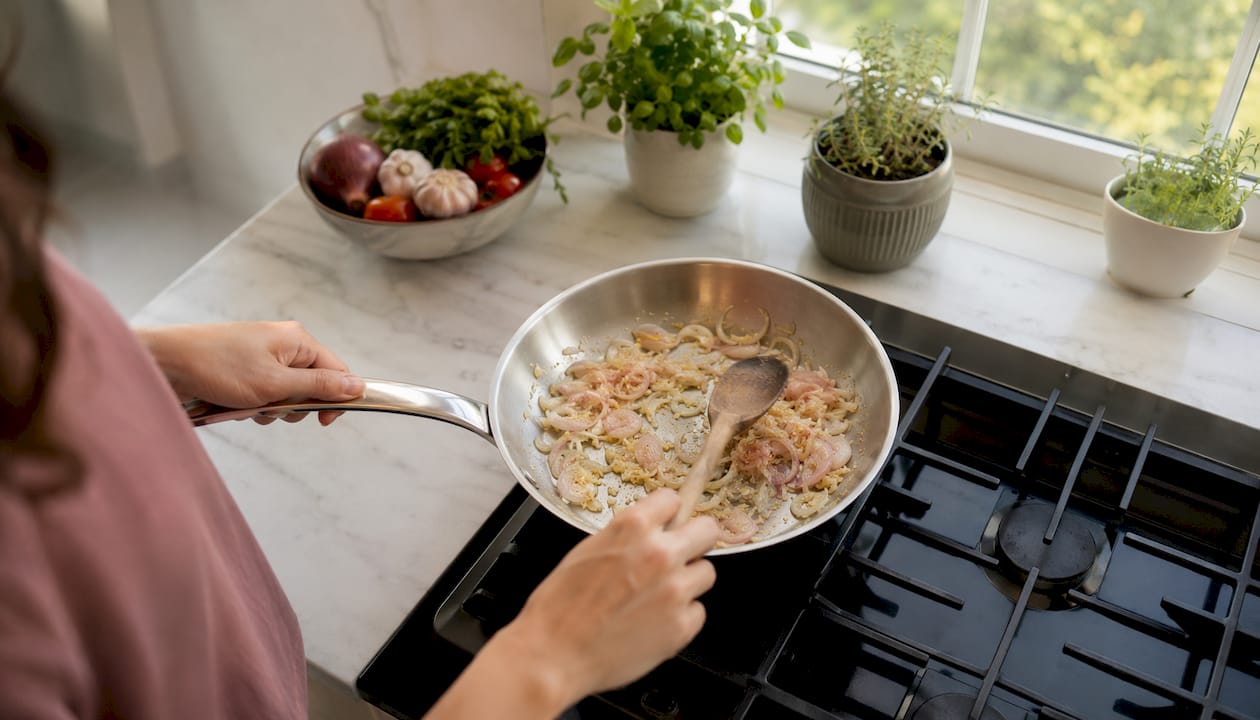
Pro Tip: Sauté a clove of minced garlic or a few slices of onion in your oil for about 60 seconds before adding the rice and water. According to Food Network, this builds a base of flavor that basic boiling methods completely miss.
How to adjust oil quantity and what happens with too much
Use an amount of oil that suits your dish and fat choice. For richer tastes, use more oil; for lighter meals, use less.
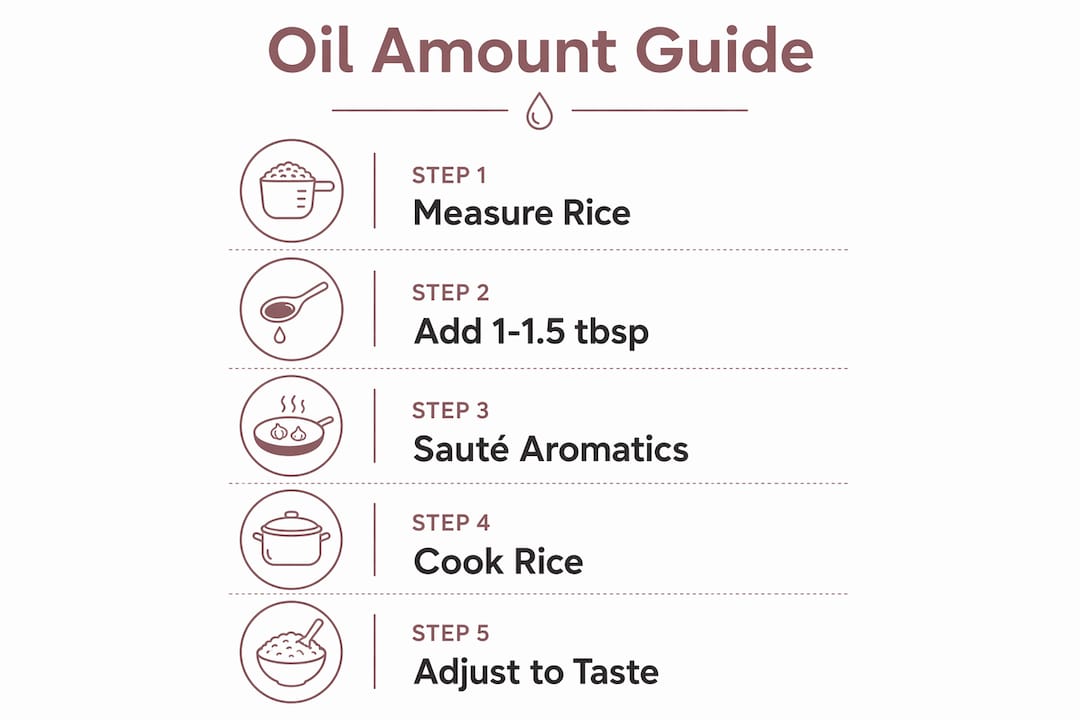
Too much oil, though, creates real problems. Excess oil can leave an oily residue on your rice and give it a heavy, greasy mouthfeel that no one wants. The fix is simple: measure carefully and increase gradually over a few batches rather than guessing.
Adjustment tips:
- Begin with a moderate oil amount and adjust for richness
- Use strongly flavored oils sparingly
- Rinse rice to remove starch and improve oil absorption
- If rice is greasy, reduce oil slightly next time
What to avoid:
- Pouring oil in without measuring
- Using more than 1.5 tablespoons for a standard 2-cup batch
- Skipping the rinse when using starchy short-grain rice
A rice cookbook can also walk you through oil amounts for specific rice varieties if you want more detailed guidance beyond white rice.
Common questions about cooking rice with oil
Is oil necessary for cooking rice? No, oil is not required. Rice cooks fine with just water. That said, adding oil improves texture and prevents sticking, so it's worth including.
How much liquid do 2 cups of rice need? Most white rice varieties need 4 cups of water for 2 cups of uncooked rice, following the standard 2:1 ratio. Check out this stovetop rice guide for a full walkthrough.
What types of oil work best for cooking rice? Neutral oils like vegetable oil, canola oil, and light olive oil are the most versatile choices. Coconut oil and sesame oil add distinct flavor, so use them intentionally and in smaller amounts.
What happens if I add too much oil? Your rice will feel greasy and heavy. The grains may also clump in an unpleasant way as the excess oil cools. Stick to measured amounts to avoid this.
When do you add the oil? Add oil at the start, either when sautéing aromatics or directly into the pot with your water before bringing it to a boil.
Expert tips from Adultingwithfood for beginner cooks
At Adultingwithfood, we teach beginners to build real kitchen confidence one skill at a time. Rice is one of the first things we cover, and oil use is a detail that makes a big difference.
- Start with less oil and increase after your first batch based on how the texture feels
- Use the sauté method whenever possible for deeper flavor
- Always follow the 2:1 water-to-rice ratio for consistent results
- Measure your oil rather than eyeballing it until you have a few batches under your belt
Pro Tip: Add your oil to a cold pot, then warm it over medium heat before adding garlic or onion. This way the aromatics bloom slowly in the fat and infuse the entire dish with flavor before a single grain of rice hits the pan.
Key Takeaways
For 2 cups of rice, use 1 to 1.5 tablespoons of oil. That single measurement covers most beginner rice dishes and gives you fluffy, separated grains every time.
| Point | Details |
|---|---|
| Recommended oil amount | Use 1 to 1.5 tablespoons of oil for 2 cups of uncooked rice. |
| Oil per cup of rice | Start with 1 to 2 teaspoons per cup for a standard side dish. |
| Water ratio | Use 4 cups of water for every 2 cups of rice (2:1 ratio). |
| Too much oil | Excess oil causes greasy texture; measure carefully and adjust gradually. |
| Best technique | Add oil at the start and sauté aromatics for richer flavor. |
Ready to cook with real confidence? Adultingwithfood gives you weekly recipes, grocery checklists, and real chef support so every meal feels less like guesswork. Join the membership and get your Starter Pack today.