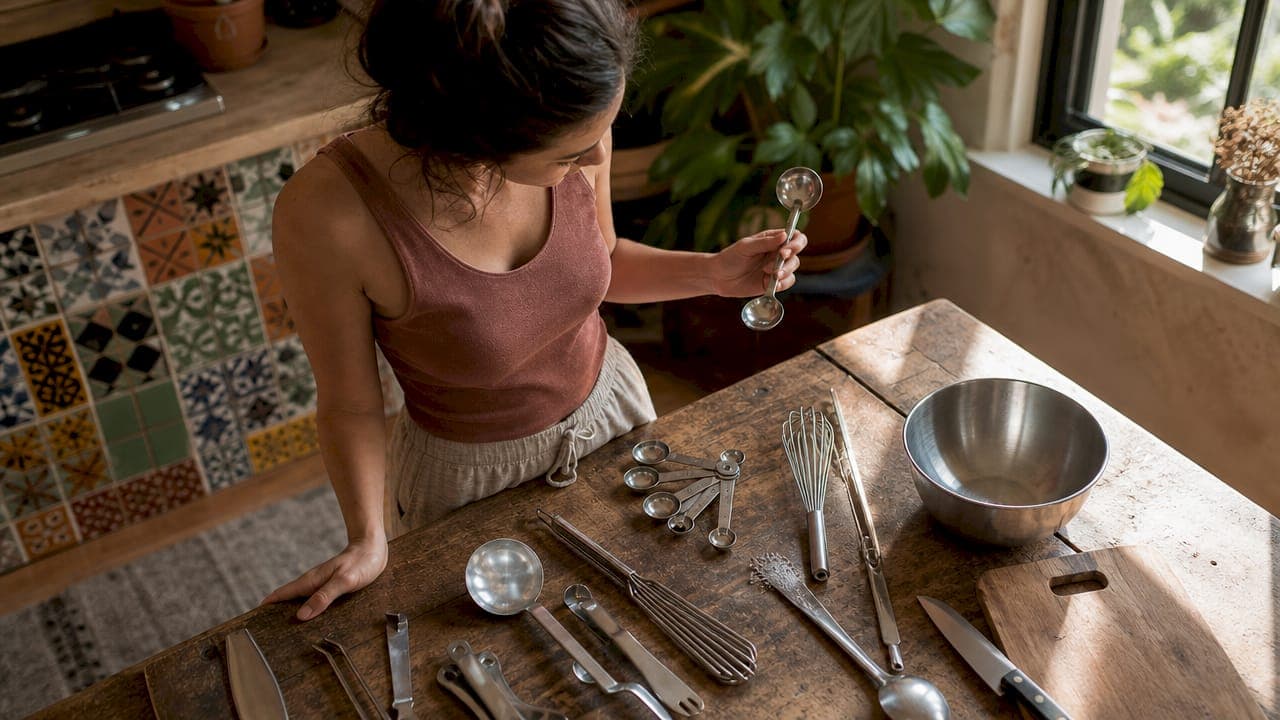
Identifying kitchen utensils is the process of recognizing common cooking tools by their shape, material, and function so you can use them correctly in any recipe. Common tools like ladles, spatulas, tongs, and whisks each serve a distinct purpose, yet many beginners misidentify them under pressure. Getting this right from the start saves you from ruined meals, damaged cookware, and a lot of frustration. Adultingwithfood was built specifically to help beginners like you cut through the confusion and build real kitchen confidence, one tool at a time.
What are the essential kitchen utensils every beginner cook should know?
A foundational kitchen toolkit includes at least 12 essential items used daily for cooking, serving, and eating. That number is not arbitrary. It reflects the minimum set of tools you need to execute most everyday recipes without improvising or substituting. Knowing each item by name and function is the first step toward cooking with confidence.
Here are the 12 tools every beginner should be able to identify and use:
| Utensil | Primary function | Common material |
|---|---|---|
| Chef's knife | Chopping, slicing, dicing | Stainless steel, carbon steel |
| Cutting board | Safe surface for prep work | Wood, plastic |
| Ladle | Scooping and transferring liquids | Stainless steel, silicone |
| Spatula | Flipping, scraping, spreading | Silicone, stainless steel |
| Tongs | Gripping and lifting food | Stainless steel, silicone tips |
| Whisk | Aerating and blending liquids | Stainless steel, silicone |
| Vegetable peeler | Removing skin from produce | Stainless steel |
| Frying pan | Searing, frying, sautéing | Stainless steel, cast iron, non-stick |
| Saucepan | Boiling, simmering sauces | Stainless steel, aluminum |
| Mixing bowl | Combining ingredients | Stainless steel, glass, ceramic |
| Measuring cups | Portioning dry and liquid ingredients | Plastic, stainless steel |
| Measuring spoons | Portioning small amounts | Plastic, stainless steel |
Each tool on this list shows up in recipes constantly. A whisk aerates eggs and blends sauces. A ladle moves soup from pot to bowl without spilling. A spatula flips a burger or scrapes batter from a bowl. Once you can recognize these tools on sight, you stop second-guessing yourself mid-recipe.
Pro Tip: Start by pulling out each tool from your kitchen drawer and saying its name out loud. Connecting the physical object to its name and function takes less than five minutes and sticks far better than reading a list.
How do you visually identify common kitchen tools?
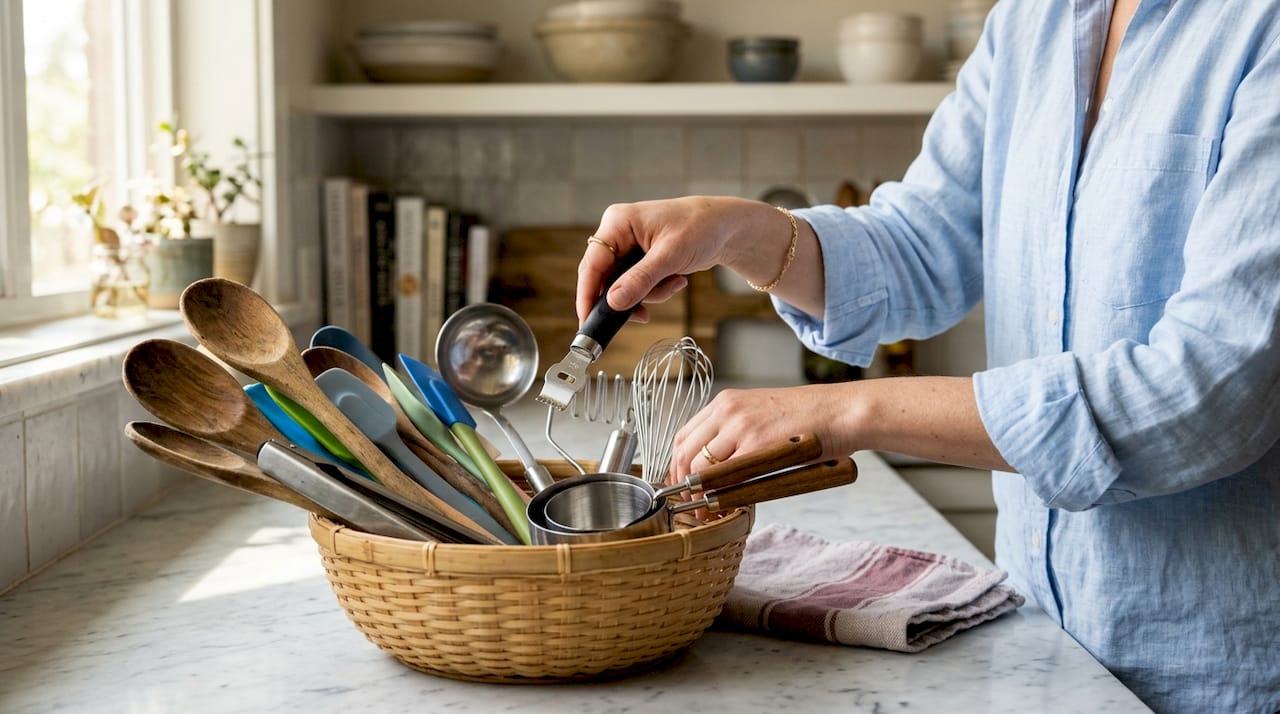
Physical attributes like shape, material, moving parts, wear marks, and labels are the most reliable clues for identifying any kitchen tool. This approach works even when you have no idea what something is called. You read the object itself rather than relying on memory alone.
Here is how to break down any unfamiliar tool:
- Handle type: Long handles signal high-heat use, like ladles or slotted spoons meant for stovetop work. Short handles indicate prep tools like peelers or zesters.
- Bowl or head shape: A deep, rounded bowl means the tool holds liquid, like a ladle or serving spoon. A flat, wide head is for flipping, like a spatula or fish turner.
- Edge design: Straight edges cut or scrape. Perforated or slotted surfaces drain liquid while holding food, which is the defining feature of a strainer or slotted spoon.
- Material weight: Heavy gauge metal, especially cast iron, signals a pan built for high heat and long cooking times. Thin, lightweight metal suggests a tool meant for quick tasks.
- Wear patterns: Scorch marks near the base of a pan confirm stovetop use. A knife with a worn edge near the heel has been used heavily for chopping.
- Labels and markings: Food-safe stamps, heat ratings, and brand markings on handles confirm material type and safe use range.
Using functional clues to identify tools is a more practical learning approach than memorizing names alone. When you understand why a tool looks the way it does, you can figure out what it does even if you have never seen it before.
Specialty items require extra attention. Cooking twine, for example, must be 100% natural cotton and never bleached or synthetic to be safe for direct contact with meat during cooking. The label tells you everything. Checking it takes two seconds and prevents a real safety issue.
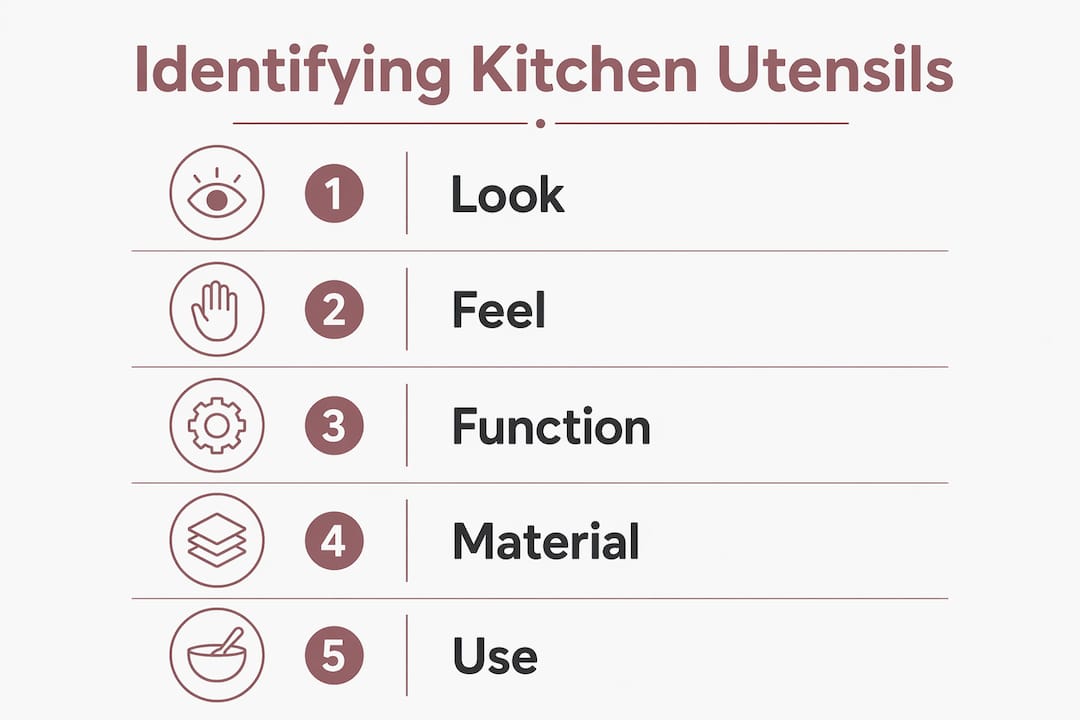
Automated tools like Google Lens can give you a first-pass identification, but always verify with physical clues and a reliable reference. Many kitchen tools look nearly identical, and a visual search alone will not always distinguish a fish spatula from a regular turner.
Pro Tip: When you find an unfamiliar tool, ask three questions: What does the head shape suggest? What is it made of? Where are the signs of wear? Those three answers will get you to the right answer most of the time.
How do you match utensils to specific cooking tasks?
Selecting the right tool for each cooking method directly affects how your food turns out and how long your cookware lasts. Using the wrong pan or utensil is one of the most common beginner mistakes, and it is also one of the easiest to fix once you know the rules.
Here is how to match your tools to the task:
- Frying: Use a frying pan or skillet. These have sloped sides that let you flip food easily and allow steam to escape, which keeps your food from getting soggy.
- Boiling pasta or blanching vegetables: Use a stockpot. Its tall sides and large volume hold enough water to cook pasta evenly without clumping.
- Making sauces or boiling eggs: Use a saucepan. Its straight sides and moderate depth give you control over liquid reduction.
- Sautéing vegetables or proteins: Use a sauté pan. It has straight, taller sides than a frying pan, which keeps food from flying out when you toss it.
- Stirring on non-stick surfaces: Use wooden or silicone utensils only. Metal tools scratch non-stick coatings, which shortens the life of the pan and can release coating particles into your food.
- Flipping delicate fish or pancakes: Use a thin, flexible spatula. A thick or rigid spatula tears the food instead of sliding cleanly underneath it.
Matching tools to tasks also protects your equipment. A cast iron pan holds heat better than a thin aluminum pan, which makes it the right choice for searing meat. Using a thin pan for searing produces uneven browning and can warp the pan over time. Knowing the difference saves you money on replacements.
Check out this beginner stovetop guide for a practical example of how the right tools make a simple recipe like rice much easier to get right.
How should beginners organize and maintain their kitchen utensils?
Grouping utensils into prep, cooking, and serving categories simplifies your kitchen setup and speeds up your workflow. When every tool has a logical home, you spend less time searching and more time cooking.
Here is a practical organization and maintenance system for beginners:
- Prep zone: Keep your chef's knife, cutting board, peeler, and measuring cups near your counter workspace. These are the tools you reach for before the stove turns on.
- Cooking zone: Store your spatulas, tongs, ladles, and whisks in a utensil crock next to the stove. Reaching for them mid-cook should take one second, not ten.
- Serving zone: Keep serving spoons, ladles, and tongs in a separate drawer or section. Mixing serving tools with cooking tools creates confusion when you are plating food quickly.
Maintenance matters as much as organization. Knives with full tang construction offer better strength, balance, and longevity than partial tang versions. Full tang means the metal runs the full length of the handle, which prevents the blade from loosening over time. Check this when you buy a knife and when you inspect one you already own.
| Utensil type | Maintenance tip | Why it matters |
|---|---|---|
| Chef's knife | Hand wash and dry immediately | Prevents rust and handle damage |
| Cast iron pan | Season with oil after each wash | Maintains non-stick surface |
| Non-stick pan | Use only soft utensils | Prevents coating damage |
| Wooden spoons | Oil occasionally, never soak | Prevents cracking and bacteria buildup |
| Measuring cups | Check for warping or fading marks | Ensures accurate measurements |
Caring for your tools extends their life significantly. A well-maintained cast iron pan lasts decades. A neglected non-stick pan may need replacing within a year. The time you invest in basic upkeep pays off every time you cook.
Key Takeaways
Identifying kitchen utensils by shape, material, and function is the fastest way for beginners to build real cooking confidence and protect their equipment.
| Point | Details |
|---|---|
| Start with 12 core tools | A foundational kit covers knives, pans, ladles, spatulas, tongs, whisks, and measuring tools. |
| Read physical clues | Shape, material, edge design, and wear marks reliably identify any unfamiliar tool. |
| Match tools to tasks | Use the right pan and utensil for each cooking method to improve results and protect cookware. |
| Organize by category | Group tools into prep, cooking, and serving zones to speed up your workflow. |
| Maintain your tools | Hand wash knives, season cast iron, and use soft utensils on non-stick surfaces to extend tool life. |
What I have learned from years of watching beginners in the kitchen
Most beginners do not struggle because cooking is hard. They struggle because they are staring at a drawer full of tools they cannot name and do not trust. I have seen it happen over and over. Someone follows a recipe perfectly but grabs the wrong pan, and the whole dish falls apart.
The fix is simpler than most people expect. Prioritizing the must-have utensils first before worrying about specialty gadgets builds confidence faster than any other approach. You do not need a mandoline slicer or a fish spatula on day one. You need a good knife, a solid pan, and a spatula you can actually identify.
The other mistake I see constantly is treating utensil identification as a memorization task. It is not. It is a reading task. Every tool tells you what it does through its shape and material. A perforated bowl drains. A long handle keeps your hand away from heat. A heavy base holds temperature. Once you start reading tools that way, you stop forgetting their names because you understand their logic.
My honest advice: pull out every tool you own, lay them on the counter, and sort them by function. Do it once, and you will never feel lost in your own kitchen again.
— William
Build your kitchen toolkit with Adultingwithfood
You now know how to identify, use, and care for the tools that make real cooking possible. The next step is putting that knowledge into practice with the right support behind you.
Adultingwithfood gives beginner cooks everything they need to go from confused to confident. Members get the Adulting With Food Starter Pack, weekly recipe drops with 5 new recipes, grocery checklists, and direct support from a real chef. You will always know which tools to grab, which groceries to buy, and exactly what to do with both. No guessing, no wasted money on gadgets you do not need.
Get your Starter Pack today and start cooking meals you are actually proud of.
FAQ
What does identifying kitchen utensils mean?
Identifying kitchen utensils means recognizing each tool by its shape, material, and function so you can use it correctly in any recipe. It is a practical skill that builds cooking confidence and prevents equipment damage.
What are the most common kitchen utensils a beginner needs?
A beginner needs at least 12 core tools, including a chef's knife, cutting board, frying pan, saucepan, spatula, ladle, tongs, whisk, peeler, mixing bowl, and measuring cups and spoons.
How do you identify an unknown kitchen tool?
Examine the tool's shape, material, handle length, edge design, and wear marks to determine its function. These physical clues reliably identify most tools even without a label.
Why does it matter which utensil you use for each cooking task?
Using the correct pan and utensil for each method improves your results and protects your cookware. Metal tools on non-stick surfaces, for example, scratch the coating and shorten the pan's life.
How should beginners store their kitchen utensils?
Group tools into prep, cooking, and serving zones and store them near where you use them. Keeping cooking utensils in a crock next to the stove means you can grab what you need without breaking your focus mid-recipe.