
Marinating adds flavor to the surface of your food and seasons it mostly through salt, with a light tenderizing effect from acid. It is not a method to season all the way through, so don't wait 24 hours expecting a miracle. The one rule that matters most: always marinate in the refrigerator, in a non-reactive container, and go easy on salt if your marinade already includes soy sauce or Worcestershire.
TL;DR:
- Marinating mainly seasons food through surface salt and acids, which penetrate only the outer layer rather than the entire piece.
- Use a non-reactive container in the fridge, and reserve some marinade before raw meat contact for later use as a sauce.
- Marinate delicate proteins like seafood for less than 30 minutes, while tougher cuts like steak can soak 1 to 4 hours without loss of texture.
- Common mistakes include overusing acids, skipping salt, and cooking wet meat, which can lead to mushy textures or flat flavors.
- Building simple marinades with a basic formula of salt, acid, fat, aromatics, and optional sugar helps beginners gain confidence and understanding.
Table of Contents
- What Does Marinating Actually Do?
- How Do You Build a Basic Marinade From Scratch?
- How Long Should You Marinate Different Foods?
- What Food Safety Rules Matter Most When Marinating?
- What Mistakes Do Beginners Make With Marinades?
- Three Starter Marinades You Can Make Tonight
- Why I Think Marinating Is the Skill Beginners Underrate Most
- Ready to Turn This Into a Weeknight Habit?
- Sources
What Does Marinating Actually Do?
Marinating works differently than most beginners assume. It's not a magic soak that transforms meat from the inside out. It's a surface treatment, and understanding that changes how you use it.
Here's what's actually happening in the bowl:
- Salt is the real workhorse. It penetrates further than anything else in your marinade, seasoning the meat and helping it hold onto moisture during cooking.
- Acids and enzymes (lemon juice, vinegar, pineapple) break down surface proteins. A little tenderizes; too much turns the outer layer mushy and gray, since marination acts mainly as a surface brine rather than a deep cure.
- Oil carries fat-soluble flavors like garlic and chili into contact with the meat and helps prevent sticking on the grill.
- Sugar promotes browning once the food hits heat.
According to America's Test Kitchen, if you want seasoning that reaches deep into a cut, you want a brine or an injection, not a marinade. Marinating is a flavor topcoat, and once you accept that, you stop over-marinating out of anxiety.
How Do You Build a Basic Marinade From Scratch?
You don't need a recipe book for this. You need a formula, and once it's in your head, you can build a marinade out of whatever's in your fridge.
Every solid marinade has five jobs to fill:
- Salt — soy sauce, fish sauce, table salt, or a salty condiment.
- Acid or enzyme — citrus juice, vinegar, yogurt, or wine.
- Fat — olive oil, sesame oil, or a neutral oil.
- Aromatics — garlic, ginger, herbs, chili, mustard.
- Sugar (optional) — honey, brown sugar, or maple syrup for better browning.
A dependable starting ratio is roughly 3 parts oil to 1 part acid, with salt and aromatics added to taste. Chefs generally aim for about half a cup of marinade per pound of food, which is enough to coat everything without drowning it. If your acid or salt component is something concentrated like soy sauce or Worcestershire, cut back on additional salt. Those ingredients carry enough sodium on their own to oversalt a dish if you're not paying attention.
Always mix and hold your marinade in a non-reactive container, meaning glass, stainless steel, or a food-safe resealable bag. Skip aluminum bowls or pans; acid reacts with the metal and can leave an off flavor in your food. If you want to save some marinade for a sauce later, set that portion aside before it ever touches raw meat.
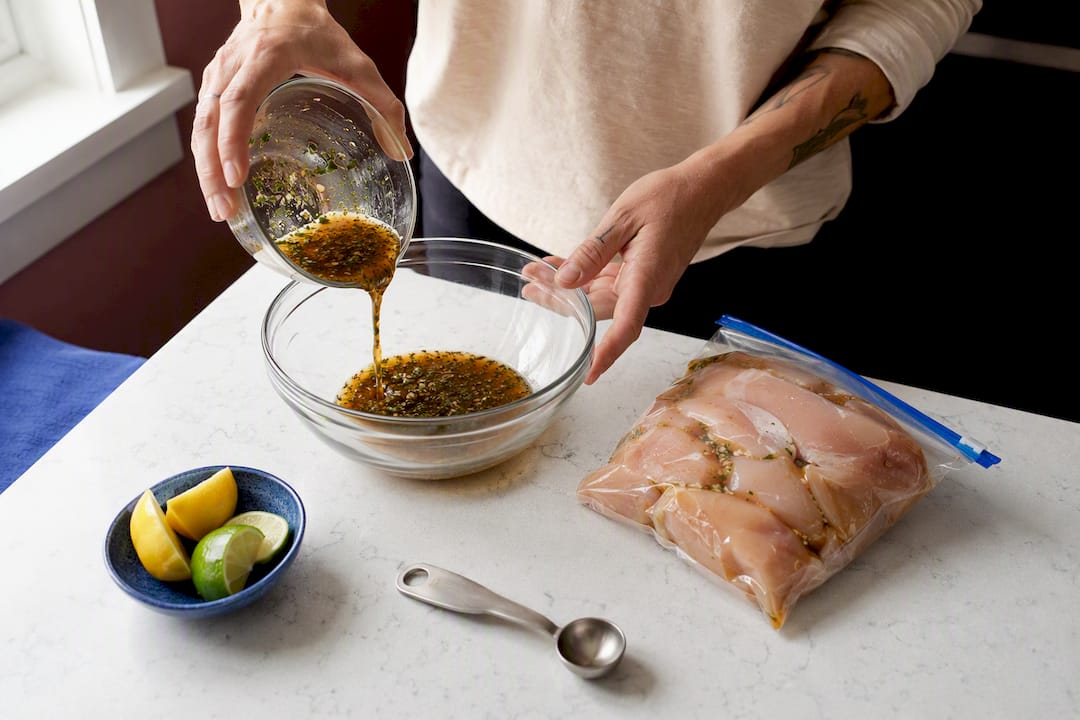
Pro Tip: Taste your marinade before it touches raw food. If it tastes balanced on a spoon, it will taste balanced on the plate. If it's too sharp or salty now, it will still be too sharp or salty after marinating.
How Long Should You Marinate Different Foods?
Timing depends entirely on what you're marinating and how aggressive your acid is. Delicate proteins like shrimp and fish break down fast; tougher cuts like flank steak can handle a longer soak.
Enzymatic marinades built on pineapple, papaya, or kiwi work quickly and aggressively; shorten your window whenever one of those ingredients is in play, especially with seafood. Dairy-based marinades (buttermilk, yogurt) are gentler and more forgiving of extra time.
If you're short on time, don't skip marinating altogether. A 15 to 20 minute soak still delivers a real, noticeable flavor boost for a weeknight dinner, and there's rarely a need to plan a full day ahead for everyday cooking.
What Food Safety Rules Matter Most When Marinating?
Marinating happens with raw food sitting in liquid at room-friendly temperatures, which makes safety non-negotiable. A few habits keep you out of trouble every time.
- Marinate in the refrigerator, never on the counter, and store the container on the bottom shelf so drips can't contaminate anything below.
- If you want to reuse marinade as a sauce, reserve a portion before it ever touches raw meat, poultry, or seafood.
- If you didn't reserve any and want to use the marinade that raw food sat in, boil it for at least three minutes to kill off bacteria before serving.
- Marinate meat after it's fully thawed, or let it marinate as it finishes thawing in the fridge, never at room temperature.
- Wash your hands, cutting board, and any surface that touched raw marinade before it touches anything else.
These aren't extra steps for the cautious cook. They're the difference between a great dinner and a bad night, and they take seconds once they become habit. For a deeper look at safe minimum temperatures once your food hits the pan, safe cooking temperatures are worth bookmarking alongside your marinating routine.
What Mistakes Do Beginners Make With Marinades?
Most marinating mistakes come from good intentions taken too far. Here's what to watch for and how to fix it fast.
- Too much acid. Heavy vinegar or citrus breaks down surface protein into a mushy, grayish layer. Balance it with more oil and a pinch of salt, or cut the marinating time in half.
- Skipping salt entirely. Salt is doing the real seasoning work, so a marinade without it tastes flat no matter how many herbs you add.
- Too much sugar. Sugar burns quickly on a hot grill. If your marinade is sweet, cook over medium heat or watch it closely.
- Cooking wet meat. Pulling food straight from the marinade and into the pan traps steam instead of building a crust. Pat it dry first so it sears instead of steams.
- Choosing a marinade when you needed a brine. If your goal is deep, all-the-way-through seasoning, a saltwater brine or a dry rub will outperform any marinade.
Pro Tip: If a marinade tastes too acidic on its own, don't add more oil to mask it. Add a small pinch of sugar or honey instead; it rounds out sharp acid far better than fat alone.
Three Starter Marinades You Can Make Tonight
These three formulas cover the range a beginner needs: poultry, beef, and a plant-based option. Each follows the same core structure, so once you've made one, the other two will feel familiar.
- Weeknight Lemon Herb Chicken — Combine 3 tablespoons olive oil, 1 tablespoon lemon juice, 1 teaspoon salt, 2 minced garlic cloves, and a spoonful of chopped oregano or thyme. Marinate boneless chicken breast 30 minutes to 2 hours in the fridge, then sear in a hot pan until it reaches a safe internal temperature.
- Soy Ginger Flank Steak — Mix 2 tablespoons soy sauce, 1 tablespoon rice vinegar, 1 tablespoon brown sugar, 1 teaspoon grated ginger, and 3 tablespoons oil. Skip added salt since the soy sauce covers it. Marinate flank steak 1 to 4 hours, pat dry, and sear hard on both sides.
- Mediterranean Veg and Tofu — Whisk 3 tablespoons olive oil, 1 tablespoon red wine vinegar, ½ teaspoon salt, a pinch of oregano, and a smashed garlic clove. Press tofu first, then marinate tofu or sliced vegetables for 20 to 45 minutes before roasting or grilling.
Reserve a spoonful of any marinade before it meets raw food if you want a drizzle-ready sauce at the end. Pressed for time on a weeknight? A 15 to 20 minute soak in any of these still delivers a real difference.
Why I Think Marinating Is the Skill Beginners Underrate Most

Most people treat marinating as an afterthought, something you do because a recipe told you to, not because you understand why. I'd argue it's actually one of the fastest ways to build real kitchen confidence, because it forces you to think about balance: salt against acid, fat against sugar, timing against texture. Get that instinct down with a marinade, and it carries into everything else you cook.
At AdultingintheKitchen, we've built our teaching approach around exactly this kind of foundational skill. It's the reason members get a Starter Pack and weekly recipe drops instead of just a stack of recipes with no context. You don't need fancy technique to make a genuinely good dinner tonight. You need a formula you trust and a little practice repeating it.
— Bill
Ready to Turn This Into a Weeknight Habit?
AdultingintheKitchen is built for exactly the moment you're in right now: standing in your kitchen with a formula in your head, wanting to actually use it without second-guessing every step. Instead of hunting down another recipe blog for your next marinade, you get the Starter Pack, weekly recipe drops with five new dishes, grocery store checklists that take the guesswork out of shopping, and real chef support when a marinade or a technique isn't turning out the way you expected.

That support matters more than most beginners expect. Getting a quick answer to "is this marinade too acidic?" from an actual chef, instead of guessing, is what turns a one-off recipe into a repeatable skill. If you're planning ahead for a bigger cooking session, pairing your marinating practice with broader meal-prep strategies can stretch one good marinade across several meals.
Join AdultingintheKitchen today and get your Starter Pack, this week's recipe drop, and direct chef support to start building skills like this one with confidence.
Sources
- How to marinate meat | Allrecipes
- Marinating mistakes and how to fix them | Food Network
- Should you marinate meat? | Serious Eats