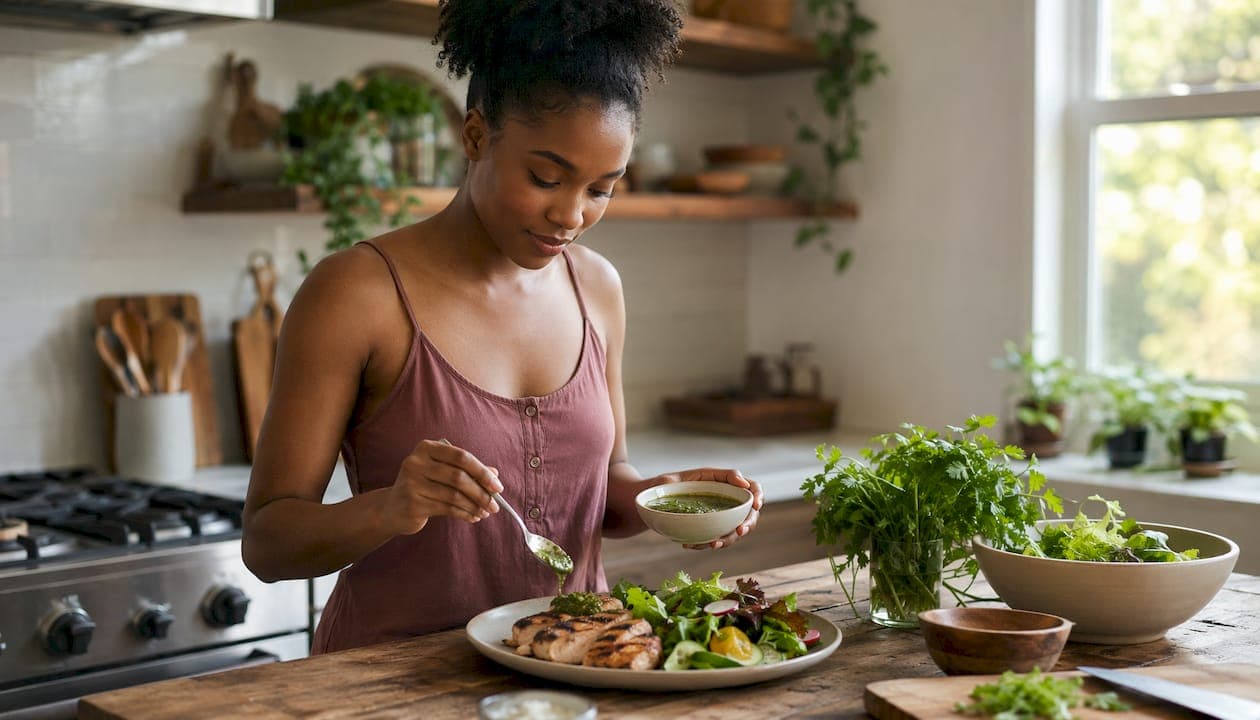
The fastest way to upgrade any meal is to add a sauce. Drizzle Frank's RedHot on scrambled eggs, stir sriracha into mayo for a sandwich spread, spoon gochujang over a rice bowl, or finish grilled chicken with a squeeze of lemon and butter from the pan. That covers breakfast, lunch, dinner, and snacks in four moves. The one rule to keep every sauce balanced: build with fat + acid + salt + one clear flavor, then taste and adjust before you serve.
Quick wins you can try tonight:
- Drizzle Cholula over fried or scrambled eggs
- Stir a teaspoon of sriracha into mayo for an instant spicy spread
- Spoon gochujang thinned with a little sesame oil over a grain bowl
- Finish pan-cooked chicken with butter, lemon juice, and a pinch of salt
- Use Frank's RedHot as a dipping sauce for raw veggies or wings
According to YouGov polling, hot sauce is one of the most common finishing tools already sitting in many American kitchens. You probably have a bottle right now. Let's put it to work.
Table of Contents
- How do you use sauces in everyday meals?
- How do you cook with sauces, not just finish with them?
- What is the sauce formula every beginner needs to know?
- Five quick sauce recipes you can make right now
- Which sauces pair best with common foods?
- How should you store opened sauces?
- How do you fix a sauce that went wrong?
- Key Takeaways
- Why sauces are the highest-leverage skill for beginner cooks
- Ready to cook real meals with real confidence?
- Useful sources
How do you use sauces in everyday meals?
Sauces work at every meal moment, not just dinner. Here is a category-by-category breakdown so you can pick the uses that fit your week.
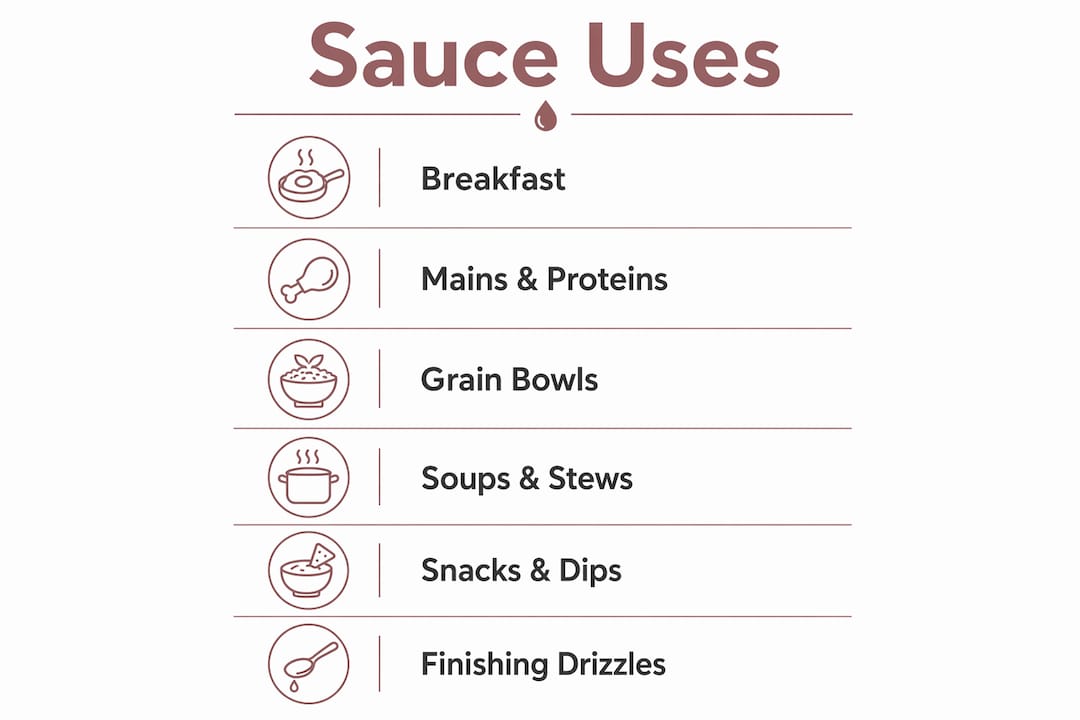
Breakfast
A few drops of Frank's RedHot or Cholula on scrambled eggs or an omelet adds brightness without overwhelming the egg flavor. Fold the hot sauce in at the very end, off the heat, so the flavor stays sharp. Sriracha mixed with a little honey makes a fast drizzle for avocado toast.
Mains and proteins
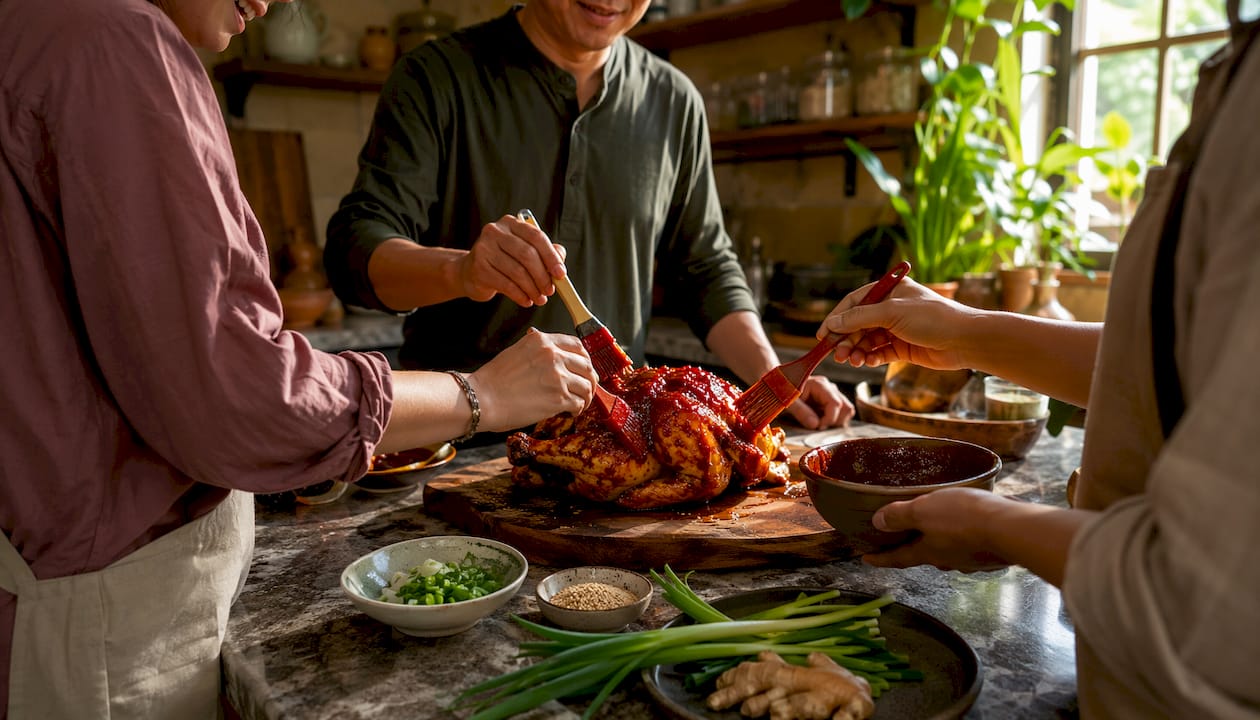
Gochujang is excellent as a glaze on chicken thighs or salmon. Mix one tablespoon of gochujang with one teaspoon of honey and one teaspoon of soy sauce, brush it on during the last two minutes of cooking, and you have a Korean-style finish with almost no effort. For a simpler move, finish any pan-cooked protein with a squeeze of lemon and a pat of butter right in the pan.
Bowls and grain salads
A soy-lime dressing (two parts soy sauce, one part lime juice, one part sesame oil) works on rice bowls, noodle salads, or roasted vegetable bowls. Thin gochujang with a little water and rice vinegar for a spicier option. These dressings coat grains better when the grains are still slightly warm.
Soups and stews
Stir a teaspoon of sriracha or a tablespoon of gochujang into a pot of ramen, miso soup, or vegetable stew near the end of cooking. It adds depth without changing the dish's identity. A splash of hot sauce in chili is a classic move for the same reason.
Snacks and dips
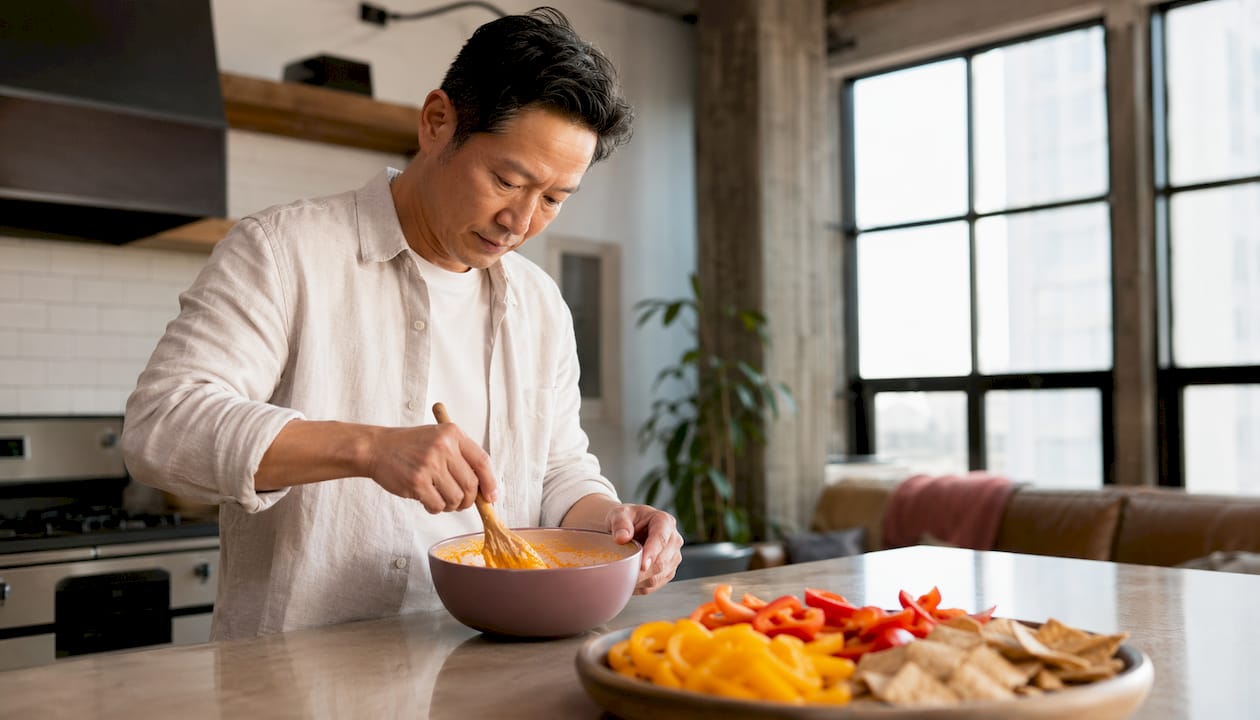
Mix Frank's RedHot with softened cream cheese for a two-ingredient dip. Thin sriracha with a little lime juice and use it as a dipping sauce for dumplings or spring rolls. Cholula works well straight from the bottle as a dip for chips or roasted sweet potato wedges.
Finishing drizzles
Chili oil over roasted vegetables or a fried egg is one of the easiest creative sauce applications you can add to your rotation. A drizzle of hot-sauce-and-honey glaze over roasted carrots or Brussels sprouts takes about 30 seconds and changes the whole dish.
Pro Tip: Mix one part hot sauce with one part honey and one part butter (melted) for a three-ingredient glaze that works on wings, salmon, or roasted cauliflower. Make a small batch and keep it in the fridge for up to a week.
How do you cook with sauces, not just finish with them?
Using sauces during cooking, not only at the table, is where your food starts tasting like restaurant food. Timing is everything.
When to add a sauce
- Marinades: before cooking, to flavor and tenderize
- During cooking: glazes and braising liquids go on mid-cook
- Finishing: pan sauces, butter sauces, and hot sauce drizzles go on last
Quick marinade workflow
- Combine your sauce base (soy sauce, hot sauce, or yogurt) with an acid (lemon juice or vinegar), oil, and aromatics.
- Coat the protein and refrigerate. For chicken, 30 minutes to 4 hours is the sweet spot. Fish needs only 15–30 minutes; longer breaks down the texture.
- Discard the used marinade. If you want to serve it as a sauce, set aside a separate portion before the raw protein touches it, or bring the used marinade to a full boil for at least one minute before using it.
Pan sauce workflow
- Cook your protein and remove it from the pan. Leave the browned bits (the fond) in the pan.
- Add a splash of broth, wine, or even water and scrape up the fond with a wooden spoon. This is deglazing, and those bits are pure flavor.
- Add a pat of butter, a squeeze of lemon, and any herbs. Simmer for 60–90 seconds until slightly thickened. Pour over the protein.
The CIA notes that sauce choice should match cooking technique, so a pan sauce is the natural move when you already have fond in the skillet. You are using what the cooking method already produced.
Glaze workflow
Mix your sauce with honey or brown sugar to create a glaze. Brush it on during the last 2–3 minutes of cooking, not the beginning.
Pro Tip: Sugar burns fast. Apply glazes only in the final minutes of roasting or grilling, and watch the heat. If your glaze starts to char before the protein is done, move the pan to a lower rack or reduce the temperature by 25°F.
What is the sauce formula every beginner needs to know?
Every good sauce, from a simple vinaigrette to a pan sauce, follows the same pattern: fat + acid + salt + one clear flavor direction. Once you know this, you can build a sauce by taste instead of following a recipe word for word.
Here is what each element does:
- Fat (olive oil, butter, mayo, yogurt): adds richness, carries flavor, and smooths out heat or sharpness
- Acid (lemon juice, vinegar, hot sauce): brightens the whole dish and cuts through heaviness
- Salt: sharpens every other flavor; without it, even a well-built sauce tastes flat
- One clear flavor direction: the main character (garlic, ginger, chili, herbs, mustard)
The Passport Kitchen sauce framework describes this same logic across cuisines: every sauce answers questions about carrier (fat), brightness (acid), texture, and finish. The formula works whether you are making a Korean glaze or a French pan sauce.
Troubleshooting checklist
- Too greasy or heavy? Add acid. A squeeze of lemon or a splash of vinegar cuts richness immediately.
- Tastes flat? Add salt first, then taste again. If still flat, add a small amount of soy sauce or miso for umami depth.
- Too thin? Simmer it for 2–3 minutes to reduce. Try reduction before reaching for cornstarch; thickeners added too early can create a chalky texture.
- Too spicy? Stir in a dairy element (sour cream, yogurt, butter) or add more fat and acid to dilute the heat.
Temperature and serving
The CIA's plating guidance is clear: hot sauces stay hot, cold sauces stay chilled. For crispy foods like fried chicken or roasted potatoes, pool the sauce beneath the food so the crust stays crunchy. For proteins that benefit from coating, spoon the sauce over the top.
Pro Tip: Taste your sauce in this order: first for acid (does it feel bright?), then for salt (does it taste sharp and clear?), then for texture (does it coat a spoon lightly?). Three checks, 30 seconds, and your sauce is ready.
Five quick sauce recipes you can make right now
These five sauces use the formula above. All five take under 10 minutes. Three are no-cook. Two hold in the fridge for several days.
The recipes
-
Lemon yogurt sauce — 1/2 cup plain Greek yogurt, juice of half a lemon, 1 minced garlic clove, pinch of salt. Stir together. Serve over roasted vegetables, grilled chicken, or grain bowls. No-cook; holds in the fridge for 3–4 days.
-
Hot-sauce mayo — 3 tablespoons mayo, 1 tablespoon Frank's RedHot or sriracha, 1 teaspoon lemon juice. Whisk together. Use as a sandwich spread, dipping sauce, or burger topping. No-cook; holds for up to a week refrigerated.
-
Mustard vinaigrette — 1 tablespoon Dijon mustard, 2 tablespoons red wine vinegar, 3 tablespoons olive oil, pinch of salt. Shake in a jar. Pour over salads, grain bowls, or steamed vegetables. No-cook; holds for 5 days refrigerated. This is the best first sauce for beginners because it teaches acid-to-fat balance in one simple step.
-
Soy-lime dressing — 2 tablespoons soy sauce, 1 tablespoon lime juice, 1 tablespoon sesame oil, 1 teaspoon honey. Whisk together. Use on noodle bowls, rice, or shredded cabbage. No-cook; holds for up to a week refrigerated.
-
Quick pan sauce — After cooking chicken or fish, deglaze the pan with 1/4 cup chicken broth. Add 1 tablespoon butter and 1 teaspoon lemon juice. Simmer 90 seconds. Pour over the protein. Best made fresh; do not store.
The Simple Sauce Formula approach recommends starting with a base, adding acid, then salt, then your main flavor. These five recipes follow exactly that sequence, which is why they work even when you are adjusting by eye.
Ratio reference
| Sauce type | Base | Acid | Fat/oil | Notes |
|---|---|---|---|---|
| Vinaigrette | — | 1 part vinegar | 3 parts oil | Add mustard to emulsify |
| Creamy dressing | 1 part yogurt/mayo | 1 tsp lemon | 1 tsp oil | Thin with water if needed |
| Pan sauce | 1/4 cup broth | 1 tsp lemon | 1 tbsp butter | Reduce 60–90 seconds |
| Glaze | 1 tbsp sauce base | — | 1 tbsp honey | Apply in final 2–3 minutes |
| Soy dressing | 2 parts soy | 1 part lime | 1 part sesame oil | Add honey to balance salt |
Which sauces pair best with common foods?
Pairing logic comes down to three things: texture match, cooking technique, and flavor contrast. Acidic sauces cut richness. Fermented sauces (gochujang, soy-based) add umami to mild proteins. Creamy sauces smooth out heat or dryness.
A quick rule of thumb: starches tolerate more heat than delicate proteins. A heavily spiced sriracha mayo works on a rice bowl or a burger; the same amount on a delicate piece of white fish would overpower it. Match the sauce's intensity to the food's weight.
For deeper flavor pairing principles, the same logic that governs sauce pairings applies to building full flavor profiles in any dish.
Pairing table
| Sauce | Eggs | Chicken | Fish | Grilled veg | Grain bowl |
|---|---|---|---|---|---|
| Frank's RedHot | Great finish | Wings, tenders | Skip | Drizzle on corn | Add to dressing |
| Cholula | Classic drizzle | Tacos, grilled | Light fish tacos | Good on squash | Mild heat option |
| Sriracha | Stir into yolk | Sandwiches, wraps | Tuna, salmon | Roasted broccoli | Mix into mayo |
| Gochujang | Bold scramble | Korean glaze | Salmon glaze | Cauliflower | Bibimbap-style |
| Mustard vinaigrette | Skip | Salad topping | Poached fish | Asparagus | Grain salad base |
| Soy-lime dressing | Skip | Noodle bowls | Seared tuna | Bok choy | Best all-around |
Cuisine-specific notes: use gochujang for Korean-style glazes on chicken or salmon. Stir sriracha into mayo for sandwiches or banh mi. Cholula is the go-to for tacos and Mexican-inspired bowls. For Southeast Asian dishes, the soy-lime dressing above covers most of the flavor territory you need.
The same pairing instinct applies beyond food. If you enjoy pairing flavors across categories, the acid-cuts-richness principle shows up in coffee and food pairing too.
How should you store opened sauces?
Most opened hot sauces are shelf-stable for a while, but refrigerating them after opening extends their life and keeps the flavor bright.
Storage checklist:
- Write the open date on the bottle with a marker
- Refrigerate mayo-based sauces immediately after opening
- Store oil-based sauces (chili oil, herb oils) in the fridge to prevent rancidity
- Check for off smells, color changes, or unusual separation before using
- Keep lids tight; air exposure degrades flavor faster than temperature
Shelf-life reference
| Sauce type | Pantry (unopened) | Refrigerator (opened) | Notes |
|---|---|---|---|
| Hot sauce (vinegar-based) | 1–2 years | — | Frank's, Cholula, sriracha |
| Fermented (gochujang, soy) | 1–2 years | — | Keep sealed; watch for mold |
| Mayo-based | 1 year | 1–2 months | Refrigerate immediately |
| Oil-based (chili oil) | — | 2–3 months | Rancidity risk; smell before using |
| Pan sauce (homemade) | N/A | 2–3 days | Best fresh; reheat fully |
Many no-cook sauces like chimichurri, aioli, and herb oils hold well in the fridge for several days, which makes them practical for meal prep.
Traveling with sauces: Most packaged condiments, vinegars, and spice-based sauces are admissible into the U.S. Some agricultural items may be restricted. Check CBP guidance before traveling internationally with sauces.
Safety note: Always discard marinades that touched raw protein unless you bring them to a full rolling boil first. Reheat any sauce that was used with raw meat before serving it again.
How do you fix a sauce that went wrong?
Every beginner runs into the same few problems. Here is what went wrong and how to fix it.
-
Too greasy or heavy: You have too much fat relative to acid. Add lemon juice or vinegar, one teaspoon at a time, and stir. Taste after each addition.
-
Too thin: Simmer the sauce uncovered for 2–3 minutes. Reduction concentrates flavor and thickens naturally. Only add cornstarch if simmering does not work; mix one teaspoon of cornstarch with one tablespoon of cold water first, then stir it in.
-
Broken emulsion (mayo or hollandaise that separated): The fat was added too fast or the temperature dropped. Start a new base (a fresh egg yolk or a tablespoon of warm liquid in a clean bowl) and whisk the broken sauce into it very slowly, drop by drop at first.
-
Too salty: Add more fat (butter, oil, or cream) or more acid to dilute the salt. A small amount of unsalted broth can also help. Do not add water alone; it thins the sauce without adding flavor.
-
Burnt sugar in a glaze: You cannot fix burnt sugar. Scrape the pan clean, lower the heat, and start the glaze again. Next time, apply it in the last 2 minutes only.
-
Too spicy: Stir in sour cream, plain yogurt, or a pat of butter. A squeeze of lemon also helps by shifting the palate's focus away from heat.
Pro Tip: Write down what you changed and what worked. After three or four sauces, you will notice patterns. That is how cooking intuition actually builds, one small adjustment at a time.
Taste between every fix. One change at a time is the rule. Adding acid AND salt AND more fat all at once makes it impossible to know what actually solved the problem.
Key Takeaways
The most reliable way to use sauces is to build every one with fat, acid, salt, and one clear flavor, then taste and adjust before you serve.
| Point | Details |
|---|---|
| Use the sauce formula | Fat + acid + salt + one clear flavor direction covers every sauce you will make as a beginner. |
| Start with five quick wins | Hot-sauce mayo, mustard vinaigrette, soy-lime dressing, lemon yogurt sauce, and a pan sauce cover most meals. |
| Time your sauce correctly | Marinades go on before cooking, glazes in the last 2–3 minutes, pan sauces and finishes after the heat is off. |
| Store smart | Refrigerate opened mayo-based and oil-based sauces; label with the open date; discard marinades that touched raw protein. |
| Fix by tasting, one step at a time | Too greasy? Add acid. Too flat? Add salt. Too thin? Simmer first, thicken second. |
| Adultingwithfood membership | Weekly recipe drops and chef support help beginners practice these sauce skills with guided, step-by-step instruction. |
Why sauces are the highest-leverage skill for beginner cooks
Most beginners focus on the protein or the main dish and treat the sauce as optional. That is the wrong order of priorities. A sauce is the part of the dish that ties everything together, delivers the final flavor impression, and covers small mistakes in cooking time or seasoning. Learning five sauces well means you can finish almost any meal confidently.
The other thing beginners underestimate is how transferable sauce skills are. Once you can make a mustard vinaigrette, you understand acid-to-fat balance. Once you can make a pan sauce, you understand deglazing and reduction. Those two techniques alone unlock dozens of recipes. The Thai curry paste technique follows the same logic: a concentrated sauce base, fat, acid, and a clear flavor direction.
Try the five quick sauces from this article this week. Pick one per day, make it twice, and notice what changes the second time. That repetition is where real kitchen confidence comes from. Share what you made in the comments below.
Ready to cook real meals with real confidence?
Knowing how to use sauces is one skill. Putting it together with the right recipes, the right groceries, and actual chef support is where the real shift happens.

Adultingwithfood is a digital cooking membership built for people who are done ordering out and ready to cook real food at home. When you join, you get the Adulting With Food Starter Pack, five new recipes every week with grocery checklists, and direct access to chef support so you never get stuck mid-recipe. The weekly drops include sauce-forward recipes that put the formulas and ratios from this article into practice, with step-by-step guidance so you build the skill, not just follow the steps once.
Start your membership at Adultingwithfood and get your first recipe drop this week.
Useful sources
- Examining Sauces — CIA Technique of the Quarter: CIA culinary technique PDF covering plating, temperature, and sauce-to-technique matching.
- Sauce & base techniques — Passport Kitchen: Primer on the five foundations of any sauce (base, fat, structure, acidity, finish).
- The Simple Sauce Formula — The Flavor Hows: Practical walkthrough of the fat + acid + salt + flavor formula with quick sauce examples.
- Sauces & foundations guide — Clarity Kitchen: Beginner progression from vinaigrette to pan sauce to roux, with technique explanations.
- 32 Easy Sauce Recipes — Food Network: Collection of no-cook and quick-cook sauces with fridge-holding notes.
- Prohibited and Restricted Items — U.S. Customs and Border Protection: Official CBP guidance on bringing condiments and food items into the U.S.
- Americans' favorite condiments — YouGov: Polling data on condiment usage in the U.S., including hot sauce prevalence.