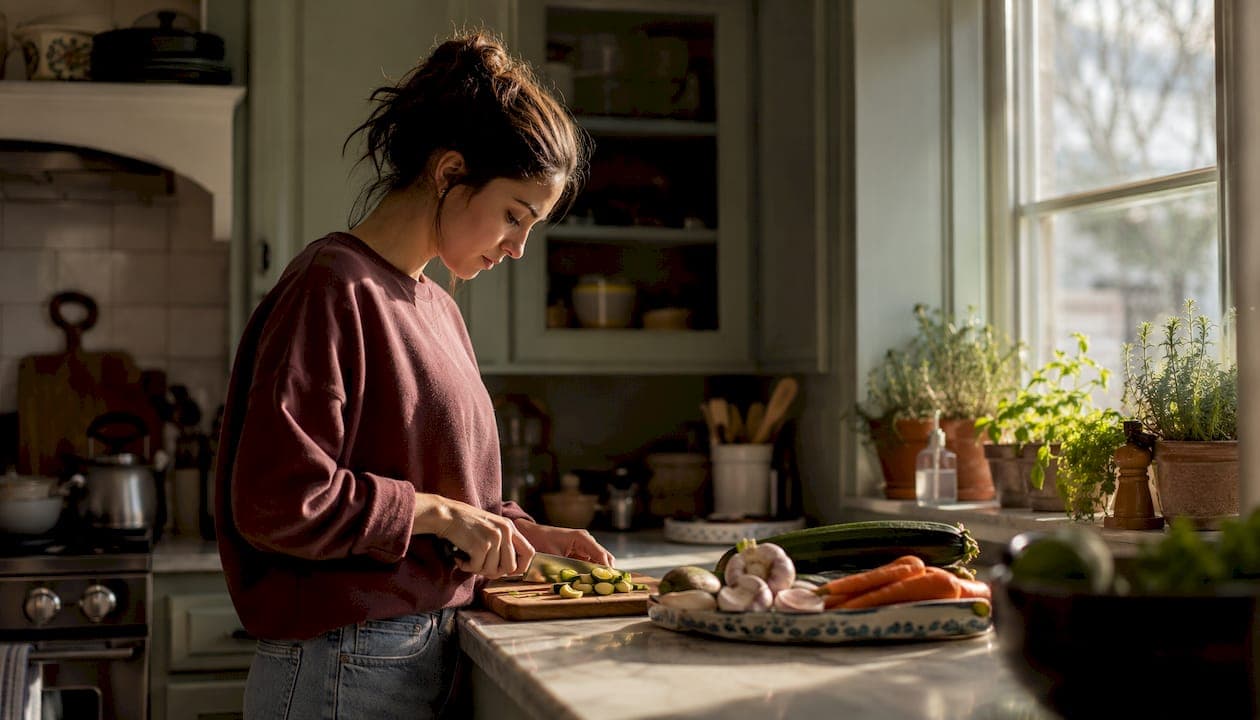
Easy recipes for beginners are straightforward dishes built on minimal ingredients, clear steps, and techniques that teach you how to actually cook. The best beginner recipes do more than feed you. They build skills like seasoning in layers, controlling heat, and prepping ingredients before you start. Adultingwithfood is built around exactly this idea: that anyone can learn to cook real meals at home when they start with the right recipes and the right guidance. A foundational beginner kitchen needs just 30 essential items costing $345–$580. That number proves you do not need a fully stocked professional kitchen to get started.
1. What are the best easy recipes for beginners to try first?
The ten recipes below are chosen because each one teaches a specific skill. They use common ingredients, take under 30 minutes, and require only basic tools. Work through them in order and you will build real cooking confidence fast.
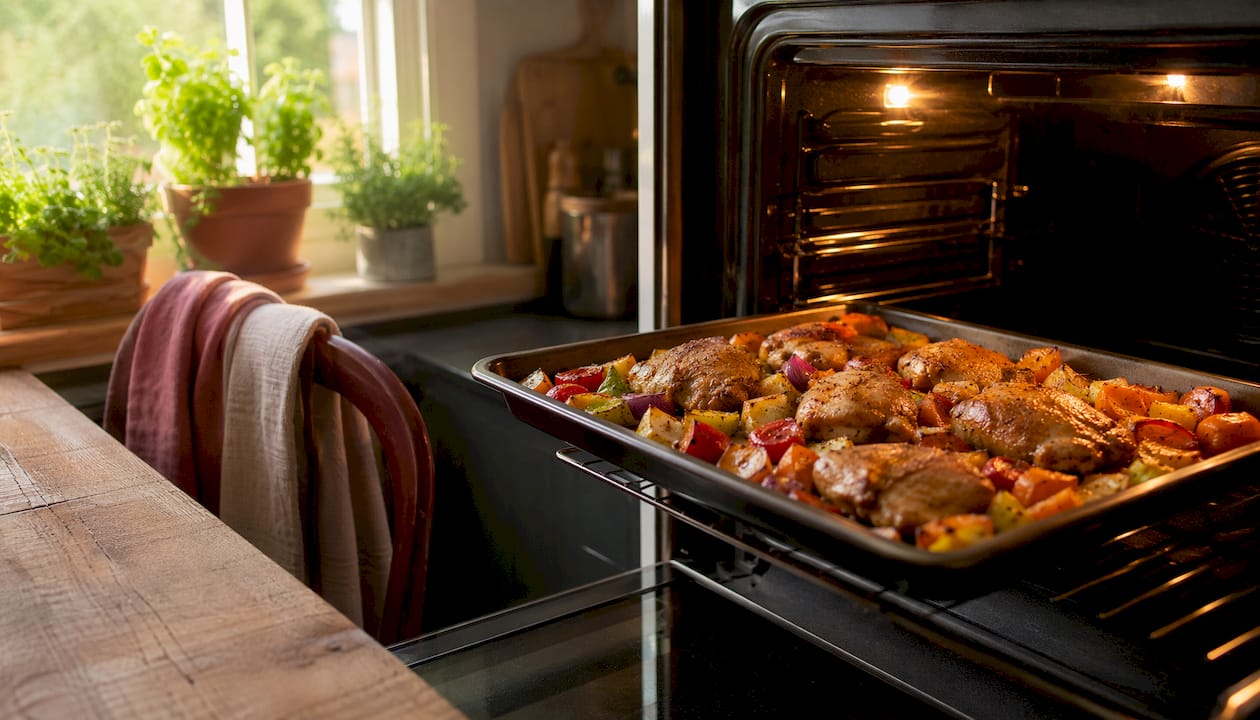
Sheet pan chicken and vegetables
Toss chicken thighs and chopped vegetables with olive oil, kosher salt, and black pepper. Roast at 400°F for 25–30 minutes. This recipe teaches you oven roasting, proper seasoning, and how to read doneness by internal temperature. Cooking chicken to 165°F and resting it 5–10 minutes locks in juices and improves texture. That one habit alone separates dry, disappointing chicken from a meal you are proud of.
Veggie omelet
A three-egg omelet with diced bell pepper and onion teaches pan heat control and timing. Preheat your skillet over medium heat before adding butter. The eggs should set at the edges within 30 seconds of hitting the pan.
Chickpea salad
Open a can of chickpeas, drain and rinse them, then toss with olive oil, lemon juice, diced cucumber, and salt. No heat required. This recipe builds your instinct for balancing fat, acid, and salt, which is the foundation of flavor in almost every dish you will ever make.
Basic pasta with tomato sauce
Boil salted water, cook pasta to package directions, and finish with a simple canned tomato sauce seasoned with garlic and dried basil. The key skill here is tasting as you go and adjusting salt before serving.
Scrambled eggs
Scrambled eggs sound too simple to matter. They are not. Low heat, constant stirring, and pulling the pan off the burner before the eggs look fully done teaches you that carryover cooking is real. Most beginners overcook eggs by leaving them on heat too long.
Stir-fried rice with vegetables
Use day-old rice, a hot skillet, soy sauce, and whatever vegetables you have. This recipe teaches high-heat cooking, quick timing, and how to build flavor with pantry staples instead of complicated sauces.
Roasted sweet potatoes
Cube sweet potatoes, coat with olive oil and salt, and roast at 425°F for 25 minutes. Simple roasting teaches you how caramelization works. The edges should brown and slightly crisp. That browning is flavor.
Black bean tacos
Warm canned black beans with cumin, garlic powder, and a squeeze of lime. Serve in corn tortillas with shredded cabbage and salsa. This recipe teaches seasoning with dried spices and building a complete meal from pantry staples.
Garlic butter shrimp
Shrimp cook in under five minutes, which makes them a great lesson in timing. Melt butter in a hot pan, add garlic, then shrimp. Pull them off the heat the moment they turn pink. Overcooked shrimp are rubbery. This recipe teaches you to trust your eyes over the clock.
Stovetop rice
Making rice on the stovetop teaches ratio cooking, lid discipline, and patience. Use a 1:2 ratio of rice to water. Bring to a boil, reduce to a simmer, cover, and do not lift the lid for 18 minutes.
Pro Tip: Read the full recipe before you touch a single ingredient. Surprises mid-cook are the number one reason beginners panic and make mistakes.
2. Which kitchen tools and pantry staples make easy cooking even simpler?
You do not need a drawer full of gadgets. A small set of quality basics covers almost every simple beginner recipe you will cook.
Essential tools:
- One large skillet (10 or 12 inch, stainless or cast iron)
- One medium saucepan with a lid
- One rimmed baking sheet
- A sharp chef's knife
- A cutting board
- An instant-read thermometer for cooking proteins safely
Pantry staples to always have on hand:
- Olive oil
- Kosher salt and cracked black pepper
- White wine vinegar or apple cider vinegar
- Dried herbs: oregano, cumin, basil, garlic powder
- Canned beans (black, chickpea, kidney)
- Canned tomatoes
- Pasta and rice
A large skillet, a saucepan, and a baking sheet cover the cooking methods in every recipe listed above. Buying a full 20-piece cookware set before you know what you need is one of the most common beginner mistakes. Start small. Add tools only when a specific recipe demands it.
Pro Tip: A bench scraper is one of the most underrated beginner tools. Use it to sweep prepped ingredients from your cutting board directly into the pan. It speeds up cooking and keeps your workspace clean.
You can find a full breakdown of what every tool is called and what it does in this beginner kitchen accessories guide from Adultingwithfood.
3. What core cooking skills do easy recipes help you build?
Mastering 10 foundational cooking skills reduces meal prep anxiety. The most impactful of those skills is seasoning in layers. Here is what that means in practice and why it matters.
Seasoning in layers
Adding salt gradually throughout cooking produces better flavor than salting only at the end. Salt at the start when you sweat onions, again when you add your main ingredient, and once more before serving. Each layer builds depth that a single pinch at the end cannot replicate.
Pan preheating
Preheating your pan 2–3 minutes over medium-high heat before adding oil prevents food from sticking. Wait 30 seconds after adding oil before you add food. This one habit fixes the most common beginner frustration: food that tears apart when you try to flip it.
Mise en place
Mise en place is a French culinary term that means "everything in its place." Prepping all ingredients before you start cooking transforms cooking from chaotic to controlled. Chop, measure, and organize everything before the burner goes on.
Avoiding pan overcrowding
Overcrowding a pan traps moisture and produces soggy, steamed food instead of browned, flavorful food. Cook in batches when needed. It takes longer, but the texture difference is significant.
Cooking by temperature, not time
Ovens vary. Burners vary. Ingredient sizes vary. Cooking by internal temperature removes all of that guesswork. An instant-read thermometer is the most reliable tool a beginner can own.
"Beginners often treat cooking as assembly rather than a science. Adding a splash of lemon juice or vinegar at the end can instantly brighten a dish that tastes flat. Acidity balances fat and salt in a way that no extra seasoning can."
4. How can beginners build confidence and avoid common pitfalls?
Confidence in the kitchen comes from repetition, not perfection. Cook the same simple recipes multiple times before moving on to harder ones. Muscle memory builds faster than most beginners expect.
- Read the full recipe first. Surprises mid-cook cause rushed decisions and mistakes. Know every step before you start.
- Taste as you cook. Adjust salt, acid, and seasoning at each stage. Your palate is your best feedback tool.
- Use an instant-read thermometer. Simple kitchen tools act as a safety net that removes anxiety around cooking proteins. You stop guessing and start knowing.
- Accept imperfect results. A slightly over-salted dish or an omelet that breaks is not a failure. It is data. Write down what happened and adjust next time.
- Keep recipes flexible. Recipes are guides, not rules. Swap one vegetable for another. Use what you have. Flexibility reduces pressure and builds creative thinking.
Pro Tip: Cook one new recipe per week and repeat it at least twice before moving on. Repetition is how skills become automatic.
A well-organized kitchen also reduces stress. If you want to set up your space for maximum efficiency, the kitchen layout guide from Adultingwithfood walks you through it step by step.
Key Takeaways
The most effective approach to easy cooking for beginners is pairing simple recipes with foundational techniques like seasoning in layers, pan preheating, and mise en place to build lasting kitchen confidence.
| Point | Details |
|---|---|
| Start with skill-building recipes | Choose recipes that teach one clear technique, like roasting, sautéing, or stovetop simmering. |
| Season in layers | Add salt at multiple stages of cooking, not just at the end, for better flavor depth. |
| Preheat pans before adding food | Heat your pan 2–3 minutes before adding oil to prevent sticking and improve texture. |
| Use an instant-read thermometer | Remove protein guesswork by cooking to internal temperature, not time alone. |
| Repeat recipes before advancing | Cook the same dish two or three times to build muscle memory and real confidence. |
What I have learned from watching beginners cook
The biggest mistake I see new cooks make is skipping the read-through. They scan the recipe, assume they understand it, and then hit a step mid-cook that requires something they have not prepped. The panic that follows is what makes cooking feel hard. It is not the cooking. It is the surprise.
The second thing I have noticed is that beginners under-season almost universally. They are afraid of salt. But salt is not the enemy. Under-salting is. When food tastes flat, the fix is almost always a pinch of salt or a squeeze of lemon, not a new recipe.
The recipes I keep recommending to absolute beginners are sheet pan chicken, scrambled eggs, and stovetop rice. Those three cover oven roasting, stovetop heat control, and ratio cooking. Master those three and you have the foundation for hundreds of other meals.
One more thing: do not buy a full knife set. Buy one good chef's knife and learn to use it well. A sharp, comfortable 8-inch chef's knife handles 90% of what you will ever cut. The rest is just clutter on your counter.
Cooking gets easier every single time you do it. The first omelet will be ugly. The fifth one will be good. The tenth one will be yours.
— William
Adultingwithfood is built for cooks exactly like you
You do not need culinary school or a fancy kitchen to start cooking real food at home. You need the right recipes, the right tools, and someone to guide you through the basics without making it complicated.
Adultingwithfood gives beginner cooks a complete cooking membership that includes weekly recipe drops, grocery checklists, and real chef support. Every recipe is designed to be easy to follow and built to teach you something new. The Adulting With Food Starter Pack gives you everything you need to set up your kitchen, stock your pantry, and start cooking meals you are genuinely proud of. Get your Starter Pack today at Adultingwithfood and cook your first real meal this week.
FAQ
What makes a recipe easy for beginners?
Easy beginner recipes use minimal, common ingredients, require basic tools, and include clear step-by-step instructions. The best ones also teach a foundational skill like seasoning, heat control, or timing.
How long should beginner recipes take to prepare?
Most simple beginner recipes take under 30 minutes from start to finish. Sheet pan meals, stovetop eggs, and canned bean dishes are reliable options that fit that window.
What is mise en place and why does it matter?
Mise en place means prepping all your ingredients before you start cooking. It prevents mid-cook panic, speeds up the process, and is one of the most effective habits a beginner can build.
Do I need expensive tools to follow easy recipes?
No. A large skillet, a medium saucepan, a rimmed baking sheet, a chef's knife, and an instant-read thermometer cover nearly every beginner recipe. A basic kitchen setup costs $345–$580 for 30 essential items.
How do I fix food that tastes flat?
Add a small amount of salt or a squeeze of lemon juice or vinegar. Acidity balances fat and salt and brightens flavors that feel dull. Taste before serving and adjust in small increments.