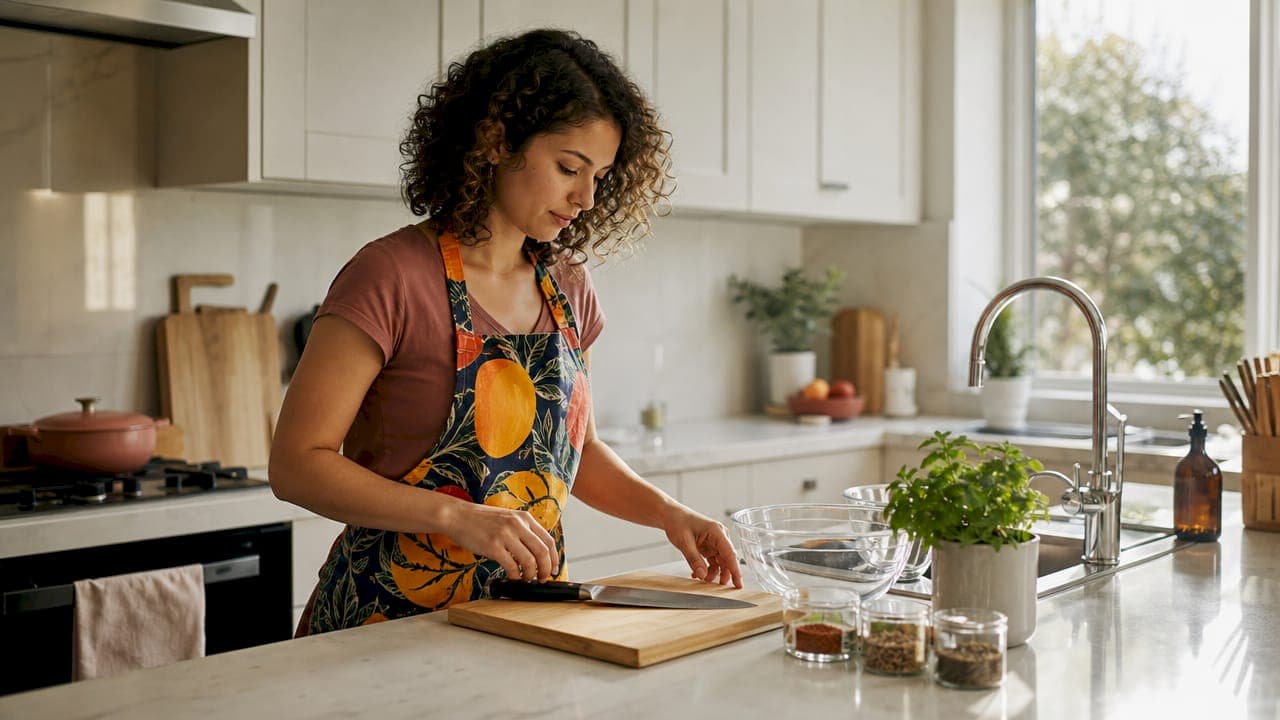
Kitchen accessories names are the standard terms for the tools, utensils, and equipment used to prepare, cook, and serve food at home. Knowing these names gives you a real advantage when you shop, follow a recipe, or watch a cooking video. You stop guessing what a "whisk" or a "colander" is and start cooking with confidence. This guide covers the core kitchen accessories list every new cook needs, explains how tools are categorized, and helps you avoid the most common beginner mistakes, like buying gadgets before you master the basics.
1. What are the essential kitchen accessories names for beginners?
A well-equipped beginner kitchen needs only about 7–10 essential items to cover most daily cooking needs. That number is small enough to fit in one drawer and powerful enough to handle almost any recipe you will find. Quality beats quantity every time.
Here are the must-have tools on every kitchen accessories name list:
- Chef's knife (8-inch): The single most important tool in your kitchen. A sharp chef's knife handles chopping, slicing, mincing, and dicing. Proper sharpening and honing keep it safe and effective for years.
- Cutting board: Use a large, stable board. Wood and plastic are both good options. Wood requires hand washing and occasional oiling. Plastic is dishwasher safe.
- Mixing bowls (set of 3): You will use these for everything from tossing salads to mixing batter. A nested set saves cabinet space.
- Measuring cups and spoons: Baking especially requires accuracy. Get a set of dry measuring cups, a liquid measuring cup, and a full set of measuring spoons.
- Silicone spatula: Scrapes bowls clean and folds ingredients without scratching nonstick surfaces. Heat resistant up to high temperatures.
- Tongs: Your best tool for flipping meat, tossing pasta, and grabbing hot items safely. Look for locking tongs with silicone tips.
- Whisk: Beats eggs, blends sauces, and incorporates air into batters. A medium balloon whisk handles most tasks.
- 10-inch skillet: A nonstick skillet covers eggs, sautéed vegetables, pan sauces, and more. This is your most-used pan.
- Saucepan (2-quart): Perfect for soups, grains, and sauces. A tight-fitting lid is non-negotiable.
- Colander: Drains pasta, rinses vegetables, and strains liquids. Stainless steel lasts longer than plastic.
Pro Tip: Buy your chef's knife and skillet first. These two tools alone will handle the majority of recipes you cook as a beginner.
2. How are kitchen accessories categorized?
Kitchen tools fall into four functional categories: Prep Tools, Cooking Tools, Measuring and Timing Tools, and Serving and Table Items. Organizing your kitchen accessories list this way prevents you from buying duplicates and helps you spot gaps in your setup.
1. Prep Tools
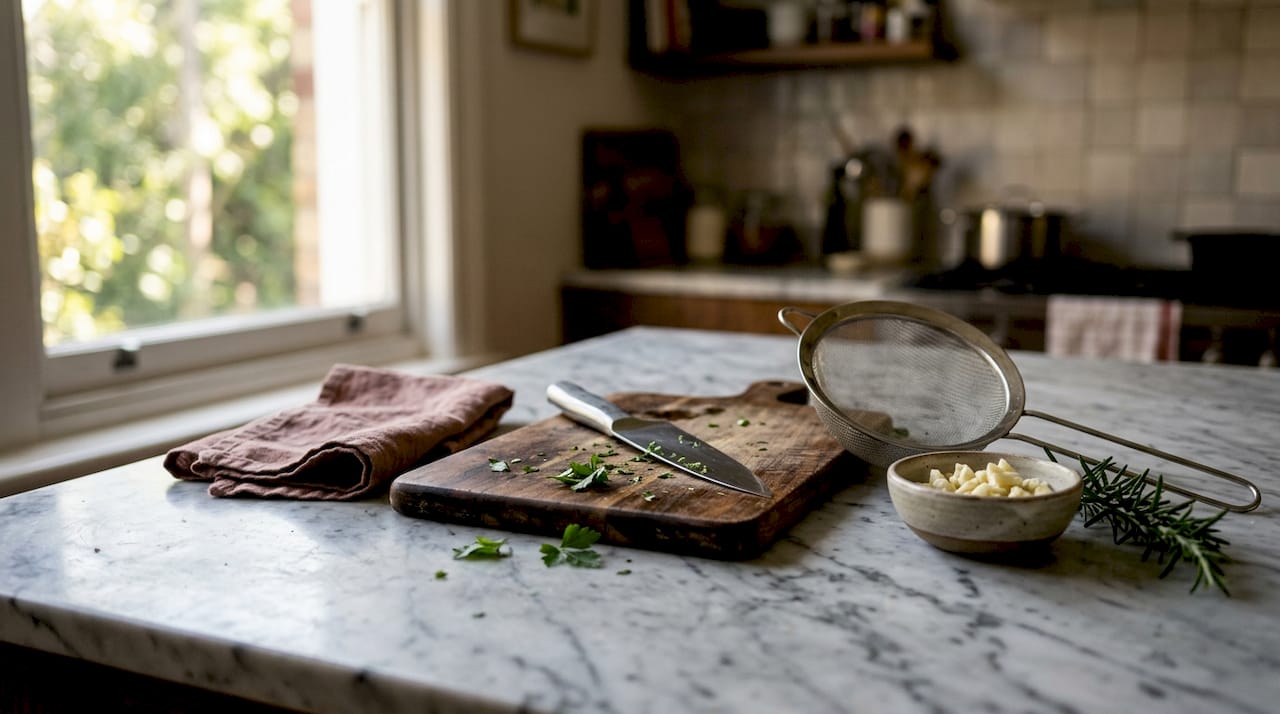
Prep tools handle everything before the heat turns on. This category includes vegetable peelers, box graters, kitchen shears, and a cutting board. A Y-shaped peeler is faster than a straight peeler for most cooks. Kitchen shears cut herbs, trim meat, and open packaging. Clean them promptly after each use to extend their life.
2. Cooking Tools
Cooking tools go near the stove. This group includes your spatula, tongs, wooden spoon, ladle, and whisk. Silicone and wood utensils protect nonstick surfaces and handle heat without melting or reacting with acidic foods. Keep these in a crock next to your stove for easy access.
3. Measuring and Timing Tools
Accuracy matters, especially when you are learning. This category covers dry and liquid measuring cups, measuring spoons, a kitchen scale, and a timer. A digital kitchen scale is the most accurate way to measure ingredients and is worth adding early.
4. Serving and Table Items
This group includes plates, bowls, cutlery, and serving spoons. You do not need to buy these all at once. Start with a basic set and add pieces as you need them.
Organizing by function rather than by looks is the smarter approach. Intentional selection by function and material improves your cooking workflow and reduces clutter on your counters.
3. Which materials should new cooks prioritize?
The material of a kitchen tool determines its safety, durability, and best use. Most home cooks accumulate mismatched utensils that reduce kitchen efficiency. Choosing the right material from the start saves you money and frustration.
Here is a quick breakdown of the most common materials:
- Silicone: Heat resistant, nonstick safe, and dishwasher safe. Use silicone spatulas, tongs tips, and baking mats. This is the safest material for nonstick cookware.
- Wood: Great for stirring and scraping. Wood does not scratch nonstick surfaces and does not conduct heat. Wooden utensils require hand washing and oiling to stay food safe and last longer. Never put them in the dishwasher.
- Stainless steel: Durable, non-reactive, and easy to clean. Best for whisks, tongs, colanders, and mixing bowls. Avoid using metal utensils on nonstick pans.
- Nylon: Lightweight and heat resistant, but lower quality nylon can stain or warp over time. Silicone is generally the better choice.
A silicone spatula paired with a wooden spoon covers more situations than a large set of uniform plastic utensils. The silicone handles heat and nonstick surfaces. The wood handles stirring in cast iron or stainless pans.
Pro Tip: Oil your wooden spoons and cutting board once a month with food-grade mineral oil. It takes two minutes and adds years to their life.
One safety detail most beginners miss: if you use butcher's twine for roasting, use 100% cotton twine. Synthetic twine melts in the oven and leaves residue on your food.
4. Which optional tools are worth adding later?
Time-saving tools like immersion blenders and garlic presses are upgrades, not starting points. Buy them after you identify a specific task that slows you down or frustrates you. Adding them too early just creates clutter.
Here are the most useful optional kitchen accessories to consider once you have the basics down:
- Immersion blender: Blends soups and sauces directly in the pot. Saves you from transferring hot liquid to a countertop blender. Worth buying once you start making soups regularly.
- Garlic press: Minces garlic in seconds without a knife. A small upgrade that saves real time if you cook with garlic often, which is most nights.
- Clip-on pot strainer: Clips to the side of a pot and lets you drain water without a separate colander. Useful in small kitchens with limited storage.
- Microplane grater: Zests citrus, grates hard cheese, and shaves chocolate. A step up from a box grater for finishing dishes.
- Instant-read thermometer: Takes the guesswork out of cooking meat. One of the most practical upgrades for new cooks who want to stop cutting chicken open to check doneness.
- Kitchen scale: More accurate than measuring cups for baking. Also useful for portioning proteins and following recipes from other countries that use grams.
- Spider strainer: A wide, shallow wire basket on a long handle. Lifts pasta, fried foods, and blanched vegetables out of hot water or oil cleanly.
Beginners gain confidence faster by mastering a few durable workhorse tools than by relying on specialized gadgets too early. Get comfortable with your chef's knife and skillet first. Then add tools that solve real problems you actually face in the kitchen.
You can find ideas for putting these tools to work in easy dinner recipes that are designed for beginner cooks.
5. Why do kitchen tool names vary and what should you know?
Different terms like "skillet" and "frying pan" refer to the same tool but show up in different recipes, stores, and regions. This trips up new cooks constantly. Knowing that these terms are interchangeable removes a real barrier to learning.
A few common name pairs that confuse beginners:
- Skillet vs. frying pan: Same tool. Skillet is more common in American cooking. Frying pan is used in British and Australian recipes.
- Colander vs. strainer: Both drain liquid. A colander has larger holes and handles pasta well. A fine-mesh strainer catches smaller particles and works for rinsing grains.
- Saucepan vs. pot: A saucepan is smaller with a long handle. A pot is larger with two short handles. Both cook liquids, but the right size matters for the recipe.
- Sheet pan vs. baking sheet vs. cookie sheet: These terms overlap. A rimmed sheet pan is the most versatile. A cookie sheet has no rim. Most recipes that say "baking sheet" mean a rimmed sheet pan.
Understanding naming conventions helps you shop with confidence and follow any recipe without stopping to look things up. When you know what a tool does, the name becomes easy to remember.
Key takeaways
A beginner kitchen built around 7–10 quality tools, organized by function and chosen for material safety, gives you everything you need to cook real meals at home.
| Point | Details |
|---|---|
| Start with 7–10 core tools | A chef's knife, cutting board, skillet, saucepan, mixing bowls, measuring cups, spatula, tongs, whisk, and colander cover most recipes. |
| Organize by function | Group tools into Prep, Cooking, Measuring, and Serving categories to avoid buying duplicates. |
| Choose materials wisely | Use silicone and wood for nonstick cookware; stainless steel for bowls, whisks, and colanders. |
| Add optional tools later | Buy an immersion blender, garlic press, or thermometer only after you identify a specific need. |
| Learn the names | Knowing that "skillet" and "frying pan" are the same tool prevents confusion when shopping or following recipes. |
What I have learned from building kitchens from scratch
I have helped a lot of new cooks set up their first kitchens, and the pattern is always the same. They either buy too little and feel stuck, or they buy too much and feel overwhelmed before they cook a single meal.
The mistake I see most often is buying a 15-piece utensil set because it looks complete. Most of those pieces never leave the drawer. A spider strainer and a basting brush are useful tools, but not on day one. On day one, you need a knife that holds an edge, a pan that heats evenly, and a spatula that does not melt.
My honest advice: spend more on three things and less on everything else. A quality 8-inch chef's knife, a solid nonstick skillet, and a wooden cutting board will outlast cheap versions by years. Everything else can be budget-friendly.
The other thing I tell every beginner: learn the names of your tools. It sounds small, but when a recipe says "deglaze the pan with a wooden spoon," you should not have to pause and search. Knowing your kitchen equipment list cold means you spend your mental energy on cooking, not on identifying tools.
Build slow, buy intentionally, and cook often. That is the only system that works.
— William
Your first kitchen, done right with Adultingwithfood
Setting up a beginner kitchen is easier when you have a clear starting point. Adultingwithfood is built for exactly this moment: when you are ready to cook real food at home and want to know what tools you actually need.
The Adultingwithfood Starter Pack includes weekly recipe drops, grocery checklists, and real chef support to help you build kitchen confidence from day one. You get guidance on what to buy, what to skip, and how to use what you have. No guessing, no wasted money on gadgets you will never use. Get your Starter Pack today and start cooking meals you are proud of.
FAQ
What are the most important kitchen accessories names for beginners?
The most important kitchen accessories for beginners are a chef's knife, cutting board, skillet, saucepan, mixing bowls, measuring cups and spoons, spatula, tongs, whisk, and colander. These 10 tools cover the majority of everyday cooking tasks.
What is the difference between a skillet and a frying pan?
A skillet and a frying pan are the same tool. "Skillet" is the common American term, while "frying pan" appears more often in British and Australian recipes.
Which utensil materials are safest for nonstick cookware?
Silicone and wood are the safest materials for nonstick cookware. Metal utensils scratch nonstick coatings and should be avoided on those surfaces.
When should I buy optional kitchen tools like an immersion blender?
Buy optional tools like an immersion blender or garlic press only after you have mastered your basic tools and identified a specific task that slows you down. Adding specialized gadgets too early creates clutter without improving your cooking.
How do I maintain wooden kitchen utensils?
Wooden utensils need hand washing and monthly oiling with food-grade mineral oil to stay safe and last longer. Never put wooden spoons or cutting boards in the dishwasher, as water warps and cracks the wood.