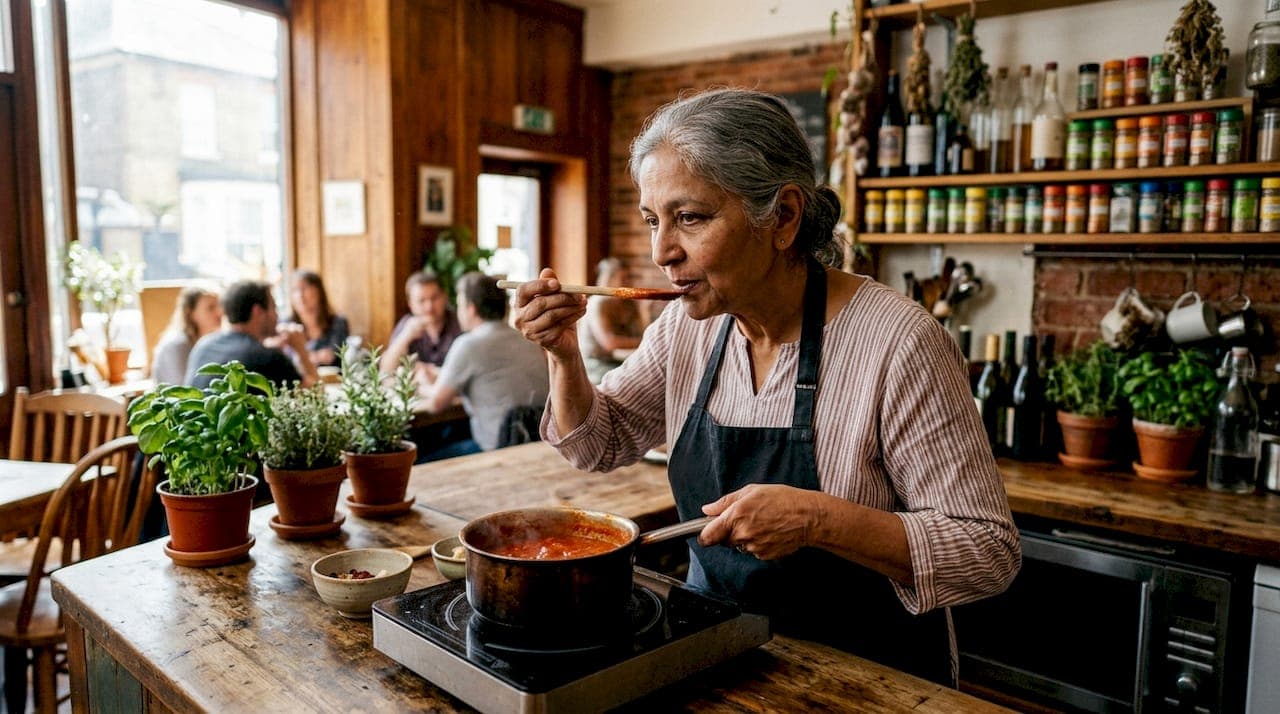
Food flavor profiles are the distinct combinations of taste, aroma, mouthfeel, and sensory characteristics that define how a dish is perceived and remembered. Understanding these profiles is the single most effective way to stop cooking by guesswork and start building meals with real intention. The industry term used by professionals is "flavor profiling," and it draws on sensory science recognized by organizations like the Society of Flavor Chemists. Whether you are trying to replicate a restaurant dish or fix a recipe that tastes flat, knowing your food flavor profiles gives you a clear path forward.
1. What are food flavor profiles and why do they matter?
A flavor profile is not just about taste. It captures every sensory signal a dish sends: the sweetness on your tongue, the aroma that hits before you take a bite, the texture that coats your mouth, and the finish that lingers after you swallow. Professional flavorists treat these as distinct, measurable dimensions rather than one blurry impression.
Flavor profiles matter because they give you a framework. Without one, you are adjusting a dish by feel alone. With one, you can identify exactly what is missing, whether that is acid to brighten, fat to round, or a herbal note to lift the whole thing.
The concept applies to every cuisine and every skill level. A beginner learning to season pasta and a chef developing a new menu item are both working with the same underlying logic.
2. The 11 primary flavor families every cook should know
The flavor families recognized across culinary and food science communities cover the full range of what you taste and smell in food. Here are the eleven you will encounter most often:
- Sweet: Sugar, honey, ripe fruit, caramel. Sweetness softens harsh edges and rounds out bitter or acidic notes.
- Salty: Sodium amplifies every other flavor. Salt is a flavor multiplier, not just a seasoning.
- Sour/Acidic: Vinegar, citrus, fermented foods. Acidity brightens and cuts through richness.
- Bitter: Coffee, dark chocolate, radicchio, certain greens. Bitterness adds depth and complexity when used in small amounts.
- Umami: Soy sauce, aged cheese, mushrooms, tomatoes. Umami creates savory depth and a satisfying, lingering finish.
- Spicy/Heat: Chili, black pepper, ginger. Heat adds energy and contrast to a dish.
- Smoky: Charred wood, smoked paprika, grilled meats. Smokiness adds a thermal, aged quality.
- Herbal: Fresh basil, cilantro, thyme, mint. Herbal notes add freshness and a green, plant-forward character.
- Fruity: Stone fruit, citrus zest, dried fruit. Fruity notes range from bright and tart to rich and jammy.
- Earthy: Mushrooms, beets, lentils, root vegetables. Earthiness grounds a dish and adds body.
- Creamy: Butter, cream, coconut milk. Creaminess softens texture and carries other flavors.
Pro Tip: You do not need all eleven in one dish. Most great recipes rely on three to five flavor families working together, with one or two playing a supporting role.
3. The 20 characteristic flavor notes from the Society of Flavor Chemists
Beyond the broad families, the Society of Flavor Chemists identifies 20 characteristic flavor notes that trained flavorists use to describe food precisely. These notes span eight sensory categories and give you a much finer vocabulary for what you are tasting.
The 20 notes are: ripe, jammy, floral, earthy, fresh, brown, green, fatty, juicy, sweet, candy, umami, meaty, tropical, herbal, mouthfeel, creamy, pulpy, spicy, and woody. Each one maps to a specific sensory experience. "Brown" describes the toasted, caramelized quality from heat. "Green" captures raw, grassy, or vegetal freshness. "Pulpy" refers to the textural density of whole fruit or vegetable flesh.
Flavor creation is dynamic. Heat, storage, and ingredient interactions all shift which notes are dominant. A tomato sauce simmered for 20 minutes tastes "fresh" and "juicy." The same sauce cooked for two hours shifts toward "brown," "meaty," and "umami." Knowing these notes helps you control that shift on purpose.
4. How the flavor wheel helps you describe and build flavor
The flavor wheel is a visual tool that organizes flavor descriptors from broad categories at the center to specific sensory notes at the outer edges. Its concentric design means you start with a general impression and work outward to precision. The flavor wheel moves cooks beyond vague terms like "it tastes off" toward specific, shared language that actually helps you fix a problem.
A 5-step framework for using the wheel effectively:
- Select your primary flavor family. Start at the center. Is the dominant note sweet, savory, acidic, or something else?
- Define the desired experience. Are you building toward bright and fresh, or rich and warming?
- Note supporting flavors. What secondary notes are present or missing? Floral, woody, tropical?
- Assess sweetness and acidity. These two dimensions control balance more than any other factor.
- Evaluate the overall sensory experience. Consider mouthfeel, finish, and whether the flavors resolve cleanly or clash.
This process turns a vague impression like "something is missing" into a precise descriptor: "fresh, juicy strawberry with moderate sweetness and a bright citrus finish." That kind of language, drawn from the flavor wheel guide, makes recipe development repeatable.
Pro Tip: Use the flavor wheel when a dish tastes almost right but not quite. It forces you to name what you are sensing, which makes the fix obvious.
5. Global cuisine flavor profiles: what the data shows
A 2026 analysis of over 3,200 global recipes mapped seven flavor dimensions across 17 cuisines. The findings are striking. 93% of Chinese and 92% of Korean dishes are dominated by umami notes. Indian cuisine is predominantly spicy at 76%. Greek cuisine is highly acidic at 75%. These numbers reflect the core ingredient logic of each tradition.
| Cuisine | Dominant Flavor | Percentage |
|---|---|---|
| Chinese | Umami | 93% |
| Korean | Umami | 92% |
| Indian | Spicy | 76% |
| Greek | Acidic | 75% |
| Mediterranean | Smoky/Herbal | Niche |
| Italian | Bitter/Savory | Niche |
Multi-dimensional dishes like Pad Thai show how flavor profiles stack. That dish combines sweet, acidic, salty, and spicy in deliberate proportions. No single note dominates. The balance is the point.
Bitterness and smokiness are niche dimensions that appear in fewer recipes globally. Bitterness characterizes specific Italian and Ethiopian dishes. Smokiness defines Mediterranean and Tex-Mex cooking. Neither anchors an entire cuisine the way umami or acidity does. That makes them powerful accent notes rather than foundations.
6. How to use flavor pairing to build better dishes
Flavor pairing is not about matching similar flavors. It is about understanding the functional role each ingredient plays and how those roles interact. Successful pairing requires balancing harmony, contrast, lift, and depth while keeping ingredient intensity in check.
Here is how each role works in practice:
- Harmony: Ingredients that share flavor notes reinforce each other. Lemon and white wine both carry bright acidity. Together, they amplify that quality without competing.
- Contrast: Opposing flavors create tension that makes a dish interesting. Sweet and salty, rich and acidic, creamy and spicy all work this way.
- Lift: Light, aromatic ingredients like fresh herbs or citrus zest cut through heaviness and refresh the palate. They prevent a dish from feeling dense.
- Depth: Fatty, umami-rich, or smoky ingredients anchor a dish and give it staying power. Without depth, a meal tastes thin even when it is technically balanced.
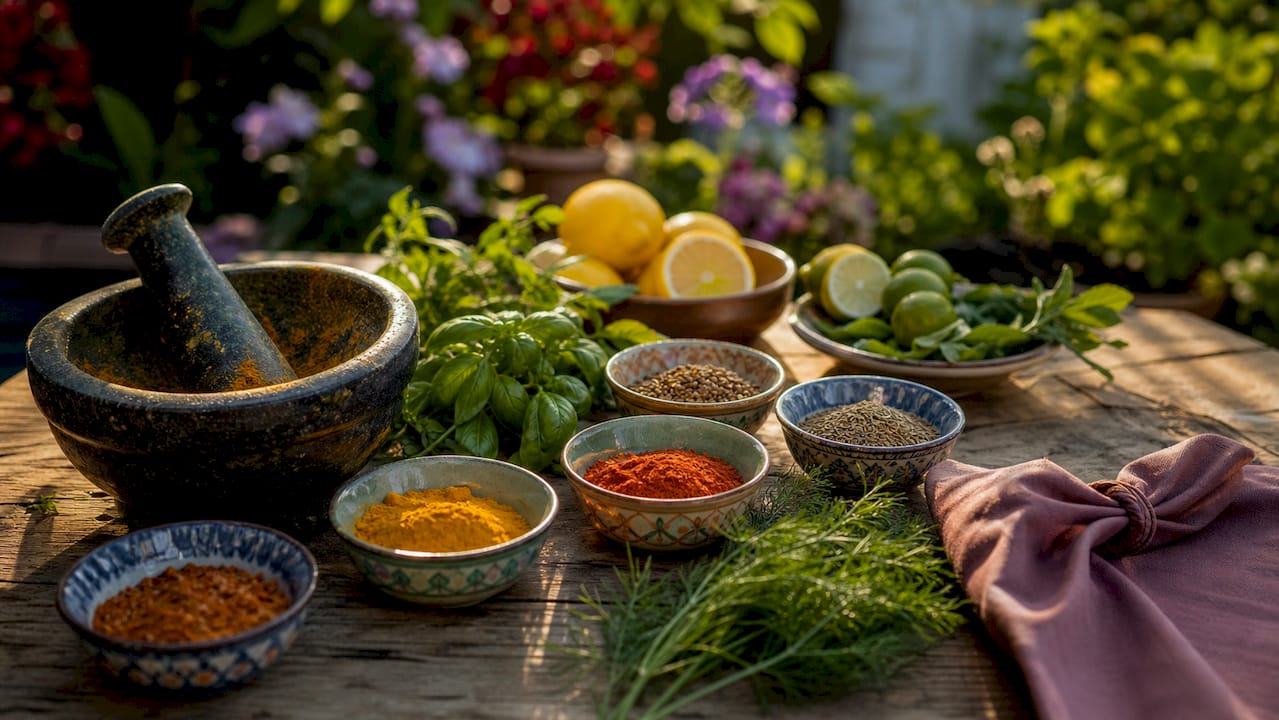
Aromatic ingredients like herbs, spices, and nuts each serve a specific function. Herbs refresh. Spices anchor or energize. Nuts add texture and a fatty, woody note that rounds out sharp flavors. Using them with intention, rather than habit, is what separates a good cook from a great one.
Understanding ingredient intensity is equally important. A small amount of fish sauce adds umami depth without tasting fishy. Too much, and it overpowers everything else. The goal is always to enhance the core flavor, not compete with it.
7. Primary vs. secondary flavor notes: the key to complexity
Primary flavor notes are the dominant taste you perceive immediately. Secondary notes are the subtle, supporting characteristics that emerge over time and add complexity. A dish built only on primary notes tastes one-dimensional. Secondary notes are what make you keep eating.
Think of a slow-braised short rib. The primary note is rich, meaty umami. But the secondary notes, a hint of wine acidity, a whisper of woody herbs, a faint sweetness from caramelized onion, are what make it memorable. Secondary flavors prevent monotony and keep the palate engaged from the first bite to the last.
You build secondary notes through technique. Browning meat creates "brown" and "meaty" notes. Deglazing with wine adds "fruity" and "acidic" layers. Finishing with fresh herbs introduces "green" and "herbal" brightness. Each step adds a new dimension to the profile.
Key Takeaways
Mastering food flavor profiles requires learning the 11 primary flavor families, applying the 20 Society of Flavor Chemists notes, and using pairing logic to build dishes with harmony, contrast, lift, and depth.
| Point | Details |
|---|---|
| Learn the 11 flavor families | Sweet, salty, sour, bitter, umami, spicy, smoky, herbal, fruity, earthy, and creamy form the foundation of every dish. |
| Use the 20 flavor notes | The Society of Flavor Chemists' 20 notes give you precise language to describe and adjust any flavor profile. |
| Apply the flavor wheel | A 5-step framework turns vague impressions into specific, fixable flavor descriptions. |
| Study global cuisine data | 93% of Chinese dishes are umami-dominant; understanding cuisine logic helps you cook authentically and intentionally. |
| Balance primary and secondary notes | Secondary notes like herbal brightness or wine acidity prevent one-dimensional dishes and keep meals interesting. |
Why flavor profiles changed how I cook at home
I spent years cooking by instinct, adding a pinch of this and a splash of that, hoping it would come together. It usually did, but I could never explain why, and I definitely could not fix it when it did not. Learning to name what I was tasting changed everything.
The moment I started using the flavor wheel, I stopped saying "it needs something" and started saying "it needs acid" or "it needs a herbal lift." That shift from vague to specific is the real value of flavor profiling. It is not about making cooking more complicated. It is about making it more reliable.
The global cuisine data surprised me too. Knowing that Greek cooking is built on acidity and Korean cooking on umami gave me a framework for experimenting with those traditions at home. I stopped trying to replicate dishes exactly and started understanding the logic behind them. That is when cooking became genuinely fun.
My advice: start with the flavor wheel the next time a dish tastes almost right. Name what you are sensing. Then look at what functional role is missing. Nine times out of ten, the fix is simple once you can name the problem.
— William
Build your flavor knowledge with Adultingwithfood
Understanding flavor profiles is one of the fastest ways to improve every meal you cook. Adultingwithfood is built for home cooks who want to go beyond following recipes and actually understand why food tastes the way it does.

The platform offers weekly recipe drops, grocery checklists, and real chef support designed to help you cook with confidence. Every resource connects ingredient knowledge to practical technique, so you are not just cooking, you are learning. Visit Adultingwithfood to explore guides, flavor resources, and the Adulting With Food Starter Pack that gives you everything you need to cook restaurant-quality meals at home.
FAQ
What are food flavor profiles?
Food flavor profiles are the distinct combinations of taste, aroma, mouthfeel, and sensory characteristics that define how a dish is perceived. They include primary notes like sweet or umami and secondary notes like floral or woody that add complexity.
What are the main types of flavors in food?
The 11 primary flavor families are sweet, salty, sour, bitter, umami, spicy, smoky, herbal, fruity, earthy, and creamy. Most dishes are built around three to five of these working together.
What is a flavor wheel and how do you use it?
A flavor wheel organizes flavor descriptors from broad categories to specific sensory notes. You use it by identifying your primary flavor family, then working outward to name supporting notes, assess sweetness and acidity, and evaluate the overall sensory experience.
Which cuisines have the strongest flavor profiles?
Chinese and Korean cuisines are among the most flavor-dominant globally, with 93% and 92% of dishes respectively built on umami notes. Indian cuisine is 76% spicy and Greek cuisine is 75% acidic, according to a 2026 analysis of over 3,200 global recipes.
How do you improve flavor balance in a dish?
Identify which functional role is missing: harmony, contrast, lift, or depth. Adding acid brightens, fat rounds, fresh herbs lift, and umami-rich ingredients anchor. Naming the gap is the first step to fixing it.