Finding a supportive cooking community that actually helps you build kitchen confidence is harder than it should be. Many communities focus only on fancy recipes or one-way lessons instead of practical advice, real interaction, or useful resources for beginners. This comparison shows how five leading communities cover home cooking, live classes, and member help so you can pick the one that matches your learning style.
Table of Contents
Adultingwithfood
At a Glance
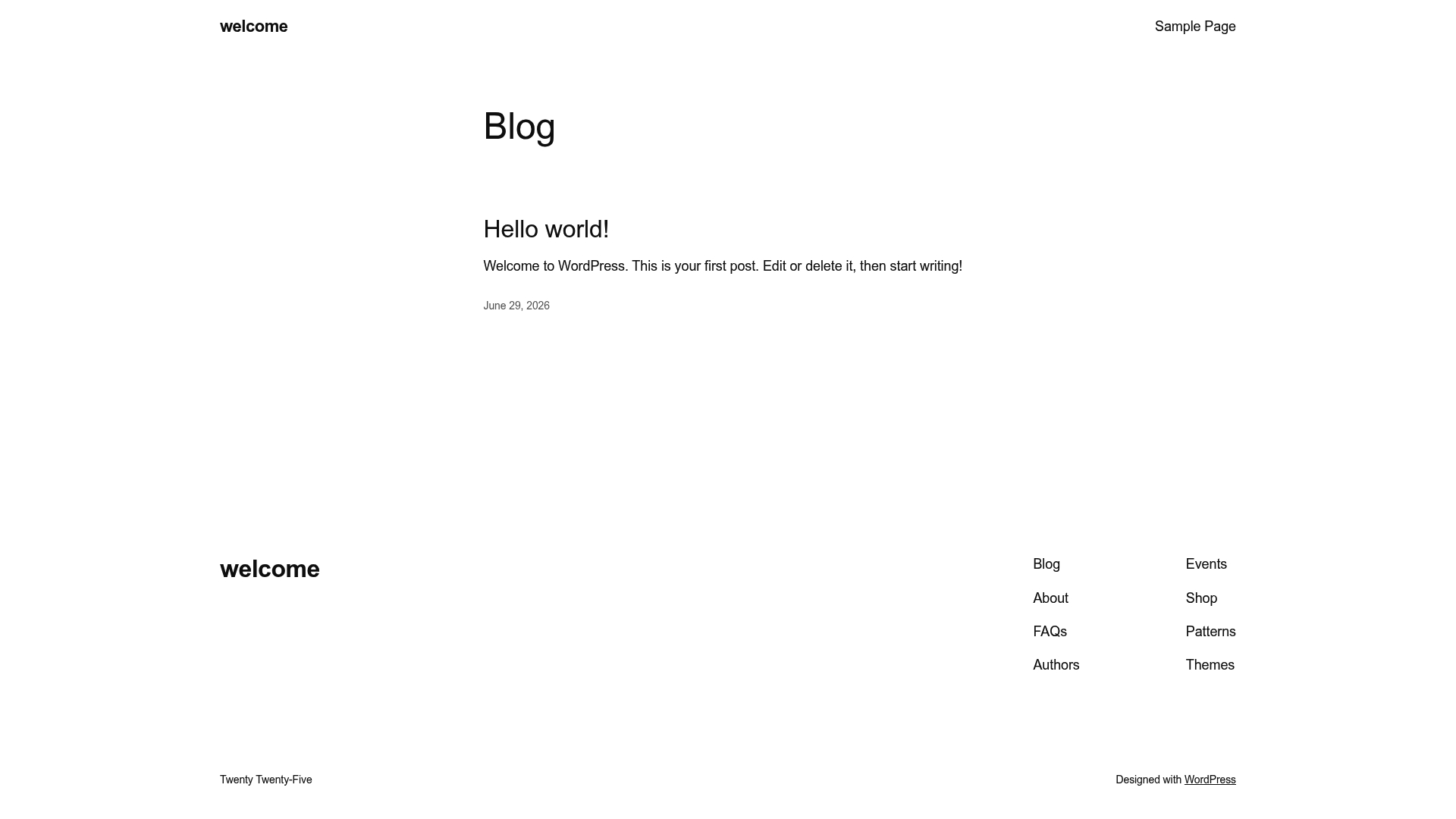
The vendor advertises weekly recipe drops with 5 new recipes. The site appears as a WordPress blog with sections for blog posts, FAQs, an about page, events, a shop, patterns, and themes. Content and community notes are present, but no clear commercial product listing appears on the site.
Core Features
The site organizes content around food and life-skill topics, with blog posts and FAQs that address practical kitchen skills and grocery basics. It uses WordPress flexibility to host event pages, a shop, and themed content areas that support community discussion and sharing. Specific product features or integrations are not listed or accessible from the visible pages.
Key Differentiator
Focused niche content blending food and adulting topics for community-building. That editorial focus gives readers practical, everyday advice rather than abstract culinary theory. The emphasis on real-life skills and lifestyle tips helps the site connect readers who want manageable, confidence-building cooking guidance.
Pros
The blog’s topic mix targets people learning to cook and manage household food tasks, which helps new cooks find relatable guidance. WordPress lets the site mix longform how-tos, short grocery checklists, and event notices without a steep learning curve for contributors. The presence of a shop and event pages creates paths for community engagement and occasional transactions. The site suits readers who prefer learning from written guides and searchable posts rather than live classes.
Cons
- No identifiable commercial product or paid membership is listed. The site functions primarily as an informational hub. That limits readers looking for a structured course or subscription with defined deliverables.
Who It's For
People who want straightforward cooking tips, grocery basics, and lifestyle advice aimed at everyday adults. This fits readers who prefer reading guides, following simple checklists, and joining occasional community events. It is less suitable for learners who need step-by-step video courses or hands-on chef mentorship.
Unique Value Proposition
The vendor advertises members receive the Adulting With Food Starter Pack. That concrete resource suggests hands-on orientation for beginners who need a clear starting point for tools and pantry basics. The site pairs that with grocery store checklists and claims of chef support, which could shorten the time you spend guessing which tools or groceries to buy.
Real World Use Case
A recent college graduate moves into their first apartment and needs quick grocery lists and simple recipes. They use the blog’s checklists to stock a starter pantry and the recipe drops to plan dinners for the week. Event pages and the shop provide occasional extras, while the written guides build kitchen confidence through repeatable steps.
Website: https://adultingwithfood.com
Homemade Cooking
At a Glance
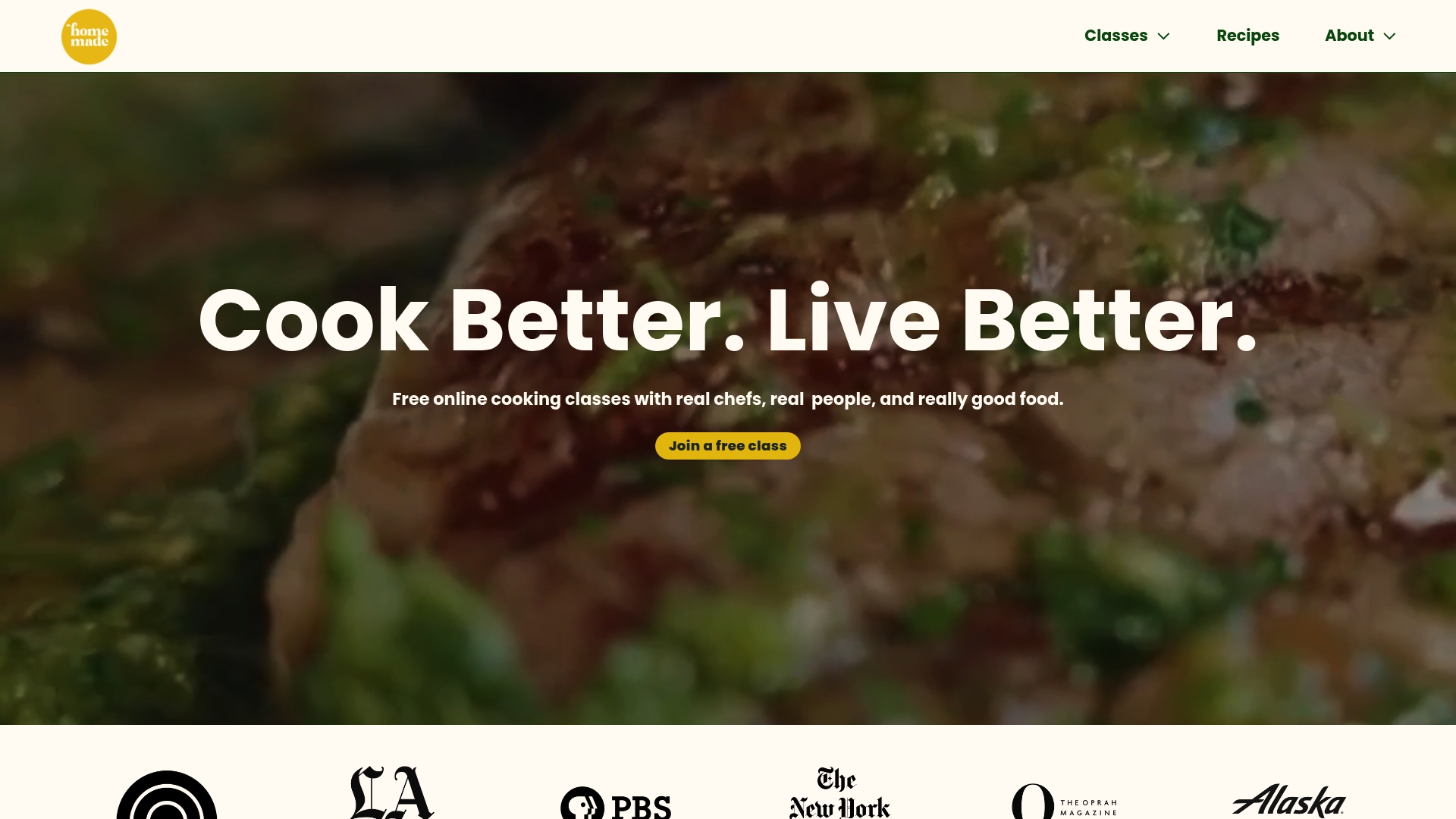
Free scheduled live cooking classes with professional chefs are the core offering on Homemade Cooking. Live cooking classes run on a fixed schedule and include interactive cook alongs plus recipe replays. The site also publishes educational demonstrations and cuisine focused shows for home cooks.
Core Features
Live, scheduled classes let people follow along with chefs and ask questions in real time. A library of recipe replays and written resources makes it easy to revisit lessons at home. Interactive classes build community through Q and A plus group participation during sessions. Topics range from simple weeknight meals to technique driven demos on sauces and knife skills.
Key Differentiator
The clearest distinction is the emphasis on scheduled, instructor led live classes that are free. That format brings direct interaction with chefs and hands on practice during the class. The free structure lowers the barrier for casual learners who do not want subscriptions. Compared with Adultingwithfood, Homemade Cooking targets people who want free live training rather than a paid membership.
Pros
Free access to live classes removes the cost barrier for people learning at home. Direct interaction with chefs creates a mentor like experience during practice and Q and A. The class topics cover a wide set of cuisines and technique focused demos that suit beginners up to intermediate cooks. The replay library and written resources make it simple to repeat recipes and polish skills between sessions.
Cons
-
Limited to online classes. No physical products or in person sessions are offered.
-
Website content is mostly informational with few options to buy tools or boxed ingredients.
-
No clear pricing for premium services appears on the site.
When It May Not Fit
People who want in person workshops, ingredient kits, or product shopping will find Homemade Cooking a poor match. Those seeking a structured paid curriculum with coach feedback will prefer a membership based service. The site lacks e commerce features and subscription options for learners who want bundled materials.
Who It's For
Home cooking enthusiasts who want free live instruction will get the most from this site. Beginners who want hands on practice and the chance to ask chefs questions benefit from live classes. People who prefer a pay as you go or membership model may want a different offering.
Real World Use Case
A new cook signs up for a Tuesday evening class on pan seared fish and joins the live session. During class the chef demonstrates techniques and answers plating and timing questions. Afterward the cook replays the lesson and follows the recipe notes to practice alone. They save the replay and use the written grocery list to shop the next day.
Website: https://homemadecooking.com
DiaSpo
At a Glance
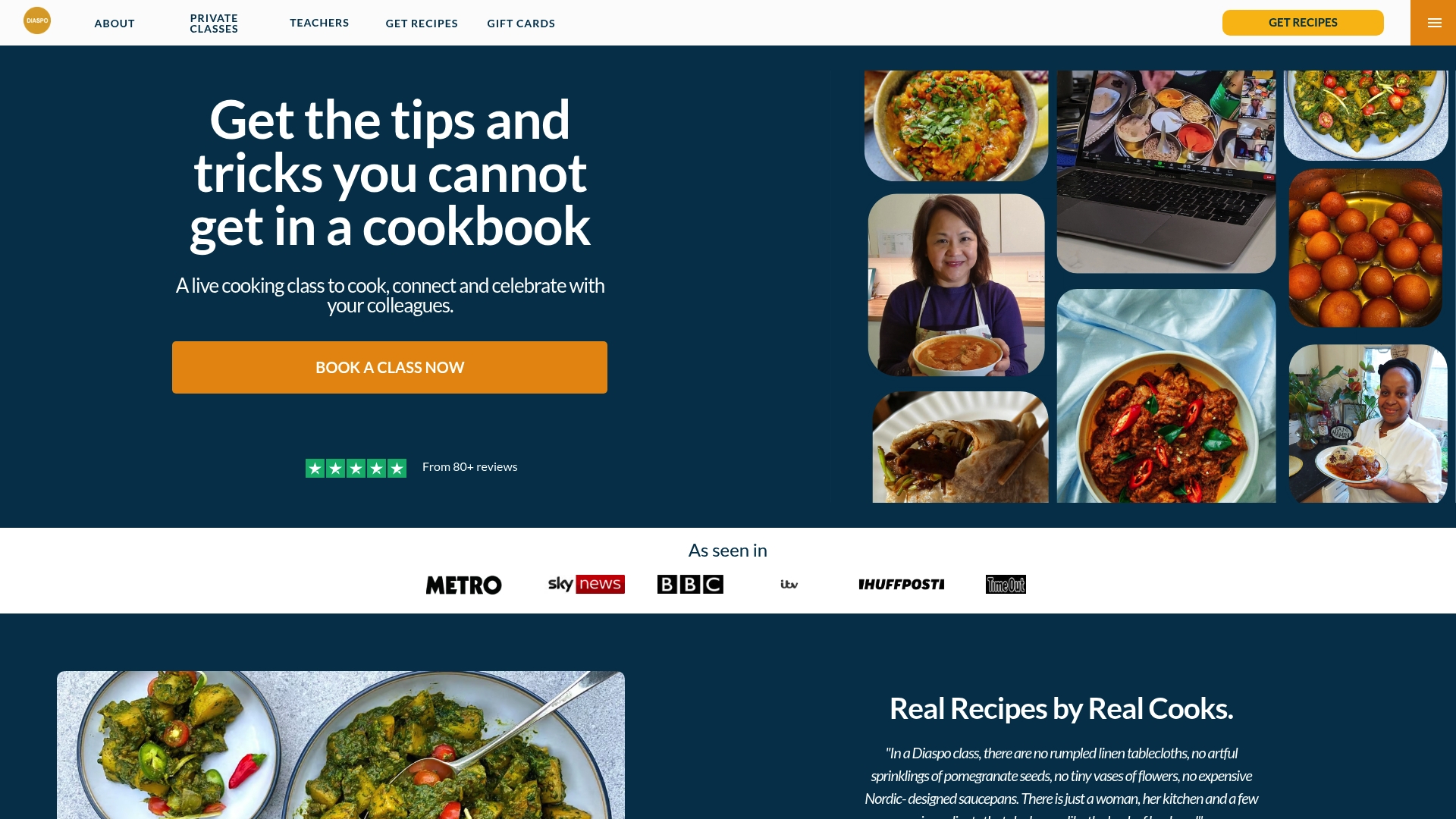
Live interactive cooking classes run by expert home cooks teach family recipes and the stories behind them. Classes accept private group bookings for teams, families, or friend groups. Teaching focuses on cultural secrets and informal storytelling to make cooking social and accessible.
Core Features
Classes are live and interactive, with cooks guiding you step by step and answering questions. You can book private sessions for teams, friends, or families and select from culturally diverse recipes. Sessions emphasize storytelling, heritage techniques, and practical tips rather than formal culinary jargon.
Key Differentiator
The standout trait is the emphasis on cooks sharing family stories and recipes alongside technique. That focus makes each class a cultural exchange instead of a generic lesson. Because the experience centers on personal narratives, DiaSpo suits groups who want connection and context with their cooking. That angle makes classes feel personal and memorable rather than transactional.
Pros
Authentic home cooks bring regional recipes and patient teaching, so beginners can follow along without feeling rushed. Private bookings adapt to group size, and customer feedback often praises the engaging instructors and their storytelling. The informal tone helps participants relax and ask questions.
Cons
- Limited online feature detail on the website makes it hard to compare class formats and length.
- No public pricing is listed, so you likely need to request a quote for custom sessions.
- The service focuses on classes and community, so it is not a recipe box or ingredient supplier.
When It May Not Fit
If you want meal kits delivered with measured ingredients, this is not the right fit. If you need in-person instruction, DiaSpo cannot meet that need because classes are online only. Organizations that require fixed pricing or a self-serve booking portal may find the custom approach inconvenient.
Who It's For
You are an organizer booking an interactive cultural activity for a remote team or family. You value personal stories and learning technique directly from home cooks rather than reading a recipe. You prefer a shared social experience over prepackaged meal delivery.
Real World Use Case
A multinational company books a private virtual class where an Algerian home cook teaches couscous and its family story. Employees follow along with pantry staples, ask live questions, and share cultural context during the session. The class becomes a team-building event that highlights heritage and gives people a recipe they can make later. Organizers receive a follow up with the recipe and tips for recreating the dish.
Website: https://joindiaspo.com
Get Cooking
At a Glance
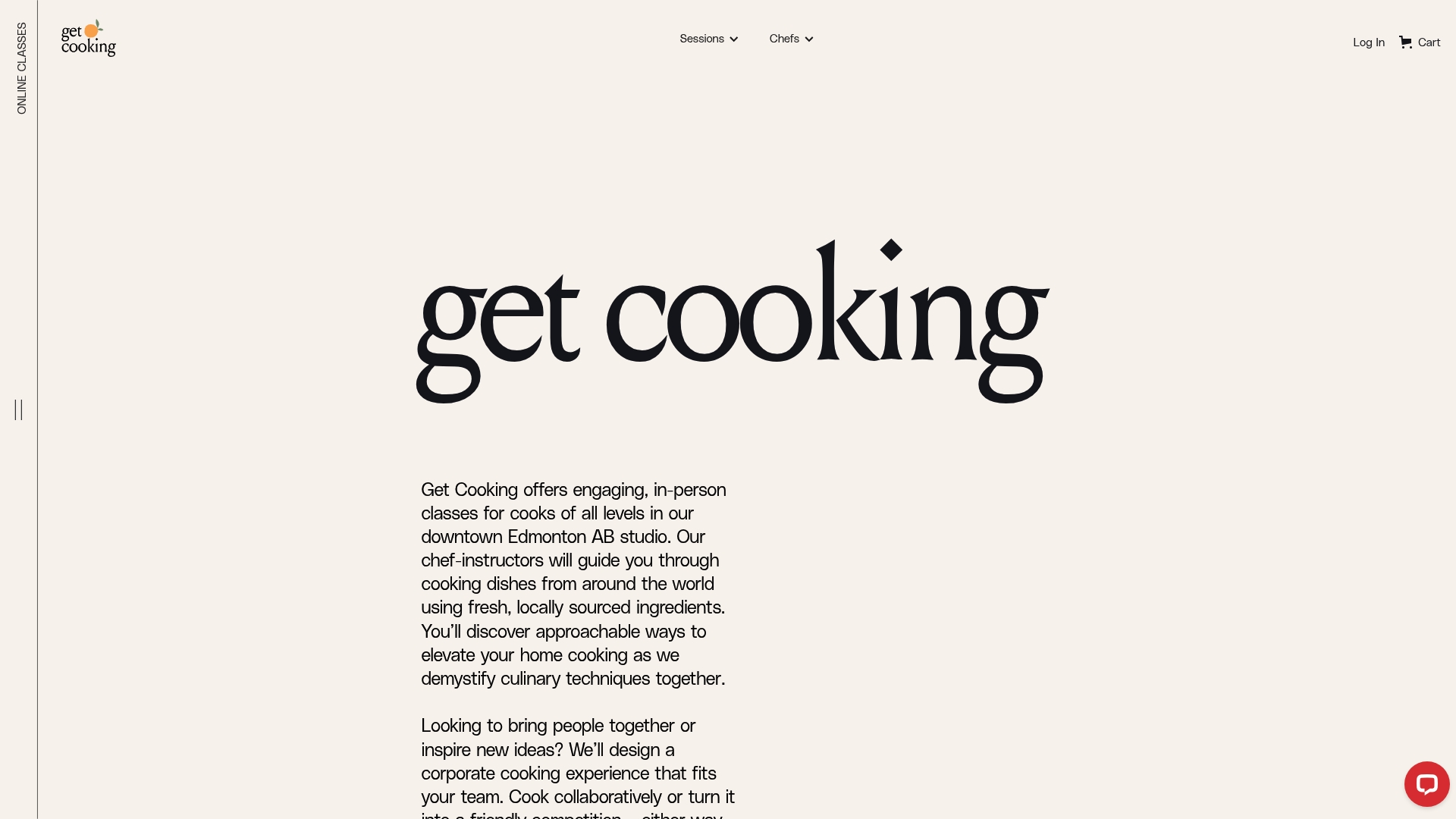
Online classes are paused at the moment, limiting remote options temporarily. The school runs hands on classes from a downtown Edmonton studio focused on seasonal, globally inspired menus. Small class sizes and chef demonstrations aim to build kitchen confidence for beginners and intermediate cooks.
Core Features
Get Cooking offers in person classes at an Edmonton studio, live interactive sessions via Zoom when available, and hands on instruction led by professional chef instructors. Seasonal global cuisine themes rotate through the calendar, and the school sells gift cards and class bundles for gifts or repeat visits. Classes include demonstrations, guided practice, and communal meals at the end.
Key Differentiator
The program pairs intimate, studio-based lessons with instructor-led live sessions and menus built around local ingredients. That local focus and small group format make it a practical choice for people near Edmonton who want tactile practice rather than a broad online membership.
Pros
Professional chef instructors teach technique and timing so you practice real kitchen skills while you cook. The mix of class formats gives flexible options for individuals and small groups, and seasonal menus keep content fresh across months. Small class sizes create time for personalized feedback and hands on corrections that help beginners progress faster.
Cons
-
Online classes paused at the moment, limiting remote participation temporarily.
-
Seats in popular sessions may sell out quickly, which can complicate scheduling for planners.
-
In person experiences are limited to the Edmonton area, so people outside that region cannot attend studio classes.
When It May Not Fit
If you live outside the Edmonton area and expect regular live classes, this service will be a poor match while online sessions remain paused. If your team needs a very large event, the small class format may not serve groups larger than a typical classroom. Remote learners who require a steady weekly online schedule should look elsewhere until live online offerings resume.
Who It's For
Cooks in and near Edmonton who want hands on instruction and real practice with chef guidance will benefit most. Beginners who need simple technique coaching and intermediate home cooks exploring new cuisines will find the format supportive. Gift buyers and local teams seeking a social, food centered activity also match this offering.
Real World Use Case
A local office books a private in person session for a team event. Chef instructors guide each participant through a seasonal menu using local produce, then lead the group through plating and a shared meal. The event doubles as a skill building session and a team dinner.
Website: https://getcooking.ca
Planned Pan
At a Glance
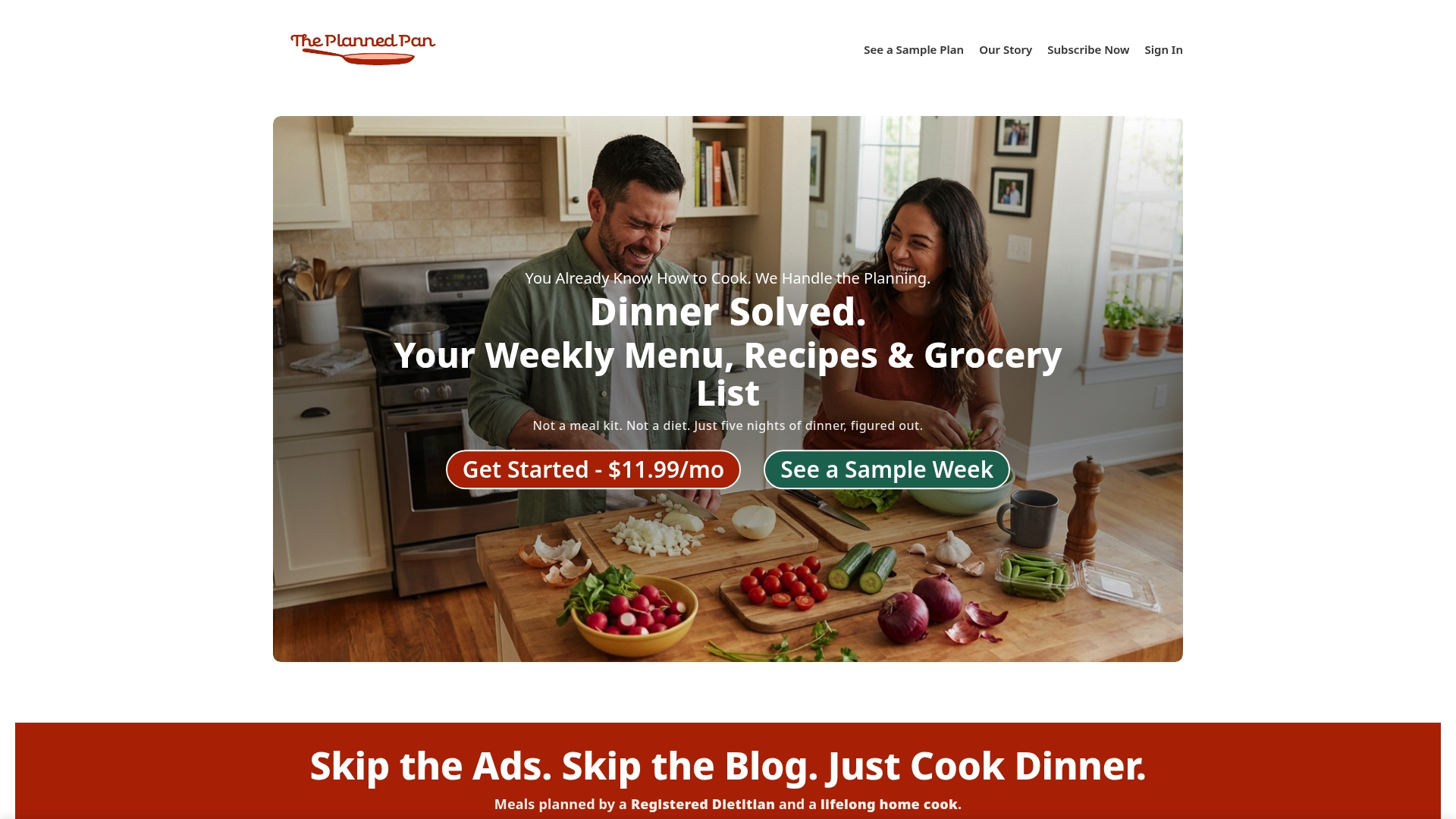
Five complete dinner recipes arrive each week, paired with an organized grocery list and substitution options. The service drops a new plan every Saturday to keep weeknight menus fresh. The subscription costs $11.99/month and comes with a cancel anytime policy.
Core Features
Planned Pan combines meal plans created by a registered dietitian and a lifelong home cook into one weekly package that targets balanced, practical dinners. Each plan contains five full dinner recipes with substitutions, tips, and adjustable servings for 1 to 10 people. Grocery lists are sorted by store section so you can shop efficiently and avoid extra trips.
Key Differentiator
The biggest advantage is the pairing of nutrition expertise with home kitchen experience, which produces recipes that balance taste and everyday convenience. Organized grocery lists connect each plan to a single shopping trip and remove guessing about quantities. That combination suits people who want better weeknight dinners without switching to meal kits.
Pros
Planned Pan charges an affordable monthly fee compared with typical meal kits and frequent takeout, which lowers your planning overhead while keeping full control of where you shop. The service preserves flexibility by letting you use your usual grocery store and pantry staples, which often reduces food waste. Recipes assume basic cooking skills and move quickly from prep to plate, so you spend less time on complex technique. New plans every week and a cancel anytime policy make it easy to test the service for a month.
Cons
-
Requires you to buy and transport ingredients. The service does not include food delivery or meal kits.
-
Limited scope focuses only on dinner recipes. There are no breakfast, lunch, or weekend plans included.
-
Recipes assume basic competence in the kitchen. Planned Pan does not provide step by step cooking instruction or video lessons.
When It May Not Fit
Planned Pan is a poor match if you rely on delivered meals or complete meal kits for convenience. It also misses anyone who wants multi meal planning that covers breakfasts, lunches, or weekend menus. People who need guided instruction or video tutorials will find the plans thin on teaching support.
Who It's For
This service fits home cooks who already know basic techniques and want to stop planning dinners. Busy professionals who prefer a single shopping trip and predictable evening meals will benefit most. People who want balanced dinners without dieting rules will find the tone practical and flexible.
Real World Use Case
A busy professional subscribes and receives five dinner recipes on Saturday, then shops once for the week using the sorted grocery list. They adjust servings to feed two and pick substitutions based on pantry items. Dinners reheat well so leftovers double as next day lunches.
Pricing
Pricing is simple. $11.99/month gives access to weekly meal plans, grocery lists, and serving adjustments. There are no contracts and you can cancel at any time.
Website: https://plannedpan.com
Food Bricks
At a Glance
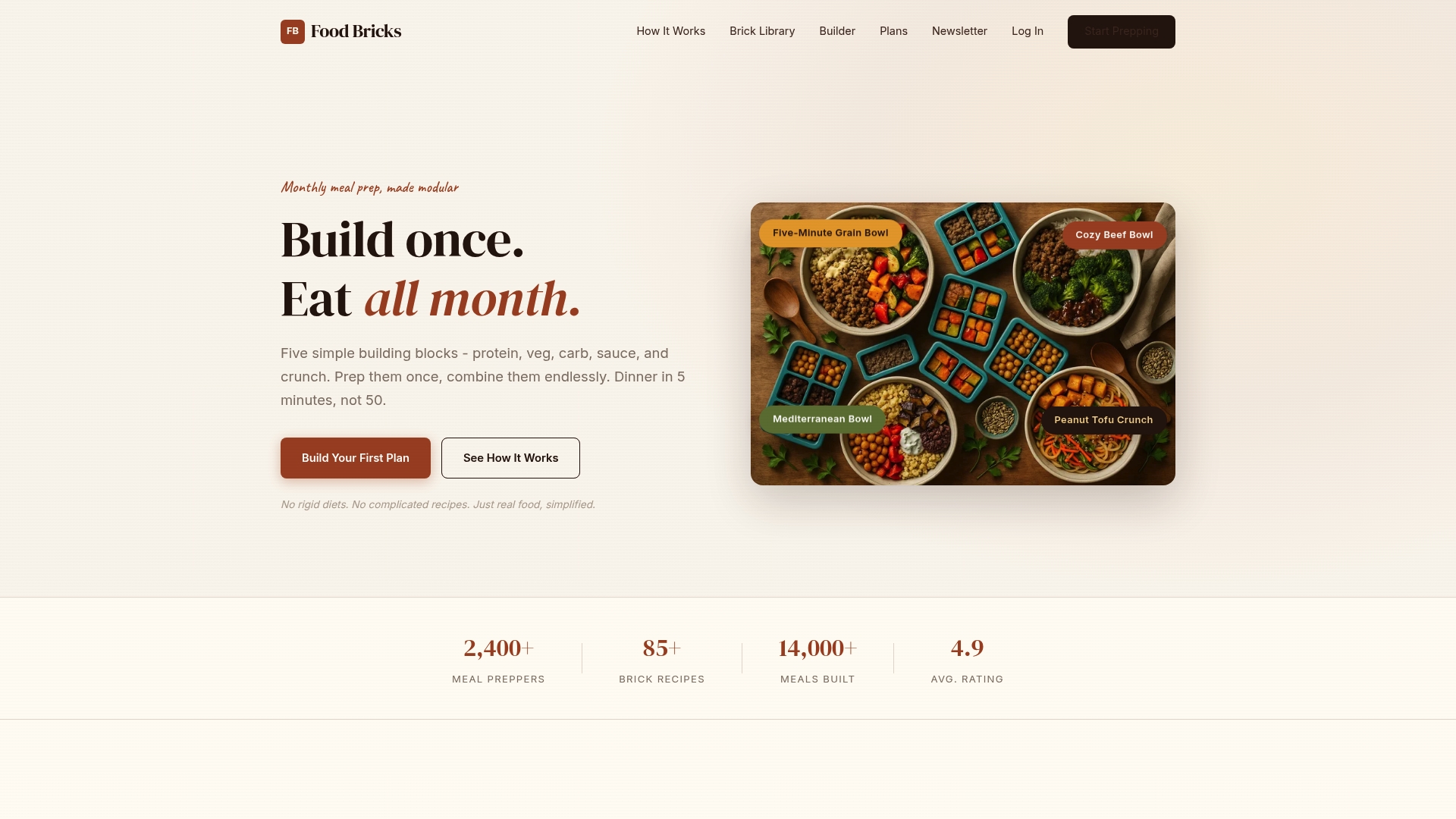
Food Bricks describes preparing five simple building blocks once a month to stock quick, balanced meals. The bricks are protein, vegetables, carbs, sauce, and crunch. The approach favors one long prep session and rapid daily assembly.
Core Features
The system centers on Modular meal components you batch prep and then recombine into meals. A large recipe library and a meal builder let you create monthly plans and generate printable shopping lists and prep checklists. Subscription tiers unlock full access and an optional macro tracking upgrade.
Key Differentiator
The defining idea is interchangeable, scalable bricks you swap to match servings and dietary needs. You scale proteins, vegetables, carbs, and sauces to fit a family or a single person. Optional macro tracking helps people who track macros to plan portions without changing the core workflow.
Pros
Batch prep reduces nightly cooking to simple assembly and cuts decision fatigue for busy weeks. The mix and match design supports varied diets and family preferences without rigid recipes. Printable shopping lists and prep checklists keep shopping and the Sunday session organized. Macro tracking as an add on gives athletes and nutrition trackers a straightforward way to measure portions.
Cons
- Food Bricks reports about a 3 hour upfront prep session, which may feel like a large weekend commitment for some people.
- Some people will want more detailed, step by step recipes than the system emphasizes.
- The experience focuses on prebuilt bricks and set meal combinations, which limits freeform recipe experimentation.
When It May Not Fit
If you dislike long prep sessions, this approach will frustrate you. If you prefer guided, step by step culinary instruction, the brick model will feel sparse. If your cooking style relies on improvising single dishes each day, the modular system will not match that workflow.
Who It's For
This product fits busy professionals, families, and fitness minded people who want predictable weeknight dinners. You should like planning ahead and committing a block of time to prep. It also suits people who want to reduce waste and simplify grocery shopping.
Real World Use Case
A busy parent spends a few hours on Sunday building multiple bricks. Each night they assemble a protein, veg, carb, sauce, and crunch into a quick dinner. The system saves time, reduces takeout, and keeps meals consistent across the week.
Pricing
A free tier is available for limited access. Full plans cost $9.99/month for the standard feature set. Macro tracking and advanced planning tools cost $14.99/month as an upgraded subscription.
Website: https://myfoodbricks.com
Comparison of alternatives
Adultingwithfood.com offers a niche blend of lifestyle and culinary guidance, contrasting with competitor programs emphasizing class-based or meal-preparation formats.
Interactive Classes vs Informative Content
Homemade Cooking excels in its live, professional chef-led classes that provide direct interaction and instant feedback—qualities especially beneficial for attendees who rely on demonstration-based learning. In contrast, Adultingwithfood.com prioritizes static, beginner-focused informational resources, which shine in their accessibility for individuals unable to commit to fixed schedules. Both styles each have distinct merits depending on the learner's preferred format.
Cultural Cooking Experiences
DiaSpo's cultural and narrative-rich cooking sessions provide an intimate and unique angle, featuring diverse recipes alongside the shared stories surrounding them. These classes adapt to private groups, offering effective socialization and customization options. For participants seeking a community yet assorted global culinary adventure, this specificity makes DiaSpo competitive.
Best fit
- Young professionals who require accessible lifestyle and grocery tips will find Adultingwithfood.com’s content straightforward and practical for use.
- Individuals preferring live chef interaction and structured sessions with recorded replays may favor Homemade Cooking for its effective class design.
- Group organizers seeking culturally rich cooking sessions for families or teams might appreciate DiaSpo’s personal and narrative-driven approach to teaching.
- Couples or households looking for affordable yet weekly dinner planning packages will benefit from Planned Pan's subscription model.
- People aiming to optimize meal prep through macro tracking and interchangeable ingredients can turn to Food Bricks as an efficient batch preparation solution.
Our pick
Adultingwithfood.com is best for readers prioritizing beginner-friendly lifestyle integration and grocery trip simplification. Although other competitors succeed in specific niches like live instruction or prep-focused meal planning, Adultingwithfood.com uniquely combines practical, community-oriented blog content with confidence-building culinary advice.
Choosing the right cooking resource depends on your preferences for content accessibility, interactivity, and focus. Here's a comparison of popular options:
| Platform | Focus | Key Feature | Best For | Limitations |
|---|---|---|---|---|
| Adultingwithfood | Blog content blending cooking and life skills | Editorial focus on grocery lists and life skills | New cooks preferring written guidance | No structured course or defined service offerings |
| Homemade Cooking | Free live online cooking classes | Interactive sessions with Q&A | Beginners preferring hands-on practice | Lacks e-commerce options and formal subscriptions |
| DiaSpo | Live cultural recipe classes with storytelling | Personal stories paired with live cooking | Groups seeking cultural culinary experiences | Requires booking; no upfront pricing available |
| Get Cooking | In-person classes at Edmonton studio | Hands-on instruction using seasonal menus | Residents of Edmonton seeking hands-on practice | Currently paused online services |
| Planned Pan | Weekly meal plans with shopping lists | Dietitian-created dinner recipes and grocery lists | Busy professionals wanting stress-free planning | No breakfast or lunch options included |
| Food Bricks | Modular meal prep system | Batch-prepped components for efficient meals | Efficient meal preppers streamlining grocery logistics | Significant upfront prep time required |
Finding Reliable Support to Build Cooking Confidence
Choosing from the best cooking subscription boxes in 2026 can feel overwhelming. Many people who are newly on their own want clear guidance on what kitchen tools to buy, how to set up cooking spaces, and which ingredients to keep stocked. Adultingwithfood offers exactly that support by providing weekly recipe drops, grocery store checklists, and real chef advice that helps beginners build confidence in the kitchen.
If you want to replace drive-thrus and delivery apps with real meals you can make at home, Adultingwithfood meets your needs with:
- A Starter Pack to set up your kitchen effectively
- Recipes designed for practical learning and success
- Personalized messages from the Executive Chef for encouragement
Visit Adultingwithfood to get your Starter Pack and begin learning with a community ready to help you cook with confidence.
FAQ
What benefits does Adultingwithfood offer for new cooks?
Adultingwithfood provides practical kitchen skills and grocery basics tailored for beginners. The site offers weekly recipe drops that help new cooks build confidence and manage meal planning effectively. You can expect support and guidance as you start your cooking journey.
How does Adultingwithfood compare to Homemade Cooking?
Homemade Cooking excels at offering free live cooking classes led by professional chefs, which provides direct interaction and hands-on learning. Adultingwithfood, on the other hand, is ideal for those looking for a subscription-based service that offers written guidance and recipes, making it a better fit for readers who prefer self-paced learning.
What unique features does Adultingwithfood provide?
Adultingwithfood features a Starter Pack resource aimed at beginners, which includes essential kitchen tools and grocery basics. This resource helps to simplify the initial cooking setup for new cooks by providing clear, actionable steps to get started.
Can I seek personalized advice through Adultingwithfood?
While Adultingwithfood does not offer one-on-one coaching, it provides valuable written guidance and practical advice suitable for individuals learning to cook. This makes it a great lower-commitment option for those wanting to build their cooking skills without intensive commitment.
What type of recipes can I expect from the Adultingwithfood membership?
Adultingwithfood delivers five new recipes weekly, focusing on everyday cooking that is accessible to beginners. This steady stream of recipes ensures that meal planning remains fresh and uncomplicated for new cooks.
How often are new recipes released with Adultingwithfood?
Adultingwithfood releases new recipes weekly, ensuring that members can regularly discover and try new dishes to enhance their cooking skills. This consistent update helps keep meal planning both exciting and practical.