
One rotisserie chicken can become ten completely different weeknight dinners in 20–40 minutes. Soups, tacos, pasta, grain bowls, enchiladas, sandwiches, casseroles, sheet-pan dinners, breakfast scrambles, and salads are all on the table. The protein is already cooked and seasoned. Your only job is to build around it.
Here are ten quick ideas you can use tonight:
- Chicken tortilla soup — shred into broth with canned tomatoes and black beans; serve with tortilla chips
- Caesar salad with chicken — chop breast meat over romaine; add croutons and parmesan
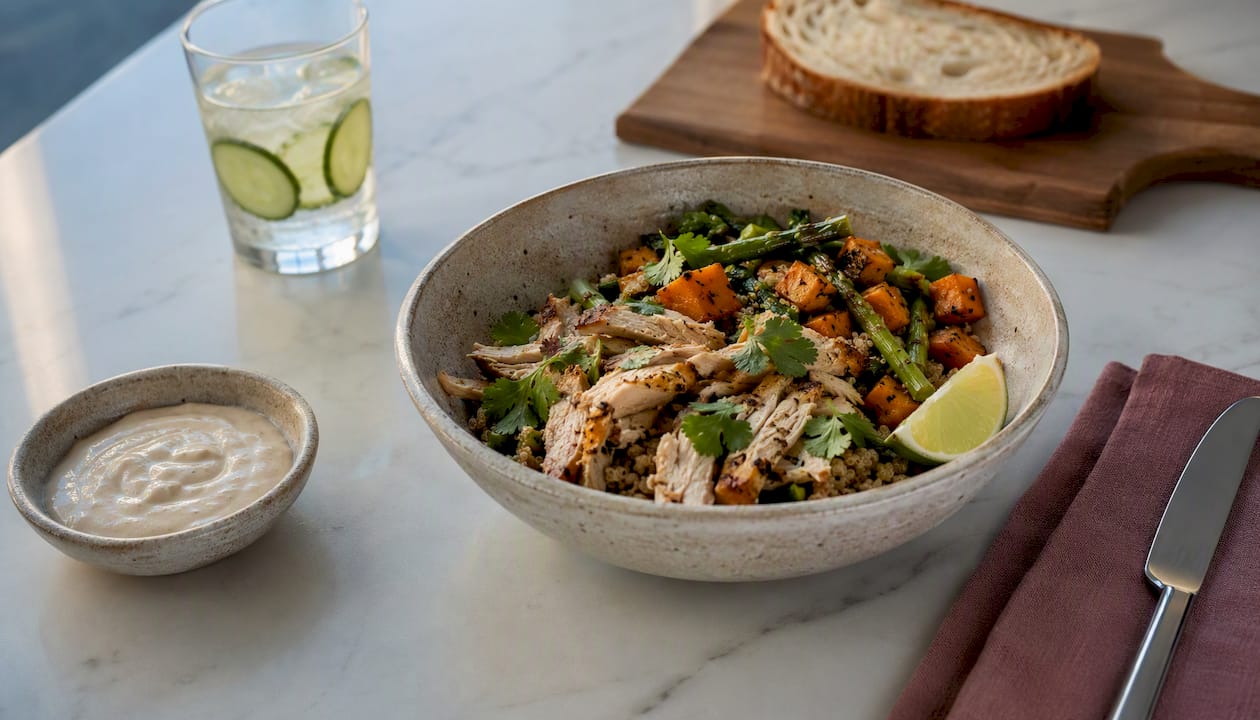
- Grain bowl — layer over rice or farro with roasted veg and tahini dressing
- Chicken tacos — warm shredded meat with cumin and salsa; serve in corn tortillas
- One-pot pasta — toss with tortellini, starchy pasta water, and olive oil for a light sauce
- Enchiladas — roll shredded chicken and cheese in flour tortillas; cover with green salsa and bake
- Chicken salad sandwich — mix chopped meat with mayo, celery, and Dijon; serve on toasted bread
- Sheet-pan quesadillas — fill large flour tortillas with chicken and cheese; bake at 425°F until crisp
- Egg and chicken scramble — sauté shredded meat with eggs, peppers, and onion for a high-protein breakfast
- Chicken noodle soup — simmer shredded meat in store-bought broth with egg noodles and carrots
The Simply Recipes bag hack is worth knowing from the start: add warm cooked rice directly into the rotisserie bag, shred the chicken back in, and toss everything together. The bag captures all the rendered fat and seasoned juices, and cleanup takes about 30 seconds. The USDA recommends reheating all cooked chicken to an internal temperature of 165°F before serving.
Table of Contents
- Easy rotisserie chicken meals by category
- How to prep your rotisserie chicken the right way
- Chef shortcuts that make every dish better
- How to turn one chicken into three different cuisines
- Make-ahead, storage, and reheating guide
- Nutrition notes: protein, sodium, and lighter swaps
- Key Takeaways
- Why rotisserie chicken changed how I think about weeknight cooking
- Real cooking support for beginners who want to keep going
- Useful sources
Easy rotisserie chicken meals by category
Rotisserie chicken is endlessly forgiving. Swap the vegetable, change the sauce, use a different starch. The bird accepts almost any direction you take it. The table below organizes the best quick ideas by meal type so you can scan and pick tonight's dinner in under a minute.

| Category | Recipe Idea | 1-Line Assembly Note |
|---|---|---|
| Soups | Chicken tortilla soup | Shred into broth + canned tomatoes + black beans + cumin; top with chips |
| Soups | Classic chicken noodle | Simmer in low-sodium broth with egg noodles, carrots, and celery |
| Soups | White bean and chicken | Blend half the beans for body; add shredded chicken + rosemary + kale |
| Salads | Caesar chicken salad | Chop breast over romaine + croutons + parmesan + Caesar dressing |
| Salads | Southwest chicken salad | Shredded chicken + corn + black beans + avocado + lime vinaigrette |
| Salads | Greek chicken salad | Chopped chicken + cucumber + olives + feta + red onion + oregano |
| Grain Bowls | Teriyaki rice bowl | Shredded chicken + steamed rice + edamame + store-bought teriyaki sauce |
| Grain Bowls | Mediterranean farro bowl | Chicken + farro + roasted red peppers + hummus + lemon |
| Sandwiches | Classic chicken salad | Chopped chicken + mayo + Dijon + celery + dill on toasted sourdough |
| Sandwiches | Buffalo chicken wrap | Shredded chicken + hot sauce + blue cheese crumbles in a flour tortilla |
| Tacos/Enchiladas | Weeknight chicken tacos | Warm shredded chicken with cumin + garlic powder; serve in corn tortillas + salsa |
| Tacos/Enchiladas | Green salsa enchiladas | Roll chicken + Monterey Jack in flour tortillas; cover with jarred green salsa; bake 20 min |
| Pastas/Casseroles | One-pot tortellini | Cheese tortellini + shredded chicken + starchy pasta water + olive oil + parmesan |
| Pastas/Casseroles | Chicken and rice casserole | Shredded chicken + cooked rice + cream of mushroom soup + frozen peas; bake 25 min |
| Sheet-Pan | Sheet-pan quesadillas | Large flour tortillas + chicken + cheddar; bake at 425°F until crisp |
| Sheet-Pan | Chicken and veggie tray | Toss chicken pieces + broccoli + bell pepper with olive oil + garlic; roast 20 min |
| Breakfast | Chicken and egg scramble | Sauté shredded chicken + eggs + diced peppers + onion; season with smoked paprika |
| Breakfast | Chicken breakfast burrito | Scrambled eggs + shredded chicken + salsa + cheese rolled in a warm tortilla |
A few notes on how to use the chicken across these categories:
- Soups and casseroles: shredded works best; add the chicken in the last 5 minutes so it doesn't overcook further
- Salads and bowls: chopped or pulled into larger pieces holds up better against dressings
- Tacos, enchiladas, and wraps: shredded and warmed with a spice blend (cumin, chili powder, garlic powder) in a dry skillet for 2–3 minutes
- Pastas: tear into bite-sized pieces and stir in at the end; the residual heat is enough
For quick dinner ideas that work for two people, the grain bowl and one-pot tortellini are the fastest to scale down without waste.
How to prep your rotisserie chicken the right way
The biggest mistake most home cooks make is waiting too long to shred. Shredding while the chicken is still warm makes it significantly easier to pull the meat cleanly from the carcass. Cold chicken tightens up, and you end up leaving good meat behind.
Here is a simple prep checklist:
- Shred warm — pull the chicken apart within 30 minutes of buying it or after a brief 2-minute microwave warm-up
- Reserve the juices — tip the carcass over a bowl before you start; those drippings are liquid flavor
- Decide on skin — keep it for soups and casseroles where it melts in; trim it for salads and lighter dishes
- Save the carcass — drop it in a zip-lock bag and freeze it for stock (more on that below)
Safe reheating matters. The USDA recommends reheating all cooked poultry to an internal temperature that is considered safe before serving. A quick-read thermometer takes the guesswork out entirely. If your chicken has been in the fridge for more than four days, discard it regardless of how it looks or smells.
If the meat feels dry after sitting in the fridge, massage shredded chicken with olive oil and lemon juice before adding it to a dish. The oil restores moisture and the acid lifts the flavor back up. This works especially well before adding chicken to salads or grain bowls where texture matters most.
Pro Tip: Season your shredded chicken with a pinch of salt and a squeeze of lemon right after pulling it from the carcass, even if the recipe will add more seasoning later. That base layer of salt and acid makes every dish taste more intentional.
Chef shortcuts that make every dish better
These are the high-leverage moves that separate a good rotisserie chicken dinner from a great one. None of them require extra equipment or skill. Pick one to try tonight.
-
Use the rotisserie bag as a mixing bowl. Add warm cooked rice directly into the bag, shred the chicken back in, and toss. The bag captures all the rendered fat and seasoned juices. This technique cuts cleanup to almost nothing and makes the rice taste like it cooked with the bird.
-
Save the pasta water. When making a quick pasta, scoop out a cup of starchy cooking water before draining. Emulsify it with olive oil in the warm pan, add shredded chicken and toss. You get a light, glossy sauce without cream or a separate sauce recipe.
-
Reserve the drippings. The juices pooled at the bottom of the rotisserie container are concentrated chicken stock. Stir them into rice, drizzle over roasted vegetables, or use as a base for a quick pan sauce.
-
Choose egg pasta or tortellini for one-pot meals. Egg-enriched pasta (ricotta cavatelli, cheese tortellini) binds better with emulsified starchy water and olive oil than plain semolina pasta. The result is a richer, more cohesive sauce with two or three ingredients.
-
Freeze the carcass for stock. Drop the bones into a zip-lock bag and freeze. When you have two or three carcasses, simmer them into a rich stock with onion, celery, and bay leaf. That stock becomes the base for your next soup or risotto.
-
Warm the chicken before adding it to cold dishes. A quick 60-second sauté in a dry skillet with a pinch of cumin or smoked paprika wakes up the flavor and adds a slight crisp edge to the meat before it goes into tacos or bowls.
-
Add one finishing element. A small move, like a squeeze of lime, a handful of fresh cilantro, or a spoonful of chili crisp, turns a simple plate into something that feels composed. Bright acid, a crunchy topping, or a fresh herb is the difference between "I threw this together" and "I made this."
Pro Tip: To add crunch to soft dishes like soups, casseroles, or grain bowls, toast a handful of pumpkin seeds or sunflower seeds in a dry pan for 2–3 minutes. Sprinkle on top right before serving. It costs almost nothing and changes the texture completely.
How to turn one chicken into three different cuisines
The three-ingredient formula is the most useful template in weeknight cooking: rotisserie chicken + starch + sauce or vegetables. Change the sauce and spice, and the same base becomes a completely different meal.
Four reusable templates:
- Build-a-bowl: chicken + grain (rice, farro, quinoa) + sauce + one vegetable + one topping
- Quick sauced pasta: chicken + pasta + starchy water + olive oil + finishing cheese or herb
- Enchilada filling: chicken + cheese + spice blend + jarred sauce + tortillas
- Chicken salad: chicken + creamy binder + acid + crunch element + fresh herb
The flavor-swap table below shows how to shift each template element across three cuisines using pantry staples:
| Template Element | Latin Swap | Mediterranean Swap | Asian Swap |
|---|---|---|---|
| Sauce | Jarred salsa or enchilada sauce | Hummus, tzatziki, or pesto | Soy sauce, teriyaki, or chili crisp |
| Spice blend | Cumin + chili powder + garlic | Oregano + lemon zest + garlic | Ginger + sesame oil + garlic |
| Cheese | Cotija or Monterey Jack | Feta or parmesan | Skip or use a sesame-miso drizzle |
| Vegetable | Black beans, corn, avocado | Roasted red pepper, cucumber, olives | Edamame, shredded cabbage, snap peas |
| Starch | Corn tortillas or rice | Farro, pita, or orzo | Steamed rice or rice noodles |
Two example conversions using the build-a-bowl template:
Bowl 1 → Latin: Shredded chicken + white rice + jarred salsa + black beans + cotija cheese + lime juice. Ready in 10 minutes if the rice is pre-cooked.
Bowl 1 → Mediterranean: Same chicken + farro + hummus + roasted red peppers + feta + lemon juice + fresh parsley. Same effort, completely different flavor profile.
Rotisserie chicken is forgiving enough that you can swap the vegetable, skip the cheese, or use a different starch and still land on something good. The goal is to use what you have. Canned beans, jarred pesto, and a bag of pre-washed salad greens are all you need to make most of these templates work on a weeknight.
For more ideas on how to use sauces as quick flavor builders, that guide covers the basics for beginners.
Make-ahead, storage, and reheating guide
Cooked rotisserie chicken keeps in the refrigerator for a few days and in the freezer for several months when stored properly. Portion it before freezing so you can pull exactly what you need without thawing the whole batch.
Storage checklist:
- Let the chicken cool for no more than 2 hours at room temperature before refrigerating (USDA food safety guidance)
- Shred or chop before storing so it reheats evenly
- Store in airtight containers or zip-lock bags with as much air removed as possible
- Label every container with the date
- Freeze the carcass separately in its own bag for stock
| Storage Method | Timeline | Best Practice |
|---|---|---|
| Refrigerator (cooked) | 3–4 days | Store in airtight container; use by day 4 |
| Freezer (cooked, shredded) | several months | Portion into meal-sized bags; remove air |
| Freezer (carcass for stock) | Up to 3 months | Combine multiple carcasses in one bag |
| Reheating from fridge | 2–3 minutes | Microwave covered with a damp paper towel, or warm in a skillet with a splash of broth |
| Reheating from frozen | Thaw overnight first | Thaw in fridge, then reheat to 165°F |
Quick troubleshooting: If the chicken smells sour, feels slimy, or has been in the fridge longer than four days, discard it. When reheating, always verify 165°F with a thermometer rather than going by appearance. Dry reheated chicken recovers well with the olive oil and lemon massage described earlier.
Nutrition notes: protein, sodium, and lighter swaps
A store-bought rotisserie chicken is a convenient, high-protein base. A typical 3-ounce serving of skinless rotisserie chicken delivers roughly 25 grams of protein, making it one of the most efficient protein sources you can buy at a grocery store. The catch is sodium. Many commercial birds are brined before roasting, which means the sodium content can be significant, particularly if you are eating the skin or using the drippings in a dish that already has salty ingredients.
Three quick swaps to keep meals lighter:
- Trim the skin before shredding for salads, bowls, and wraps; keep it for soups and casseroles where it adds body
- Use low-sodium broth when making soups or sauces with the drippings, since the drippings themselves are already salty
- Bulk with beans or vegetables instead of extra starch; a can of white beans or a bag of frozen spinach adds fiber and volume without adding much sodium
The olive oil and lemon massage technique mentioned earlier also helps here. When you revive dry chicken with a small amount of healthy fat and acid, you need less sauce overall to make the dish taste good, which naturally reduces the sodium load from jarred salsas or store-bought dressings.
For easy recipes for beginners that build on these lighter approaches, that guide walks through simple techniques step by step.
Key Takeaways
One rotisserie chicken gives you a fully cooked, seasoned protein that converts into soups, bowls, tacos, pastas, and more in under 40 minutes using pantry staples and a few smart prep moves.
| Point | Details |
|---|---|
| Shred while warm | Pull meat from the carcass immediately after buying; cold chicken is harder to shred and wastes more meat. |
| Use the bag hack | Add warm rice to the rotisserie bag, shred chicken back in, and toss to capture all the seasoned juices with minimal cleanup. |
| Store safely | Refrigerate cooked chicken for up to 3–4 days; freeze shredded portions for several months; always reheat to 165°F. |
| Swap flavors, not skills | One chicken base becomes Latin, Mediterranean, or Asian with a sauce and spice swap using pantry staples. |
| AdultingintheKitchen | Offers weekly recipe drops, grocery checklists, and chef support to help beginners build on exactly these kinds of weeknight wins. |
Why rotisserie chicken changed how I think about weeknight cooking
The conventional wisdom says meal prep requires a Sunday afternoon, a full grocery haul, and a lot of containers. That framing stops most beginners before they start. Rotisserie chicken breaks that model completely. You buy one bird, spend ten minutes shredding it warm, and you have the foundation for three or four different meals across the week. No marinating, no raw protein handling, no timing a roast.
What most people underestimate is how much the finishing move matters. The chicken is already good. A squeeze of lemon, a handful of fresh herbs, or a spoonful of chili crisp on top is what makes it feel like you actually cooked something. That gap between "I just used leftovers" and "I made a real dinner" is smaller than most beginners think, and closing it builds real confidence fast.
Pro Tip: Try one flavor swap tonight and pack the leftovers for tomorrow's lunch. Label the container with the date and what's inside. That one habit, repeated over a few weeks, is how you stop relying on takeout.
AdultingintheKitchen exists for exactly this kind of moment: when you want to build on a win like this and keep going. Here is Bill's culinary experience and professional background.
Real cooking support for beginners who want to keep going
If tonight's rotisserie chicken dinner went well and you want that feeling every week, AdultingintheKitchen is built for exactly that next step. The membership gives you a Starter Pack that covers kitchen setup and the tools you actually need, plus five new recipes every week with grocery store checklists so you always know what to buy and why.

What makes it different from browsing recipes online is the real chef support. When something goes wrong or you are not sure how to adapt a recipe, you get actual guidance, not a comment section. The goal is to help you build real skills, not just follow instructions once and forget them. If you are ready to cook with more confidence and stop defaulting to delivery, check out the Founding Member Starter Package and see what's included.
Useful sources
- This Is the Easiest and Tastiest Rotisserie Chicken Dinner I've Ever Made — Simply Recipes: Covers the rotisserie bag hack for mixing chicken and rice with minimal cleanup.
- The One-Pot Rotisserie Chicken Dinner I Make on Repeat — The Kitchn: Step-by-step one-pot pasta technique using starchy water emulsified with olive oil.
- Got a Rotisserie Chicken? Here Are 14 Quick, Satisfying Dinners You Can Make Tonight — Serious Eats: Practical technique guidance including the olive oil and lemon rehydration method.
- How to Use Up Rotisserie Chicken — NYT Cooking: Covers shredding technique, finishing moves, and recipe ideas for weeknight cooking.
- 15 Easy Rotisserie Chicken Recipes for Busy Weeknights — The Mom 100: Recipe collection with practical guidance on flexible swaps and using the carcass for stock.
- What to Do With Rotisserie Chicken — Consumer Reports: Three tested weeknight recipes using shredded rotisserie chicken as a smart shortcut.
- 51 Rotisserie Chicken Recipes That Make Short Work of Dinner — Food Network: Broad recipe collection covering casseroles, pastas, soups, and sandwiches.