You don't need a plan, a full fridge, or an hour to make a real dinner. Here are 8 quick and easy dinner recipes for one you can start right now — each one is a single serving, built for speed, and designed to actually fill you up.
- Shrimp avocado taco bowl — toss seasoned shrimp in a skillet, pile over lettuce and avocado. Ready in 15 minutes.
- Salmon rice bowl — sear a 5-oz fillet, warm leftover rice, drizzle with soy-honey-lime. Done in 15 minutes.
- Creamy chicken pasta — one skillet, diced chicken breast, cream, garlic, Parmesan. 25 minutes stovetop.
- Miso-Parmesan noodle soup — half a cup of pasta, miso, broth, a handful of vegetables. 25 minutes, one pot.
- Chickpea tomato curry — canned chickpeas, jarred tomatoes, spices, rice. 20 minutes, zero chopping required.
- Skillet fried rice — leftover rice, one egg, soy sauce, whatever vegetables are in the fridge. 15 minutes.
- Bean and cheese quesadilla — canned beans, shredded cheese, one tortilla, a dry skillet. 10 minutes flat.
- Omelet bowl — two eggs, any leftover protein or veg, cooked in a small nonstick pan. 10 minutes.
Pick one and go. The rest of this guide breaks down how to cook each one well, what tools you actually need, and how to shop and store for one without wasting anything.
Table of Contents
- What makes a single-serving dinner actually work?
- Quick 15–30 minute dinners you can cook tonight
- One-pan dinners that keep cleanup to almost nothing
- Pantry and lazy dinners that still feel like a real meal
- Small-batch pasta and grain bowls: how to portion and sauce them
- Protein cook times and food safety for single servings
- Essential tools and pantry staples for fast single-serve dinners
- How to shop, store, and avoid waste when cooking for one
- How these recipes were chosen and tested
- Key Takeaways
- Cooking for one is worth every minute
- Adultingwithfood makes cooking for one easier from day one
- Useful sources and further reading
What makes a single-serving dinner actually work?
Single-serve recipes are not just family recipes cut in half. When you scale down a dish, the cooking surface area stays the same relative to the food, liquid evaporates faster, and proteins overcook in seconds. A recipe built for one from the start accounts for all of that.
The four things that separate a good solo dinner from a frustrating one:
- Single-portion sizing — ingredients measured for one, not divided from a four-serving recipe
- Short cook times — 15–30 minutes total, including prep
- Minimal cleanup — one pan, one pot, or one sheet pan whenever possible
- Pantry-friendly components — ingredients that last more than two days so nothing goes to waste
The practical trade-off is freshness versus batch cooking. Cooking for one every night gives you maximum variety, but buying single portions of fresh produce costs more per ounce than buying in bulk. The sweet spot is keeping a core set of pantry staples (canned beans, quick-cooking grains, soy sauce, olive oil) and buying only one or two fresh proteins per week.
Pro Tip: Use a small 8-inch or 10-inch skillet for almost everything. A full 12-inch pan spreads a single chicken breast too thin, dries out the fond, and makes sauces evaporate before they come together.
Quick 15–30 minute dinners you can cook tonight
These five mini-recipes are the workhorses. Each one finishes in 30 minutes or less, uses a short ingredient list, and gives you one satisfying plate with no leftovers to deal with.
1. Shrimp avocado taco bowl (15 min)
Ingredients: 4 oz raw shrimp (peeled), 1 cup lettuce, ½ avocado (diced), ¼ cup cherry tomatoes (halved), 1 tsp olive oil, ⅛ tsp each salt, pepper, and chili powder, 1 tsp lime juice, 1 tbsp cotija cheese.
- Toss shrimp with salt, pepper, and chili powder.
- Heat olive oil in a small skillet over medium heat. Cook shrimp 3–4 minutes, flipping once, until opaque.
- Build the bowl: lettuce, avocado, tomatoes, then shrimp on top.
- Drizzle with lime juice and finish with cotija.
- Vegetarian swap: Replace shrimp with ½ cup canned black beans, rinsed and warmed.
- Dairy-free: Skip cotija or use a squeeze of extra lime instead.
2. Salmon rice bowl (15 min)
Ingredients: 1 salmon fillet (~5 oz), ½ cup cooked rice (warmed), 1 tbsp soy sauce, 1 tsp honey, 1 tsp lime juice, 1 tsp sesame oil, sliced cucumber or shredded cabbage for topping.
- Mix soy sauce, honey, lime juice, and sesame oil in a small bowl. Set aside.
- Pat salmon dry and season with salt and pepper.
- Sear in a lightly oiled skillet over medium-high heat, 3–4 minutes per side.
- Plate over rice, drizzle with dressing, and add toppings.
- Gluten-free swap: Use tamari instead of soy sauce.
- No rice: Serve over shredded cabbage or mixed greens for a lighter bowl.
3. Creamy chicken pasta (25 min)
Ingredients: 3 oz dry pasta (penne or rotini), ½ small chicken breast (~4–5 oz, halved lengthwise), 2 tsp butter, 2 garlic cloves (minced), ¼ cup heavy cream, 1 tbsp grated Parmesan, ¼ cup reserved pasta water, 2 tsp lemon juice.
- Cook pasta in salted water; reserve ¼ cup pasta water before draining.
- Season chicken with salt and pepper. Sauté in butter over medium heat, 2 minutes per side, until cooked through. Remove to a plate.
- In the same pan, cook garlic 30 seconds. Add cream and simmer 2–3 minutes. Stir in Parmesan, pasta water, and lemon juice.
- Toss in pasta, slice chicken on top, and finish with extra Parmesan.
- Dairy-free swap: Use full-fat coconut milk instead of cream; skip Parmesan or use nutritional yeast.
- Gluten-free: Substitute your favorite gluten-free pasta (add 2–3 minutes to cook time).
4. Chickpea tomato curry (20 min)
Ingredients: 1 can (15 oz) chickpeas (drained), ½ cup canned crushed tomatoes, ¼ cup coconut milk, 1 tsp olive oil, ½ tsp each cumin, coriander, and garam masala, salt to taste, rice or naan to serve.
- Heat olive oil in a small saucepan over medium heat. Add spices and stir 30 seconds until fragrant.
- Add tomatoes and coconut milk. Simmer 5 minutes.
- Add chickpeas and cook 10 minutes, stirring occasionally, until sauce thickens.
- Serve over rice or with naan.
- Lower-carb: Serve over cauliflower rice or spinach instead of regular rice.
5. Skillet omelet bowl (10 min)
Ingredients: 2 large eggs, 1 tbsp milk or water, 1 tsp butter, ¼ cup any leftover protein or vegetables (diced), 2 tbsp shredded cheese, salt and pepper.
- Whisk eggs with milk, salt, and pepper.
- Melt butter in a small nonstick skillet over medium-low heat.
- Pour in eggs. Let the edges set, then gently push cooked egg toward the center.
- Add filling and cheese, fold, and slide onto a plate.
- Dairy-free: Use olive oil instead of butter; skip the cheese or use a dairy-free alternative.
One-pan dinners that keep cleanup to almost nothing
One-pan cooking is the single biggest time-saver for solo cooks, and not just because of the dishes. When everything cooks in the same vessel, the flavors build on each other and you get a more satisfying result with less effort.
Four reliable single-serving one-pan options:
- Garlic butter shrimp and zucchini — sauté shrimp and sliced zucchini in a 10-inch skillet with butter and garlic. Done in 12 minutes.
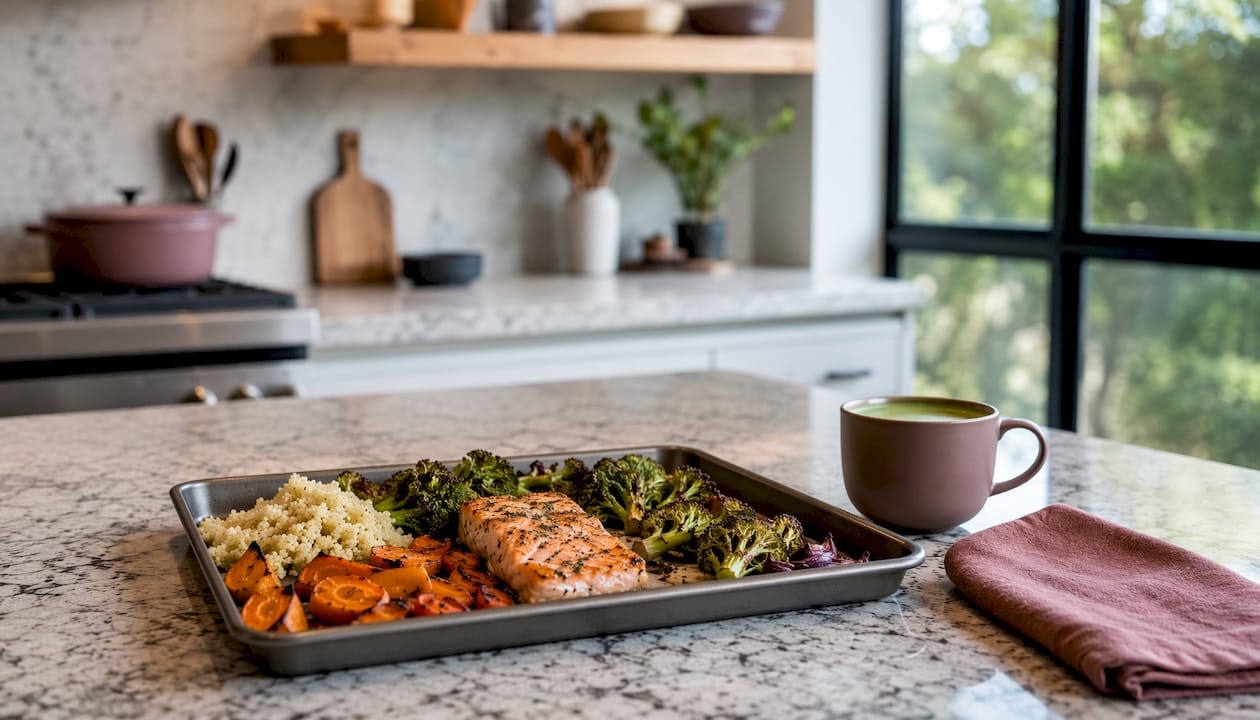
- Sheet-pan salmon and asparagus — one 5-oz fillet and a handful of asparagus on a small sheet pan at 400°F for 12–15 minutes.
- Skillet chicken and rice — brown a chicken thigh, add ½ cup rice and 1 cup broth, cover and simmer 20 minutes. Everything finishes together.
- One-pan sausage and peppers — one sausage link sliced, half a bell pepper, onion, olive oil. 15 minutes in a skillet.
For sheet-pan cooking, use a quarter-sheet pan (9x13 inches) rather than a full-size pan. A full sheet pan spreads a single portion too thin, causing vegetables to steam instead of roast. Timing matters too: add denser vegetables (broccoli, carrots) first and delicate ones (asparagus, cherry tomatoes) in the last 5–7 minutes so everything finishes at the same time.
Pro Tip: When cooking one portion in a skillet, use just enough oil to coat the bottom — about 1 teaspoon. Too much oil for a small amount of food creates splatter and makes proteins steam instead of sear.
Pantry and lazy dinners that still feel like a real meal
Some nights you don't want to think. These dinners pull from what's already in your kitchen and come together in under 20 minutes.
Fried rice is the classic example. Day-old rice, one egg, soy sauce, and whatever vegetables or protein are in the fridge. The key is using cold rice (fresh rice is too wet and turns mushy) and a hot pan. It's the most reliable leftover-repurposing meal for solo cooks.
Other pantry-first options:
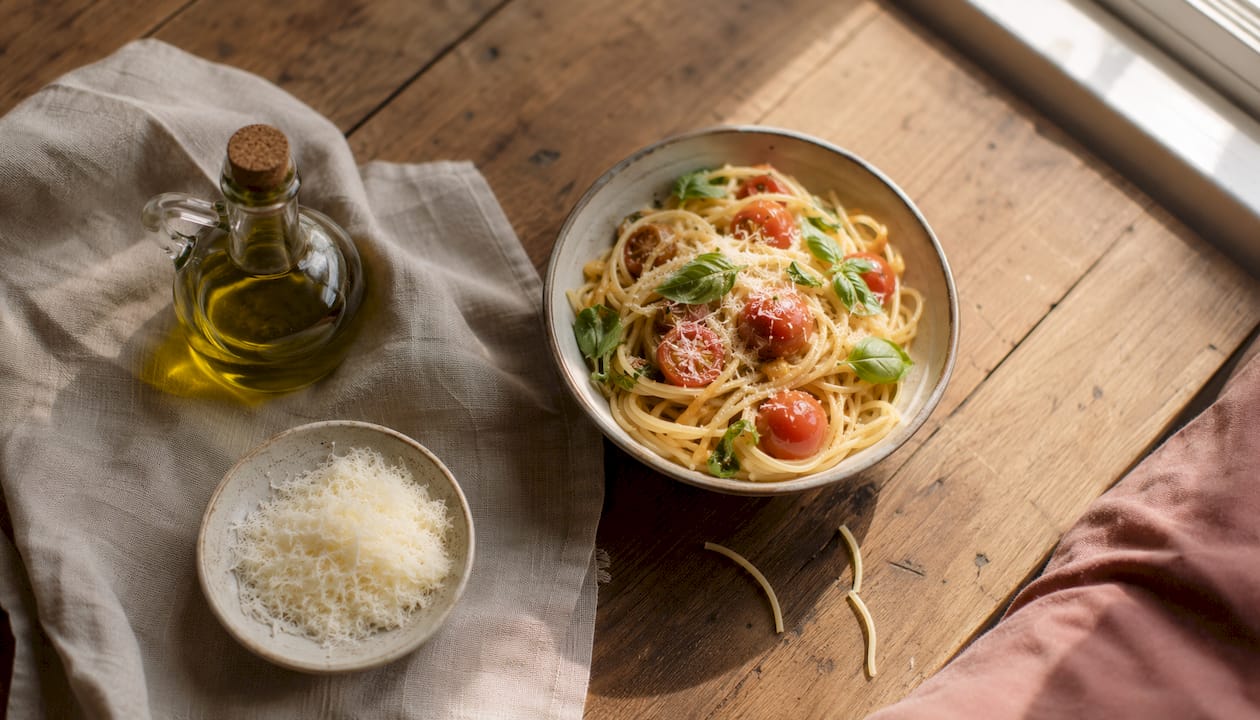
- Jarred-sauce pasta — 3 oz pasta, ½ cup store-bought marinara, a handful of Parmesan. Upgrade it with a pinch of red pepper flakes and a drizzle of good olive oil.
- Bean quesadilla — one flour tortilla, ¼ cup canned black or pinto beans, shredded cheese, cooked in a dry skillet 2–3 minutes per side.
- Upgraded avocado toast — thick-cut bread, half an avocado mashed with lime and salt, topped with a fried egg or canned tuna for protein.
- Canned chickpea bowl — rinse and warm chickpeas, toss with olive oil, lemon, cumin, and whatever greens you have.
Repurposing leftovers is straightforward when you think of them as ingredients, not finished meals. Leftover roasted chicken becomes the protein in a quesadilla, a grain bowl, or a quick pasta. Leftover rice becomes fried rice or the base for a curry bowl. The goal is to cook once and eat twice without it feeling repetitive.
To boost nutrition without extra prep, stir a handful of baby spinach into hot pasta or curry (it wilts in 60 seconds), add a can of white beans to any soup or sauce, or crack an egg into fried rice in the last two minutes.
Small-batch pasta and grain bowls: how to portion and sauce them
Measuring for one is the part most people skip, and it's why solo pasta ends up as a pot of leftovers. For dry pasta, a single serving is about 2–3 oz (roughly a small handful, or about ¾ cup of short pasta like penne). For rice, ¼ cup dry rice yields about ¾ cup cooked, which is a solid single-serving base.
Cook times don't change when you scale down, but the water-to-grain ratio matters more. Use just enough water to cover the grain by an inch; too much water dilutes flavor and extends cook time.
Three fast sauces that take under 5 minutes and feel restaurant-quality:
- Miso-Parmesan broth — 1 tbsp white miso, 1 tbsp grated Parmesan, 1 cup hot water or broth. Whisk together and pour over noodles. This is the base of the miso-Parmesan noodle soup that comes together in 25 minutes.
- Garlic-chili oil — 2 tbsp olive oil, 1 minced garlic clove, ¼ tsp red pepper flakes, warmed in a small pan 1–2 minutes. Toss with any pasta or grain.
- Lemon-herb olive oil — 2 tbsp olive oil, 1 tsp lemon zest, 1 tsp fresh or dried herbs. No cooking needed; just toss with warm pasta.
Flavor boosters worth keeping on hand: white miso, grated Parmesan, soy sauce, chili oil, rice vinegar, and a good olive oil. These six items can change the profile of the same bowl of rice or pasta completely, which is how NYT Cooking describes building variety from a small pantry. Recipe developers recommend having 3–5 back-pocket recipes that are ingredient-flexible — these become the habits that replace takeout.
Protein cook times and food safety for single servings
Getting protein right is where most solo cooks either nail the meal or ruin it. The good news: quick proteins are fast precisely because they're small.
Safe cook times for common single-serving proteins:
- Shrimp (4 oz): 3–4 minutes total in a hot skillet, flipping once. They're done when they curl into a C-shape and turn opaque. Overcooked shrimp curl into an O and turn rubbery.
- Salmon fillet (~5 oz): 3–4 minutes per side over medium-high heat. The USDA recommends an internal temperature of 145°F for fish.
- Diced chicken breast (~4–5 oz): 6–10 minutes depending on the size of the pieces. Internal temperature must reach 165°F. Let it rest 2–3 minutes before cutting.
- Sliced beef (thin cuts like boneless short rib or sirloin): 1–2 minutes per side for medium-rare; use an instant-read thermometer and aim for 130–135°F for medium-rare or 145°F for medium.
For food safety with single servings, the rules are the same as for any batch: cook to the right internal temperature, don't leave cooked protein at room temperature for more than two hours, and refrigerate leftovers within that window. Cooked chicken and shrimp keep in the fridge for 3–4 days; cooked salmon is best within 2 days.
Pro Tip: Cook one extra portion of protein at the start of the week — a second chicken breast or a few extra shrimp — and refrigerate it. You've just built the base for tomorrow's grain bowl, quesadilla, or pasta without any additional cook time.
The shrimp taco bowl is a perfect example of this approach: shrimp cook in 3–4 minutes and can be repurposed the next day over rice or in a wrap.
Essential tools and pantry staples for fast single-serve dinners
You don't need a fully stocked kitchen. You need the right small set of tools and a pantry that covers multiple flavor profiles.
Compact equipment checklist:
- 8–10 inch skillet (nonstick for eggs; stainless or cast iron for searing)
- 2-quart saucepan for pasta, grains, and soups
- Sharp chef's knife and a small cutting board
- Quarter-sheet pan (9x13 inches) for oven cooking
- Measuring cups and spoons
- Instant-read thermometer
For a full breakdown of what each tool does and which brands to look for, the beginner kitchen equipment guide at Adultingwithfood covers everything in detail.
Pantry staples that last and create variety:
| Staple | Why it matters | Shelf life |
|---|---|---|
| Olive oil | Base for sautéing and finishing sauces | 12 months |
| Soy sauce | Umami, salt, and color in one ingredient | 2–3 years |
| Rice vinegar | Brightens any bowl or sauce | 2 years |
| White miso | Deep savory flavor for soups and dressings | 3–6 months (refrigerated) |
| Canned beans | Instant protein and fiber, no prep needed | 2–5 years |
| Quick-cooking grains (rice, farro, couscous) | Fast carb base for any bowl | 1–2 years |
| Honey | Balances acidity and adds glaze | Indefinite |
| Chili oil or red pepper flakes | Heat and depth without extra ingredients | 1 year |
When buying fresh items, choose loose vegetables over pre-bagged ones so you only take what you need. Buy single chicken breasts from the butcher counter rather than a family pack. Frozen shrimp in a resealable bag is one of the smartest buys for solo cooks — you pull out exactly what you need and zip the rest back up.
How to shop, store, and avoid waste when cooking for one
Smart shopping for one comes down to three habits: buy singles, use your freezer, and plan around multi-use ingredients.
Shopping tactics:
- Buy proteins in single portions from the butcher or seafood counter when possible
- Choose frozen shrimp, salmon fillets, or chicken breasts in resealable bags — pull one portion at a time
- Buy loose produce (one carrot, two stalks of celery) instead of pre-packaged bags
- Stock long-lasting pantry items in bulk (olive oil, soy sauce, canned goods) to lower cost per use
- Plan two or three dinners around the same fresh ingredient to use it up before it turns
Storage quick-reference:
| Item | Fridge life | Freezer life |
|---|---|---|
| Raw chicken breast | 1–2 days | 9 months |
| Raw shrimp | 1–2 days | 6 months |
| Cooked chicken or shrimp | 3–4 days | 2–3 months |
| Cooked salmon | 2 days | 2 months |
| Cooked rice or grains | 4–5 days | 1 month |
| Canned beans (opened, stored in water) | 3–4 days | Not recommended |
Label everything with the date using a piece of masking tape and a marker. It takes five seconds and saves you from the "is this still good?" guessing game.
For cost, quick proteins and pantry grains keep per-meal costs low. A single salmon fillet, a portion of rice, and pantry sauce ingredients typically land well under $10 per meal, often closer to $5–7, depending on where you shop. That's a fraction of the average delivery order, and you control exactly what goes in it.
How these recipes were chosen and tested
Nearly 30% of American households are single-person households. That's a huge number of people cooking for themselves every night, and most recipe content still isn't built for them.
Every recipe in this guide was selected using three criteria: it had to be portioned for one from the start (not scaled down from a family recipe), it had to finish in 15–30 minutes, and it had to use ingredients available at any standard grocery store. As the research confirms, single-serve recipes work best when they're designed for smaller vessels and adjusted liquid ratios — not just halved versions of larger dishes.
Timing was verified in a single small-kitchen setup, using standard home equipment: an 8-inch skillet, a 2-quart saucepan, and a standard oven. Recipes were adjusted until the cook times were reliable and the portions felt satisfying without producing leftovers.
Adultingwithfood is built on this same principle. The membership is designed specifically for people learning to cook for themselves, with weekly recipe drops, grocery checklists, and real chef support. Every recipe in the program is tested and portioned for real home kitchens, not professional ones.
Key Takeaways
The most reliable path to a fast, satisfying solo dinner is a short list of flexible recipes, a stocked pantry, and proteins you can cook in under 10 minutes.
| Point | Details |
|---|---|
| Build 5 back-pocket recipes | A small set of flexible, ingredient-swappable recipes replaces the takeout habit faster than any single dish. |
| Use small pans | An 8–10 inch skillet and a 2-quart saucepan handle nearly every single-serving recipe without overcooking or wasting oil. |
| Quick proteins save time | Shrimp cooks in 3–4 minutes; a salmon fillet sears in 3–4 minutes per side; diced chicken finishes in 6–10 minutes. |
| Shop and store smart | Buy single portions, freeze what you won't use in two days, and label everything with the date. |
| Adultingwithfood | Weekly single-serve recipe drops, grocery checklists, and chef support make cooking for one consistent and confidence-building. |
Cooking for one is worth every minute
Here's the honest truth: most people who skip cooking for themselves aren't doing it because they can't cook. They're doing it because it feels like too much effort for just one person. That mindset is the only real barrier.
When you treat a solo dinner as something you deserve, not something you're settling for, the whole experience shifts. You control the flavors, the portions, and the cost. You're not splitting a pizza you didn't want or paying a delivery fee on a meal that arrives cold. A 15-minute shrimp bowl or a 25-minute creamy pasta costs a fraction of takeout and tastes better because you made it exactly how you like it.
Variety is completely within reach too. The same base — rice, pasta, greens — becomes a completely different meal when you change the sauce and the protein. That's not a cooking trick; it's just how good home cooking works. You don't need a new recipe every night. You need a few solid ones you can rotate and adapt.
For simple Mediterranean-inspired flavor ideas that translate beautifully to single-serve bowls and pastas, that guide is worth a read when you're ready to expand your flavor range.
Adultingwithfood makes cooking for one easier from day one
If you're ready to stop guessing what to make and start cooking with real confidence, Adultingwithfood is built exactly for this.
Members get the Adulting With Food Starter Pack, which covers kitchen setup, grocery basics, and the foundational skills you need to cook real meals at home. Every week, five new recipes drop directly to your inbox, each one portioned and tested for a real home kitchen. Grocery store checklists take the planning work off your plate, and real chef support means you're never stuck on a technique or a substitution.
- Starter Pack — kitchen setup, tools, and grocery guidance in one place
- Weekly recipe drops — 5 new single-serve and small-batch recipes every week
- Grocery checklists — no more wandering the store without a plan
- Chef support — real answers when you have a question
Get your Starter Pack today and make your next dinner the one that sticks.
Useful sources and further reading
- Easy Shrimp Avocado Taco Bowl for One — Sarah's Cucina Bella
- 15-Minute Salmon Bowl for One — One Happy Dish
- Creamy Chicken Pasta for One — One Happy Dish
- Miso-Parmesan Noodle Soup for One — NYT Cooking
- Dinner for One: 35 Easy Dinner Ideas — One Dish Kitchen
- All Kitchen Equipment Beginners Need — Adultingwithfood
- Easy Recipes for Beginners: Build Real Kitchen Skills — Adultingwithfood
- Your Cooking Planner Guide for Beginner Cooks — Adultingwithfood
- Quick Dinner Ideas for 2: Fast Meals in 30 Minutes — Adultingwithfood