
A cooking planner is the organized system you use to decide what you'll eat, build your grocery list, and get meals on the table without the last-minute scramble. Think of it as your weekly game plan for the kitchen. According to Everyday Health, meal planning reduces daily dinner decision stress, supports nutrition goals, and helps keep grocery spending within budget. Registered Dietitian Nutritionist Stacey Simon echoes this: a simple plan, even a rough one, is enough to make a real difference.
Here's what a solid meal planning system covers:
- Meal selection: Choosing recipes a few days ahead so you're never guessing at 6 PM
- Grocery list creation: Building a shopping list from your chosen meals so nothing gets forgotten
- Batch prep: Spending 1–2 hours chopping, cooking grains, and prepping proteins so weeknights stay manageable
You don't need to be an experienced cook to start. You just need a plan.
Table of Contents
- How to build your cooking planner step by step
- How to customize your meal plan to fit your life
- What does a balanced meal actually look like?
- Common mistakes beginners make with meal planning
- What tools and templates work best for a cooking planner?
- How to shop smarter with your cooking planner
- Time management strategies for meal prep
- Key Takeaways
- Adultingwithfood gives you a real head start in the kitchen
How to build your cooking planner step by step
The Kitchn's beginner's guide recommends breaking the process into three separate tasks: recipe selection, shopping, and prep. Treating them as one big job is where most beginners get stuck.
- Friday evening: Spend some time picking meals for the week ahead. Choose a few dinners you already know how to make, plus one new recipe to build your skills.
- Saturday morning: Write your grocery list organized by store section (produce, proteins, pantry, dairy, frozen). Shop once and you're done.
- Sunday afternoon: Block some time for batch prep. Cook grains, roast vegetables, and prep proteins so weeknight assembly takes less time.
Start with just a few days of planned meals if a full week feels like too much. Build the habit first, then expand.
Pro Tip: Use a rotation strategy. Keep a few simple meals in regular rotation so you're not reinventing the wheel every week. Familiar meals reduce decision fatigue and keep you consistent.
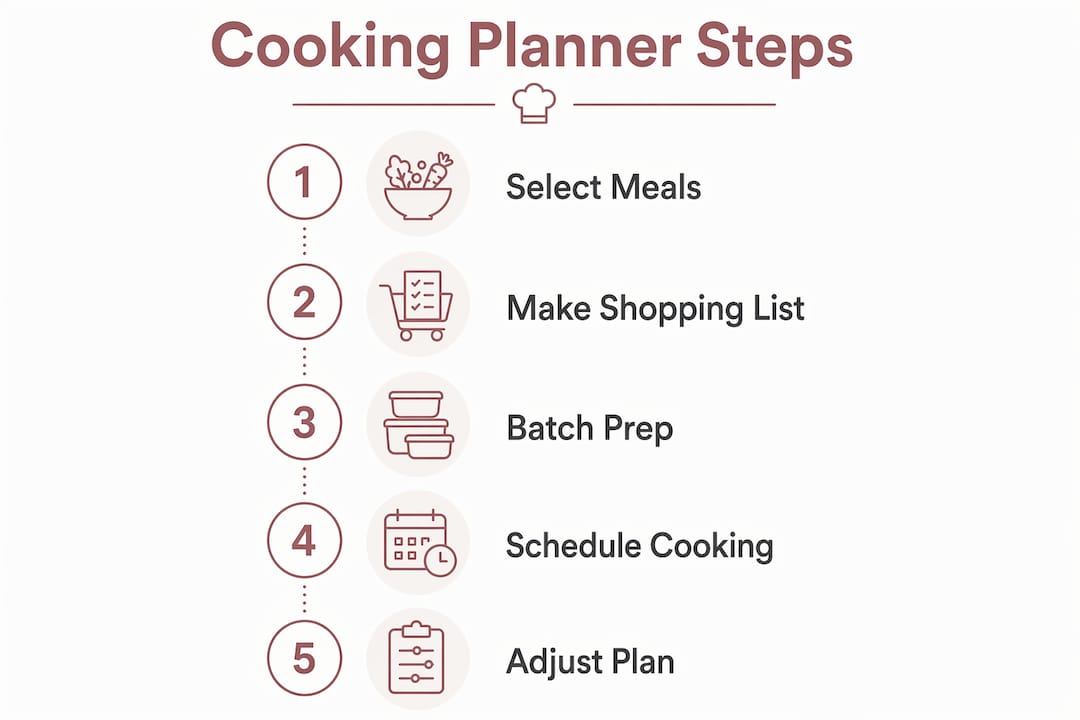
Ingredient stacking makes this even easier. Cook a batch of chicken or brown rice on Sunday, then use it differently across three meals: a stir-fry Monday, a grain bowl Wednesday, a wrap Friday. Same ingredient, zero monotony.
How to customize your meal plan to fit your life
Harvard's Nutrition Source is clear on this: there is no single correct method. Your cooking schedule template should reflect your food preferences, your skill level, and your actual week, not someone else's perfect plan.
- Start small. Plan 2–3 dinners, not seven. Add more as the habit sticks.
- Mix familiar and new. Keep most meals in your comfort zone and introduce one new recipe per week to build skills without pressure.
- Build in flexibility. Mark one or two nights as "leftover nights" or "eat out" nights. A flexible plan lowers mental burden and makes grocery shopping more efficient.
- Set a goal that matters to you. Saving money, eating better, reducing food waste, or simply knowing what's for dinner tonight. Pick one and let it guide your choices.
- Use ingredient stacking. Plan meals that share common ingredients to cut shopping time and reduce waste without eating the same thing twice.
Your plan is a guide, not a contract. Adjust it freely.
What does a balanced meal actually look like?
The Plate Method from Harvard T.H. Chan School of Public Health gives you a simple visual check without tracking a single calorie.
| Plate section | Proportion | Examples |
|---|---|---|
| Non-starchy vegetables | half | Broccoli, spinach, peppers, zucchini, carrots |
| Lean protein | a quarter | Chicken, fish, eggs, tofu, beans, lentils |
| Complex carbohydrates | a quarter | Brown rice, quinoa, whole-wheat pasta, sweet potato |
Fill half your plate with vegetables, a quarter with protein, and a quarter with complex carbs. That ratio puts you in a solid nutritional range without obsessing over numbers. It's the easiest nutrition guide a beginner can use.
Common mistakes beginners make with meal planning
Most beginners don't fail because they lack motivation. They fail because of a few fixable habits.
- Overplanning new recipes. Picking five unfamiliar dinners in one week leads to burnout fast. Stick to a rotation of 2–3 staple meals and add one new recipe at a time.
- Treating it as one big task. Planning, shopping, and prep are three separate jobs. Do them on separate days and each one feels manageable.
- Skipping dedicated prep time. A meal plan without a prep session is just a wish list. Block some time for prep and treat it like an appointment.
- Building a rigid plan. Life happens. Keep two or three five-minute emergency meals on hand: scrambled eggs on toast, canned soup, a quick grain bowl.
- Ignoring ingredient stacking. Buying different ingredients for every single meal wastes both money and time.
Pro Tip: Batch prep on Sunday prevents what many cooks call "Sunday Scaries" cooking fatigue. Wash and chop vegetables, cook a pot of grains, and portion proteins in one session. Monday through Friday becomes assembly, not cooking.
What tools and templates work best for a cooking planner?
You don't need anything fancy to get started. A notebook and a pen work fine. But the right tool can make the habit stick faster.
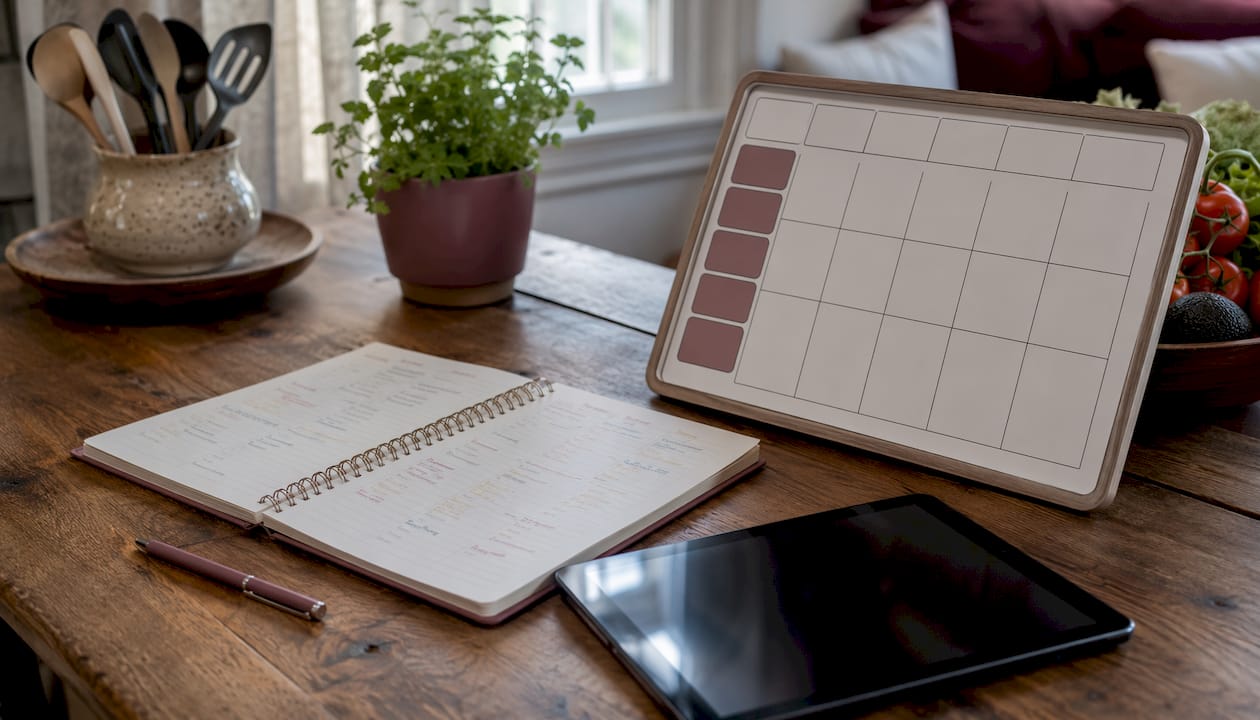
Physical options include a simple weekly planner pad, a whiteboard on the fridge, or a printed cooking schedule template you fill in each Friday. Many beginners find writing things down by hand helps them commit.
Digital options give you more flexibility. Apps like Spoonacular and Mr. Cook let you drag recipes onto a weekly calendar and auto-generate a grocery list by aisle. If you want recipe inspiration alongside your planner, RecipeOK offers a free weekly meal planner with a catalog of recipes you can pull directly into your plan.
The best tool is the one you'll actually use every week. Start simple, and upgrade only if you need more structure.
How to shop smarter with your cooking planner
Your grocery list is only as good as how it's organized. Writing items down as they come to mind means backtracking across the store and tossing extras in the cart.
Organize your list by store section before you leave the house:
- Produce: Fresh fruits and vegetables
- Proteins: Meat, poultry, fish, eggs, tofu
- Pantry: Grains, canned goods, spices, oils
- Dairy and alternatives: Milk, yogurt, cheese
- Frozen: Backup proteins, frozen vegetables, fruit
Stock pantry staples in bulk: oats, brown rice, quinoa, dried beans. They're inexpensive, last for months, and form the base of dozens of meals. For produce, favor longer shelf-life items like apples, onions, carrots, and sweet potatoes. You'll waste less and spend less. Pairing your meals thoughtfully, the way you might pair coffee with food, can also make your weekly menu feel more intentional and satisfying.
Time management strategies for meal prep
The biggest time-saver in any kitchen is doing the hard work before the week starts. Component prepping, cooking grains, roasting vegetables, and grilling proteins in batches, means weeknight dinners take 15–20 minutes instead of 45.
A few habits that protect your time:
- Cook proteins in batches. One tray of roasted chicken covers three dinners.
- Multi-task during prep. While grains cook on the stove, chop vegetables for the week.
- Label everything. Date your prepped containers so you know what to use first and nothing gets forgotten in the back of the fridge.
- Plan for quick weeknight dinners by keeping pre-cooked components ready to assemble.
Consistency beats perfection every time. One solid prep session per week is enough to change how your whole week feels.
Key Takeaways
A cooking planner works best when it's flexible, built around familiar meals, and supported by a single weekly prep session.
| Point | Details |
|---|---|
| Start with 2–3 meals | Plan only a few dinners per week at first; build the habit before expanding. |
| Use the Plate Method | Fill half your plate with vegetables, a quarter with protein, and a quarter with complex carbs for easy nutrition. |
| Separate your tasks | Treat planning, shopping, and prep as three distinct sessions to stay consistent. |
| Ingredient stacking saves time | Reuse common ingredients across multiple meals to cut prep time and reduce waste. |
| Adultingwithfood supports your plan | Weekly recipe drops, grocery checklists, and real chef support help beginners build a cooking routine that sticks. |
Adultingwithfood gives you a real head start in the kitchen
Knowing the system is one thing. Having the recipes, the checklists, and a real chef in your corner is another. Adultingwithfood is a digital cooking membership built specifically for beginners who want to stop relying on takeout and start cooking meals they're proud of.
Every week, members get five new skill-building recipes, grocery store checklists that align directly with the weekly plan, and access to real chef support when a recipe doesn't go as expected. The Adulting With Food Starter Pack covers kitchen setup, essential tools, and the grocery basics you need before you cook your first meal. You can also explore easy beginner recipes that build real skills week over week. Adultingwithfood has also been recognized among the top cooking subscription communities for beginner cooks.
Ready to cook your first real meal at home? Visit Adultingwithfood and get your Starter Pack today.