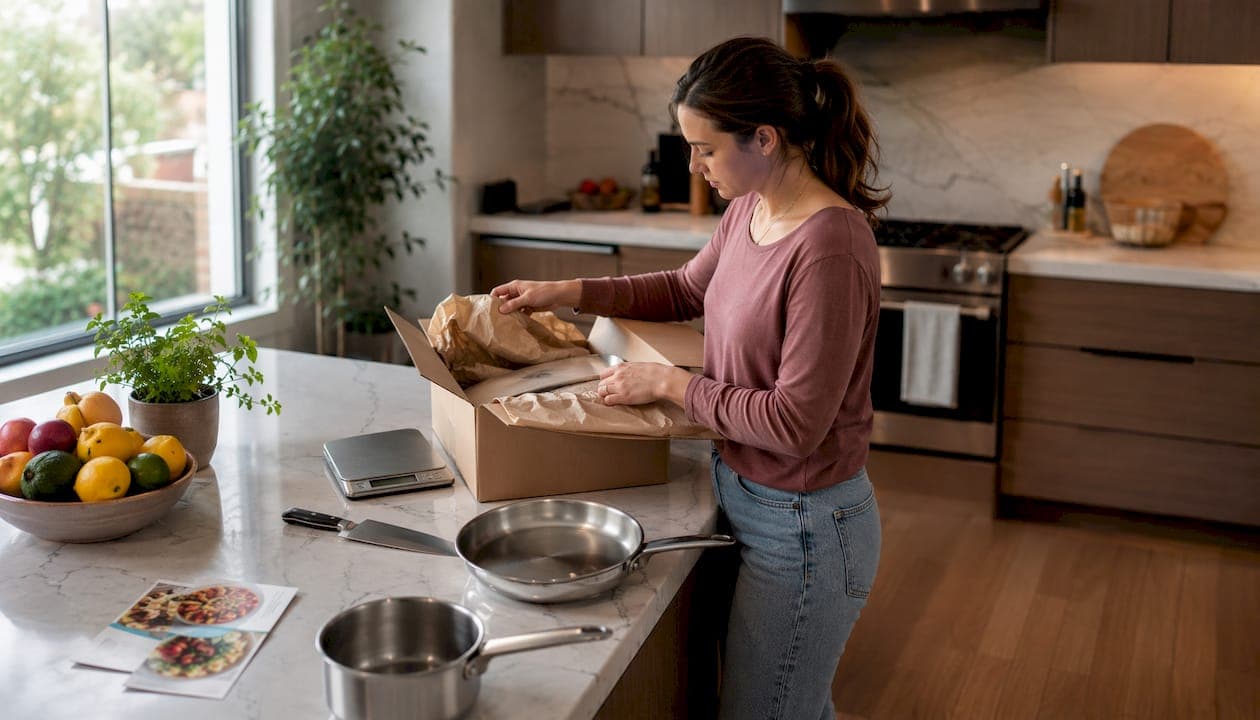
What all kitchen equipment do you actually need to start?
Building a practical kitchen setup does not require buying everything at once. Start with these core tools and you will be ready to cook real, restaurant-quality meals from day one.
Knives:
- Chef's knife with full tang construction (handles roughly 90% of prep tasks)
- Paring knife for delicate work like segmenting citrus
- Serrated bread knife for crusty loaves
Cookware:
- Cast iron skillet
- Heavy-gauge stainless steel pan
- Large stockpot (a generously sized one works well)
- Small saucepan
Bakeware:
- Half-sheet and quarter-sheet pans with rolled edges
- Loaf pan
- Mixing bowls (stainless steel and glass)
Measuring tools:
- Digital kitchen scale
- Measuring cups and spoons
Small appliances:
- Electric kettle
- Blender
- Hand mixer
Safety gear:
- Oven mitts and trivets
- Fire extinguisher
Storage and organization:
- Airtight containers
- Cutting boards (at least two)
- Utensil holder
That is your full kitchen utensils list in one place. The sections below explain why each category matters and what to look for when you shop.
Table of Contents
- 1. Why your knives are the foundation of everything
- 2. Cookware that actually holds heat and lasts
- 3. Why a digital kitchen scale beats measuring cups
- 4. Prep tools and organization that speed up your cooking
- 5. How to set up your kitchen for success as a beginner
- Ready to cook with confidence? Adultingwithfood can help
- Key Takeaways
1. Why your knives are the foundation of everything
A good chef's knife is the single most important tool in your kitchen. Full-tang construction means the blade runs all the way through the handle in one solid piece, giving you better balance and control. That stability matters every time you chop, slice, or dice.
You only need three knives to cover almost every task:
- Chef's knife: Your workhorse for chopping vegetables, slicing meat, and mincing garlic
- Paring knife: Built for nimble, close-up work like hulling strawberries or peeling fruit
- Serrated bread knife: The only knife that cleanly cuts through a crusty sourdough without crushing it
Skip the big knife block sets. Buying a few high-quality knives separately gives you better value and performance than a block full of blades you will never touch. Most of those sets include low-grade steel that dulls fast and feels unbalanced in your hand.
Knife maintenance matters just as much as the knife itself. Hone your chef's knife regularly with a honing steel to keep the edge aligned between uses. When honing no longer restores sharpness, take it to a professional sharpener or use a whetstone. For safe storage, a magnetic knife strip or a knife block keeps blades protected and within reach. Check out these knife safety tips to build good habits from the start.
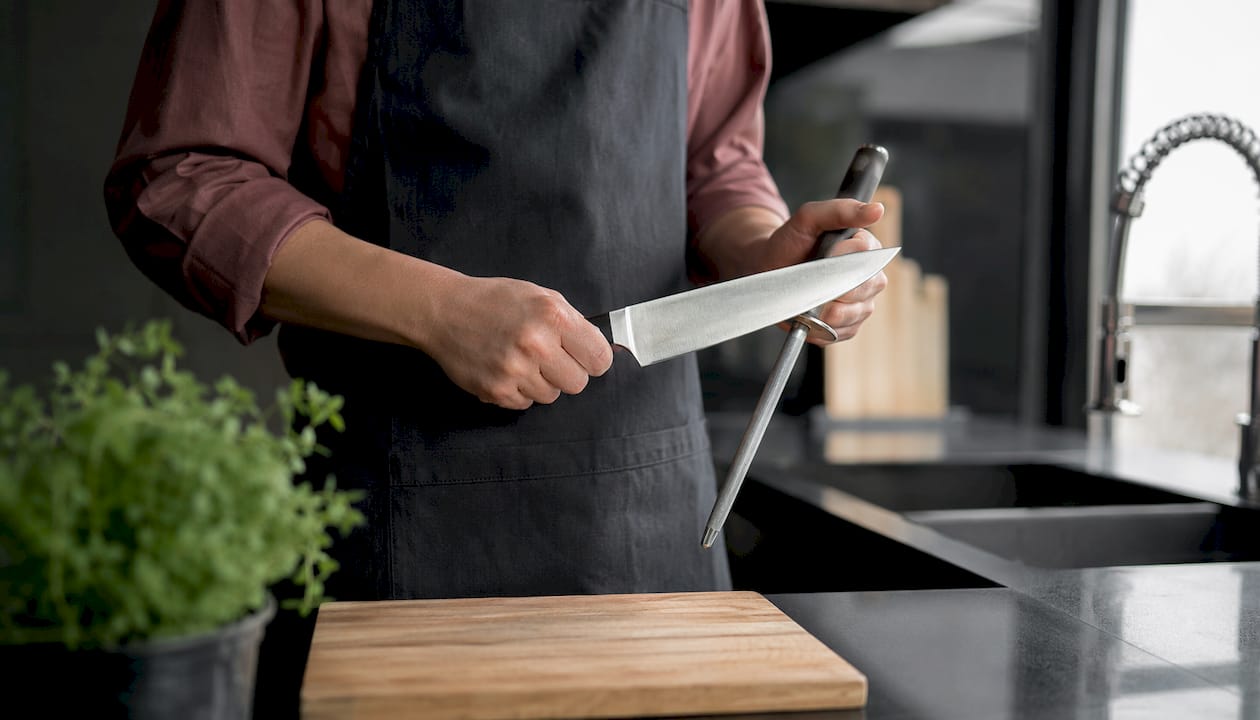
Pro Tip: Never put your knives in the dishwasher. The heat and detergent dull the blade and can warp wooden handles. Hand-wash and dry them immediately after use.
2. Cookware that actually holds heat and lasts
The material your pans are made from changes how your food cooks. Cast iron and heavy-gauge stainless steel are the two best options for home cooks because they hold heat evenly and stand up to years of use. Cheap, lightweight metals warp under high heat, which causes hot spots and uneven cooking.
Here is how each material performs:
- Cast iron skillet: Builds a natural nonstick surface over time, gets extremely hot, and creates a beautiful sear on meat. A Lodge cast iron skillet is a widely trusted starting point.
- Heavy-gauge stainless steel pan: Heats up faster than cast iron and responds quickly to temperature changes, making it ideal for sautéing and stir-fries. For guidance on picking the right material, choosing cookware materials is worth reading before you shop.
- Nonstick pan: Not your first choice for everything, but genuinely useful for scrambled eggs and crepes. The coating degrades over time, so plan to replace it every couple of years.
- Large stockpot: A generously sized pot handles stock, soups, pasta, and chili. You will not use it every day, but nothing else substitutes when you need it.
Proper care extends the life of all your cookware. Hand-wash stainless steel even when the label says dishwasher-safe. Season your cast iron after each use to maintain its surface.
3. Why a digital kitchen scale beats measuring cups
A digital kitchen scale measures ingredients down to the gram, which makes your recipes far more consistent than volume measures alone. Kitchen scales became recommended essentials by 2026 precisely because they remove the guesswork that trips up beginner cooks, especially in baking where a few extra grams of flour can change the entire texture of a loaf.
Why the scale wins:
- Accuracy: A cup of flour can vary by weight depending on how tightly it is packed. A scale gives you the same amount every time.
- Fewer dishes: Weigh directly into your mixing bowl and skip the measuring cups entirely.
- Confidence: When a recipe works perfectly, you know exactly how to repeat it.
Measuring cups and spoons still have a place in your kitchen for quick tasks like measuring a teaspoon of baking soda or a tablespoon of oil. Keep both on hand. But for anything that requires precision, especially baked goods, reach for the scale first.
4. Prep tools and organization that speed up your cooking
A well-organized kitchen cuts down on the time you spend searching for tools and the frustration that comes with a cluttered workspace. Properly sized tools and a logical layout transform cooking from stressful to manageable, especially when you are learning.
Stock these prep tools to cover the basics:
- Kitchen shears: Faster than a knife for trimming herbs, cutting pizza, or breaking down poultry
- Vegetable peeler: A sharp one saves your knuckles and works in seconds
- Box grater: Handles cheese, zucchini, ginger, and more
- Prep bowls: Small bowls for holding prepped ingredients keep your workspace clear and your cooking organized
- Colander: Metal is better than plastic because it handles boiling water without warping
- Wooden spoon and silicone spatula: Your two most-used stirring tools, used every single day
- Tongs: Locking tongs work for everything from flipping chicken to tossing salad
For bakeware, professional-style sheet pans with rolled edges prevent warping and distribute heat evenly. Flat cookie sheets do not. Get at least one half-sheet and one quarter-sheet pan. They handle cookies, roasted vegetables, and sheet-pan dinners equally well.
For a deeper look at arranging your workspace, the most efficient kitchen layout guide walks you through how to set up prep, cook, and clean zones so everything flows naturally.
5. How to set up your kitchen for success as a beginner
Start with the essentials from this list and add tools as your cooking grows. Buying everything at once leads to clutter and tools you never use. Prioritize quality over quantity, especially for knives and cookware, because one great pan outperforms three cheap ones every time.
A few setup principles that make a real difference:
- Arrange by task: Keep knives, cutting boards, and prep bowls in one zone. Keep your pans near the stove. Store bakeware near the oven.
- Store ingredients properly: Airtight containers keep pantry staples like flour, rice, and spices fresh and easy to find.
- Keep safety gear accessible: Oven mitts should live right next to your oven, not in a drawer across the kitchen. A fire extinguisher rated for kitchen use belongs mounted near the stove, not stored in a closet.
- Use a utensil holder: Keeping your most-used tools on the counter means you grab them without thinking, which speeds up every meal.
If you are still learning to identify what each tool does, the beginner's guide to kitchen utensils is a practical starting point. Building your setup step by step, with real guidance behind you, is how you go from unsure to confident in the kitchen.
Ready to cook with confidence? Adultingwithfood can help

You now have a clear picture of all the kitchen equipment you need to get started. The next step is learning how to actually use it.
Adultingwithfood is a digital cooking membership built for beginners exactly like you. Members get the Adulting With Food Starter Pack, weekly recipe drops with 5 new recipes, grocery store checklists, and real chef support to answer your questions along the way. No guessing. No wasted groceries. Just real meals you will be proud to serve.
Get your Starter Pack today and start cooking restaurant-quality meals at home.
Key Takeaways
A practical beginner kitchen setup requires quality knives, durable cookware, a digital scale, and organized prep tools to consistently produce restaurant-quality meals at home.
| Point | Details |
|---|---|
| Start with three knives | A chef's knife, paring knife, and serrated bread knife cover nearly every prep task. |
| Choose cast iron or stainless steel | These materials hold heat evenly and last for years, unlike cheap lightweight metals that warp. |
| Use a digital kitchen scale | Scales measure down to the gram, giving you consistent results every time you cook or bake. |
| Organize by cooking zone | Arrange prep, cook, and bake areas so your tools are always within reach when you need them. |
| Add safety gear from day one | Oven mitts, trivets, and a kitchen-rated fire extinguisher belong in every beginner setup. |