
You can cut household food waste fast by planning meals, shopping with a portion-aware list, storing food correctly, freezing what you won't eat in the next few days, and repurposing leftovers into planned second meals. The U.S. EPA estimates the average family of four throws away almost $3,000 worth of food every year. That's not a rounding error. That's a car payment, a vacation, or three months of groceries.
Here's a quick checklist you can use right now:
- Before shopping: Check your fridge, freezer, and pantry. Write down what you already have.
- At the store: Buy only what fits your meal plan for the week. Skip bulk buys on perishables you won't finish.
- When you get home: Move older items to the front of the fridge and pantry. New items go to the back.
- Fridge rule: Keep your refrigerator at or below 40°F. Cooked leftovers are safe for 3–4 days.
- Freezer rule: Label everything with the date before it goes in. Freeze leftovers you won't eat within two days.
Pro Tip: Label containers with the date AND the contents before they go in the fridge. "Mystery Tuesday soup" gets eaten. Unlabeled containers get forgotten and tossed.
Table of Contents
- How do you shop and plan meals to stop overbuying?
- How to store pantry, fridge, and freezer items so food lasts longer
- How to cook, portion, and repurpose leftovers into planned meals
- Which tools and templates help lower-waste habits stick?
- How cooking skills directly help you waste less food
- Key Takeaways
- The habit that actually changes things
- AdultingintheKitchen makes cooking at home easier from day one
How do you shop and plan meals to stop overbuying?
Waste prevention starts before you open the refrigerator. Most overbuying happens because people shop without a clear picture of what they already have or how many servings they actually need.
A practical weekly routine takes about 10 minutes. Check your fridge, freezer, and pantry first. Then pick 3–5 core meals for the week. Build your shopping list from those meals, written in quantities, not just ingredients. "Salad greens" becomes "one 5-oz bag." "Chicken" becomes "1.5 lbs for two dinners." This cooking planner approach keeps your list grounded in what you'll actually cook.
Smart shopping habits that prevent waste:
- Write your list by store section (produce, proteins, pantry) so you move efficiently and skip impulse buys.
- Add a "use-by" column to your list. If something at home is expiring soon, plan a meal around it before buying more.
- Buy bulk only for shelf-stable items you use regularly: dried beans, rice, oats, canned tomatoes.
- Choose imperfect or "ugly" produce when it's available. Misshapen carrots and bruised apples are nutritionally identical to perfect ones and often cheaper.
- For single or two-person households, check out quick dinner ideas for two to right-size your portions before you shop.
Pro Tip: Shop with a full stomach. Studies consistently show that hungry shoppers buy more than they need, especially perishables they won't finish.
How to store pantry, fridge, and freezer items so food lasts longer
Organization is the single most underrated tool for cutting kitchen waste. If you can't see it, you won't eat it.
Fridge placement matters more than you think
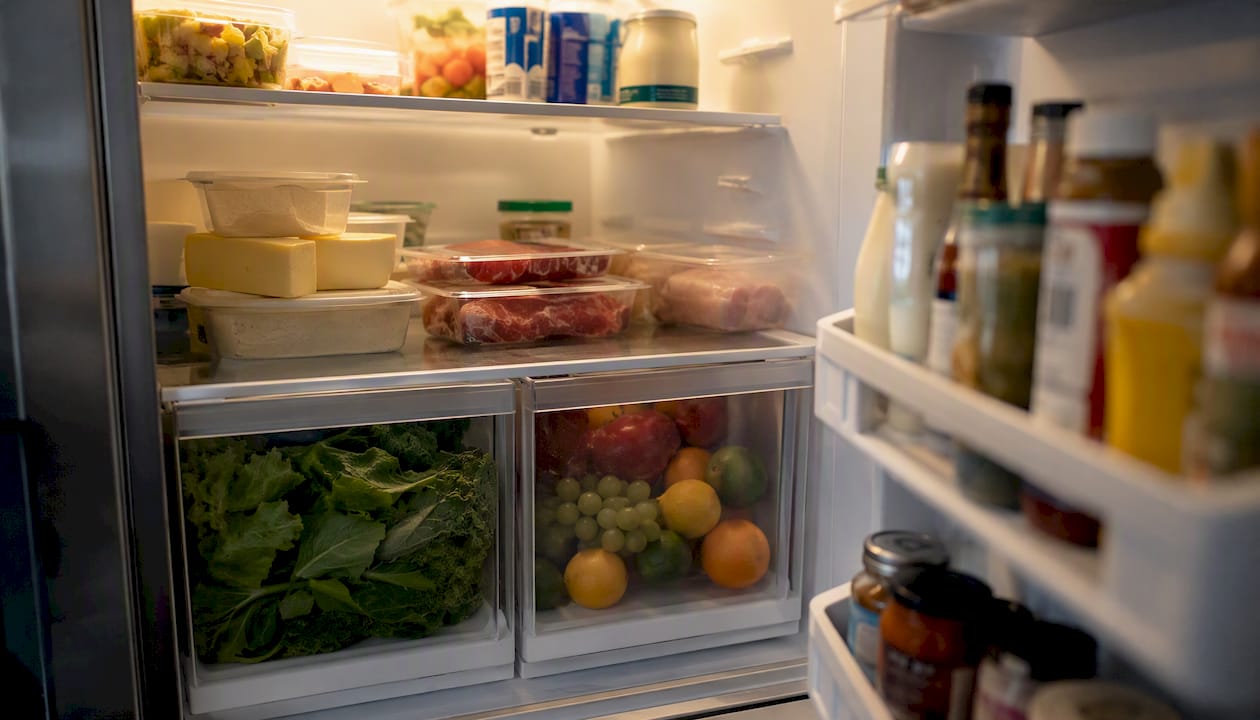
Keep your refrigerator at or below 40°F. The coldest shelf (usually the bottom, above the crisper drawers) is where raw meat and fish belong. Cooked leftovers and dairy go on the middle shelves. The door is the warmest spot in the fridge, so store condiments there, not milk or eggs. Use the humidity drawers correctly: high humidity for leafy greens and herbs, low humidity for fruits that emit ethylene gas (apples, pears, stone fruits).
Pantry and dry goods
Transfer opened bags of grains, flour, and cereals into airtight containers. Label each container with the date you opened it. Rotate stock every time you restock: new items go to the back, older items come forward. A well-organized kitchen layout makes this rotation a natural habit rather than a chore.
Freezer best practices
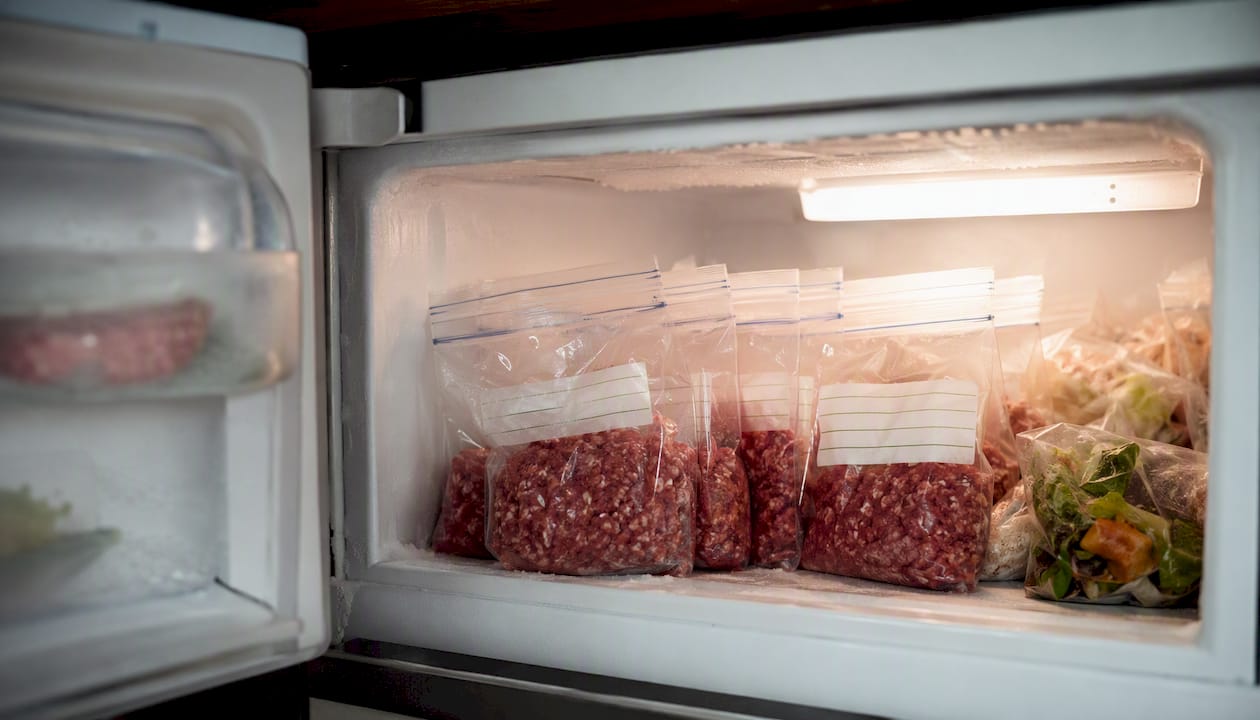
Freeze in portions you'll actually use in one meal. A full pound of ground beef frozen as one block means you'll thaw more than you need. Divide it into half-pound portions before freezing. Label every bag or container with the food name and the date. Do a quick freezer sweep once a month to move older items to the front.
Pro Tip: Freeze a "scrap bag." Toss vegetable trimmings, herb stems, and onion skins into a zip-lock bag in the freezer. When it's full, simmer it into a free batch of vegetable stock.
How to cook, portion, and repurpose leftovers into planned meals
The most effective mindset shift is this: decide the second meal before you store the first one. When you roast a sheet pan of vegetables on Sunday, you're not just making dinner. You're making Tuesday's grain bowl topping and Wednesday's frittata filling.
Batch cooking doesn't have to mean cooking everything at once. Partial batch cooking works just as well. Cook a double portion of rice. Roast an extra chicken breast. Make a larger pot of soup. These small decisions create planned leftovers rather than accidental ones.
Repurposing by food type:
- Cooked rice: Fried rice, rice soup, stuffed peppers, or a base for a grain bowl. Try this leftover rice soup recipe for a fast 30-minute meal.
The key is keeping components stored separately when possible. Cooked rice stored apart from sauce stays versatile for three days. Mixed together, it becomes one dish with one use.
Safe storage timelines for common foods
| Food | Refrigerator (40°F or below) | Freezer |
|---|---|---|
| Cooked leftovers | 3–4 days | 2–3 months |
| Raw ground meat | 1–2 days | 3–4 months |
| Raw poultry | 1–2 days | 9–12 months |
| Eggs (in shell) | 3–5 weeks | Not recommended |
| Hard cheese (opened) | 3–4 weeks | — |
| Cooked beans | 3–5 days | 1–2 months |
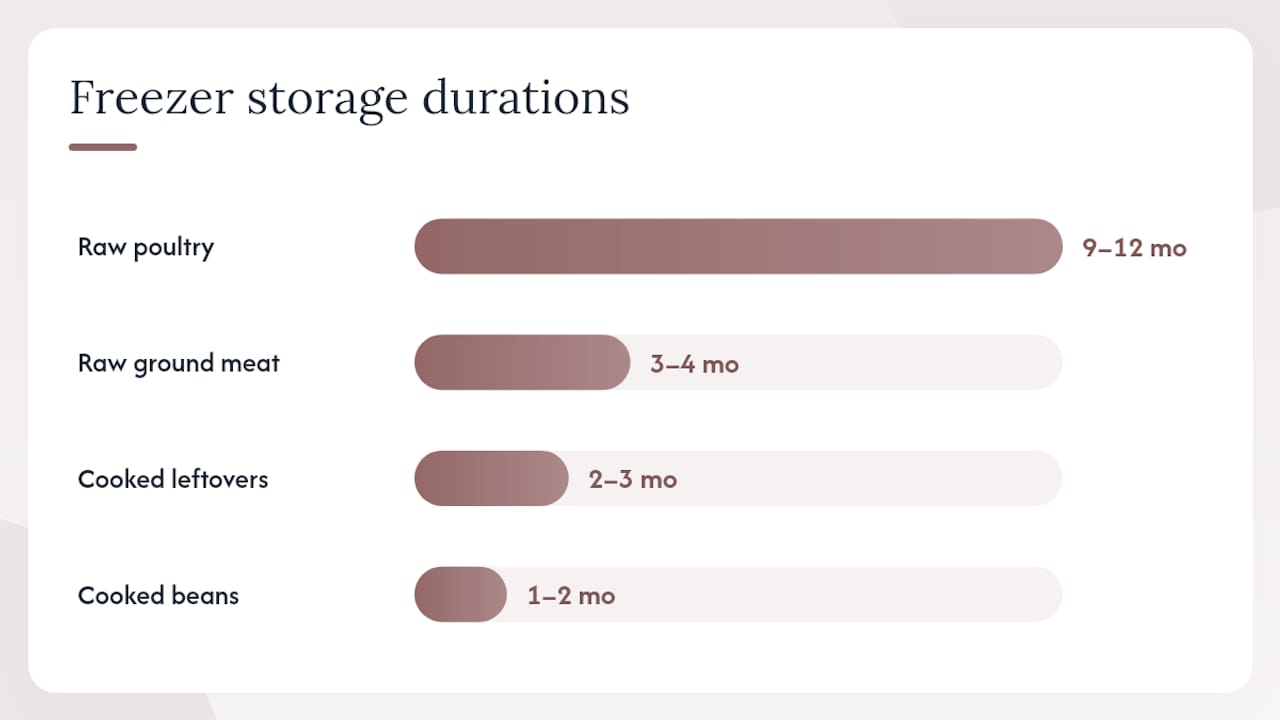
Sources: Illinois Extension, USDA Food Loss and Waste
The 2-hour rule is non-negotiable: perishable food left at room temperature for more than two hours (one hour if the room is above 90°F) should not be refrigerated and eaten later. When in doubt, use the FoodKeeper app from FoodSafety.gov. It gives specific storage windows for hundreds of foods and is free on iOS and Android.
Which tools and templates help lower-waste habits stick?
Habits stick when they're frictionless. These tools remove the friction.
The FoodKeeper app (free, iOS and Android) from FoodSafety.gov is the most useful single tool for reducing waste. Search any food and get its exact refrigerator, freezer, and pantry storage window. It also sends reminders. Use it every time you're unsure whether something is still good.
The USDA's consumer resources at usda.gov/foodlossandwaste/consumers include downloadable infographics and printable guides you can post on your fridge or pantry door.
Simple templates you can build yourself:
- A weekly fridge inventory sheet (a sticky note works): list what's in the fridge and when it expires.
- A freezer log taped to the freezer door: item, date frozen, quantity.
- A grocery checklist organized by store section, with a "use-by" column for items already at home.
Set a recurring 10-minute calendar reminder for Sunday evening. That one routine, done consistently, catches most waste before it happens.
How cooking skills directly help you waste less food
Skill and waste are directly connected. When you know how to cook confidently, you buy more intentionally, portion more accurately, and repurpose leftovers without hesitation. Beginners who aren't sure what to do with half a head of cabbage or leftover roasted chicken tend to let it sit until it's too late.
That's exactly the gap AdultingintheKitchen is built to close. The membership gives you a Starter Pack with kitchen setup guidance, a curated grocery checklist, and weekly recipe drops with five new recipes every week. You also get real chef support, so when you're staring at leftover ingredients and not sure what to make, you have someone to ask.
Better portioning comes from cooking the same formats repeatedly until they feel natural. Start with one repurposing format, like grain bowls or wraps, and practice it until it's automatic. Once that clicks, add a second. The easy dinner recipes for family on the AdultingintheKitchen blog are a good starting point for building that repetition.
Pro Tip: Pick one "leftover format" to master this week. A grain bowl works with almost any cooked protein, vegetable, and grain you have on hand. Once you can build one confidently, you'll stop throwing away cooked food.
Key Takeaways
Cutting household food waste comes down to four habits: plan before you shop, store food where you can see it, know what's actually safe to eat, and decide the second meal before you store the first.
| Point | Details |
|---|---|
| Plan before you shop | A 10-minute weekly inventory prevents overbuying and catches expiring food before it's wasted. |
| Know your date labels | "Best-by" and "sell-by" are quality dates, not safety dates; cooked leftovers are safe for 3–4 days refrigerated. |
| Freeze before it's too late | Label and freeze leftovers you won't eat within two days to extend their life by months. |
| Donate and compost what's left | Donate safe, unopened food to local food banks; compost scraps to keep them out of the landfill. |
| Build cooking skills | AdultingintheKitchen's membership gives beginners the recipes, grocery checklists, and chef support to cook confidently and waste less. |
The habit that actually changes things
Most people try to reduce food waste by being more careful. They buy less, feel guilty about what spoils, and then repeat the same cycle the following week. What actually works is building a small set of repeatable systems, not willpower.
The weekly fridge sweep, the labeled freezer bag, the meal plan written before the shopping list: none of these are complicated. But they require doing them consistently, not perfectly. If you miss a week, you haven't failed. You just start the sweep again next Sunday.
The readers who make the biggest progress are the ones who pick one habit, practice it until it's automatic, and then add another. That's it. No dramatic kitchen overhaul required.
AdultingintheKitchen makes cooking at home easier from day one
Knowing what to cook, how much to buy, and what to do with what's left is exactly what AdultingintheKitchen teaches. The membership is built for people who want real guidance, not just another recipe to scroll past.
When you join, you get the Adulting in the Kitchen Starter Pack with kitchen setup guidance and a grocery checklist built for beginners. Every week, five new recipes drop, each designed to use common ingredients you already have. Real chef support means you can ask questions and get answers, not just watch a video and hope for the best. Members buy more intentionally, cook more confidently, and waste far less because they know exactly what to do with every ingredient they bring home.
Start cooking with real chef guidance and see how much easier it gets when you have a plan.