Refrigerate or freeze cooked food within two hours (one hour if it's above 90°F outside), eat refrigerated leftovers within 3 to 4 days, and reheat everything to an internal temperature of 165°F before you eat it. That's the whole safety game in one sentence. Everything else in this guide is just the "how" behind that "what," so you can stop guessing and start building habits that keep your food, and your stomach, in good shape.
TL;DR:
- Leftovers must be refrigerated or frozen within two hours of cooking, or within one hour if outside temperatures exceed 90°F.
- Use shallow containers and label leftovers with dates to enable quick cooling and effective rotation, ensuring safety within 3 to 4 days in the fridge.
- Hot food should be cooled by dividing into smaller portions in containers, avoiding leaving large batches out, to prevent bacteria growth in the danger zone.
- Reheat leftovers to an internal temperature of 165°F, using a thermometer, and avoid thawing food on the counter to prevent bacterial contamination.
- Store leftovers on top shelves of the fridge and keep raw meats on the bottom to prevent cross-contamination, and discard items with mold, slimy textures, or foul smells after 3 to 4 days.
Table of Contents
- How Do You Store Leftovers Safely Right After a Meal?
- What's the Right Way to Cool Hot Food Before Storing It?
- How Long Do Cooked Leftovers Last in the Fridge and Freezer?
- How Should You Reheat and Thaw Leftovers?
- How Do You Keep Leftovers From Cross-Contaminating Your Fridge?
- When Should You Throw Leftovers Out?
- How Adulting in the Kitchen Helps You Build These Habits
- A Quick Note on Why This Actually Matters
- Learn to Cook With Confidence, Not Just Follow Rules
- Sources
How Do You Store Leftovers Safely Right After a Meal?
The window between "dinner's over" and "leftovers are safe" is small, and most kitchen mistakes happen right here. Follow these rules the moment you set down your fork:
- Beat the clock. Get food into the fridge or freezer within 2 hours of cooking, or within 1 hour if your kitchen or patio is hotter than 90°F.
- Go shallow. Use wide, shallow, airtight containers instead of one deep pot. Food cools faster when it's spread thin.
- Label everything. Write the date on the lid or a piece of tape. You will not remember by Thursday what you made on Sunday.
- Rotate your shelves. Move older containers to the front so you actually eat them before they turn into science experiments.
- Make the freeze-or-eat call fast. If you know you won't finish something within 3 to 4 days, freeze it now instead of hoping (or eat within a few days).
- Reheat with a thermometer. Bring leftovers to 165°F, checking the thickest part with a food thermometer.
None of this takes more than a few extra minutes, and it's the difference between a smart cook and a lucky one.
What's the Right Way to Cool Hot Food Before Storing It?
Hot food that sits out cooling on the counter is quietly sliding through the temperature danger zone, the range between 40°F and 140°F where bacteria multiply fastest. The fix is simple: divide big batches into smaller, shallow portions so heat escapes quickly instead of lingering in one dense pot of soup or chili.
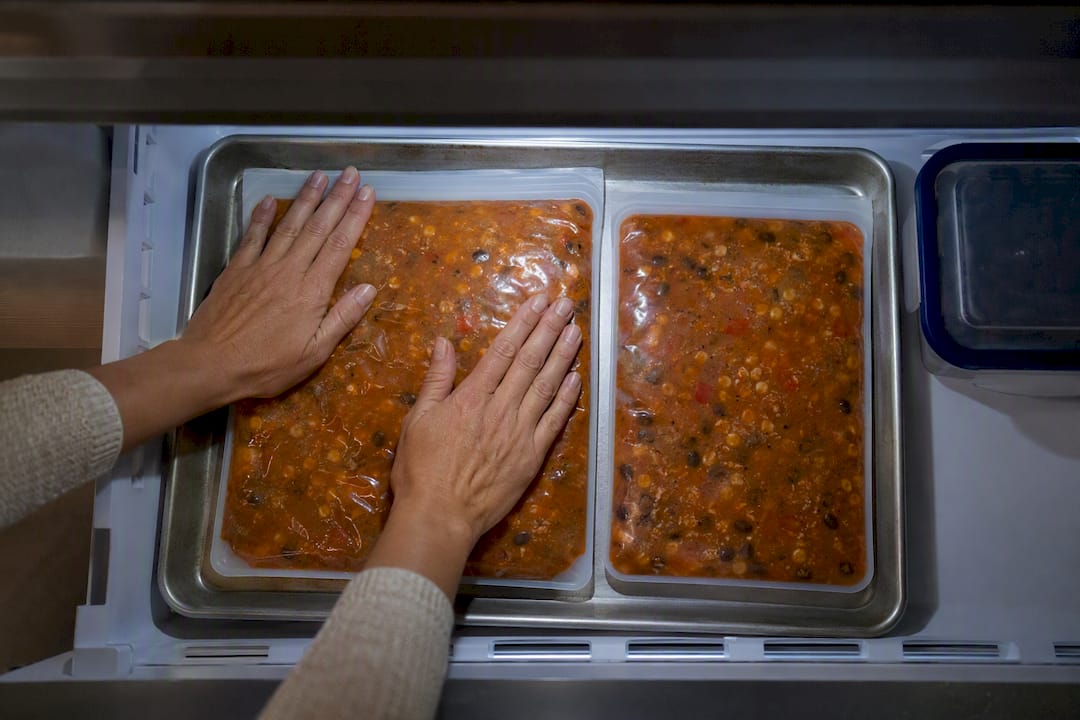
Your container choice matters more than most people think. Glass containers are durable, microwave-safe, and won't hold onto odors, but they're heavier and take longer to chill. Plastic containers are light and stack well, though they can stain and warp over years of reheating. Silicone bags are the space-saving option, especially for the freezer, since you can press out the air and freeze them flat.
You can skip the old advice about leaving lids cracked until steam stops. Modern refrigerators handle warm food just fine, especially when it's already portioned shallow, so seal the container and get it inside. Just avoid stacking hot containers directly on top of each other. That traps heat and slows down the whole fridge.
How Long Do Cooked Leftovers Last in the Fridge and Freezer?
Most cooked leftovers hold up for 3 to 4 days in the refrigerator, and for about 3 to 4 months in the freezer before quality starts to drop, even though frozen food stays technically safe indefinitely as long as it never thaws. A few categories deserve extra attention, since they spoil faster or hide risk more easily than a plate of roasted vegetables.
Freezing meal-sized portions instead of one giant block saves freezer space and means you can thaw exactly what you need instead of a family-sized brick. Label each bag or container with the date it went in, because "quality window" is a polite way of saying it'll still be safe but might taste a little tired past that mark.
How Should You Reheat and Thaw Leftovers?
Getting food back to a safe temperature is a different job than getting it back to a tasty one, though the two usually happen together if you do it right.
- Always reheat to 165°F. Check with a food thermometer in multiple spots, especially the center of dense items like casseroles.
- Microwave with intention. Add a splash of liquid, cover the dish, stir partway through, and let it rest a minute so the heat evens out instead of leaving cold pockets.
- Use the stovetop or oven for texture. Covered, lower heat with occasional stirring keeps soups and roasts moist while still hitting 165°F.
- Thaw safely, not on the counter. Use the refrigerator, a sealed bag submerged in cold water (changing the water every 30 minutes), or the microwave if you're cooking immediately after.
Counter thawing seems harmless, but the outside of the food can sit in the danger zone for hours while the center is still frozen solid. Skip it entirely.
How Do You Keep Leftovers From Cross-Contaminating Your Fridge?
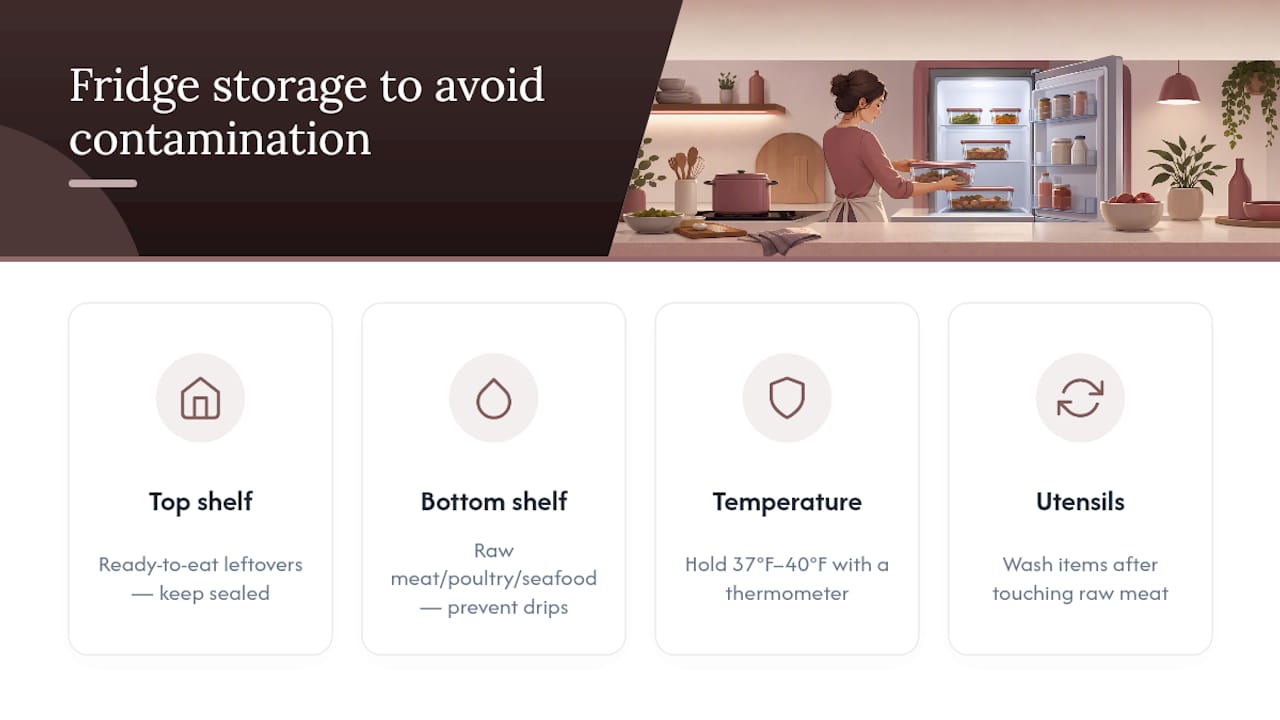
Your fridge has a logical order, and most people ignore it. Ready-to-eat leftovers belong on the top shelves, while raw meat, poultry, and seafood stay on the bottom, so any drips land away from food you're not planning to cook again.
Keep every leftover sealed, wipe up spills the moment you see them, and never let a container of soup sit uncovered next to raw chicken. A refrigerator thermometer costs less than a takeout dinner and tells you if you're actually holding steady at 37°F to 40°F, which matters more than trusting the dial on the door. And if a spoon or plate touched raw meat, it needs a real wash before it touches anything else, no rinsing and reusing.
When Should You Throw Leftovers Out?
The 3 to 4 day fridge rule is your primary guide, and when you're not sure how old something is, the safest move is to toss it. Watch for these signs, though they're a backup plan, not your main defense:
- Visible mold or fuzzy spots on the surface
- A slimy or sticky texture that wasn't there before
- Curdling, separation, or a strange color shift
- A sour, rancid, or "off" smell
Here's the part that trips people up: dangerous bacteria often don't change how food looks, smells, or tastes. Seafood and cream-based dishes deserve extra caution since they turn risky before they turn obviously bad.
How Adulting in the Kitchen Helps You Build These Habits
Knowing the rules is one thing. Actually doing them every single week is another, and that's where a little structure helps. The weekly recipe drops and grocery checklists are built with realistic portions in mind, so you're not constantly stuck with more soup than any shallow container can handle.
Two small habits change everything: portion that pot of soup into individual containers the second it stops steaming, and pack casseroles flat in freezer-friendly bags instead of one bulky block.
Pro Tip: Press a silicone freezer bag flat before sealing it, laying it on a baking sheet until it's frozen solid. It freezes faster, thaws faster, and stacks like a book instead of hogging your whole freezer shelf.
Cookers can get chef support when a storage or reheating question comes up mid-recipe, which is the kind of backup that turns hesitant cooks into confident ones.
A Quick Note on Why This Actually Matters
Good storage habits aren't about being extra careful. They're about eating what you cooked instead of throwing half of it away, and not spending a night on the bathroom floor because a container sat out too long. Start tonight with one small change: label your leftovers and get them into shallow containers within two hours of cooking. That single habit prevents more food waste, and more sick days, than almost anything else in this guide.
— Bill
Learn to Cook With Confidence, Not Just Follow Rules
Storing leftovers safely is one piece of a bigger skill: cooking food you're actually excited to eat again. AdultingintheKitchen gives beginner cooks the tools to make that happen, without the guesswork of figuring it out alone.
The membership includes the Adulting in the Kitchen Starter Pack, weekly recipe drops with five new dishes, grocery store checklists sized for real households, and chef support when a recipe or storage question stumps you. Instead of cooking a huge batch and hoping you remember to eat it before it spoils, you'll learn to portion, freeze, and reheat meals that actually fit your week. If you're ready to build real kitchen habits instead of just avoiding food waste, check out the membership and see what your first week could look like.
This article is general information, not a substitute for advice from a qualified doctor. Consult a qualified healthcare professional about your own circumstances before acting on anything here.
Sources
- Food safety and prevention — Centers for Disease Control and Prevention (CDC)
- Safe food handling guidance — UC ANR / Cooperative Extension (PDF)
- Food poisoning: How long can you safely keep leftovers? — Mayo Clinic