You can turn one bag of frozen vegetables into a real dinner in under 30 minutes, no thawing marathon required. Stir-fries, fried rice, pasta with a creamy corn purée, egg muffins, and sheet-pan dinners all work straight from the freezer. At AdultingintheKitchen, we build our weekly recipe drops around exactly this kind of speed.
Here's your lineup for tonight:
- Stir-fry or noodle bowl — about 20 minutes, 2 to 4 servings
- Frozen veggie fried rice — under 30 minutes using a 12-ounce bag and day-old rice
- Pasta with corn purée — 20 minutes, blender required
- Egg muffins with mixed veg — 25 minutes, meal-prep friendly
- Sheet-pan dinner — 30 minutes, minimal cleanup
Pro Tip: Casseroles and soups follow a different rule: plan on 12 to 16 ounces of frozen mixed vegetables per 9x13 dish to properly stretch a batch for leftovers.
Key Takeaways
Frozen vegetables can anchor a complete dinner in under 30 minutes when you match the right cooking method to the dish and season with intention.
| Point | Details |
|---|---|
| Match method to goal | Roast or air-fry for crispiness, sauté for speed, steam or microwave for hands-off cooking. |
| Thaw greens first | Spinach and block-style greens need thawing and squeezing dry before use. |
| Use the 12 to 16 oz rule | Casseroles and soups stretch furthest with 12 to 16 ounces of frozen mixed vegetables per batch. |
| Season in layers | Add aromatics and fat while cooking, then finish with acid right before serving. |
| Get guided support | AdultingintheKitchen's Starter Pack and weekly recipe drops help beginners turn these techniques into weeknight habits. |
Table of Contents
- How to Cook Frozen Vegetables Without Sogginess
- What Are the Best Quick Frozen Vegetable Dishes?
- Can Casseroles and Soups Stretch Frozen Vegetables Further?
- How Do You Make Frozen Vegetables Taste Intentional?
- How Long Do Frozen Vegetable Meals Keep?
- What Kitchen Tools Make Frozen Vegetable Cooking Faster?
- Cook Faster With Real Chef Support Behind You
- Sources
How to Cook Frozen Vegetables Without Sogginess
The method you pick should match what you actually want on the plate. Want crispy edges and real browning? Roast or air-fry. Need dinner heated through in five minutes flat? Sauté or stir-fry in a hot pan. Cooking for one and want zero effort? Steam or microwave, though expect softer texture.
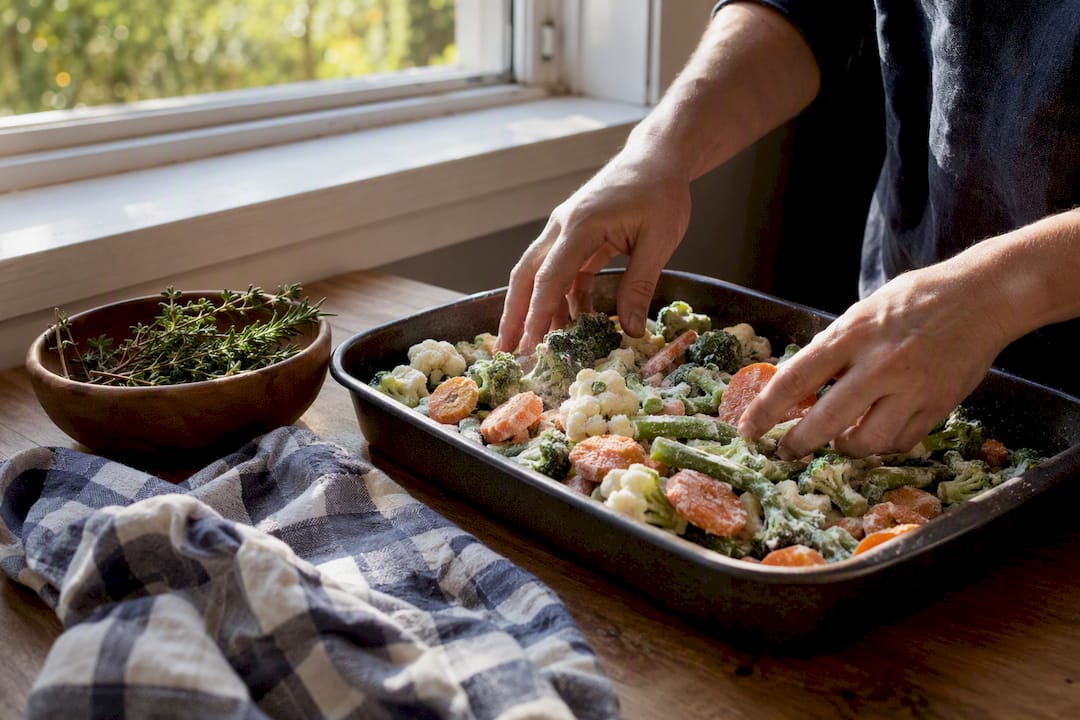
The biggest mistake home cooks make is treating every frozen vegetable the same way. Broccoli and cauliflower florets roast beautifully and develop real char, while microwaving turns them to mush. Corn kernels do best pan-charred in a dry skillet before anything else touches the pan. Spinach and other block-style greens are the exception to the "cook from frozen" rule: thaw them first, then squeeze out excess water in a clean towel before folding them into egg muffins or dips, or you'll dilute every bite.
For stir-fries, skip the lid. Add vegetables straight to a screaming-hot, uncovered pan so steam escapes instead of pooling, which is what actually causes sogginess.
- Roast or air-fry: 400°F+, single layer, no crowding
- Sauté or stir-fry: high heat, uncovered, cook until liquid evaporates
- Steam or microwave: fastest, softest texture, best for soups and purées
Pro Tip: Culinary experts treat frozen vegetables as a flavor-neutral canvas rather than a finished side. Add your aromatics, fat, and acid at the very end so they don't cook off.
What Are the Best Quick Frozen Vegetable Dishes?
These five recipes are built to be plug-and-play. Swap the protein, make any of them vegan, and you'll still hit the table in half an hour.
- Frozen vegetable stir-fry with noodles. Add a frozen stir-fry blend and shelled edamame straight to a hot, oiled pan and cook until the liquid evaporates and edges start to brown, then toss with noodles and a quick sauce. The edamame adds plant-based protein without extra prep, and the whole dish is ready in under 30 minutes. Serves 2 to 4. Swap the edamame for shredded rotisserie chicken if you want more protein per serving.
- One-pan frozen veggie fried rice. A 12-ounce bag of frozen mixed vegetables plus 4 cups of day-old rice, cooked hard and fast, develops the slight crispiness that fresh rice never quite gets. Scramble in a few eggs, toss with soy sauce, sesame oil, and a touch of honey or sriracha. Serves 4. No day-old rice on hand? Spread fresh rice on a sheet pan to dry out for 15 minutes first.
- Pasta with corn purée. Blend thawed frozen corn into a cream-free sauce, thin it with reserved pasta water, and toss with noodles, Parmesan, and cracked pepper. Serves 2. This one is naturally vegetarian and easy to make dairy-free by skipping the cheese.
- Egg muffins with mixed vegetables. Thaw and squeeze frozen spinach dry, dice frozen peppers and onions, whisk into eggs, and bake in a muffin tin for 20 minutes. Serves 4 to 6 (two muffins per serving). These reheat well for grab-and-go breakfasts all week and are naturally gluten-free.
- Sheet-pan dinner. Spread frozen broccoli, cauliflower, and a protein of your choice across a sheet pan, hit everything with olive oil and seasoning, and roast at 425°F for 25 to 30 minutes. Serves 3 to 4. One pan, minimal cleanup, and the vegetables get real caramelization instead of steaming in their own moisture.
- Use frozen shelled edamame or canned beans for a fast protein boost in any of these
- Keep sauces on the side if you're meal-prepping to avoid soggy leftovers
- Any of these adapt to gluten-free with tamari instead of soy sauce
Can Casseroles and Soups Stretch Frozen Vegetables Further?
Casseroles and soups are the best way to turn a single bag of frozen vegetables into multiple meals. The reliable rule: use 12 to 16 ounces of frozen mixed vegetables per 9x13 casserole or large pot of soup, which gives you enough volume to feed four to six people with leftovers to spare.
Scaling is simple. Doubling a casserole recipe means doubling the vegetables and the binder (broth, cream sauce, or roux) in equal proportion, but you generally only need to increase baking time by 10 to 15 minutes, not double it. For soups, add liquid gradually since frozen vegetables release extra water as they cook, and you can always thin a chowder but you can't easily thicken a watery one on short notice.
- Shepherd's pie-style bake: 12 to 16 oz frozen mixed veg, mashed potato topping
- Chicken pot pie or baked pasta: same 12 to 16 oz baseline, swap the binder
- Hearty vegetable chowder: 12 to 16 oz frozen veg, potatoes, and stock
Pro Tip: Portion cooled casseroles into individual containers before refrigerating. It cuts reheating time nearly in half and keeps the topping from turning soggy.
How Do You Make Frozen Vegetables Taste Intentional?
Seasoning is what separates a forgettable side from a dish you actually crave. Start with an aromatic (garlic, ginger, scallions), add a real fat (butter, olive oil, sesame oil), and finish with acid (lemon, lime, or vinegar) right before serving.
Specific pairings work better than random seasoning. Frozen corn wakes up with cilantro, lime juice, and crumbled cotija or Parmesan. Frozen peas love mint, a squeeze of lemon, and either ricotta or crisped pancetta stirred through at the end. Frozen green beans take well to a hot sauce built from garlic, soy, and a splash of rice vinegar.
- Aromatics: garlic, ginger, shallots, scallions
- Fats: butter, olive oil, sesame oil, brown butter
- Acids: lemon, lime, rice vinegar, white wine vinegar
- Finishers: Parmesan, cotija, toasted nuts, fresh herbs
Because frozen vegetables are flash-frozen at peak ripeness, they already carry good flavor. Seasoning intentionally is what brings it forward instead of leaving it buried under bland cooking.
How Long Do Frozen Vegetable Meals Keep?
Most frozen-veg meals hold up in the fridge for 3 to 5 days if you cool them quickly and store them airtight. Soups and casseroles freeze especially well, often keeping quality for 2 to 3 months.
- Cool food to room temperature before sealing to avoid condensation and freezer burn
- Thaw frozen greens fully and squeeze dry before reincorporating into a reheated dish
- Label containers with the date; frozen soup loses texture past three months
What Kitchen Tools Make Frozen Vegetable Cooking Faster?
You don't need a fully stocked kitchen for any of this. A sturdy skillet or wok handles high-heat sautéing and evaporation, a baking sheet covers roasting and sheet-pan dinners, and a blender turns thawed corn into pasta sauce in seconds.
- Skillet or wok (cast iron or heavy nonstick both work)
- Rimmed baking sheet for roasting and sheet-pan meals
- Blender or immersion blender for purées and creamy sauces
- Pantry staples: olive oil, butter, low-sodium soy sauce, vinegar, and a bold finishing cheese or nut butter
No wok? A wide nonstick skillet does the same job in a small kitchen. The goal is high, even heat that lets water evaporate instead of pooling.
Why Frozen Vegetables Are a Confidence Builder
Frozen corn and peas were my pantry safety net long before I trusted myself in the kitchen. They never go bad, they never require a special trip, and they turn a half-empty fridge into dinner. If you're new to cooking, that reliability matters more than any fancy technique.
Cook Faster With Real Chef Support Behind You
If you want recipe templates, shopping lists, and real feedback while you build these skills, AdultingintheKitchen gives you exactly that, without the hunting-and-guessing that comes from bookmarking fifty random recipes online.
Membership gets you the Starter Pack for setting up your kitchen the right way from day one, weekly recipe drops with five new recipes so you're never stuck wondering what to cook, grocery checklists that flag smart frozen-veg shortcuts, and real chef support when a recipe doesn't go as planned. It's built for people who want to cook real meals at home instead of defaulting to takeout apps. Grab the Founding Member Starter Package and get your next week of dinners sorted before you even open the fridge.
Sources
If you want to read more, start here:
- Healthy and affordable meals: veggie stir fry | Second Harvest Mid TN
- How to Turn That Sad Bag of Frozen Vegetables Into Something Delicious | Milk Street
- Frozen Vegetable Dinner Ideas | The Kitchn
- Vegetable Stir-Fry with Frozen Vegetables and Noodles - Grateful Grazer
- Frozen Veggie Fried Rice Recipe | Emily's Plate