Pick one method (one-pot, sheet-pan, quick pasta, skillet, or simple assembly), lean on pantry shortcuts like rotisserie chicken and jarred sauce, and you can have dinner on the table in 10 to 30 minutes with almost no chopping. That's the whole strategy. Everything below just shows you how to put it into practice, starting tonight.
TL;DR:
- Most beginner-friendly recipes focus on one method with pantry staples, aiming for active cooking time under 20 minutes and minimal chopping.
- Using pre-cooked proteins like rotisserie chicken, canned beans, and frozen vegetables significantly reduces prep and active time.
- Salt cooking liquids thoroughly and adding acid at the end enhances flavor without complicated techniques or ingredients.
- Proper technique, such as seasoning the cooking medium and matching heat to the method, prevents bland and underwhelming dinners.
- Repetition of a small set of core techniques and ingredients builds confidence more effectively than trying many different recipes.
Table of Contents
- Easy Weeknight Dinners for Beginners, Organized by Method
- Practical Shortcuts and Pantry Staples That Make Cooking Easy
- Beginner Techniques That Keep Dinner From Tasting Bland
- A Simple 7-Night Dinner Plan for New Cooks
- Why Repetition, Not Recipe Count, Builds Real Confidence
- An Easier Way to Learn: The Adulting in the Kitchen Membership
- Sources
Easy Weeknight Dinners for Beginners, Organized by Method
The fastest way to stop staring blankly into your fridge at 6 PM is to stop thinking in individual recipes and start thinking in methods. Once you know one-pot pasta, you basically know 15 different dinners. Same with sheet-pan and skillet meals. Below are five methods, with beginner-friendly picks in each one.
Every idea here follows the same beginner-friendly criteria: short ingredient lists, mostly pantry staples, and low active time. Active time means minutes you're actually standing at the stove doing something, not minutes the oven or a simmering pot is doing the work for you. That distinction matters more than total cook time when you're just starting out.
One-pot and pasta dinners
- One-pot lemon garlic pasta. Pasta, broth, garlic, and lemon cook together in the same pot, and the starchy liquid turns into a light sauce on its own. Beginner-friendly because there's no separate sauce step. Active time: about 20 minutes.
- One-pot chicken and rice. Chicken thighs sear briefly, then rice and broth simmer around them until everything's done together. One pan, one cleanup. Active time: 15 minutes, then mostly hands-off simmering.
- Tomato basil orzo. Orzo cooks directly in canned tomatoes and broth, so it thickens into something closer to a risotto than plain pasta. Active time: 15 minutes.
- Weeknight chili. Canned beans, canned tomatoes, and ground beef or turkey simmer in one pot with chili seasoning. Nearly impossible to mess up, and it reheats well. Active time: 15 minutes.
One-pot pasta specifically deserves its own mention because it's one of the most forgiving techniques a beginner can learn. The pasta cooks directly in a flavored liquid, the way risotto does, which means the starch released by the noodles thickens the sauce automatically. Everyone recommends salting that liquid well and stirring occasionally so the pasta doesn't clump or turn gummy.
Sheet-pan dinners
- Sheet-pan sausage and vegetables. Toss sausage links with pre-cut broccoli or green beans, roast at 425°F. Almost zero chopping if you buy pre-cut veg. Active time: 10 minutes.
- Sheet-pan salmon and asparagus. Salmon fillets and asparagus roast together with olive oil, salt, and lemon. Fish cooks fast, so this is a genuinely quick weeknight option. Active time: 10 minutes.
- Sheet-pan chicken fajitas. Sliced chicken and bell pepper strips (buy them pre-sliced) roast on one tray, then get wrapped in tortillas. Active time: 15 minutes.
Sheet-pan cooking earns its reputation as the easiest entry point into weeknight cooking because the oven does almost all the work, and cleanup is a single tray. Roundups built specifically for busy cooks consistently push one-pan and sheet-pan recipes to the top of the list for exactly that reason.
Skillet and stir-fry dinners
- Beef and broccoli stir-fry. Pre-sliced beef strips (many grocery stores sell them this way) cook fast in a hot skillet with frozen broccoli and a bottled stir-fry sauce. Active time: 12 minutes.
- Fried rice with whatever's in your freezer. Day-old rice, frozen peas and carrots, an egg, and soy sauce. This is the dish that teaches you heat control faster than almost anything else, since it lives or dies on a hot pan. Active time: 10 minutes.
- Garlic shrimp skillet. Frozen shrimp (thawed under cold water for five minutes) cook in under five minutes with garlic and butter. Active time: 10 minutes.
The fried rice method from The Kitchn is worth learning early because it teaches you to work with high heat and pre-cooked components at the same time, a skill that transfers to almost every stir-fry you'll ever make.
30-minute chicken and pork dinners
- Pan-seared chicken thighs with pan sauce. Sear thighs skin-side down, flip, then deglaze the pan with broth and a spoonful of mustard or jarred sauce. Active time: 20 minutes.
- Pork chops with apples. Chops sear in a skillet, apples soften alongside in the same pan. Active time: 20 minutes.
- Sheet-pan chicken thighs and potatoes. Bone-in thighs and baby potatoes roast together at 425°F until the skin crisps. Active time: 10 minutes.
Assembly and no-cook dinners
- Rotisserie chicken tacos. Shred a store-bought rotisserie chicken, warm it with taco seasoning, pile onto tortillas. Active time: 8 minutes.
- Big grain bowl. Microwaveable rice, canned beans, chopped rotisserie chicken, and whatever dressing is in your fridge. Active time: 10 minutes.
- Loaded quesadillas. Cheese, shredded chicken, and jarred salsa folded into a tortilla and crisped in a dry skillet. Active time: 8 minutes.
Assembly meals matter because they prove a real point: not every "cooked" dinner needs actual cooking skill. Some nights, warming and combining is the whole job, and that's a completely legitimate weeknight dinner plan.
Practical Shortcuts and Pantry Staples That Make Cooking Easy
A well-stocked pantry does more for your confidence than any single recipe. Once you have the right staples on hand, most of the recipes above become almost automatic.
Keep these on hand at all times:
- Canned diced tomatoes and canned beans (black, white, chickpea)
- Chicken or vegetable broth (boxed, not just bouillon cubes)
- Dried pasta in two or three shapes
- A jarred pasta sauce and a bottled stir-fry or teriyaz sauce
- Soy sauce, miso paste, and peanut butter for fast flavor boosts
- Frozen vegetables (peas, corn, broccoli, mixed stir-fry blends)
- A rotisserie chicken, bought fresh the day you plan to use it
Three shortcuts do most of the heavy lifting on a beginner's weeknight. First, shredded rotisserie chicken drops straight into tacos, grain bowls, or a quick soup with canned broth and vegetables, cutting out the entire step of cooking raw chicken. Second, canned beans replace a protein that would otherwise need soaking and simmering; drain, rinse, and they're ready for chili, grain bowls, or a quick skillet hash. Third, frozen vegetables skip the chopping board entirely and cook at nearly the same speed as fresh.
Minimizing chopping isn't a shortcut that sacrifices flavor. Recipes built around canned legumes, whole vegetable wedges, and frozen produce still deliver real flavor while cutting active time dramatically, especially when you back them up with concentrated flavor bases like tomato paste or miso.
Pro Tip: Keep one tube of tomato paste and one tub of miso in your fridge door at all times. A tablespoon of either, stirred into a simmering sauce or broth, adds the kind of deep, savory flavor that usually takes hours to build.
Season smart, not just often. Salt the cooking liquid itself, whether that's pasta water, simmering broth, or a marinade, rather than only salting the finished plate. Add acid (lemon juice, vinegar, or a splash of pickle brine) right at the end of cooking to brighten flavors that have gone flat from heat.
Relying on pre-cooked proteins and bottled flavor bases isn't cutting corners. It's how beginners get real meals on the table with 10 to 15 minutes of actual hands-on cooking, which is exactly the point.
Beginner Techniques That Keep Dinner From Tasting Bland
Most bland weeknight dinners aren't a recipe problem. They're a technique problem, and the fix usually comes down to three habits.
- Season the cooking medium, not just the food. Whatever liquid your ingredients are cooking in (pasta water, simmering broth, a marinade) should taste seasoned on its own before you add the main ingredients. Taste it. If it tastes like plain water, add more salt until it tastes like something you'd actually want to sip.
- Match your heat to the technique. Searing needs high heat and a dry pan so the surface browns instead of steams. Simmering needs low, gentle heat so sauces reduce slowly instead of scorching. For one-pot pasta specifically, a wide, shallow pan works better than a tall pot because more surface area means the liquid reduces faster and the pasta doesn't turn mushy waiting for it to catch up.
- Check doneness before you plate. Chicken is safe at 165°F measured with an instant-read thermometer, not by cutting it open and guessing from the color. Taste your sauce right before serving and adjust salt or acid one last time. Let seared meat rest for a few minutes off the heat so the juices redistribute instead of running out onto the cutting board.
Pro Tip: A cheap instant-read thermometer solves more beginner cooking anxiety than almost any other $10 you'll spend. Guessing whether chicken is done is the single biggest source of "is this safe to eat?" stress in a new cook's kitchen, and a thermometer removes the guesswork entirely.
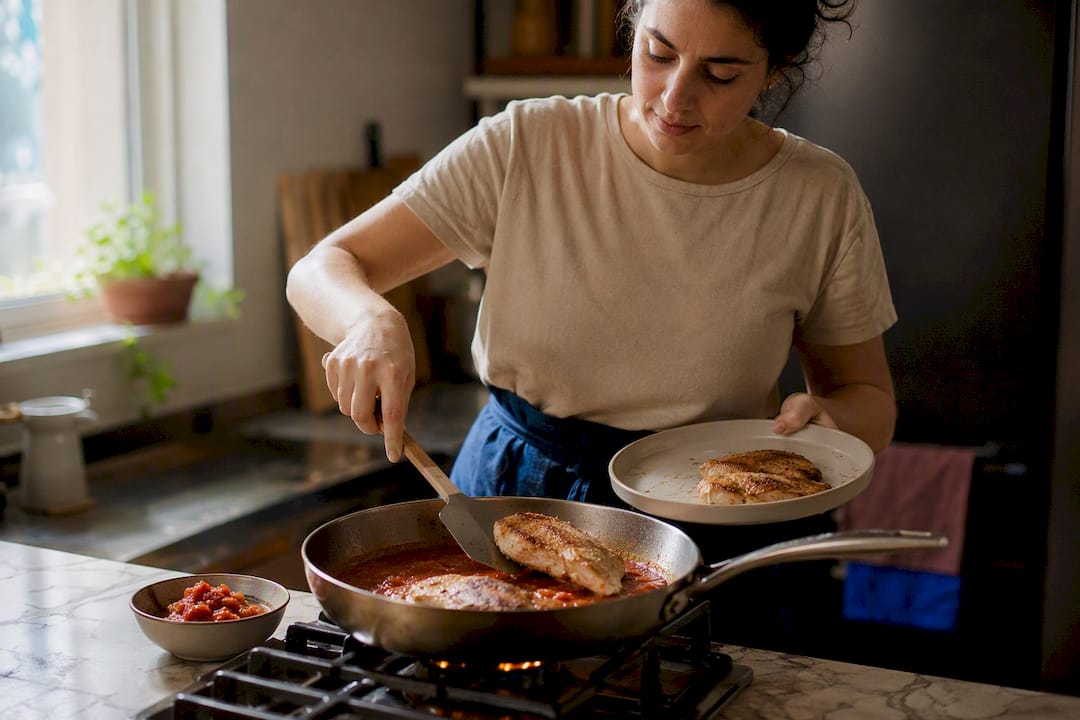
Searing a protein first and then finishing it in a sauce or the oven is one of the most useful two-step moves you can learn. It gets you a browned, flavorful crust plus a tender, evenly cooked interior, and it's the same basic move behind dishes like creamy tomato chicken, where seared cutlets finish simmering in sauce instead of drying out on their own.
A Simple 7-Night Dinner Plan for New Cooks
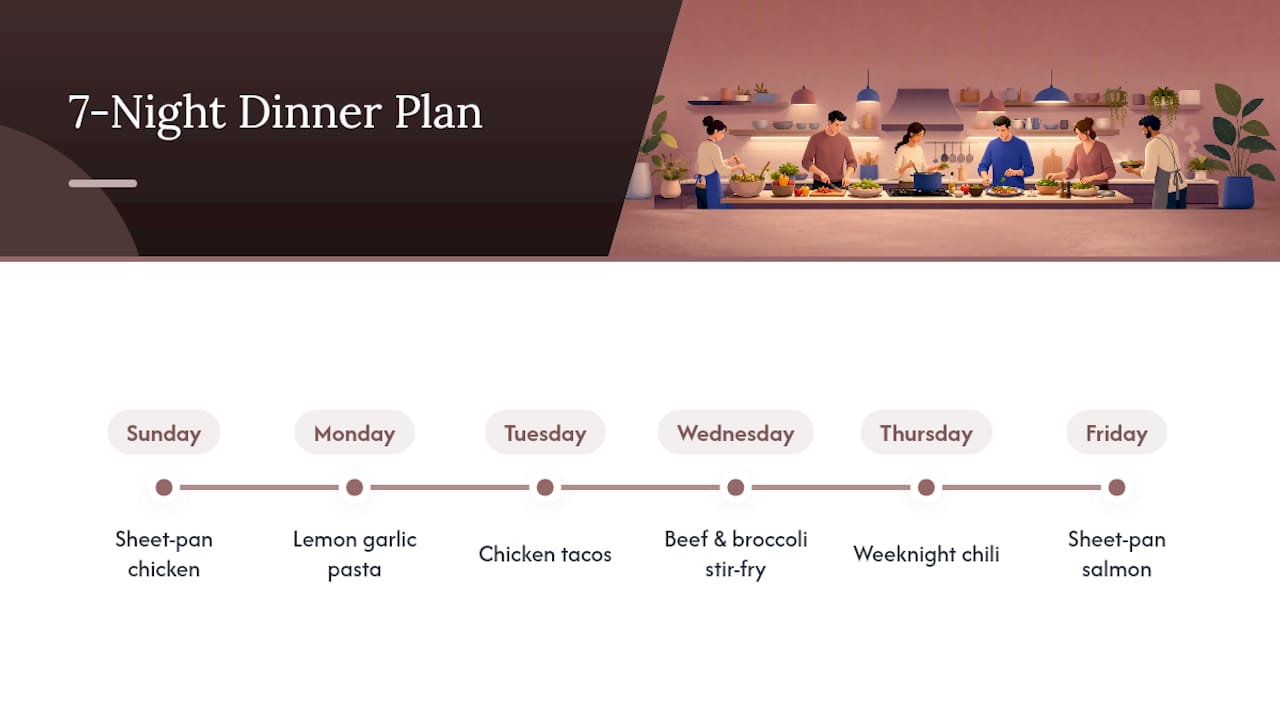
A weekly dinner plan built around six or eight core ingredients does two things at once: it cuts your grocery bill and it gives you enough repetition to actually get better at a technique instead of starting from zero every night.
Sunday: Sheet-pan chicken thighs and potatoes (roast extra chicken for Tuesday) Monday: One-pot lemon garlic pasta Tuesday: Rotisserie or leftover chicken tacos Wednesday: Beef and broccoli stir-fry Thursday: Weeknight chili (canned beans, canned tomatoes) Friday: Sheet-pan salmon and asparagus Saturday: Big grain bowl using leftover rice and whatever's left in the fridge
Core groceries to buy once and stretch across the week: chicken thighs, canned beans, canned tomatoes, a bag of rice, pasta, frozen broccoli, and a bottle of stir-fry or taco sauce. Swap ground beef for lentils or extra beans if you're cooking vegetarian, and cook rice and grains in bulk on Sunday so leftovers are ready to reuse without a second pot. This kind of ingredient overlap across the week is what actually makes a 7 day dinner plan sustainable instead of exhausting.
If you're batch-cooking chicken or rice ahead, hold off on anything meant to stay crisp (tortilla strips, crunchy toppings, breadcrumbs) until right before you serve, so it doesn't turn soggy sitting in the fridge.
Why Repetition, Not Recipe Count, Builds Real Confidence
Here's what I think most beginner cooking advice gets backward: it tries to hand you variety when what you actually need is repetition. Cooking the same one-pot pasta four different ways over a month teaches you more about heat, salt, and timing than cooking twelve different recipes once each ever will. Confidence in the kitchen isn't built by collecting recipes. It's built by running the same handful of methods enough times that your hands stop needing your brain's permission to move.
That's the whole idea behind AdultingintheKitchen's approach: fewer, better recipes, repeated with real support, instead of an overwhelming recipe archive nobody actually finishes. Try the 7-night plan above for two weeks straight before you branch out. Notice what changes.
— Bill
An Easier Way to Learn: The Adulting in the Kitchen Membership
Everything above works on its own, no membership required. But if you want a hand while you're building these habits, AdultingintheKitchen gives new cooks structure the recipe roundups above can't: a Starter Pack that sets up your kitchen and pantry correctly from day one, five new recipes dropped every week so you're never stuck guessing what's next, grocery store checklists that turn "what do I even buy" into a five-minute errand, and real chef support when a recipe doesn't go the way the photo promised.
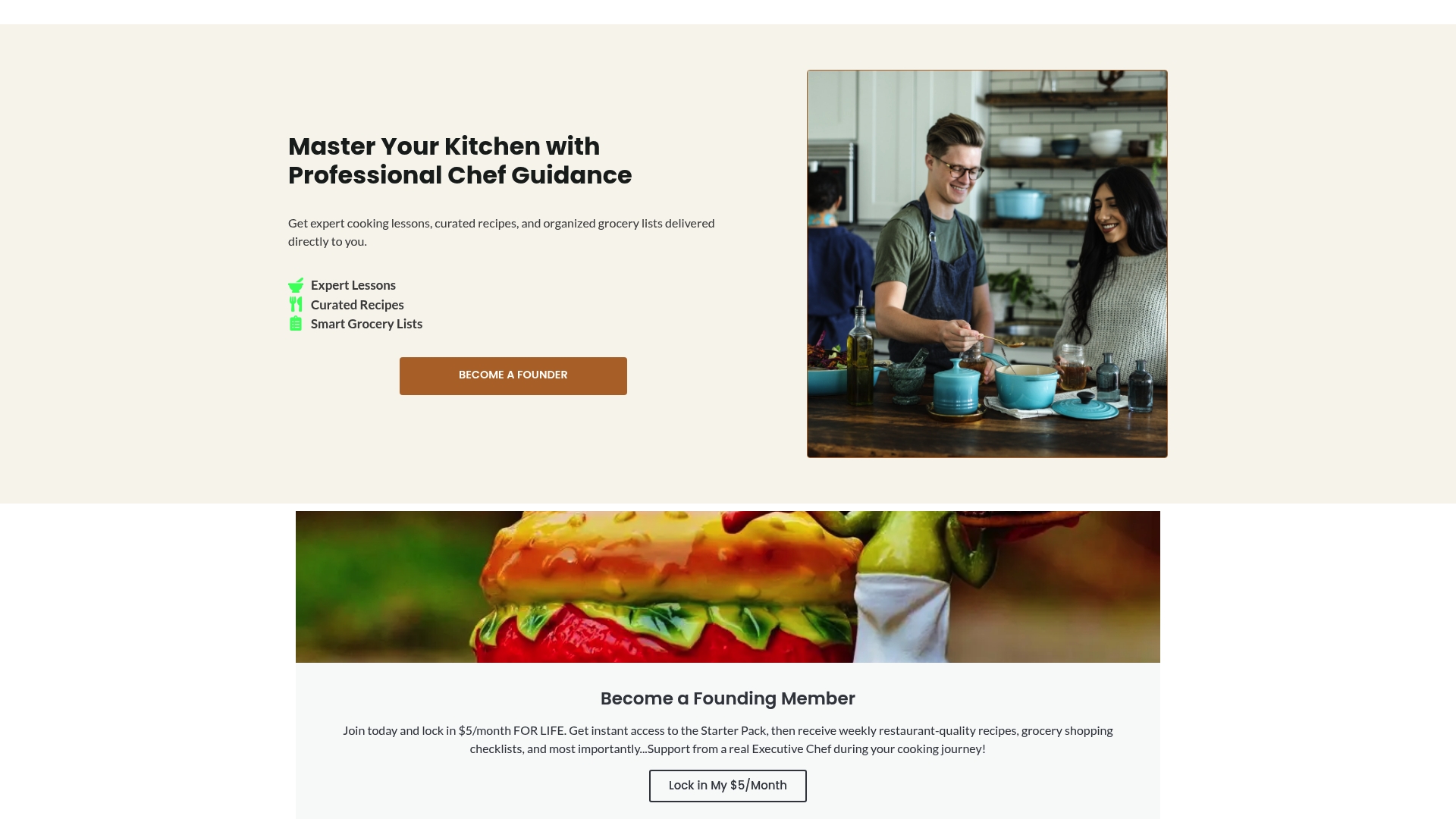
It's built for exactly the reader who's been reading this article: someone who wants weekly dinner ideas that don't require a culinary degree, plus a real person to ask when something goes sideways at the stove. If the 7-night plan above felt useful, check out the membership and see what a full week of guided, beginner-tested recipes and chef support looks like.