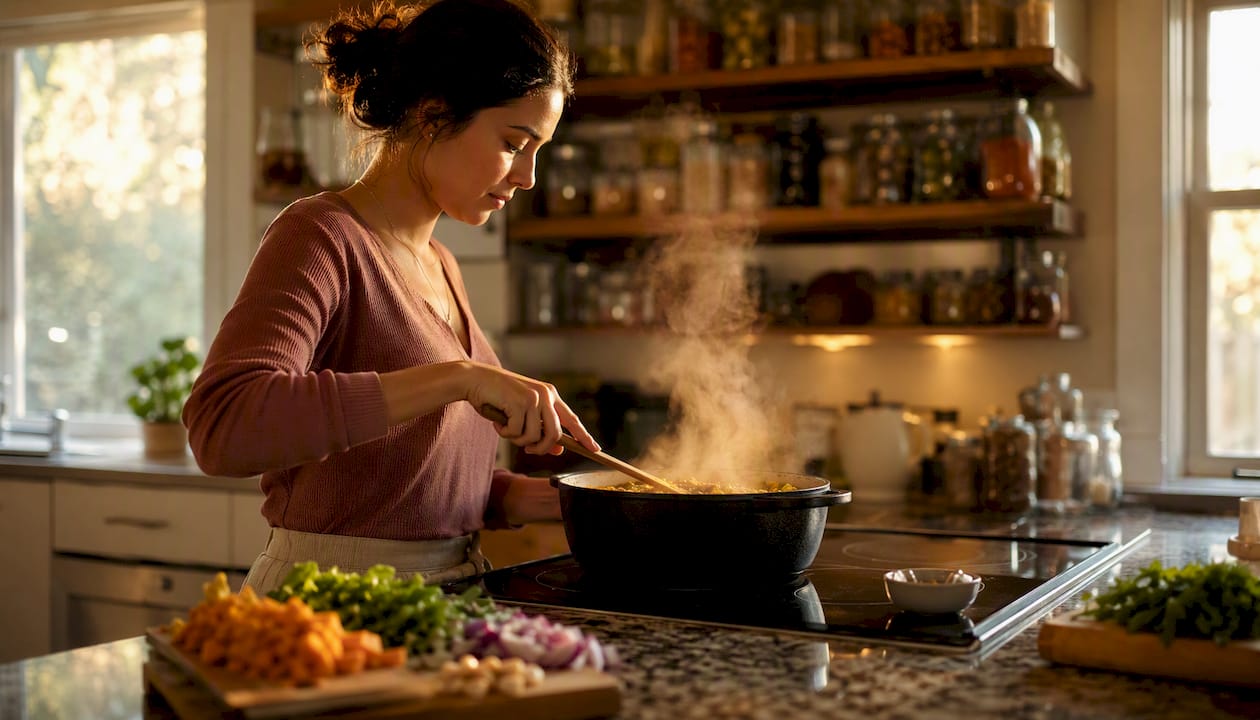
A one-pot dinner is exactly what it sounds like: a complete, satisfying meal cooked start to finish in a single vessel, whether that's a Dutch oven, a deep skillet, or a heavy saucepan. No draining pasta into a colander, no juggling three burners, no pile of pots at the end of the night. Recipes frequently run under an hour and cut post-meal cleanup down to a single pan.
Three quick picks for tonight:
- Garlic butter shrimp and orzo — orzo cooks directly in stock and finishes with Parmesan for a velvety, restaurant-quality sauce in under an hour; use a high-sided skillet.
- Fresh tomato basil orzo — 5 minutes of prep, 15 minutes of cook time, done in a single pan; great for absolute beginners.
- One-pot salsa chicken and rice — taco-seasoned chicken, rice, beans, and corn all cooked together in a skillet in 30 minutes.
What to look for on a recipe card before you start:
- Cook time — total minutes from first cut to table
- Servings/yield — so you know whether to scale up or down
- Difficulty — easy or medium tells you how much multitasking is involved
- One-line method summary — confirms it's truly one-pot (no draining, no separate pots)
Table of Contents
- The best one-pot dinner ideas, organized by category
- Quick one-pot meals ready in 30 minutes or less
- Which cookware actually makes one-pot cooking work?
- Pantry staples and the liquid rules that hold one-pot cooking together
- How to convert any recipe into a one-pot version
- Common one-pot mistakes and how to fix them
- Make-ahead, freezing, and reheating tips for one-pot dinners
- Key Takeaways
- Why one-pot cooking is the right place to start
- AdultingintheKitchen makes one-pot cooking click for beginners
- Further reading and recipe collections to explore
The best one-pot dinner ideas, organized by category
One-pot meals are forgiving, scalable, and built for weeknights. The five categories below cover every skill level and most pantry situations. Pick by time, not by mood.
Pasta
| Recipe | Cook Time | Servings | Difficulty | One-Line Method |
|---|---|---|---|---|
| Tomato basil orzo | 20 min | 2–3 | Easy | Toast orzo, simmer in broth, finish with fresh basil and tomatoes |
| One-pot pasta e fagioli | Under 20 min | 4 | Easy | Simmer pasta with cannellini beans and broth; starch thickens the sauce naturally |
| Garlic butter shrimp and orzo | ~40 min | 4 | Easy | Sauté shrimp, cook orzo in stock, finish with Parmesan and cream |
| One-pot sausage pasta | 30 min | 4 | Easy | Brown sausage, add pasta and canned tomatoes, simmer until tender |
Rice and grains
| Recipe | Cook Time | Servings | Difficulty | One-Line Method |
|---|---|---|---|---|
| Salsa chicken and rice | 30 min | 4 | Easy | Sear chicken, add rice, salsa, beans, and broth; simmer covered |
| Chicken and orzo skillet | 30 min | 4 | Easy | Brown chicken thighs, cook orzo in the same pan with stock |
| Lemon herb risotto-style orzo | 30 min | 3–4 | Medium | Stir orzo gradually with warm broth like a risotto; finish with lemon zest |
Skillet meals and stews
| Recipe | Cook Time | Servings | Difficulty | One-Line Method |
|---|---|---|---|---|
| One-pot chili | 40 min | 6 | Easy | Brown beef, add beans, tomatoes, and spices; simmer uncovered |
| Chicken and white bean stew | 40 min | 4 | Easy | Sear chicken, add beans and broth, simmer until thickened |
| Sausage and potato skillet | 30 min | 4 | Easy | Brown sausage, add diced potatoes and peppers, cover and cook through |
Oven and tray-bakes
| Recipe | Cook Time | Servings | Difficulty | One-Line Method |
|---|---|---|---|---|
| One-pot chicken thighs with vegetables | 30 min | 4 | Easy | Sear chicken in Dutch oven, add root vegetables, roast covered |
| Baked pasta with tomato and mozzarella | 40 min | 4–6 | Easy | Combine raw pasta, canned tomatoes, and broth in a baking dish; bake until absorbed |
Vegetarian and vegan
| Recipe | Cook Time | Servings | Difficulty | One-Line Method |
|---|---|---|---|---|
| Curry orzo with peas | 25 min | 3–4 | Easy | Simmer orzo in spiced broth with peas; finish with Greek yogurt |
| Black bean and rice skillet | 30 min | 4 | Easy | Sauté aromatics, add rice, black beans, and broth; simmer covered |
| Tomato lentil soup | 30 min | 4–6 | Easy | Sauté onion and garlic, add lentils, canned tomatoes, and broth; simmer |
| Vegetable minestrone | 40 min | 6 | Easy | Layer vegetables, beans, and small pasta in one pot; simmer in broth |
Category-to-vessel quick guide:
| Category | Typical Cook Time | Best Vessel | Why It's Beginner-Friendly |
|---|---|---|---|
| Pasta/orzo | 20 min or less for tomato basil orzo, up to 40 min for some shrimp/orzo (most under 30) | High-sided 12" skillet | Fast, forgiving, starch self-thickens |
| Rice/grain | 25–40 min | Dutch oven or deep skillet | Even heat prevents scorching |
| Skillet/stew | 30–30 min | Dutch oven | Holds volume; sear-to-simmer in one pot |
| Oven/tray-bake | 40 min | Enameled cast-iron or Dutch oven | Hands-off after assembly |
| Vegetarian/vegan | 20–40 min | Any heavy-bottomed pot | Forgiving; beans and lentils are hard to overcook |
Pro Tip: Short on time? Head straight to the pasta or orzo category. Both cook in under 30 minutes and need nothing more than a box of orzo, a can of tomatoes or a cup of broth, and whatever protein you have on hand.
Quick one-pot meals ready in 30 minutes or less
Busy nights call for a short list. These easy one-pot recipes all land on the table in 30 minutes or less, and each one has a single speed trick that makes it actually achievable on a Tuesday.
1. Fresh tomato basil orzo
Total time: 20 min (5 prep + 15 cook) | Servings: 2–3 | Difficulty: Easy
Speed trick: orzo cooks in about 9 minutes in simmering broth, so there's almost no waiting. Toast the orzo for 2 minutes first to build a nutty base, then pour in stock and let it absorb. Finish with fresh basil and cherry tomatoes off the heat.
2. One-pot salsa chicken and rice
Total time: 30 min | Servings: 4 | Difficulty: Easy
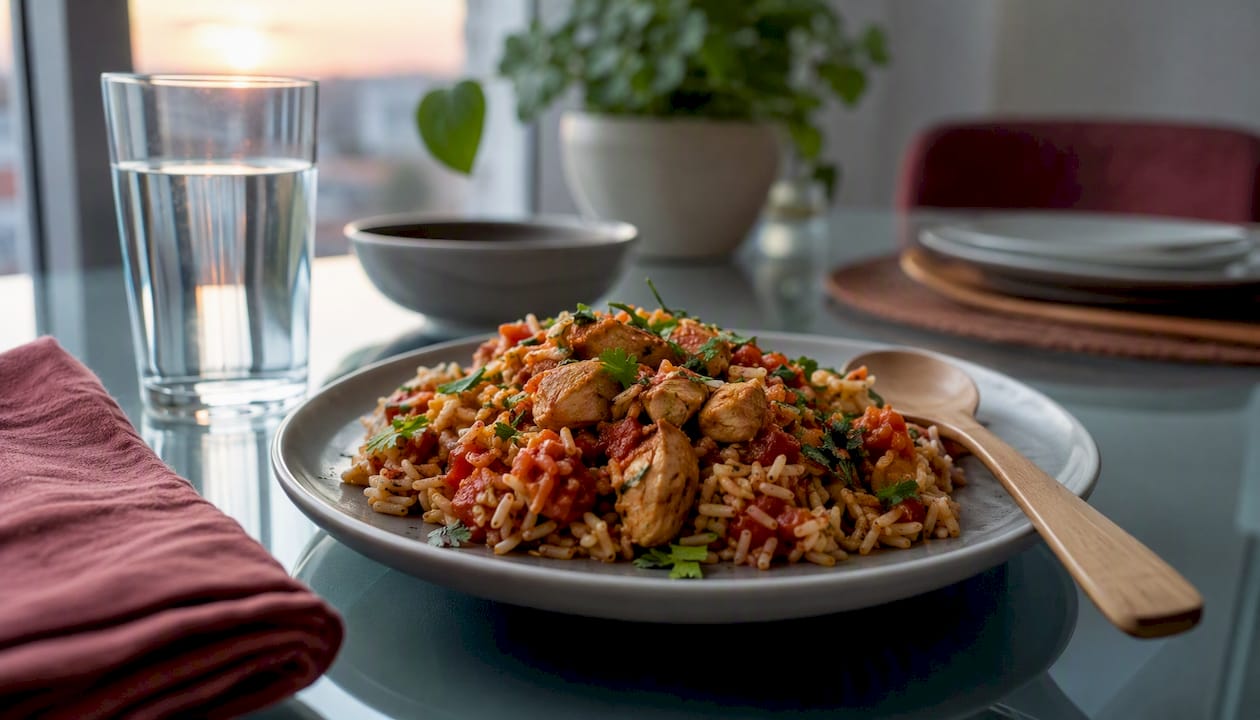
Speed trick: use pre-seasoned taco spice blend and jarred salsa instead of building a sauce from scratch. The salsa does double duty as both liquid and flavor base, cutting prep to under 5 minutes.
3. Garlic butter shrimp and orzo
Total time: ~40 min | Servings: 4 | Difficulty: Easy
Speed trick: thawed, peeled shrimp cook in 3–4 minutes. Have them ready before you start the orzo, and add them at the very end so they don't overcook while the starch finishes.
4. Curry orzo with tuna and peas
Total time: 25 min | Servings: 3–4 | Difficulty: Easy
Speed trick: canned tuna needs zero cooking time. Stir it in at the end with the peas, and the residual heat from the orzo is enough to warm everything through.
5. One-pot pasta e fagioli
Total time: Under 20 min | Servings: 4 | Difficulty: Easy
Speed trick: cannellini beans create a naturally creamy texture without any cream, and small pasta shapes like ditalini cook in 8–10 minutes. Use canned beans and the whole dish comes together faster than delivery.
6. Black bean and rice skillet
Total time: 30 min | Servings: 4 | Difficulty: Easy
Speed trick: canned black beans skip the soaking and cooking step entirely. The rice absorbs the spiced broth and salsa liquid while the beans heat through. One pan, no draining.
7. Sausage and white bean skillet
Total time: 25 min | Servings: 4 | Difficulty: Easy
Speed trick: pre-cooked chicken sausage only needs browning, not cooking through. Slice it thin, sear for 3 minutes, then add canned beans and a splash of broth to finish.
8. Chicken and orzo skillet with spinach
Total time: 30 min | Servings: 4 | Difficulty: Easy
Speed trick: use thin-cut chicken breasts or pre-cooked rotisserie chicken. Rotisserie chicken cuts active cook time by 15 minutes and adds a depth of flavor you can't get from raw chicken in 30 minutes.
Three speed-up habits that work across all of these:
- Mise en place first — Measure and chop everything before you turn on the burner. One-pot recipes move fast once the heat is on.
Pro Tip: Keep a bag of orzo and a can of broth in your pantry at all times. Those two ingredients are the backbone of at least four of the recipes above, and they're the fastest path from empty fridge to a real dinner.
Which cookware actually makes one-pot cooking work?
Vessel choice is not just a preference. The right pot determines whether you can sear, simmer, and serve from the same pan without burning the bottom or losing heat mid-cook.
The core principle: you need heat retention (so the pot stays hot when you add cold ingredients), even heat distribution (so nothing scorches in the center while the edges stay cool), and enough surface area to let liquid evaporate and sauces reduce properly.
Here are the four vessels worth knowing:
Dutch oven (5–7 quart): The most versatile piece of cookware for one-pot cooking. Heavy walls hold heat evenly, the wide base supports searing, and the tight-fitting lid traps steam for braises and stews. Use it for chili, chicken stews, soups, and any dish that needs to go from stovetop to oven. A quality Dutch oven is the single best investment a beginner can make. For guidance on what to buy first, the basic cooking tools guide from AdultingintheKitchen breaks it down clearly.
Enameled cast-iron pot: Functionally similar to a Dutch oven, but the enamel coating means you don't need to season it and it won't react with acidic ingredients like tomatoes or wine. Great for long braises and oven-finished dishes. Slightly heavier than a standard Dutch oven, which is worth knowing if you're cooking on a glass-top stove.
Heavy-bottomed stainless-steel skillet or high-sided sauté pan (12-inch): The go-to for pasta, orzo, and quick skillet meals. The high sides prevent splatter when you add broth, and stainless steel builds a fond (the browned bits on the bottom) that adds flavor when you deglaze. Avoid thin, lightweight pans here — they create hot spots that burn starch before it cooks through.
12-inch high-sided nonstick skillet: Useful for eggs and delicate fish, but not the right tool for one-pot dinners that require searing. Nonstick coatings degrade at the high temperatures needed to brown protein properly, and you lose the fond that makes one-pot sauces taste like something more than boiled ingredients.
| Vessel | Best For | Capacity | Key Advantage | Limitation |
|---|---|---|---|---|
| Dutch oven | Stews, braises, soups | 5–7 qt | Stovetop-to-oven; superior heat retention | Heavy; higher cost |
| Enameled cast-iron | Braises, acidic dishes | 5–6 qt | No seasoning needed; oven-safe | Very heavy |
| Heavy stainless skillet | Pasta, orzo, quick skillet meals | 12" | Builds fond; fast heat response | Less volume for large batches |
| High-sided nonstick | Eggs, fish | 12" | Easy release | Not for high-heat searing |
Pro Tip: If you only own one pan right now, make it a heavy-bottomed 12-inch stainless skillet with high sides. It handles 80% of the quick one-pot recipes in this article and costs less than a Dutch oven. Add the Dutch oven when you're ready to make stews and braises.
Pantry staples and the liquid rules that hold one-pot cooking together
The best one-pot cooks don't follow a recipe every single time. They keep a short list of staples on hand and understand a few basic rules about liquid, and from there they can improvise a solid dinner from almost anything.
Core pantry staples:
- Dried orzo and short pasta shapes (ditalini, penne, rotini)
- Long-grain white rice
- Canned whole or crushed tomatoes
- Canned beans (cannellini, black beans, chickpeas)
- Chicken or vegetable stock/broth (cartons or bouillon cubes)
- Dried aromatics: garlic powder, onion powder, smoked paprika, cumin, Italian seasoning
- Fresh aromatics: yellow onion, garlic cloves
- Olive oil and butter
Useful swaps when you're missing something:
- Orzo ↔ any small pasta shape (ditalini, small shells, acini di pepe)
- Canned beans ↔ cooked dried beans (same volume)
- Carton broth ↔ water plus a bouillon cube or paste (Better Than Bouillon works well)
- Fresh garlic ↔ ½ teaspoon garlic powder per clove
- Heavy cream ↔ full-fat coconut milk in most curries and some pasta dishes
The liquid rule that beginners most often miss: when you cook pasta or rice directly in liquid, the starch released by the grain thickens the cooking liquid into a sauce. That's the whole magic of one-pot pasta. The ratio matters: too little liquid and the starch scorches before it's cooked through; too much and you end up with soup. A general starting point is roughly 2 cups of liquid per cup of dry orzo or small pasta, but always check the specific recipe because vessel size and heat level affect evaporation rate.
Signs you need more liquid: the pasta or rice looks dry at the edges before it's tender, or you hear a crackling sound from the bottom of the pan. Add hot broth in small increments (¼ cup at a time) rather than pouring in a large cold addition, which drops the pan temperature and stalls cooking.
Pro Tip: Add finishing touches after the heat is off: a squeeze of lemon, a handful of fresh herbs, or a fistful of grated Parmesan. Heat destroys the brightness of fresh herbs and causes cheese to clump if stirred in while the pan is still boiling. Rest the dish for 3–5 minutes first, then finish.
How to convert any recipe into a one-pot version
Most multi-pot recipes can be adapted to a single vessel. The key is sequencing: you're not just combining ingredients, you're building flavor in layers using the same pan.
Step-by-step conversion checklist:
- Sear aromatics first. Heat oil in your vessel over medium-high heat. Add onion, garlic, or shallots and cook until softened and lightly golden, about 3–4 minutes. This step builds the flavor base for everything that follows.
- Brown the protein. Add chicken, sausage, or ground meat and sear without moving it for 2–3 minutes per side. You want color, not just cooked-through gray meat.
- Toast grains if using. Add dry rice or orzo and stir for 1–2 minutes in the fat left in the pan. Toasting adds a nutty depth and helps grains hold their shape during simmering.
- Add liquid gradually. Pour in broth, canned tomatoes, or water. Stir to scrape up any browned bits from the bottom. Those bits are flavor.
- Simmer and monitor. Reduce heat to medium-low, cover partially, and stir every few minutes for pasta or rice dishes. Stews need less attention but benefit from an occasional stir.
- Layer vegetables by cook time. Dense vegetables (carrots, potatoes) go in early. Quick-cooking vegetables (spinach, peas, zucchini) go in during the last 3–5 minutes.
- Rest before serving. Pull the pot off the heat and let it sit for 3–5 minutes. Starches settle, the sauce thickens slightly, and the flavors come together.
For quick dinner ideas for two, this same sequence works at half the volume with minor timing adjustments.
Scaling rules:
- Halving a recipe: reduce liquid by slightly less than half, since evaporation surface area stays roughly the same in the same pan. Check for doneness 3–5 minutes earlier.
- Doubling a recipe: increase liquid proportionally, but expect a longer cook time because the larger volume takes longer to come to temperature. Use a bigger vessel or the sauce will overflow.
Pro Tip: If the dish looks too thick mid-cook, add hot broth in ¼-cup splashes, not a full cup at once. A large cold addition drops the pan temperature and can make rice or pasta cook unevenly.
Common one-pot mistakes and how to fix them
Even experienced cooks run into problems with one-pot dishes. Here's what goes wrong and how to pull the dish back.
Undercooked pasta or rice: The liquid absorbed before the starch was tender. Add ¼–½ cup of hot broth, stir, cover, and simmer on low for another 3–5 minutes. Check every 2 minutes after that.
Watery sauce: Too much liquid, or the dish didn't simmer long enough uncovered. Remove the lid and increase heat to medium. Simmer uncovered for 5–8 minutes, stirring occasionally. Stir in a tablespoon of grated Parmesan or a teaspoon of cornstarch slurry to speed up thickening.
Burned bottom: The heat was too high or you didn't stir frequently enough. Do not scrape the burned layer into the dish. Instead, transfer the unburned portion to a clean pot immediately. Deglaze the original pot with a splash of broth to see if the fond is savory (good) or bitter (discard it). If the flavor of the transferred dish is fine, continue cooking in the clean pot.
Mushy vegetables: Added too early. Dense vegetables like carrots and potatoes need 15–20 minutes; leafy greens and peas need 2–3 minutes. When converting a recipe, sort your vegetables into two groups: early-add and late-add.
Bland flavor: The aromatics weren't seared properly, or no acid was added at the end. Stir in a squeeze of lemon juice or a splash of white wine vinegar off the heat. Taste and adjust salt before serving.
The single most common beginner mistake in one-pot cooking is skipping the sear. Dumping everything into a pot at once and simmering produces edible food, but it tastes flat. Searing aromatics and protein first, even for just 3–4 minutes, is what separates a one-pot dinner that tastes like something you'd order at a restaurant from one that tastes like a shortcut.
Pro Tip: For pasta and grain dishes, stir every 2–3 minutes once the liquid is in. Starch releases quickly and settles on the bottom of the pan. A quick stir prevents sticking without breaking up the pasta.
Make-ahead, freezing, and reheating tips for one-pot dinners
One-pot cooking is already efficient. Meal prepping it takes that efficiency further.
What freezes well:
- Broth-based stews (chili, chicken and white bean, tomato lentil soup)
- Saucy pasta dishes without cream (tomato-based sausage pasta, pasta e fagioli)
- Rice and bean skillets (salsa chicken and rice, black bean rice)
What doesn't freeze well:
- Cream-based sauces (they separate when thawed and reheated)
- Dishes with cooked shrimp or delicate fish (texture becomes rubbery)
- Pasta that has fully absorbed all the liquid (it turns mushy after freezing)
Storage times:
| Dish Type | Refrigerator | Freezer |
|---|---|---|
| Broth-based stews and soups | 4–5 days | Up to 3 months |
| Saucy pasta (tomato-based) | 3–4 days | Up to 2 months |
| Rice and grain skillets | 3–4 days | Up to 2 months |
| Cream-based pasta | 2–3 days | Not recommended |
Reheating tips:
- Reheat stews and soups over low heat with a splash of broth to restore the original consistency.
- Pasta and rice dishes thicken significantly in the fridge. Add 2–3 tablespoons of water or broth per serving before reheating on medium-low.
- Avoid high heat when reheating cream-based dishes. Low and slow with constant stirring prevents the sauce from breaking.
For ideas on repurposing leftover rice from one-pot meals, the leftover rice soup guide has three fast options that come together in 30 minutes.
Meal-prep strategy:
- Double any stew or broth-based recipe and freeze half in shallow containers labeled with the date and contents.
- Cool dishes quickly by spreading them in a wide, shallow container rather than leaving them in the deep pot. This brings the temperature down faster and reduces the risk of bacterial growth.
Pro Tip: Freeze individual portions in zip-top bags laid flat. They stack efficiently, thaw faster than a full container, and make weeknight reheating a 10-minute job.
Key Takeaways
One-pot dinners work because they concentrate flavor, cut cleanup to a single pan, and scale easily for any household size.
| Point | Details |
|---|---|
| Start with the right vessel | A heavy-bottomed 12-inch skillet or 5–7 quart Dutch oven handles nearly every one-pot recipe. |
| Sear before you simmer | Browning aromatics and protein for 3–4 minutes builds the flavor base the whole dish depends on. |
| Match your starch to your time | Orzo and small pasta cook in 8–10 minutes; long-grain rice needs 18–20 minutes. |
| Rest before serving | Pulling the pot off heat for 3–5 minutes lets starches settle and sauces thicken naturally. |
| AdultingintheKitchen membership | Weekly recipe drops, a Starter Pack, and real chef support help beginners build these skills with confidence. |
Why one-pot cooking is the right place to start
There's a version of cooking advice that tells beginners to master knife skills, learn French mother sauces, and build up to "real" cooking over months. That advice is well-meaning and mostly useless for someone who just wants to stop ordering delivery every night.
One-pot dinners are where real kitchen confidence actually starts. Not because they're simple (though many are), but because they teach the most important skills in the most forgiving format. You learn to sear. You learn to build a sauce from the fond left in the pan. You learn how starches behave in liquid, how to taste and adjust, and how to time vegetables so nothing is raw or mushy. Those are the same skills that show up in every other recipe you'll ever cook.
The format also removes the biggest source of beginner anxiety: the fear of dropping the ball on multiple things at once. One pot means one thing to watch. That focus is what makes the skill stick.
AdultingintheKitchen's Starter Pack and weekly recipe drops are built around exactly this idea: give beginners a small set of core techniques and a steady stream of recipes that reinforce them. One-pot meals show up in those weekly drops regularly because they're the most efficient way to build real cooking skills without burning out on complexity.
AdultingintheKitchen makes one-pot cooking click for beginners
Real kitchen confidence doesn't come from watching videos. It comes from cooking the same techniques repeatedly with clear guidance on what to do when something goes wrong.
AdultingintheKitchen is a digital cooking membership built for people who are done with delivery apps and ready to cook real meals at home. The Starter Pack gives you the tools list, the pantry setup, and the grocery checklists you need to walk into a kitchen and actually know what to do. Every week, five new recipes drop with clear skill-focused instructions, and real chef support is available when you get stuck.
What members get:
- The Adulting in the Kitchen Starter Pack (kitchen setup, tools, and grocery guidance)
- 5 new recipes every week, including one-pot meals built for beginners
- Grocery store checklists so you shop with a plan
- Real chef support to answer questions and help you troubleshoot
If you're ready to build the kind of kitchen skills that make one-pot dinners feel easy, join AdultingintheKitchen and start cooking with confidence.
Further reading and recipe collections to explore
- 21 Lazy One-Pot Dinner Recipes We'll Never Stop Making — Allrecipes — A large, well-curated collection organized by reader favorites and weeknight practicality.
- 21 One-Pot Recipes for Weeknight Dinners — Food52 — Editorial roundup grouped by technique, with tips on building flavor through layering.
- 25 Easy One-Pan Dinners Everyone Is Making — Half Baked Harvest — Popular skillet meals and sheet-pan adaptations with high-engagement reader feedback.
- Basic Cooking Tools Every Beginner Needs — AdultingintheKitchen — Gear guide covering Dutch ovens, skillets, and everything else a beginner needs to set up a functional kitchen.
- Easy Recipes for Beginners: Build Real Kitchen Skills — AdultingintheKitchen — Skill-building resource that pairs directly with the searing and timing techniques covered in this article.
- How to Make Rice on a Stove Top: Beginner's Guide — AdultingintheKitchen — Step-by-step rice basics, including liquid ratios and timing, for anyone making rice-based one-pot dishes.