Make a one-skillet pasta or sheet-pan chicken and vegetables tonight. Both deliver a full, satisfying meal with a single pan and almost no cleanup — exactly what a busy weeknight calls for.
The best one pan dinners share three qualities: they come together quickly, they use one vessel from start to finish, and they scale up or down without extra effort. NYT Cooking describes one-pot and sheet-pan meals as weeknight options that "make clean-up a breeze" while keeping flavors distinct. That is the standard every recipe below is held to.
Pick your window:
- Under 30 minutes — Skillet sausage with corn and zucchini, one-pan pasta. Fast proteins, minimal prep.
- Around 45 minutes — Sheet-pan chicken thighs with roasted veg, chicken-and-rice skillet. Hands-off oven time does the work.
- Make-ahead — Dutch oven chili, braised chicken thighs. Cook once, eat three times.
Key Takeaways
Staged cooking and measured liquid are the two techniques that make one-pan dinners reliable, repeatable, and worth coming back to every week.
| Point | Details |
|---|---|
| Stage your ingredients | Add proteins first, long-cook starches second, and quick items last to avoid sogginess. |
| Measure liquid for pasta and orzo | Use a fixed ratio so starch builds the sauce without scorching or leaving soup behind. |
| Store smart for leftovers | Most one-pan dinners keep 3–5 days in the fridge; stews and braises freeze up to 3 months. |
| Four pans cover everything | A skillet, sheet pan, Dutch oven, and nonstick skillet handle every recipe in this roundup. |
| AdultingintheKitchen membership | Weekly recipe drops, a Starter Pack, and chef support help you repeat these meals with real confidence. |
Table of Contents
- The best one pan dinners, grouped by method
- How staging and sequencing make one-pan cooking work
- What equipment and pantry staples you actually need
- Make-ahead, storage, and reheating that actually work
- Test-kitchen tips that separate good one-pan dinners from great ones
- Why one-pan dinners are the foundation of real cooking confidence
- AdultingintheKitchen gives you the structure to repeat these meals
- Sources
The best one pan dinners, grouped by method
Bon Appétit's kitchen-tested collection organizes one-pot meals by method — skillet, sheet pan, Dutch oven, rice cooker — because the pan you reach for shapes the whole recipe. The same logic drives this roundup. Every recipe below has been curated for weeknight timing.
Skillet dinners
| Recipe | Description | Prep + Cook | Servings | Quick Swap |
|---|---|---|---|---|
| One-pan pasta | Pasta, tomatoes, garlic, onion cook together; starch builds a creamy sauce | 5 min + — | 4 | Use gluten-free pasta |
| Chicken-and-rice skillet | Sear chicken thighs, cook rice in the same pan with broth | — + 30 min | 4 | Sub cauliflower rice (low-carb) |
| Sausage, corn & zucchini | Five ingredients, pre-cooked sausage as the flavor shortcut | 5 min + 15 min | 2–3 | Use plant-based sausage |
| Shrimp and orzo | Remove-and-return workflow; finish with pesto and feta | — + — | 3–4 | Omit feta for dairy-free |
Kitchen tested for weeknight timing.
The Kitchn's five-ingredient sausage skillet proves you do not need a long ingredient list to get a satisfying dinner on the table fast. Pre-cooked sausage is the cheat code: it browns in minutes and seasons the whole pan.
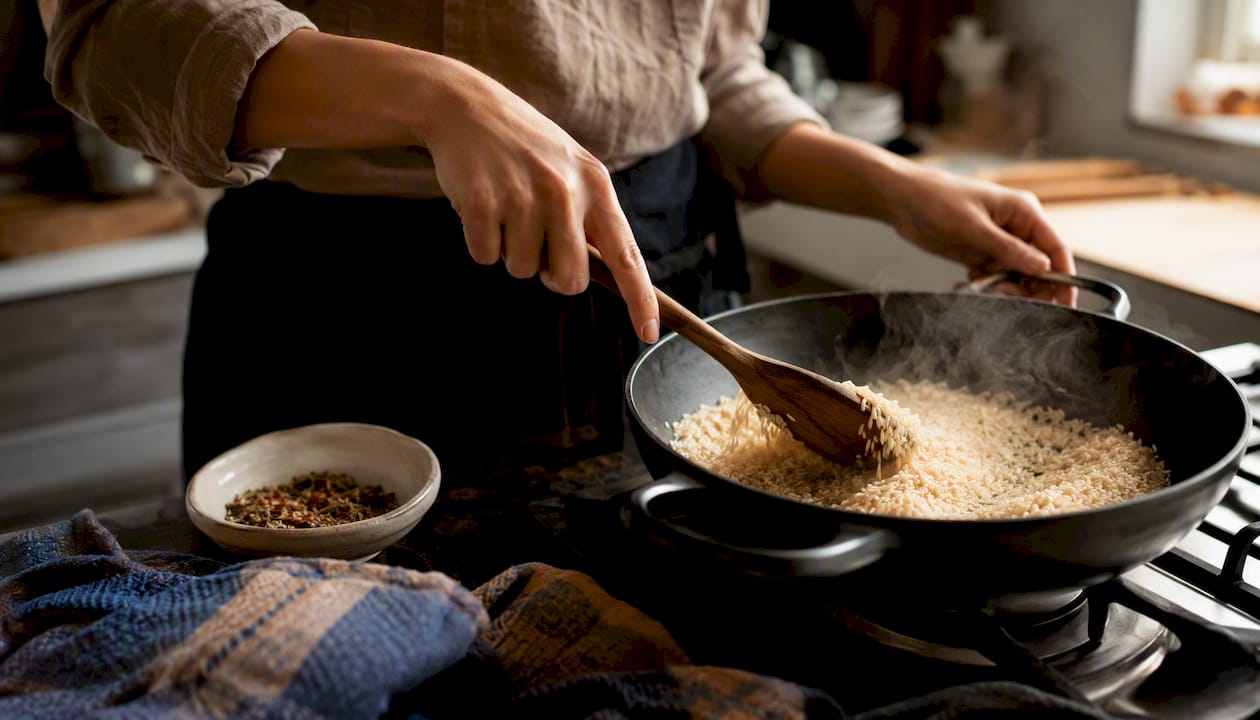
Pro Tip: For the chicken-and-rice skillet, toast the raw rice in the pan drippings for 60 seconds before adding broth. It adds a nutty depth you cannot get any other way.
Sheet-pan dinners
| Recipe | Description | Prep + Cook | Servings | Quick Swap |
|---|---|---|---|---|
| Sheet-pan chicken thighs + veg | Bone-in thighs roast over broccoli, potatoes, or whatever veg you have | — + — | 4 | Use salmon fillets |
| Sheet-pan salmon + cherry tomatoes | Salmon and tomatoes roast together; tomatoes burst into a light sauce | 5 min + — | 2–4 | Sub cod or tilapia |
| Sheet-pan sausage + peppers | Sliced sausage, bell peppers, onions — toss with olive oil and roast | — + 30 min | 4 | Use chickpeas for vegetarian |
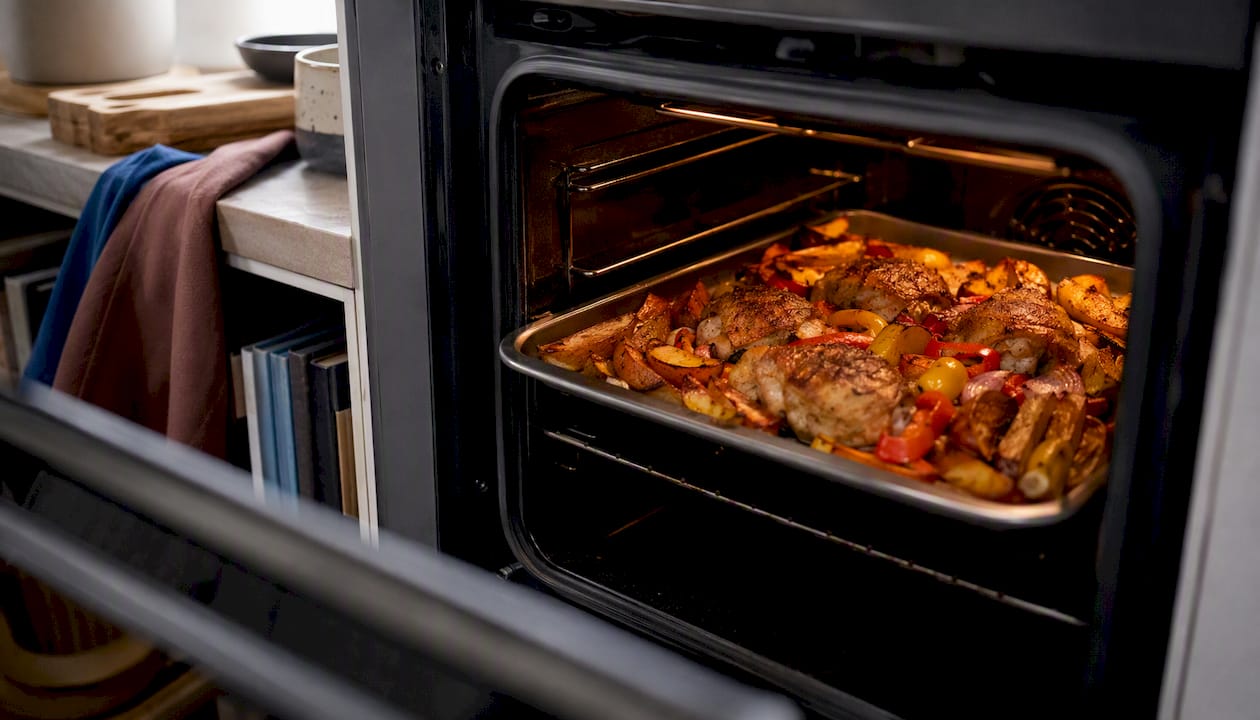
For dedicated sheet-pan ideas and pan-care tips, the sheet pan dinners guide on AdultingintheKitchen's blog is worth bookmarking.
One-pot pasta and rice
Martha Stewart's one-pan pasta is the technique that changed how a lot of home cooks think about pasta night. Dried pasta, canned tomatoes, garlic, and water go into one skillet cold. As the water reduces, the pasta's released starch turns the liquid into a glossy, creamy sauce — no colander, no second pot.
Half Baked Harvest's roundup of 25 easy one-pan dinners shows that one-pan pastas and chicken-and-rice skillets are the dishes home cooks return to most. Comfort and repeatability go together.
For rice basics that support these recipes, the beginner's guide to stovetop rice walks through the technique step by step.
Dutch oven and stew
Hearty, make-ahead friendly, and perfect for feeding a crowd. Allrecipes notes that one-pot comfort classics like chili and goulash scale easily — halve or double without changing the method. A Dutch oven braised chicken with white beans and greens takes about 50 minutes total and tastes better the next day.
Quick vegetarian picks (under 30 minutes)
- White bean and spinach skillet — canned beans, garlic, broth, sturdy greens. Done in 15 minutes.
- Shakshuka — eggs poached in spiced tomato sauce, straight in the skillet.
- Orzo primavera — orzo cooked risotto-style with whatever vegetables you have.
For easy weeknight meal ideas for families, including vegetarian options that work for picky eaters, that resource covers the bases well.
How staging and sequencing make one-pan cooking work
The single principle behind every great one-pan dinner: add ingredients in stages, not all at once. Dumping everything in together is the fastest route to mushy vegetables, rubbery protein, and a watery sauce.
Here is the sequence that works across almost every method:
- Sear aromatics and protein first. Heat oil until shimmering, then brown your protein or aromatics (onion, garlic, sausage). This builds the flavor base the rest of the dish draws from.
- Remove quick-cook items. Shrimp, delicate fish, and pre-cooked proteins come out of the pan once browned. They go back in at the end. Serious Eats' shrimp-and-orzo recipe uses exactly this remove-and-return workflow — cook the orzo in the same skillet, then return the shrimp for a brief warm-through.
- Add long-cook starches and liquid. Rice, orzo, or dried pasta go in next with a measured amount of broth or water. Measured liquid is the key word: you want the starch to absorb it completely, so there is nothing to drain.
- Deglaze and build the sauce. Scrape up the browned bits with a splash of wine, broth, or canned tomato liquid. Those bits are concentrated flavor.
- Finish with quick items. Spinach, frozen peas, fresh herbs, cheese, and pre-cooked proteins go in during the last 2–3 minutes.
Dos and don'ts:
- Do use a lid to trap steam when cooking rice or pasta in the pan.
- Do stir pasta/orzo every few minutes to prevent hot spots as liquid reduces.
- Don't crowd the pan when searing — proteins steam instead of brown.
- Don't skip the deglaze step; it is where most of the flavor lives.
Pro Tip: Keep heat at a steady medium once liquid is in the pan. A hard boil evaporates liquid too fast and scorches the bottom before the starch is cooked through.
Good mise en place — having everything measured and prepped before the pan heats up — is what makes this sequencing feel effortless rather than stressful.
What equipment and pantry staples you actually need
You do not need a full batterie de cuisine. Four pieces of equipment cover every recipe in this roundup.
| Pan | Best for | Care note |
|---|---|---|
| Straight-sided skillet (stainless or cast iron) | Searing, one-pan pasta, chicken-and-rice | Deglaze while hot; dry cast iron immediately |
| Rimmed sheet pan | Roasted proteins + veg, sheet-pan meals | Line with parchment or foil for easy cleanup |
| Dutch oven (5 qt) | Stews, braises, chili, soups | Oven-safe; avoid metal utensils on enamel |
| Nonstick skillet | Eggs, delicate fish, low-fat sautés | No metal utensils; hand-wash only |
For sheet-pan cooking, parchment paper is your best friend. It prevents sticking, speeds cleanup, and keeps the pan in better shape longer. Foil works for higher-heat roasting when you want crispier edges.
Pantry staples that make one-pan dinners reliable:
- Chicken or vegetable stock (cartons, not cans — easier to measure)
- Canned whole or crushed tomatoes
- Dried pasta, orzo, and long-grain white rice
- Canned white beans and chickpeas
- Pre-cooked sausage (chicken, turkey, or plant-based)
- Sturdy greens: kale, spinach, or frozen peas
For bold seasoning without a long spice list, a Latin flavors and spices pantry guide covers the essentials that punch above their weight in one-pan dishes.
For beginner-friendly kitchen skills that go alongside this equipment list, AdultingintheKitchen's blog has a practical starting point.
Make-ahead, storage, and reheating that actually work
One-pan dinners are some of the best candidates for meal prep because most of them taste better the next day. Here is a practical storage guide:
| Dish type | Fridge (days) | Freezer | Best reheat method |
|---|---|---|---|
| Skillet pasta | 3 days | Not recommended | Stovetop with a splash of water or broth |
| Chicken-and-rice skillet | 4 days | Up to 3 months | Microwave covered, or oven |
| Sheet-pan roasted veg + protein | 3–4 days | Up to 2 months | Oven to re-crisp |
| Dutch oven stew or chili | 4–5 days | Up to 3 months | Stovetop over medium-low |
A few practical rules:
- Store crunchy roasted vegetables separately from saucy proteins when possible. They reheat better and stay crisp longer.
- For freezing stews and braises, let them cool completely before portioning into airtight containers. Sauce-first layering (sauce on the bottom, protein on top) prevents freezer burn on the protein.
- Pasta and rice dishes reheat best with added liquid. A tablespoon of broth or water per serving prevents the starch from drying out.
- Poultry should reach an internal temperature of 165°F when reheated. A quick-read thermometer removes the guesswork.
For ideas on using leftover grains from one-pan rice dishes, the leftover rice soup guide has three fast options.
Scaling guidance: most skillet and sheet-pan recipes double cleanly — use a larger pan or two sheet pans side by side. For Dutch oven stews, doubling works as long as the pot is large enough to hold everything without crowding. For solo cooks, the quick dinner recipes for one guide covers single-serving portions.
Test-kitchen tips that separate good one-pan dinners from great ones
Staged cooking and using released starch or liquid to build the sauce are the two biggest levers for success in one-pan cooking. Get those two right and most other variables take care of themselves.
Here is what consistent testing confirms:
- Measure your liquid for pasta and orzo. Too much and you get soup; too little and the starch scorches before it cooks through. For orzo, a 1:2 ratio (orzo to liquid) in a covered skillet is a reliable starting point.
- Use the remove-and-return workflow for delicate proteins. The Serious Eats shrimp-and-orzo method finishes with pesto and feta stirred in off the heat — the residual warmth is enough to melt the cheese without overcooking the shrimp.
- Let pasta's starch do the work. The Martha Stewart one-pan pasta technique works because the starch released during cooking thickens the remaining liquid into a sauce. Stir regularly and resist the urge to add more water before the liquid has had a chance to reduce.
- Deglaze before it burns. If you see dark bits forming on the pan bottom after searing, add liquid immediately and scrape. Those bits dissolve into the sauce and add depth.
- Rest sheet-pan proteins briefly. Two to three minutes off the oven lets juices redistribute and keeps chicken thighs from running dry when you cut into them.
Pro Tip: If your one-pan pasta looks too thick before the pasta is fully cooked, add liquid in small increments — a quarter cup at a time — rather than a large pour. This keeps the starch concentration consistent and prevents a watery finish.
Why one-pan dinners are the foundation of real cooking confidence
One-pan dinners are not a shortcut. They are the clearest proof that technique matters more than equipment. When you learn to stage ingredients, build a sauce from what is already in the pan, and trust the process, you are not just making dinner — you are building a repeatable skill set that works across dozens of recipes.
That is exactly why these methods sit at the center of what AdultingintheKitchen teaches. The Starter Pack covers the equipment you actually need (a good skillet, a sheet pan, a Dutch oven), and the weekly recipe drops give you five new recipes every week — including one-pan options built for weeknight timing. The goal is not to hand you a recipe once. It is to help you cook the same dish confidently three weeks in a row until it feels like yours.
Kitchen-tested credentials matter here. Every recipe in this roundup has been evaluated for realistic weeknight timing — not ideal-conditions timing. If a recipe says 30 minutes, it means 30 minutes for a home cook who is not a professional.
AdultingintheKitchen gives you the structure to repeat these meals
Knowing a recipe is one thing. Cooking it confidently on a Tuesday night after work is another. AdultingintheKitchen is built for exactly that gap — giving you the structure, support, and curated recipes to make one-pan dinners a real weeknight habit, not a one-time experiment.
Members get the Adulting in the Kitchen Starter Pack (the tools and setup you actually need), five new recipes every week including one-pan options tested for weeknight timing, grocery store checklists so you always have the right pantry staples on hand, and real chef support when a recipe is not going the way you expected.
No more guessing what to make or whether you have the right ingredients. Join AdultingintheKitchen and start cooking with confidence tonight.
Sources
- One-Pot (or Sheet-Pan) Dinner Recipes - NYT Cooking
- One Pan Pasta Recipe (Martha Stewart)
- 53 One-Pot Meals for Breezy Dinners | Bon Appétit
- 25 Easy One-Pan Dinners Everyone Is Making. - Half Baked Harvest
- One-Pan Sausage with Corn and Zucchini (The Kitchn)