Mise en place (pronounced "meez ahn plahs") means "everything in its place." Before you turn on a single burner, read your recipe fully, gather every ingredient and tool, do all your chopping and measuring, then arrange everything within arm's reach. That one habit separates cooks who feel calm and in control from those who scramble, burn things, and over-season in a panic.
Quick-start checklist:
- Read the full recipe before touching anything
- Pull out every ingredient and tool you need
- Chop, measure, and prep everything in advance
- Arrange items at your workstation in the order you'll use them
Table of Contents
- What does mise en place actually mean?
- Why mise en place matters for home cooks
- How to do mise en place in 5 steps
- A beginner checklist and three sample setups you can copy
- How to set up your workstation at home
- Common mistakes beginners make (and how to fix them)
- Key Takeaways
- Why mise en place is the first thing we teach at AdultingintheKitchen
- Ready to cook with a system that works?
- Useful sources and further reading
- The habit that changed how I think about home cooking
What does mise en place actually mean?
Mise en place is a French culinary term that translates literally to "putting into place." Chefs often shorten it to "meez" on a busy line. The term carries two linked meanings that both matter for home cooks:
- Physical setup: Every ingredient is prepped, measured, and positioned before cooking starts
- Mental habit: You've already "pre-cooked" the dish in your head, so execution feels automatic
The practice comes from classical French kitchen tradition, where a cook's station had to be fully ready before service began. Professional kitchens treat it as a state of readiness that covers station maps, labeled containers at fixed positions, and par levels. You don't need any of that formality at home. The core idea still applies: prep first, cook second.
Why mise en place matters for home cooks
The biggest payoff is that you stop cooking and searching at the same time. When your garlic is already minced and your sauce is already measured, you can focus entirely on the heat, the timing, and the food.
Here's what that looks like in practice:
- Fewer burned ingredients: Onions go from translucent to scorched in about 90 seconds. If you're still chopping garlic when that happens, you've lost the dish. Prepping everything first means you're watching the pan, not the cutting board.
- Less over-salting: When you measure salt before cooking, you add exactly what the recipe calls for instead of shaking straight from the container mid-rush.
- Better timing: Multiple components finish together because you planned the sequence in advance.
- Safer cooking: No reaching over a hot pan to grab something from across the kitchen.
- More consistent results: The same prep routine produces the same outcome every time.
Grouping ingredients that go into the pan at the same time into a single bowl also cuts down on dishes and keeps your focus where it belongs. The confidence that comes from this is real. When you're not scrambling, cooking actually feels good.
How to do mise en place in 5 steps
Follow this sequence on your next recipe and you'll cook faster, safer, and with more confidence from the very first try. Reading the recipe first is non-negotiable — every other step depends on it.
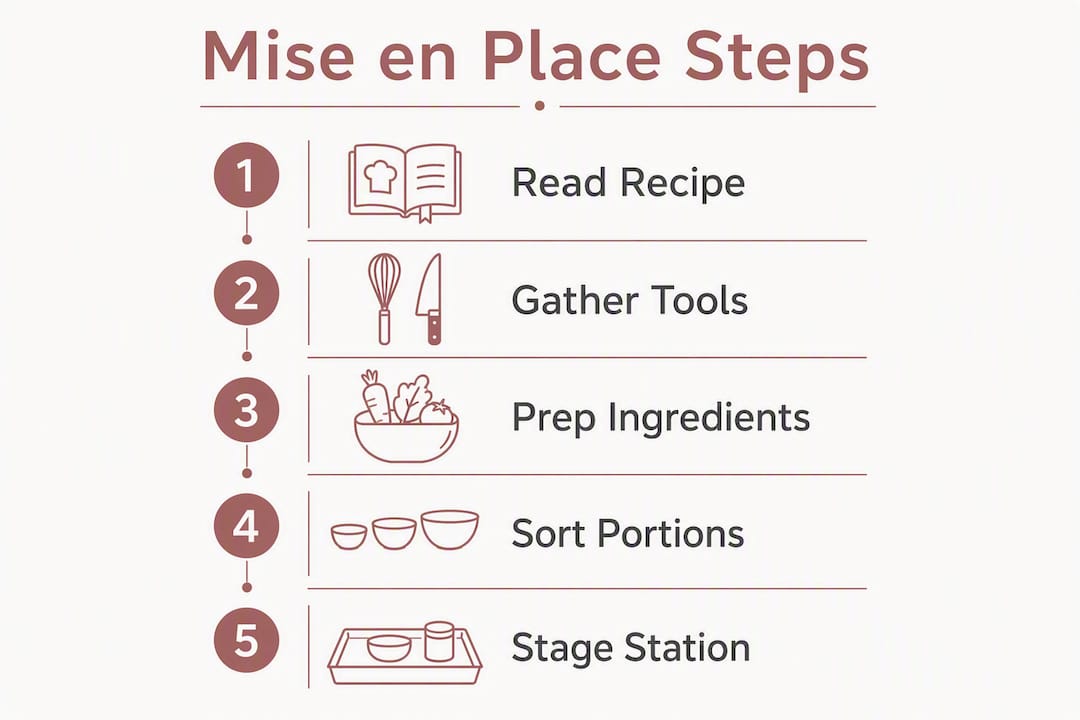
Step 1: Read the recipe and plan your timing
Read the entire recipe before you touch anything. Note which steps take the longest, what needs to be prepped first, and whether anything needs to rest, marinate, or come to room temperature. This is where you build your mental roadmap.
Step 2: Gather your ingredients and tools
Pull everything out of the fridge, pantry, and cabinet at once. Set it all on the counter. If something is missing, you find out now, not halfway through cooking. Grab your cutting board, knives, pans, measuring cups, and any bowls you'll need.
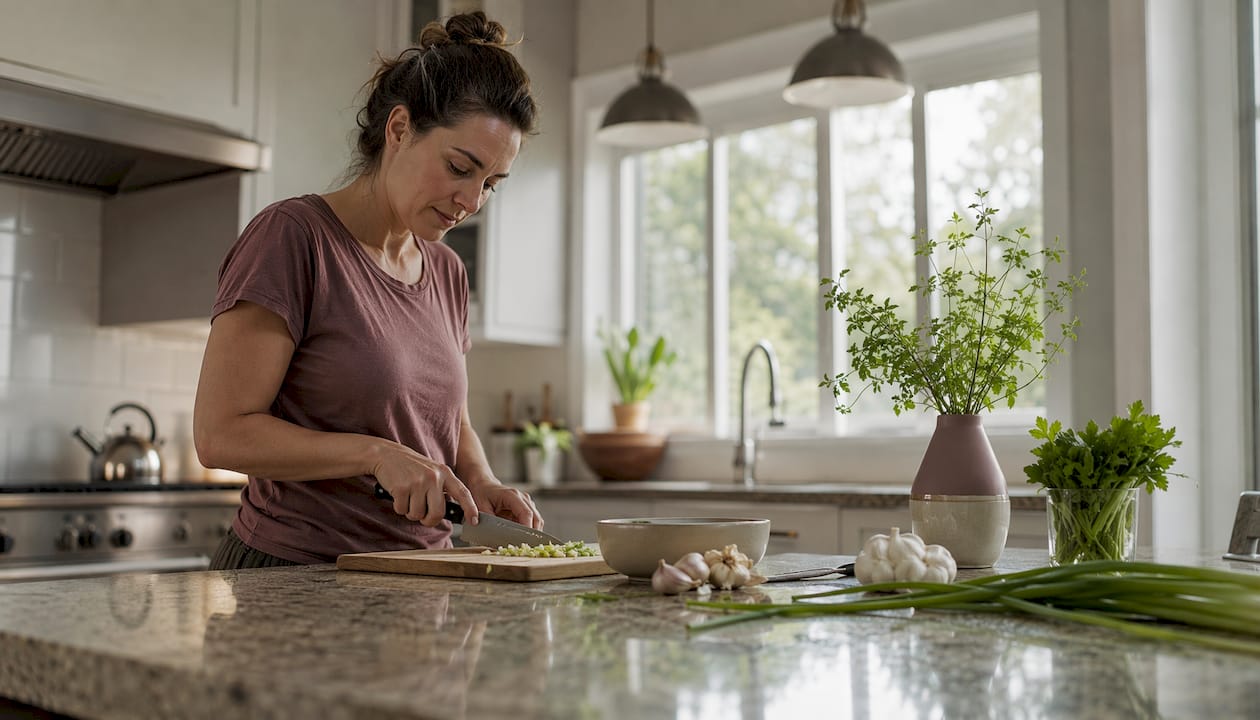
Step 3: Wash, peel, chop, and measure
Work through your prep list in order. Chop aromatics first since they're used early in most recipes. Measure liquids and spices into small bowls or containers. Group ingredients that get added to the pan at the same time into one bowl — this saves both dishes and mental energy.
Step 4: Sort and portion into containers
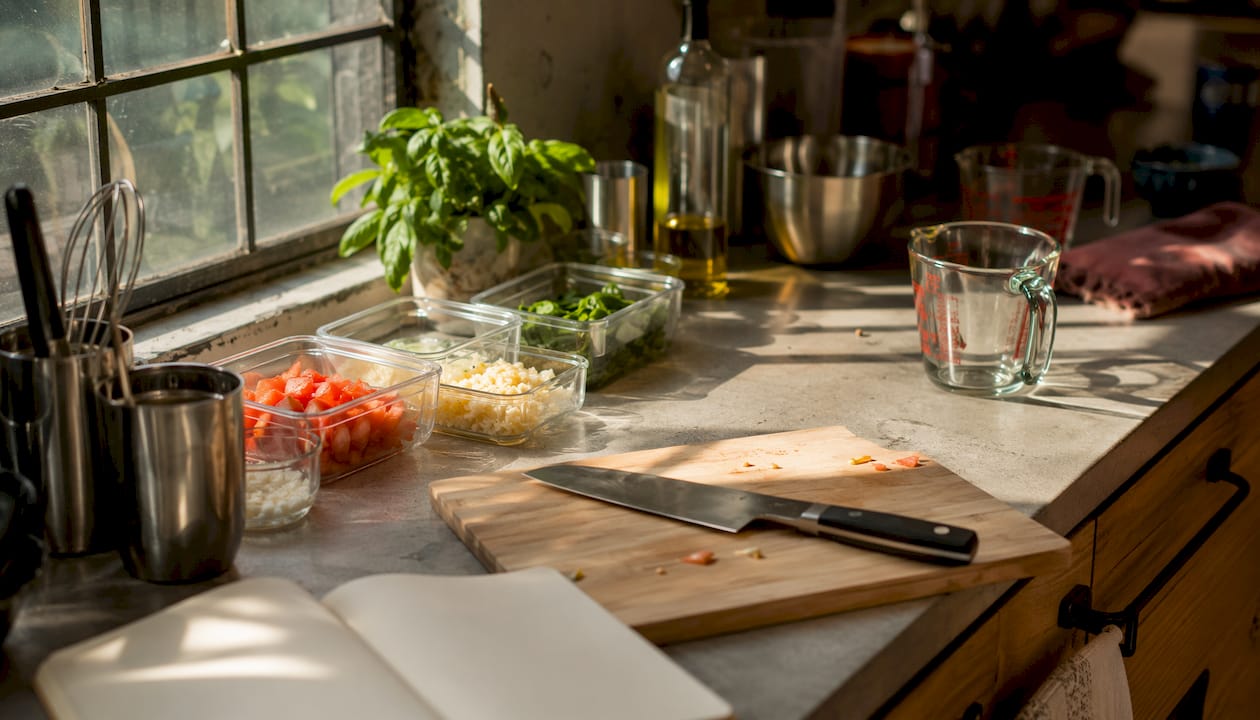
Place each prepped item in its own bowl or container. Label anything that could be confused with something else, especially if you're prepping for multiple dishes. For perishables, cover and refrigerate anything you won't use within 30 minutes.
Step 5: Stage your workstation and rehearse mentally
Arrange everything at your station in the order you'll use it, left to right if that feels natural. Then close your eyes for 30 seconds and walk through the recipe in your head. When you open them, you're ready to cook.
Pro Tip: Group ingredients that hit the pan simultaneously into one prep bowl. For a stir-fry, that might mean garlic, ginger, and scallion whites all in one small bowl. You add them together, so you prep them together. This alone cuts your active cooking stress in half.
A beginner checklist and three sample setups you can copy
Print this checklist and tape it inside a cabinet door until the habit sticks.
Mise en place checklist:
- Read the full recipe, start to finish
- Check that all ingredients are on hand
- Pull out every tool and pan you need
- Wash and dry produce
- Chop, mince, and slice everything
- Measure spices, liquids, and sauces
- Group simultaneous additions into shared bowls
- Arrange items at your station in use-order
- Refrigerate any perishables not used within 30 minutes
- Do a 30-second mental run-through before you start
Omelette (about 10 minutes of prep)
- 2 eggs, cracked into a small bowl and lightly beaten
- Fillings (cheese, herbs, or diced vegetables) in a separate small bowl
- 1 teaspoon butter measured and ready
- Pan on the burner, not yet heated
- Salt and pepper within reach
Skip the separate bowl for fillings if you're only using shredded cheese — just have it measured and nearby.
Stir-fry (about 15 minutes of prep)
- All vegetables sliced and grouped by cook time (dense veg like broccoli in one bowl, quick-cooking veg like snap peas in another)
- Garlic, ginger, and scallion whites combined in one small bowl
- Sauce (soy sauce, sesame oil, cornstarch, and water) pre-mixed in a cup
- Pan or wok on the burner, oil nearby
- Protein sliced and patted dry
You can combine all vegetables into one bowl if you're comfortable with timing. Fewer bowls, same result.
Pasta sauce (about 12 minutes of prep)
- Onion and garlic finely chopped, in one bowl (they go in together)
- One 28-ounce can of crushed tomatoes opened and ready
- Fresh herbs picked and roughly torn
- Olive oil measured into the pan
- Salt, red pepper flakes, and a block of Parmesan nearby
If you're using dried herbs instead of fresh, measure them into the bowl with the onion and garlic.
How to set up your workstation at home
A good workstation makes the prep habit stick. You don't need a big kitchen — you need a clear, logical layout.
Basic workstation setup:
- Place your cutting board in the center of your main prep area
- Keep your knife to the right of the board (or left if you're left-handed)
- Line up prepped bowls to the right of the board in use-order
- Put your pan on the nearest burner
- Keep measuring spoons and a trash bowl within arm's reach
The tools every beginner needs for mise en place are simple: a chef's knife, a sturdy cutting board, measuring spoons and cups, and a set of small bowls. That's it.
For containers, you don't need restaurant-grade glass prep bowls. Repurposed deli containers, small cereal bowls, and mason jars all work perfectly.
| Container type | Best use | Cost |
|---|---|---|
| Small cereal bowls | Measured spices, chopped aromatics | Already own them |
| Deli containers (repurposed) | Larger prepped portions, sauces | Free |
| Mason jars | Pre-mixed liquids, marinades | Low |
| Ramekins | Single-use spice portions | Low |
Pick fixed positions for your most-used items — tongs always on the right side of the stove, spoon rest always to the left of the burner. Once those positions are automatic, your hands find them without looking. That matters when a pan is screaming hot. For a deeper look at kitchen layout efficiency, the setup principles carry directly into your prep routine.
A standardized container and labeling system — writing the item name and date on anything stored — is standard in professional kitchens and takes about five seconds per container at home.
Common mistakes beginners make (and how to fix them)
Most kitchen frustration traces back to a few repeatable errors. Here's what to watch for:
- Starting without reading the recipe: You'll miss a step that requires advance prep, like marinating or bringing butter to room temperature.
- Underestimating prep time: Budget 10–15 minutes of mise en place for a simple weeknight recipe. More complex dishes need more.
- Skipping clean-as-you-go: Toss scraps as you chop and rinse bowls the moment they're empty. A cluttered counter makes cooking harder and more stressful.
- No fixed positions: If your tongs live in a different drawer every week, you'll grab for them mid-cook and lose focus.
- Cross-contamination risk: Keep raw protein on a separate board and in separate containers from produce. Label anything that touches raw meat.
Small rituals prevent big problems. A trivet always in the same spot means you never set a hot pan on a bare counter. A dedicated spoon rest means you never lose track of a sauce-covered spoon. These aren't fussy habits — they're the things that keep you calm when the heat is on.
Pro Tip: Run a 10-minute mise en place drill on a recipe you already know. The goal isn't the food — it's building the muscle memory of reading, gathering, prepping, and staging in sequence. Do it three times on simple recipes and the habit becomes automatic.
Key Takeaways
Mise en place works because it separates thinking from cooking, so you can give your full attention to the heat, the timing, and the food in front of you.
| Point | Details |
|---|---|
| Definition | Mise en place means "everything in its place" — prep all ingredients and tools before cooking starts. |
| The 5-step sequence | Read, gather, chop and measure, sort into containers, then stage and mentally rehearse. |
| Group simultaneous additions | Combine ingredients that go in the pan at the same time into one bowl to reduce stress and dishes. |
| Fixed positions matter | Assign a permanent spot to tongs, spoon rests, and prep bowls so your hands find them automatically. |
| AdultingintheKitchen | The membership provides downloadable mise en place checklists, weekly recipes, and chef support to build this habit faster. |
Why mise en place is the first thing we teach at AdultingintheKitchen
Mise en place is the foundation of everything we teach at AdultingintheKitchen. Before a member cooks their first real recipe, we walk them through the prep habit — because confidence in the kitchen doesn't come from talent. It comes from preparation.
The Starter Pack breaks down exactly how to set up your station, what containers to use, and how to read a recipe so nothing surprises you mid-cook. Weekly recipe drops come with grocery checklists that map directly to the prep steps, so you're never standing in the kitchen wondering what you forgot. And when something goes sideways, real chef support is there to help you figure out why and fix it.
Members who build the mise en place habit early consistently report less stress, faster meal prep, and the kind of cooking confidence that makes them actually want to cook again the next night.
Ready to cook with a system that works?
Knowing the steps is one thing. Having a structured plan, curated recipes, and a chef in your corner makes the habit stick faster.
AdultingintheKitchen gives you everything you need to go from "I don't know where to start" to cooking real meals you're proud of:
- Starter Pack with kitchen setup guidance and a mise en place prep framework
- 5 new recipes every week, each designed for beginners with clear, step-by-step instructions
- Grocery store checklists that align with each week's recipes so prep is already planned
- Real chef support to answer your questions and keep you moving forward
Every recipe in the membership is built around the prep-first approach you just learned. The checklists do the planning work for you — you just follow the steps. Join AdultingintheKitchen and cook your first real meal this week.
Useful sources and further reading
- Mise en place | Wikipedia — Concise overview of the term's meanings and its application beyond the kitchen
- What Is Mise en Place? | The Kitchn — Practical home-cook explanation with tips on grouping ingredients and reducing dishes
- What Is Mise En Place, and Why Is It Important? | Allrecipes — Step-by-step breakdown of the read-first, gather-second approach for beginners
- Mise en place in restaurant kitchens | Tableview — Deep dive into station maps, container systems, and the mental habit behind professional mise en place
- Mise En Place definition & how to do it | WebstaurantStore — Foodservice-focused guide with step lists and benefit summaries adaptable for home use
- Culinary Basics: Mise En Place | CACFP — Institutional culinary reference covering mise en place fundamentals and food safety basics
- What Is Mise en Place and Why Is It So Important to Chefs? | Auguste Escoffier School — Professional culinary school perspective on why chefs treat mise en place as a non-negotiable discipline
The habit that changed how I think about home cooking
Most cooking advice focuses on recipes. Mise en place is about something more fundamental: how you think before you cook.
Here's what most beginner guides miss. They present mise en place as a time-saving trick, a way to be more organized. That's true, but it undersells the real benefit. The prep ritual is actually a decision-making session. When you read the recipe, gather your ingredients, and chop everything before the burner is on, you're making every decision about the dish in a calm, unhurried state. The moment you light the stove, the decisions are already made. You're just executing.
That shift, from deciding-while-cooking to executing-what-you-already-decided, is what makes cooking feel manageable for beginners. It's also why experienced cooks can hold a conversation, adjust seasoning, and plate a dish simultaneously. They're not smarter or more talented. They just made all their decisions before the heat went on.
The practical takeaway: don't treat mise en place as prep work you do before the "real" cooking starts. It is the real cooking. The 10–15 minutes you spend reading, gathering, and prepping are where the meal is actually made. Everything after that is just following through.