What are the best beginner cooking classes online?
The four strongest options for adults starting from scratch are CocuSocial, Cambridge School of Culinary Arts, Home Cooking New York, and Web Cooking Classes. Each takes a different approach, so the right pick depends on how you learn best.
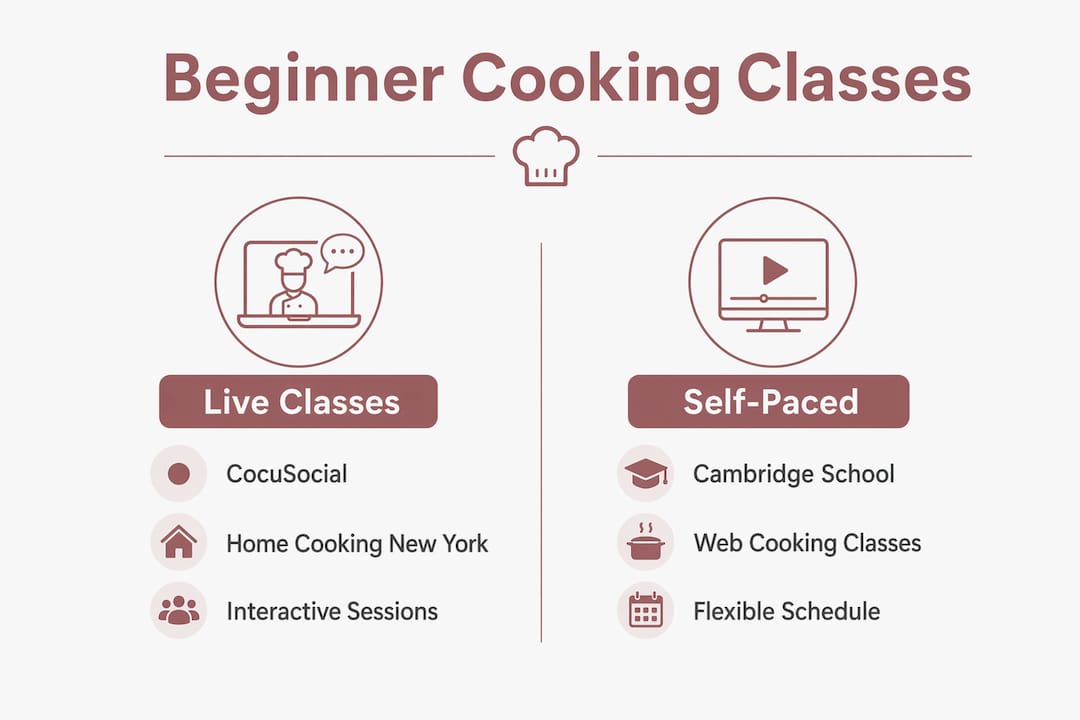
| Provider | CocuSocial | Cambridge School of Culinary Arts | Home Cooking New York | Web Cooking Classes |
|---|---|---|---|---|
| Class types | Hands-on, online, tasting, mixology | All skill levels, professional programs | Hands-on, boot camps, private events | Self-paced video lessons |
| Format | Live and interactive | On-demand and in-person | Live hands-on, ~3 hours per class | Self-paced, on-demand |
| Pricing | $55–$89 per class | Not publicly listed | Varies by class | Monthly or lifetime membership |
| Instructor expertise | Professional chefs | Professional culinary faculty | NYC-based culinary instructors | Chef Todd, direct Q&A access |
| Special features | Social cooking events, media-recognized | Professional certifications, private events | Beginner boot camps, global cuisines | Lifetime access, community forum |
| Best for | Social learners and food lovers | Aspiring culinary professionals | NYC-area home cooks and boot camp seekers | Flexible, self-paced beginners |
| Rating | 4.9★ | 4.9★ (861 reviews) | 4.8★ (108 reviews) | 5★ (2 reviews) |
CocuSocial stands out for its social format. Classes run live with professional chefs in unique venues, and the platform has been featured by The New York Times, Forbes, and TimeOut. If you want cooking to feel like an event rather than homework, this is the one.
Cambridge School of Culinary Arts suits anyone who wants more than a single class. It offers on-demand online courses for all skill levels, plus professional certificate and diploma programs for those who want to go further. The curriculum covers baking, pastry, and culinary arts from beginner to advanced.
Home Cooking New York runs hands-on classes out of SoHo teaching kitchens, with a strong beginner boot camp track and a wide range of global cuisines including Korean, Greek, and Middle Eastern. Most classes run about 3 hours, which gives you enough time to actually cook something real.
Web Cooking Classes takes a different angle entirely. It is a self-paced video school built around basic cooking methods rather than individual recipes. You get direct access to Chef Todd for questions, a community forum, and either a monthly membership or lifetime access to all 48 lessons.
What do beginner online cooking classes actually offer you?
The best basic cooking classes online teach you how to think in the kitchen, not just how to follow a recipe. That shift is what separates someone who can cook one dish from someone who can cook anything.
Most classes are built around one of three formats:
- Live sessions: You cook in real time with an instructor on Zoom or a similar platform. You can ask questions, get feedback on your technique, and see exactly how the dish comes together.
- On-demand video: You watch pre-recorded lessons and cook at your own pace. Good for busy schedules, though you lose the live feedback loop.
- Interactive hybrid: A mix of video lessons and live Q&A, photo feedback, or community forums. Web Cooking Classes and Cambridge School of Culinary Arts both use versions of this.
Beyond format, good beginner courses cover the skills that actually matter: knife handling and food safety, heat control, basic sauces, and how to season food properly. These are the building blocks. Once you have them, recipes become suggestions rather than instructions you have to follow exactly.
Before your first live class, review the equipment and grocery list the instructor sends in advance. Most classes send prep materials a few days ahead. Skipping this step is the most common reason beginners feel lost in the first 10 minutes.
Pro Tip: Set up your workspace before the class starts. Clear the counter, get your tools out, and have your ingredients measured and ready. You will focus on the technique instead of scrambling for a cutting board.
What topics do beginner cooking courses typically cover?
Most beginner courses hit the same core topics because those topics are genuinely foundational. Here is what you can expect:
Common beginner topics:
- Knife skills and safe cutting techniques
- Stocks and broths (the base of most savory cooking)
- Basic sauces: béchamel, pan sauces, vinaigrettes
- Sautéing, roasting, and searing
- Baking fundamentals: quick breads, yeast dough, simple desserts
- Egg cookery (scrambled, fried, frittata)
- Seasoning and spice use
Common class formats and lengths:
- Short workshops: single sessions, 1–2 hours, focused on one skill
- Multi-week series: 3-week series covering core techniques across three 75-minute sessions
- Comprehensive programs: 8 to 12-week courses with about 3 hours of cooking per week, covering a full range of skills
The 12-week format, like the one ClassBento offers, is the most thorough. You move from knife skills in week one all the way to roasting a whole chicken by the final session. For someone who wants a real foundation rather than a quick win, that depth is worth the time commitment.
Social cooking events, like those CocuSocial runs, add a layer that solo video learning cannot replicate. You cook alongside other people, which keeps you accountable and makes the experience genuinely fun. If you want to build community while you learn, look for group cooking events alongside your core course.
How do the leading US providers compare in depth?
Each of the four providers serves a different kind of learner, and the differences go beyond format.
CocuSocial prices classes at $55 to $89 per session, which puts them in the range of a dinner out. That framing is intentional. The experience is designed to feel social and celebratory, not like a lecture. The media recognition from outlets like Reuters and TechCrunch reflects a platform that has built real credibility in the food and experience space.
Cambridge School of Culinary Arts is the most academically structured option. It is the right fit if you are thinking about cooking as more than a hobby. The professional programs include culinary certificates, diplomas, and pastry arts tracks. For a beginner who wants to start casual but leave the door open to something more serious, this is the one to bookmark.
Home Cooking New York's beginner boot camps are worth noting specifically. Boot camps compress a lot of skill-building into a short window, which works well for people who learn by doing rather than watching. The global cuisine variety, from Middle Eastern to Korean, also means you are not stuck cooking the same three dishes everyone else learns.
Web Cooking Classes is the most accessible entry point for someone who is not ready to commit to a schedule. The self-paced structure means you can take a lesson on a Tuesday night or a Sunday morning. Chef Todd's direct Q&A access is a real differentiator for a self-paced platform. Most video courses leave you on your own when you get stuck.
Questions to ask before you enroll in any program:
- Does the instructor have verifiable culinary credentials?
- What is the refund policy if you miss a session?
- How many students are in each live class?
- Do you get access to recordings after a live session ends?
- What equipment do you need, and is a list provided in advance?
How can you build real confidence as a beginner cook?
The biggest hurdle for most beginners is not skill. It is the fear of getting it wrong. Good online classes address this directly through live feedback, Q&A during sessions, and photo submission features that let instructors respond to your actual results.
Mise en place is the single habit that separates a calm cooking experience from a chaotic one. It means having every ingredient measured, chopped, and ready before you turn on the heat. Professional chefs do it automatically. Beginners who learn it early skip most of the frustration that makes cooking feel hard.
The other shift that matters is moving from recipe-following to understanding cooking methods. When you know why high heat sears meat instead of steaming it, you can apply that logic to any protein. When you understand how acid balances fat, you can fix a dish without a recipe telling you to. That kind of adaptability is what good beginner courses build toward.
Pro Tip: Ask questions during live sessions, even if they feel basic. Instructors expect them, and other students in the class almost always have the same question.
A few practical setup tips before your first class:
- Make sure your internet connection is stable before a live session starts
- Position your camera or device so the instructor can see your workspace if feedback is part of the format
- Keep a notebook nearby to write down technique notes, not just recipes
- Check your kitchen tools against the equipment list at least two days before class
Learning to make vegetables taste better is one of those early wins that builds real momentum. It is a simple skill, but it makes every meal feel more intentional.
Adultingwithfood is a different kind of cooking education
The four providers above are great if you want a structured class with a set schedule. But if you want something you can work into your life week by week, without booking a session or waiting for the next cohort, Adultingwithfood takes a different approach.
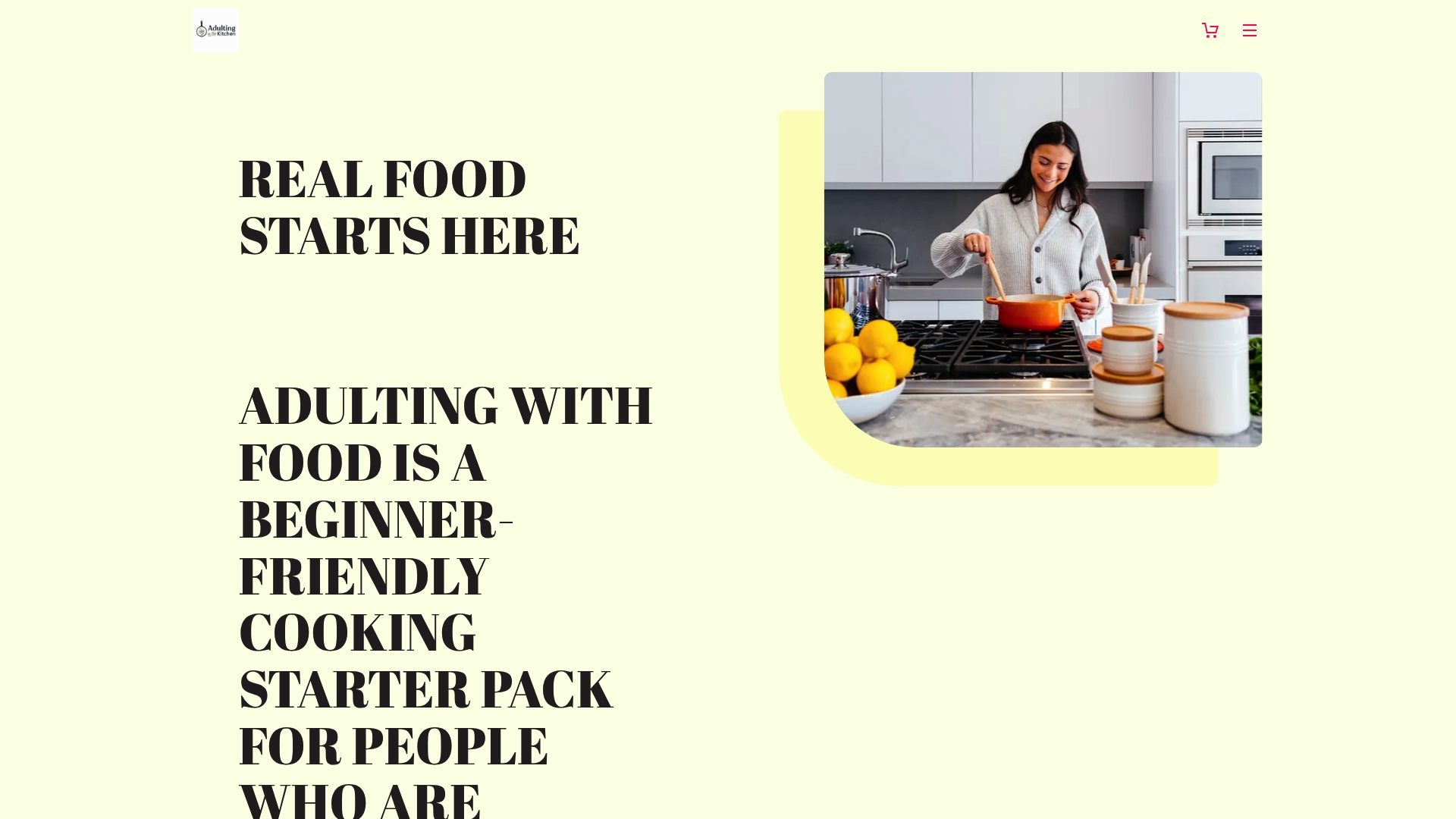
Adultingwithfood is a digital cooking membership built for adults who are starting from zero. You get the Adulting With Food Starter Pack, which covers what tools you actually need, how to set up your kitchen, and what to buy at the grocery store. Every week, five new recipes drop with grocery checklists included. Real chef support is available when you get stuck. No class schedule to work around. No session you have to rebook if life gets in the way.
Get your Starter Pack today and start cooking meals you are actually proud of.
Key Takeaways
The best beginner cooking classes online teach foundational techniques, not just recipes, and that shift is what builds lasting kitchen confidence.
| Point | Details |
|---|---|
| Top US providers | CocuSocial, Cambridge School of Culinary Arts, Home Cooking New York, and Web Cooking Classes each serve different learning styles. |
| Format matters | Live classes offer real-time feedback; self-paced options like Web Cooking Classes suit flexible schedules with direct instructor access. |
| Prep before class | Reviewing equipment and grocery lists in advance prevents most beginner frustration during live sessions. |
| Technique over recipes | Understanding cooking methods, like heat control and seasoning, lets you adapt any dish without fixed instructions. |
| Adultingwithfood | A weekly membership alternative with chef support, recipe drops, and grocery checklists for beginners who want to learn on their own schedule. |