Freezer meals are simply dishes you cook, cool, and store at 0°F or below so they stay safe indefinitely and ready whenever you need them, saving you time and money on nights you'd otherwise order takeout. The one habit that separates success from a freezer full of mystery bags is to label every container with the meal name, date, and portion size before it goes in.
TL;DR:
- Freezer meals like soups, casseroles, and cooked grains freeze well, but high-water vegetables and cream sauces can turn mushy or separate unless properly prepared.
- Label every container with the meal name, date, and reheating instructions to ensure meals are used in time and reheated safely.
- Cooling food quickly by spreading it in shallow layers prevents freezer burn and helps maintain texture and flavor.
- Thaw meals in the refrigerator, cold water, or microwave, and avoid cooking directly from frozen in slow cookers to prevent bacteria growth.
- Storing food at 0°F ensures safety indefinitely, but quality declines after two to four months; adding fresh herbs or citrus at reheating restores flavor.
Table of Contents
- Freezer Meal Basics: What They Are and What to Expect
- What Freezes Well and What to Avoid
- Essential Equipment and Packaging for Freezer Meals
- Step-by-Step Assembly Workflow: Prep, Cool, Pack, Freeze
- How Long Do Freezer Meals Last, and How Do You Thaw Them Safely?
- Simple Starter Recipes and Formats to Try This Week
- Common Freezer Meal Mistakes and How to Fix Them
- Your First Week of Freezer Cooking, Simplified
- Ready to Build Real Kitchen Confidence, Not Just a Full Freezer?
- Sources
- FAQ
Freezer Meal Basics: What They Are and What to Expect
Freezer meal prep works two simple ways. You either double a recipe you're already making and freeze half, or you set aside a dedicated afternoon to batch-assemble several meals at once. Both count as real freezer meal prep, and neither requires special skills.
The payoff is straightforward: you spend less on delivery apps, waste less food, and you always have a backup dinner when work runs long or the day falls apart. That backup meal matters more than it sounds. It's the difference between cooking something real and giving in to a drive-thru run.
Here's the honest part beginners need to hear: freezing changes food. Some texture shifts and flavor mutes a little, especially in sauces and vegetables. That's normal, not a failure. A quick finishing step, like fresh herbs or a squeeze of lemon at reheating, brings a surprising amount of brightness back to a dish that tasted flat straight out of the freezer. Once you know that trick, freezer cooking stops feeling like a compromise.
What Freezes Well and What to Avoid
Some foods practically beg to be frozen. Others fall apart, separate, or turn watery the moment they thaw. Knowing the difference before you shop saves you a wasted afternoon.
Reliable freezer winners:
- Soups, stews, and chilis (the liquid actually helps preserve texture)
- Casseroles and baked pasta dishes
- Cooked beans, rice, and most grains
- Cooked meats: shredded chicken, ground beef, pulled pork
- Cheese baked into a dish (shredded raw cheese can get grainy on its own, but it holds up fine cooked into a casserole)
Problem items to rework, not skip:
- Mayonnaise-based salads and dressings separate and turn oily
- Raw, high-water vegetables like lettuce, cucumber, and celery turn mushy
- Cream-heavy sauces can curdle or split when reheated
The fix is usually simple. Separate sauces from proteins and freeze them in their own bags, par-cook watery vegetables so less liquid escapes later, and swap regular milk for evaporated milk in cream sauces since it holds up better through the freeze-thaw cycle. If a recipe calls for raw eggs in a filling, use a fully cooked or stabilized version before freezing rather than after.
Essential Equipment and Packaging for Freezer Meals
You don't need a fancy setup to start. You need the right container for the right food, and a system for keeping track of what's in there.
Your packaging options:
- Freezer bags: Best for soups, stews, sauces, and marinated raw meat. Cheap, stackable, and space-efficient once flattened.
- Rigid plastic containers: Good for casseroles or anything with a delicate top layer you don't want crushed.
- Tempered glass: Reusable and oven-safe, but heavier and needs headspace so it doesn't crack as contents expand.
- Foil pans with lids: Ideal for bake-and-serve dishes like lasagna, since you can go straight from freezer to oven.
Portion with your household in mind. Single-serving bags work for lunches; family-sized trays make more sense for dinner. Either way, flatten bags and freeze them lying flat on a sheet pan first, then stack them vertically once solid. That single move, confirmed by the FSIS, saves real freezer space and helps food freeze faster and more evenly.
Beyond containers, keep a permanent marker or freezer labels on hand, an appliance thermometer to confirm your freezer actually holds 0°F, and a cooling rack to speed up the cooling step before packing. A vacuum sealer is a nice upgrade later, not a must-have on day one.
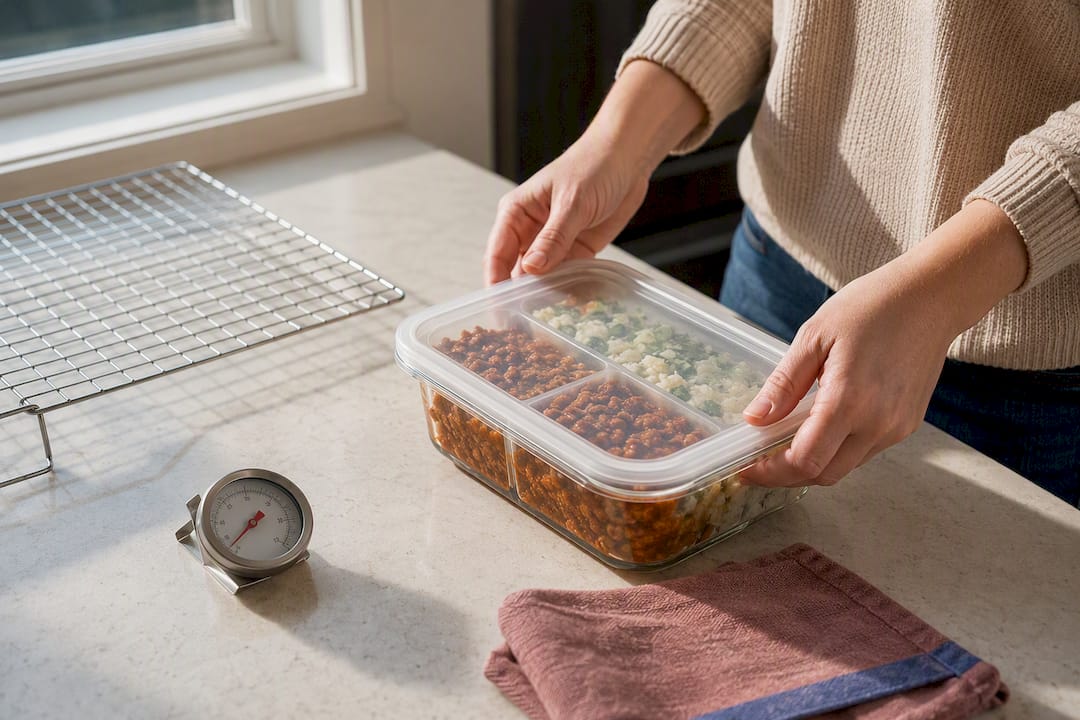
Pro Tip: Buy a cheap freezer thermometer before you buy anything else. A freezer that runs warmer than 0°F wastes every hour you put into meal prep.
Step-by-Step Assembly Workflow: Prep, Cool, Pack, Freeze
A first freezer-cook session goes sideways when people skip planning and try to wing it. Following a set order keeps the whole process manageable, even for a total beginner.
- Pick 2 to 3 recipes that share ingredients where possible, so your shopping list stays short and your prep overlaps.
- Shop with a checklist and set up your workstation before you start cooking: cutting boards, containers, labels, and a clear counter.
- Cook as normal, then cool food quickly. Spread it on a sheet pan or shallow container no more than 2 inches deep so it drops to refrigerator temperature fast instead of sitting warm.
- Portion into your chosen containers, leaving a little headspace for expansion.
- Flash-freeze flat on a tray for an hour or two before stacking bags upright.
- Label everything with the meal name, date, portion count, and reheating instructions.
- Load the freezer, keeping newer meals behind older ones so nothing gets forgotten.
A simple label might read: Chicken Tortilla Soup | Frozen 2/14 | 2 servings | Reheat from frozen, 20 min covered, stir halfway. That's it. No fancy system required, just enough information that future-you isn't guessing.
| Step | What to Do | Why It Matters |
|---|---|---|
| Plan | Pick recipes, shop, prep station | Keeps the session focused and fast |
| Cool | Limit depth to 2 inches | Speeds cooling, protects texture |
| Pack | Portion, leave headspace | Prevents burst bags and waste |
| Label | Name, date, servings, reheat instructions | Keeps meals safe and actually used |
| Freeze | Flat first, then stack | Saves space, freezes evenly |
Skipping the cooling step is the single most common beginner mistake. Packing hot food straight into a sealed container traps steam, invites freezer burn, and can raise the temperature inside your freezer enough to put nearby food at risk.
How Long Do Freezer Meals Last, and How Do You Thaw Them Safely?
Food frozen at 0°F stays safe to eat indefinitely. The storage times you see on charts are about quality, not safety, meaning a meal past its recommended window won't make you sick, it'll just taste a little less fresh.
The real safety line to watch is the temperature danger zone: between 40°F and 140°F, bacteria multiply fast. That's why how you thaw matters as much as how you freeze.
Three safe thawing methods:
- Refrigerator thawing is the safest and most forgiving option; plan for roughly 24 hours for most meals.
- Cold water thawing works when you're short on time; keep the meal sealed and change the water every 30 minutes.
- Microwave thawing is fastest but requires cooking the food immediately afterward, since parts of it heat unevenly and can sit in the danger zone.
One caution worth repeating: don't cook food straight from frozen in a slow cooker. The long, slow ramp-up in temperature can leave food in the danger zone too long. Thaw slow-cooker meals in the fridge overnight first.
Storage times for common freezer meals (quality-based, not safety cutoffs):
According to the Food Safety and Inspection Service, freezing halts microbial growth entirely, which is exactly why an indefinitely frozen meal remains safe well past its "best quality" window. Once thawed, don't refreeze raw meat that's been sitting out, but a fully cooked meal that was thawed properly in the refrigerator can typically be refrozen if needed.
Simple Starter Recipes and Formats to Try This Week
You don't need a big recipe collection to start. You need a handful of formats you can repeat with different fillings.
- Soup or stew: Cook a big batch, cool, portion into flat bags, and reheat on the stove straight from frozen.
- Baked pasta: Assemble in a foil pan, slightly undercook the pasta so it finishes cooking during reheating instead of turning mushy, and bake from frozen at a lower temperature for longer.
- Shredded chicken: Cook a large batch seasoned simply, freeze in one-cup portions, and use it for tacos, bowls, or sandwiches all week.
- Burrito bowls: Layer rice, beans, and protein in containers, then add fresh toppings like avocado or salsa after reheating, never before freezing.
- Breakfast sandwiches: Assemble egg, cheese, and a cooked protein on an English muffin, wrap individually, and reheat straight from the freezer in a toaster oven.
The efficient move is combining formats into one session. While your soup simmers, shred your chicken in the oven or a second pot, and assemble your burrito bowl components on the counter. One afternoon, four or five different meals.
Common Freezer Meal Mistakes and How to Fix Them
Most freezer meal disappointments trace back to a handful of repeat offenders, and every one of them has an easy fix.
- No label, no date. You end up with a freezer full of guesswork. Fix it by labeling before it goes in, not after.
- Packing food while it's still hot. This causes uneven freezing and freezer burn. Cool it first, always.
- Watery vegetables in the mix. Par-cook or drain high-water vegetables before freezing so they don't dump liquid into the dish later.
- Overfilled containers. Liquids expand as they freeze, and an overstuffed bag can burst. Leave headspace.
- Bland meals after reheating. Freezing mutes flavor. A dash of fresh herbs, a splash of lemon or vinegar, or a crisped topping at reheating brings a dish back to life.
There's a real difference between a quality issue and a safety issue. A slightly mushy vegetable or muted flavor is a quality problem, not dangerous. Freezer burn (dry, grayish patches) affects texture but not safety. What actually matters: never refreeze raw meat that's already thawed and sat unrefrigerated, and never cook straight from frozen in a slow cooker.
Pro Tip: Keep a running list of what's in your freezer taped to the door. It takes ten seconds to update and it's the single easiest way to make sure meals actually get eaten before quality drops.
Your First Week of Freezer Cooking, Simplified
Here's the plan we recommend for beginner cooks: shop for two or three recipes, assemble two different formats in one session (a soup and a batch of shredded chicken works great), then label and inventory everything before it hits the freezer.
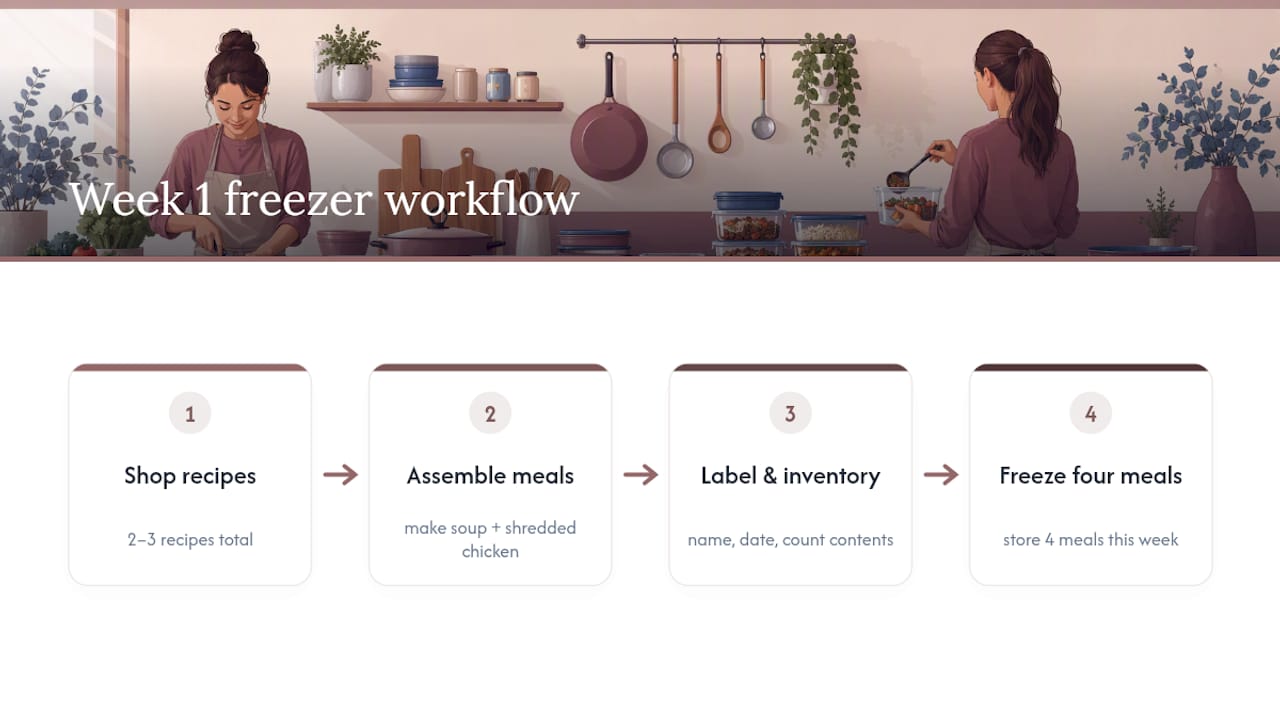
Set a small, honest goal for week one: four meals prepped, one fewer dinner decision to make each night. That's it. Success here isn't a packed freezer, it's proof that the system works for your life. Once you've done it once, doing it again gets easier every time.
Ready to Build Real Kitchen Confidence, Not Just a Full Freezer?
Freezer meal basics get you started, but knowing how to actually cook confidently, without a recipe holding your hand every step, is what keeps you out of the drive-thru line for good. This closes the gap between hunting for scattered recipes and hoping your technique is right, offering a structured path built for beginners specifically.
Many begin with a kitchen starter pack that walks through setting up your kitchen and stocking it with what you actually need, no guessing which gadgets are worth it. From there, weekly recipe drops with new recipes designed to build real skill, grocery store checklists to make shopping quicker, and real chef support can help when a recipe isn't behaving the way you expected. If freezer meals were your first step toward cooking more at home, this is the next one. Check out the membership and see what your first month could look like.
Sources
The safety facts in this guide come straight from the people who set the standards: the FSIS and FDA for official freezing and thawing rules, Michigan State University Extension and University of Nebraska Extension for hands-on packing and labeling advice, and The Kitchn for the flavor-reviving finishing tips that keep freezer meals from tasting like an afterthought.
- Freezing and Food Safety | Food Safety and Inspection Service
- Freezing Cooked Food for Future Meals: Freezer Bag Tips | UNL Food
- Easy freezer meals that actually taste good | The Kitchn
FAQ
What Are Some Good Freezer Meal Ideas for Beginners?
Soups, baked pasta, shredded chicken, burrito bowl components, and breakfast sandwiches are the easiest starting formats because they freeze and reheat predictably without special techniques.
What Are the Most Common Mistakes When Freezing Meals?
The top mistakes are skipping labels, packing food while it's still hot, overfilling containers, and freezing high-water vegetables without par-cooking them first.
What Meals Are Ideal to Freeze?
Soups, stews, casseroles, cooked beans and grains, and most cooked meats freeze reliably because their texture holds up through the freeze-thaw cycle better than raw vegetables or cream-based dishes.
What Makes a Frozen Meal Actually Taste Good After Reheating?
Adding a fresh finishing touch, like herbs, a squeeze of citrus, or a crisped topping, at reheating time restores flavor that freezing tends to mute.
How Long Can You Safely Keep Meals in the Freezer?
Food stored at 0°F stays safe to eat indefinitely; the two to four month windows you see on storage charts are for best quality, not a safety cutoff.