Your printable grocery shopping checklist is ready below. Copy it, print it on letter-size paper, or open a free template in Canva to make it your own. According to Better Homes & Gardens, an effective shopping process starts with auditing your inventory, planning meals, and organizing your list by store section — so that's exactly how this checklist is built.
Quick rule: Print the one-page version for fast weekly trips. Save an editable copy (Canva or Google Docs) for households that swap items week to week. The VA Master Grocery List PDF is a great exhaustive reference to pull from when you're building your own master version.
Key Takeaways
A categorized, printable grocery shopping checklist paired with a weekly pantry audit is the single most effective habit for cooking at home consistently and reducing food waste.
| Point | Details |
|---|---|
| Audit before you shop | Check your fridge, freezer, and pantry first; only buy what's actually missing. |
| Use the 3-3-2-2-1 rule | Three veggies, three proteins, two grains, two fruits, one dip — a fast weekly framework. |
| Organize by store layout | List items in store order (produce → dairy → frozen) to avoid backtracking. |
| Apply FIFO when stocking | Put new items behind older ones so nothing expires unused. |
| AdultingintheKitchen Starter Pack | Includes grocery checklists, five weekly recipes, and chef support for beginner cooks. |
Table of Contents
- Your full grocery store checklist, organized by category
- Where to find editable templates and printable PDFs
- How to build a custom checklist from a pantry audit and meal plan
- Smart shopping strategies that save you time and money
- Stocking your kitchen from scratch: pantry, fridge, and freezer basics
- Customizing your checklist for accessibility, dietary needs, and shared households
- Shopping well is a kitchen skill, not just an errand
- The AdultingintheKitchen Starter Pack has your checklists built in
- Sources
Your full grocery store checklist, organized by category
This is your master list. Every category maps to a real section of most grocery stores, so you can move through the aisles without backtracking. Check off what you need before you leave home.
How to print: Use two columns, 11pt font, 0.5-inch margins on letter-size paper. That fits all categories on one page with room for checkboxes.
Produce
Fruits
- Bananas
- Apples
- Oranges / citrus
- Berries (fresh or frozen)
- Grapes
- Seasonal fruit (whatever's on sale)
Vegetables
- Leafy greens (spinach, romaine, kale)
- Broccoli or cauliflower
- Bell peppers
- Onions
- Garlic
- Carrots
- Tomatoes
- Zucchini or squash
- Potatoes or sweet potatoes
- Cucumber
Dairy
- Milk (or plant-based alternative)
- Eggs
- Butter or margarine
- Shredded cheese
- Block cheese
- Greek yogurt or regular yogurt
- Sour cream
- Cream cheese
Proteins
- Chicken breast or thighs
- Ground beef or turkey
- Salmon or white fish
- Canned tuna or sardines
- Deli meat (turkey, ham)
- Tofu or tempeh
- Beans (black, chickpeas, kidney)
- Lentils
Bakery & Bread
- Sandwich bread or sourdough
- Tortillas (flour or corn)
- English muffins or bagels
- Pita bread
Grains & Pasta
- White or brown rice
- Pasta (spaghetti, penne, rotini)
- Oats (rolled or quick)
- Quinoa
- Bread crumbs
Canned & Jarred
- Diced tomatoes
- Tomato paste or sauce
- Chicken or vegetable broth
- Canned beans
- Canned corn or peas
- Coconut milk
Baking & Sweets
- All-purpose flour
- Sugar (white and brown)
- Baking powder and baking soda
- Vanilla extract
- Chocolate chips
- Honey or maple syrup
Frozen
- Frozen vegetables (peas, corn, edamame)
- Frozen fruit (for smoothies)
- Frozen proteins (shrimp, chicken, fish fillets)
- Frozen meals (backup only)
Condiments & Spices
- Salt, black pepper, garlic powder
- Cumin, paprika, Italian seasoning
- Soy sauce or tamari
- Hot sauce
- Mustard and ketchup
- Mayonnaise
Oils & Vinegars
- Olive oil
- Vegetable or avocado oil
- Apple cider vinegar
- Balsamic vinegar
Beverages
- Coffee or tea
- Sparkling water
- 100% juice (optional)
Household
- Dish soap and sponges
- Paper towels
- Trash bags
- Laundry detergent
- All-purpose cleaner
Personal Care
- Shampoo and conditioner
- Body wash or soap
- Toothpaste
- Deodorant
Print layout options:
| Layout | Best for | Tradeoff |
|---|---|---|
| Single column | Large font, easy scanning in-store | Needs 2 pages for full master list |
| Two column | Full master list on one page | Smaller font; test-print before finalizing |
Design choices like checkbox size and column count directly affect whether you actually use the list while shopping. Test-print before committing to a layout.
Where to find editable templates and printable PDFs
Not every template works the same way. Knowing which format fits your situation saves you from printing something you'll never use again.
Canva is the go-to for editable grocery list templates. You can drag in your own categories, resize checkboxes, change fonts, and export a print-ready PDF in minutes. It's free for basic use. The Pioneer Woman's website also offers a downloadable pantry and shopping list PDF that's clean, well-organized, and ready to print without any editing.
For a comprehensive master reference, the VA Master Grocery List PDF catalogs items across dozens of categories in printable checkbox format. Use it to build your own master, then pare it down to a one-page weekly list.
Community and family blogs like Low Dough Family publish free 3-3-2-2-1 method PDFs that double as starter templates for shoppers who want a structured weekly framework without designing anything from scratch.
| Format | Best for | Limitation |
|---|---|---|
| Editable (Canva, Google Docs) | Weekly customization, shared households | Requires a device and app access |
| Fixed PDF (blog, VA, Pioneer Woman) | Quick print, no setup needed | Can't edit without converting first |
To save an editable Canva template as a print-ready PDF: click Share, then Download, select PDF Print, and choose the highest quality setting. Print at 100% scale (not "fit to page") to keep checkbox sizes accurate.
How to build a custom checklist from a pantry audit and meal plan
The most effective grocery lists aren't written from memory. They come from a quick audit plus a clear meal plan. Here's the repeatable method:
- Audit your fridge, freezer, and pantry. Pull out anything close to expiring. Note what you already have in each category. This takes five minutes and prevents duplicate purchases.
- Pick three to five recipes for the week. Choose meals that share ingredients. Chicken thighs, for example, can anchor a sheet-pan dinner on Monday and a stir-fry on Wednesday.
- Extract every ingredient each recipe needs. Write them out without filtering yet.
- Cross off what you already have. What's left is your actual shopping list.
- Sort by perishability. Put fresh proteins and produce at the top so you buy them last and they stay coldest. Pantry items can sit in the cart longer.
This method is what experienced cooks do before every shop: identify expiring items first, fold them into that week's recipes, then add only what's missing.
The 3-3-2-2-1 shopping rule
If full meal planning feels like too much right now, the 3-3-2-2-1 method gives you a quick framework: three vegetables, three proteins, two grains, two fruits, and one dip or spread. You can also find a free printable worksheet for this method to take to the store. It's not a meal plan — it's a flexible ingredient set you mix and match across the week. Chowhound notes that pairing this framework with pantry basics can reduce decision fatigue and help lower your grocery bill over time.
Pro Tip: Do your pantry audit on the same day every week — Sunday morning works well — and immediately pair any expiring items with that week's recipes. You'll waste far less food and spend less at the store.
Smart shopping strategies that save you time and money
Where you put items on your list matters as much as what's on it. The Academy of Nutrition and Dietetics recommends organizing your list by store layout and checking existing supplies before you shop. Both habits reduce impulse buys and support healthier purchases.
A standard store flows like this: produce → bakery → deli → meat → dairy → frozen → household. Build your list in that order and you'll move through the store in one clean pass. No backtracking to grab the eggs you forgot.
Timing matters. Early morning and late evening are consistently the least crowded windows in most grocery stores. You'll spend less time waiting and more time choosing.
For online grocery shopping: review your order history before adding anything new. Most apps let you reorder past items in one tap, which is useful for staples. Lock in substitution preferences for items that frequently go out of stock, and avoid browsing "suggested" or "trending" sections — those exist to add to your cart, not to help your list.
Seasonal produce and sales: check your store's weekly circular before finalizing your list. Swapping in what's in season (and on sale) for a similar item on your list — say, swapping asparagus for green beans in March — usually saves money without changing the meal much. If you create and sell meal plans built around seasonal ingredients, platforms like Payhip make it easy to share them with others.
Stocking your kitchen from scratch: pantry, fridge, and freezer basics
Setting up a kitchen for the first time means buying more than one week's groceries. You're building a foundation. The University of Nebraska-Lincoln's basic foods checklist frames it well: a well-stocked pantry reduces reliance on convenience foods and builds real cooking confidence.
Starter pantry (buy once, restock as needed):
- Grains: rice, pasta, oats, quinoa
- Canned goods: diced tomatoes, broth, beans, coconut milk
- Oils: olive oil, vegetable oil
- Seasonings: salt, pepper, garlic powder, cumin, paprika, Italian seasoning
- Baking basics: flour, sugar, baking powder, vanilla extract
Fridge and freezer starters for a household of 1–2:
- Eggs (one dozen), butter (one stick), milk or alternative (half-gallon), shredded cheese (8 oz block)
- Frozen vegetables (two bags), frozen protein (one pack of chicken or shrimp)
Once you have the pantry foundation, pair it with the basic cooking tools you'll actually use — a good knife, a skillet, and a sheet pan cover most beginner recipes.
Storage and rotation: use First In, First Out (FIFO). When you bring new groceries home, move older items to the front and put new ones behind them. Clemson University's food storage guide recommends this for all pantry items, not just perishables. Even canned goods and dried pasta benefit from regular rotation to stay fresh.
| Storage location | What goes here | Why |
|---|---|---|
| Pantry | Grains, canned goods, oils, spices | Stable at room temperature; long shelf life |
| Fridge | Dairy, eggs, fresh produce, opened jars | Requires cold to stay safe and fresh |
| Freezer | Proteins, frozen veg, bread, batch-cooked meals | Extends shelf life for weeks or months |
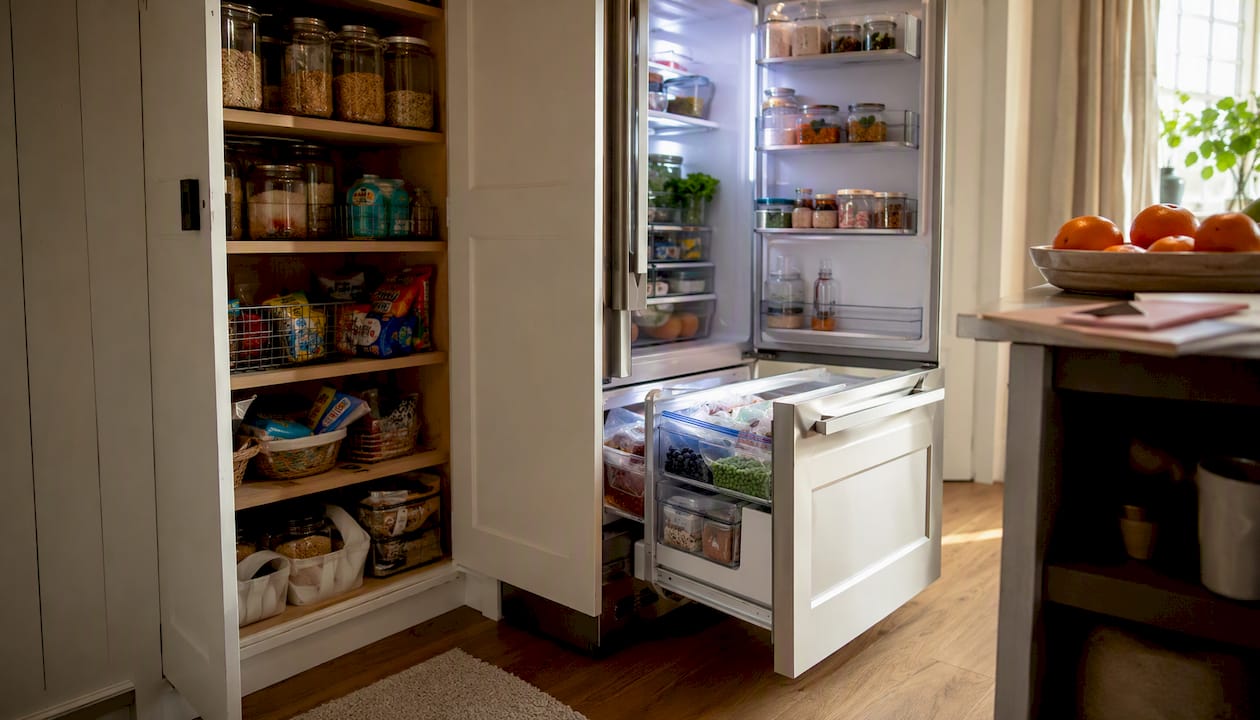
A quick tip from the checkout line: group items on the conveyor belt by where they'll be stored at home — frozen together, pantry together, fridge together. It makes putting groceries away faster and cuts down on repeated fridge opening.
Customizing your checklist for accessibility, dietary needs, and shared households
A checklist that works for you specifically is more useful than a perfect generic one. A few targeted tweaks make a real difference.
- Larger font printable: bump your Canva or Google Docs template to 14pt font and switch to a single-column layout. It prints to two pages but is far easier to read in a bright store.
- Color-coding: use one highlight color for vegetarian items and another for gluten-free swaps. At a glance, you'll know which items are flexible and which are fixed.
- Dietary swaps: for vegetarian shopping, replace ground beef with lentils or black beans and swap chicken broth for vegetable broth. For gluten-free, replace regular pasta with rice pasta and swap all-purpose flour for a 1:1 gluten-free blend.
- Shared households: keep a master editable copy in Google Docs or Apple Notes and share it with everyone in the house. Anyone can add items during the week. The designated shopper reviews and edits before the trip.
- Accessibility: a high-contrast (black text on white), large-font printable works well for low-vision shoppers. A cloud-based editable version in Google Docs is compatible with most screen readers.
For beginner-friendly recipes that map directly to this pantry setup, you'll find options that use the same core ingredients across multiple meals — which makes the checklist shorter and the shopping faster.
Shopping well is a kitchen skill, not just an errand
Most people treat grocery shopping as an afterthought — something to rush through before cooking. That's a mistake. The cooks who consistently eat well at home treat the shop as step one of the cooking process. They audit before they go, they plan before they audit, and they organize their list before they walk in the door.
The checklist is the tool. But the habit is what changes things. If you're new to cooking at home, start small: one week, one meal plan, one printed checklist. That single trip — planned, organized, and executed — builds more confidence than a month of scrolling recipes without buying anything.
What most beginners underestimate is how much the shopping step controls the cooking step. If the right ingredients are in your fridge, you cook. If they're not, you order delivery. It's that direct. A good grocery checklist isn't about being organized for its own sake. It's about removing the friction between wanting to cook and actually doing it.
AdultingintheKitchen's Starter Pack is built around exactly this idea: that shopping and cooking are one connected skill, and beginners need both supported at once.
The AdultingintheKitchen Starter Pack has your checklists built in
If you want the checklist, the recipes, and the chef support all in one place, the AdultingintheKitchen Starter Pack is built for exactly where you are right now.
Members get curated grocery store checklists, five new recipes every week, and real chef support by email — so you're never stuck staring at a pantry wondering what to make. The Starter Pack walks you through kitchen setup, what to buy, and how to turn those ingredients into meals you're proud of. It's designed for new cooks, busy adults, and anyone who's ready to stop defaulting to takeout. Visit the AdultingintheKitchen shop to see everything included and get started today.
Sources
- Use Our Printable Grocery List for a More Efficient Shopping Trip
- Basic foods checklist: How to stock your kitchen for simple meals
- Creating a Grocery List
- Food storage: pantry
- Va
- The '3-3-2-2-1' Grocery Shopping Method Saves Time and Money
- Use The 3-3-2-2-1 Method For Lower Grocery Bills Every Time
- 3-3-2-2-1 Grocery Method (with Free PDF) – Low Dough Family