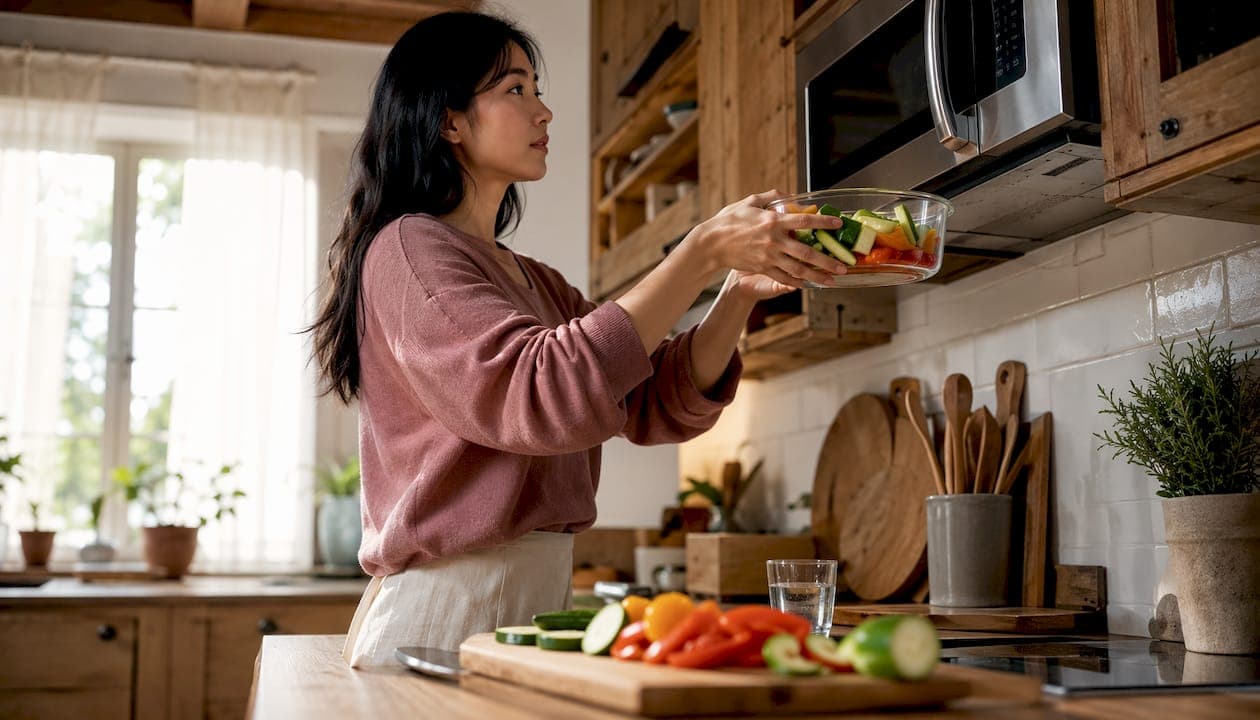
You can cook vegetables in the microwave in under 10 minutes with nothing more than a dish, a little water, and a cover. The method works by converting moisture to steam, which cooks vegetables from the inside out while keeping nutrients, color, and flavor intact. It's faster than boiling and easier to clean up than roasting.
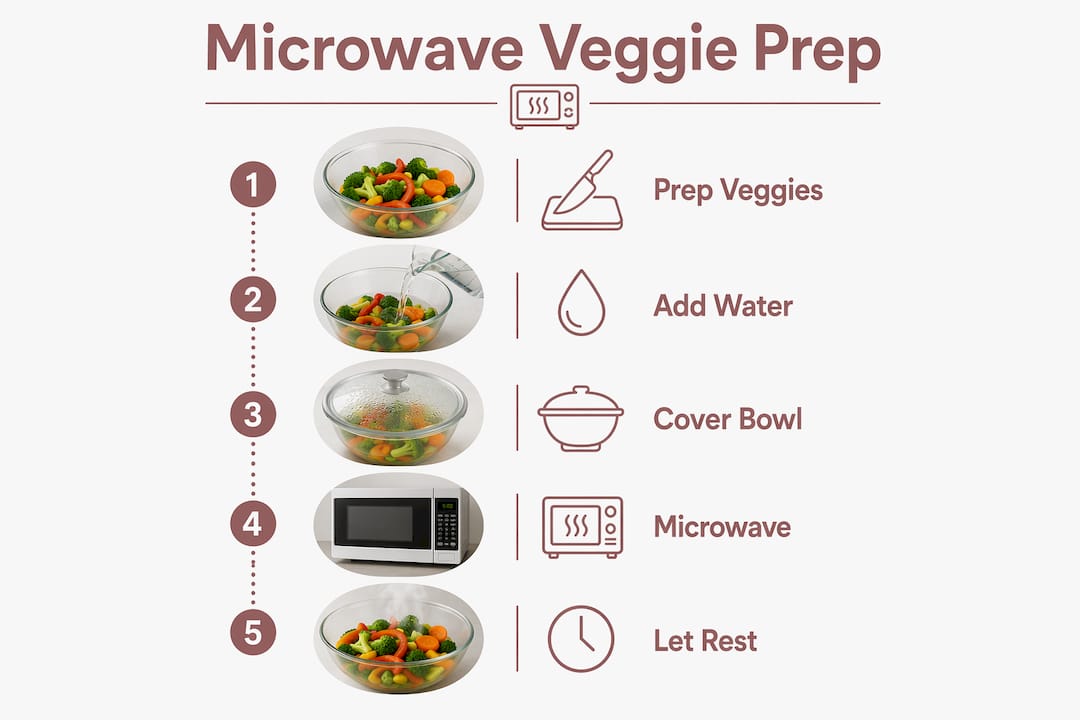
Here's the basic process at a glance:
- Wash vegetables under running water without drying them completely
- Cut into uniform, similar-sized pieces for even cooking
- Place in a microwave-safe dish with 1–3 tablespoons of water
- Cover with a microwave-safe lid or vented plastic wrap
- Microwave on HIGH for the time that matches your vegetable type
- Let rest covered for 1–2 minutes before removing the lid
- Season and serve
The rest step is not optional. Skipping it is the number one reason beginners end up with mushy vegetables.
How to cook veggies in the microwave step by step
Follow these steps and you'll get tender, flavorful vegetables every time, no special equipment needed.
-
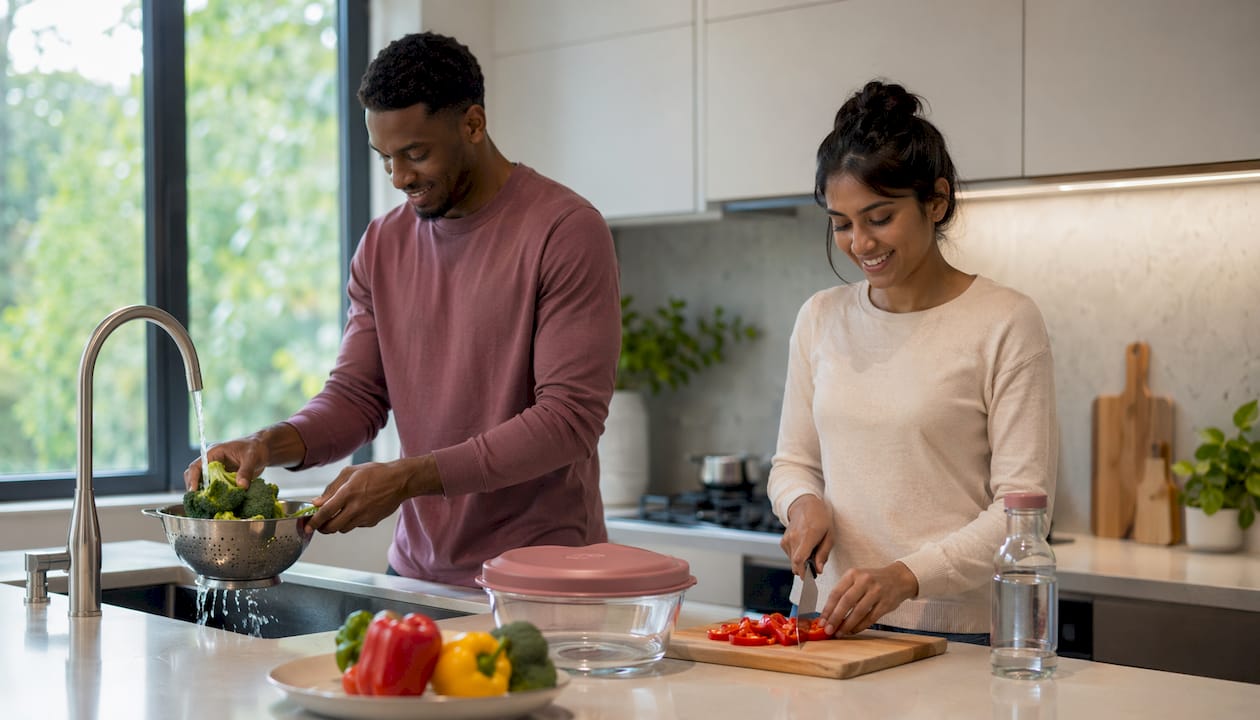
Wash your vegetables. Rinse or scrub them under cold running water. Don't dry them completely. That leftover surface moisture helps kick off the steaming process.
-
Cut into even pieces. Aim for pieces roughly the same size, about 1-inch chunks work well for most vegetables. Uneven pieces cook unevenly, and you'll end up with some pieces overcooked while others are still firm.
-
Choose the right dish. Use a microwave-safe glass or ceramic dish. Pyrex works well because it doesn't absorb heat, so the steam stays focused on your vegetables. Always check for a microwave-safe label on the bottom of the dish.
-
Add water. Pour in 1–3 tablespoons of water per pound of vegetables. You don't need much. Too much water turns steaming into boiling, which washes out flavor.
-
Cover the dish. Use a microwave-safe lid or plastic wrap with a few small holes poked in it. The cover traps steam inside while the holes let a little pressure escape.
-
Microwave on HIGH. Start with the lower end of the recommended time for your vegetable. If you're cooking something like broccoli or carrots, stir halfway through to distribute heat evenly and avoid hot spots.
-
Check for doneness. Pierce the thickest piece with a fork. It should go in with light resistance. If it slides in with zero resistance, the vegetable is overcooked.
-
Let it rest. Keep the cover on and let the dish sit for 1–2 minutes. The trapped steam continues cooking the vegetables gently, finishing them without turning them soft.
Pro Tip: Don't lift the cover the moment the microwave beeps. That rest period is doing real work. Give it the full minute or two before you drain and season.
What are the best cooking times for common vegetables?
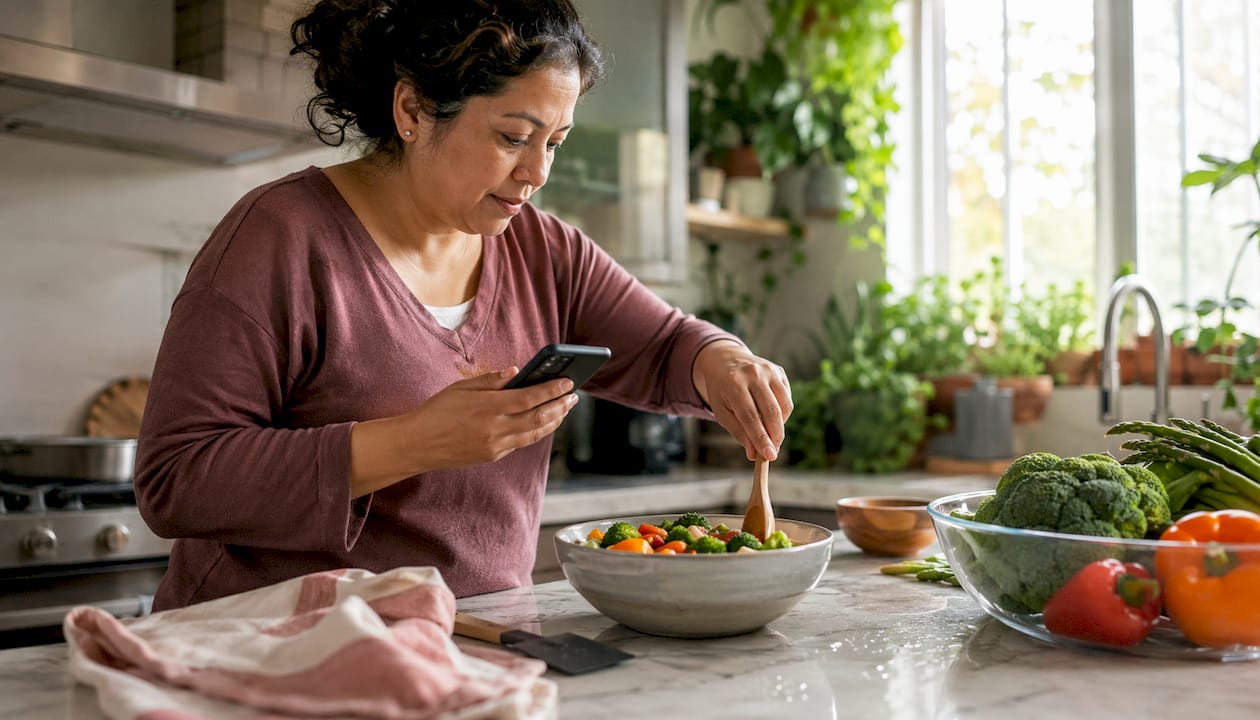
Cooking times vary based on the density of the vegetable. Firmer root vegetables need more time than leafy greens or thin stalks. The Oregon State University Extension Service provides these guidelines as a reliable starting point.
| Vegetable | Microwave Time on HIGH |
|---|---|
| Asparagus, bok choy | 2–3 minutes |
| Broccoli, cauliflower, carrots, green beans | 3–4 minutes |
| Potatoes (cut into pieces), Brussels sprouts | 5 minutes |
| Whole potato (medium, white or sweet) | 5 min, flip, then 5 more min |
For whole potatoes, poke the skin all around with a fork before microwaving. This lets steam escape and prevents the skin from bursting. After cooking, let the potato rest for 2 minutes before checking if it's done. If it needs more time, cook in 1-minute intervals with 1-minute rests until it reaches the texture you want.
Leafy greens like spinach cook in under 2 minutes and can go from perfect to wilted very quickly, so check them early.
Seasoning tips to make microwaved vegetables taste great:
- Add salt, pepper, and a drizzle of olive oil after cooking for clean, simple flavor
- Garlic powder, onion powder, or paprika work well before or after microwaving
- Fresh herbs like thyme or rosemary are best added after cooking so they don't dry out
- A squeeze of lemon juice right before serving brightens the flavor without any extra cooking
Pro Tip: Soften broccoli or carrots in the microwave for just 1 minute on HIGH before tossing them into a stir-fry. It cuts your stove time in half and keeps the texture right.
If you want to build these vegetables into quick dinner ideas, microwaved veggies make a reliable side dish that's ready before your main course is even plated.
Common mistakes beginners make when microwaving vegetables
Most problems with microwaved vegetables come down to a few easy-to-fix habits.
Mistakes to avoid:
- Skipping the rest period. The steam inside the covered dish keeps cooking the vegetables after the microwave stops. Lifting the lid immediately interrupts that process and leads to uneven texture.
- Cutting pieces in different sizes. Thick chunks and thin slices in the same dish will never finish at the same time. Uniform size is more important than anything else for consistent results.
- Using the wrong container. Plastic containers without a microwave-safe label can warp or leach chemicals when heated. Stick to glass or ceramic with a confirmed microwave-safe marking.
- Adding too much water. More than 3 tablespoons per pound and you're boiling, not steaming. Boiling pulls nutrients and flavor out of the vegetables and into the water you drain away.
- Overcooking on the first try. Start at the low end of the time range and add 30-second intervals if needed. You can always add more time. You can't undo mushy vegetables.
One thing worth knowing upfront: microwaving is technically steaming, not baking in the traditional sense. You won't get the crispy, caramelized edges you'd get from a 400°F oven. What you get instead is tender, bright, and flavorful vegetables in a fraction of the time. That's a trade-off most beginners are very happy with once they try it.
Pro Tip: If you want to learn how microwaved vegetables fit into broader meal prep, blanching vegetables is a related technique worth adding to your skill set.
Key Takeaways
Microwaving vegetables with a small amount of water and a vented cover produces tender, nutrient-rich results in under 10 minutes, as long as you cut pieces evenly and let them rest before serving.
| Point | Details |
|---|---|
| Use the right container | Microwave-safe glass or ceramic keeps heat focused on the vegetables, not the dish. |
| Water amount matters | Add 1–3 tablespoons per pound; more than that turns steaming into boiling. |
| Cut pieces uniformly | Even sizing matters more than vegetable type for consistent cooking results. |
| Always rest after cooking | Keeping the cover on for 1–2 minutes after the microwave stops prevents mushy texture. |
| Expect steamed texture | Microwaving produces tender vegetables, not crispy ones; adjust your seasoning accordingly. |
Ready to cook more than just vegetables?

If you're building real cooking skills from scratch, Adultingwithfood is built for exactly that. You get weekly recipe drops, grocery checklists, and direct support from a real chef so you're never guessing what to do next in the kitchen. Start your membership today and get the Adulting With Food Starter Pack with everything you need to cook with confidence from day one.