The fastest way to a reliable weekly grocery shop is an aisle-ordered printable checklist paired with a 10-minute fill routine. You plan your dinners first, scan what you already have, then add only what's missing. That's it. No wandering the store twice for the same forgotten onion.
Here's what to do right now:
- Print your complete grocery shopping checklist and keep it on the fridge or in your bag.
- Plan three to five dinners for the week before you write a single item.
- Scan your fridge, freezer, and pantry so you don't buy what's already there.
Do these three things and you'll walk out with fewer duplicates, less wasted food, and a shopping trip that takes minutes instead of an hour of backtracking.
Key Takeaways
A weekly grocery checklist works best when it's aisle-ordered, built from a personal master list, and filled out in a repeatable 10-minute routine that starts with meal planning.
| Point | Details |
|---|---|
| Use an aisle-ordered template | Group items by produce, protein, dairy, pantry, and frozen to match your store's layout and cut backtracking. |
| Build a master list first | Spend one week tracking recurring staples, then pre-tick them each week instead of starting blank. |
| Plan meals before shopping | Slot in three to five dinners first, then build the grocery list around those meals. |
| Scan before you add | Check the fridge, freezer, and pantry for five minutes to avoid buying duplicates. |
| Store items with intent | Rotate older stock forward, freeze extras same-day, and label leftovers to cut spoilage. |
Table of Contents
- What Makes a Weekly Grocery Checklist Actually Work?
- How Do You Build a Master Grocery List That Saves You Time Every Week?
- A Sample Aisle-by-Aisle Grocery List You Can Copy This Week
- What's the Fastest Way to Fill Out Your Weekly List?
- How Can You Save Money and Cut Impulse Buys at the Store?
- Where Should Different Groceries Live to Last Longer?
- Should You Print Your List, Use an App, or Both?
- Authoritative Resources and Printables
- What the Checklist Hype Gets Wrong
- Frequently Asked Questions
- Sources
What Makes a Weekly Grocery Checklist Actually Work?
A checklist that saves you time isn't just a random list of foods. It's built with structure, and that structure is what separates a template you'll actually use from one that gets crumpled in your junk drawer by Wednesday.
Here's what a well-built weekly grocery list template includes:
- A week header with your planned meals. Slot in your dinners first (breakfast and lunch usually reuse ingredients), so your shopping list grows out of actual meals instead of guesswork.
- Sections ordered by store path. Produce, proteins, dairy, bakery, pantry, frozen, and household goods, listed in the order you'll actually walk through the store. Templates organized by aisle cut backtracking dramatically compared to a single unsorted column.
- An "already have, don't buy" field. This is the single most overlooked feature on most weekly food shopping lists, and it's the one that stops you from buying your third jar of cumin this month.
That third piece matters more than people give it credit for. A checklist without a "don't buy" section is just a wish list. One with it becomes a real inventory tool.
How Do You Build a Master Grocery List That Saves You Time Every Week?
Spend one week writing down everything you buy without thinking twice, before you even open your wallet, and you'll have the skeleton of your master list. Many households have a recurring set of staples such as eggs, olive oil, rice, coffee, and their preferred protein sources.
Once you have that master list, the weekly checklist stops being a blank page and starts being a menu you check boxes on.
- Pre-tick the staples you buy nearly every week so you're only adding the exceptions.
- Adjust quantities for household size. Two people need less flour turnover than a family of five.
- Note dietary needs directly on the master copy (dairy-free, gluten-free, low-sodium) so nobody has to ask twice.
- Share it. A synced note, shared spreadsheet, or a picture pinned to the fridge lets everyone add "we're out of milk" as it happens instead of you discovering it mid-recipe.
Pro Tip: Keep your master list in a shared notes app so anyone in the house can add an item the second they notice it's gone, not three days later when you're already at the register.
A Sample Aisle-by-Aisle Grocery List You Can Copy This Week
Here's a weekly grocery list for a household of two to four people, built in the order most stores are laid out. Halve the quantities if you're shopping for one.

Produce: 2 lbs mixed greens, 5 apples or seasonal fruit, 3 bell peppers, 1 bag onions, garlic, 2 lemons, fresh herbs.
Proteins: 2 lbs chicken thighs or a plant-based alternative like lentils or tofu, 1 dozen eggs, 1 lb ground turkey or beef. Harvard Health's rundown of high-protein food sources is a useful reference if you're trying to balance variety with cost.
Dairy: milk, Greek yogurt, shredded cheese, butter.
Bakery: whole grain bread, tortillas.
Pantry: canned tomatoes, dried pasta, rice, canned beans, olive oil, chicken broth.
Frozen: frozen vegetables, frozen berries.
Household: dish soap, paper towels, trash bags.
Swap the produce section seasonally: seasonal produce guides will point you toward what's cheapest and freshest that month, whether that's stone fruit in July or root vegetables in November. Shopping for one? Cut proteins and produce by more than half, since those spoil fastest, but keep pantry staples close to the full quantity since they last for weeks.
What's the Fastest Way to Fill Out Your Weekly List?
You don't need thirty minutes and a cup of coffee to plan your week. You need ten.
- Minutes 0 to 3: Pick your dinners. Three to five meals is plenty; breakfast and lunch usually recycle ingredients you're already buying.
- Minutes 3 to 6: Open the fridge, freezer, and pantry and do a quick visual scan. This is where the "already have" field earns its keep.
- Minutes 6 to 8: Add staples from your master list, ticking off what you're already stocked on.
- Minutes 8 to 10: Sanity check the list against your budget, then print or save it.
This mirrors the approach Nutrition: plan your meals before you shop, not after. Follow one deviation rule at the store: for every unplanned item you toss in the cart, take one planned item back out. It keeps your total from creeping.
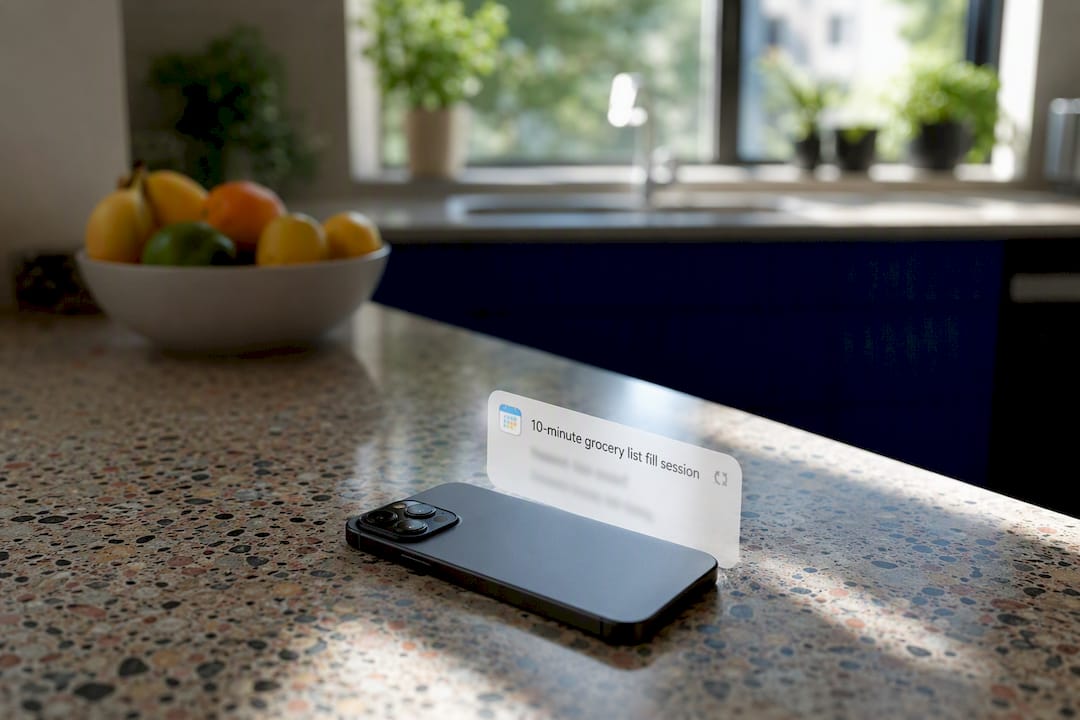
Pro Tip: Set a recurring Sunday reminder for your 10-minute fill session, and pair it with something you already do, like starting the coffee maker or folding laundry. Habits stick better when they're stacked onto existing ones.
How Can You Save Money and Cut Impulse Buys at the Store?
Small habits compound fast at checkout. Compare unit prices instead of package prices. A store brand often matches national brands on quality for basics like canned beans, flour, and frozen vegetables, so save the brand loyalty for products where it genuinely matters to you.
- Check unit price tags, not just the sticker price on the front.
- Build flexible recipes around whatever's on sale that week instead of locking in ingredients months ahead.
- Eat something before you shop. Hunger is a documented driver of impulse buying.
- Set a spending cap before you walk in, and stick to your aisle order to avoid detours through the snack aisle.
Extension-based shopping guidance backs all of this up: comparing unit prices and shopping seasonally are two of the most consistently recommended tactics for cutting grocery spend without cutting quality.
Where Should Different Groceries Live to Last Longer?
Storage mistakes waste more food than overbuying does. Put dairy and eggs on interior fridge shelves, not the door, where temperature swings hit hardest. Freeze extra meat and bread the day you buy them if you won't use them within a few days.
- Rotate older pantry items to the front so nothing expires quietly in the back.
- Label leftovers with the date, not just the contents.
- Store fresh herbs stem-down in a glass of water like flowers, not flat in a drawer.
Simple habits like these echo what the VA's heart-healthy shopping guidance recommends for extending shelf life. For a deeper dive on cutting spoilage, our guide on reducing food waste breaks down room-by-room storage fixes.
Should You Print Your List, Use an App, or Both?
A printed checklist wins when it lives on your fridge and gets crossed off by hand. It's visible, it's fast, and nobody has to open an app mid-recipe with sticky hands. A shared Google Sheet or notes app wins when multiple people in your household add items throughout the week.
- Laminate a blank template so you can wipe it clean and reuse it every week.
- Save a PDF of your filled-in list before you shop, in case you need to reference it later.
- Grab our printable checklist here if you want a ready-made starting point instead of building one from scratch.
Either format works. What matters is picking one your household will actually stick with.
If building your own list from zero still feels like a chore, that's exactly the gap AdultingintheKitchen's Starter Pack fills. Members get weekly recipe drops with five new recipes, plus grocery checklists already built around those meals, so you're never staring at a blank template wondering what to write. Add real chef support when you're unsure about a substitution or technique, and the whole "what do I even buy" question disappears. If you're ready to stop rebuilding your list from scratch every Sunday, explore what membership includes and see how the weekly drops take the guesswork out of both cooking and shopping.
Authoritative Resources and Printables
For seasonal produce timing and sample meal planners, Nutrition.gov's shopping and meal planning hub and the USDA seasonal produce guide are solid starting points. For a ready-to-print weekly list, grab our grocery shopping checklist, or explore the AdultingintheKitchen Starter Pack for weekly lists built around real recipes.
What the Checklist Hype Gets Wrong
Most advice on this topic treats the checklist itself as the solution. It isn't. The template is just paper until you pair it with a habit, and that's where most people quietly fail. They download a beautiful aisle-ordered PDF, use it once, and go back to wandering the store with a mental list that leaks details by the dairy aisle.
What actually works is smaller than people expect: a 10-minute weekly ritual, done at the same time every week, tied to a master list you barely have to think about. The "already have, don't buy" field does more heavy lifting than any fancy formatting ever will, because duplicate purchases are where most grocery budgets quietly bleed out.
If you take one thing from this article, take the deviation rule. For every unplanned item in your cart, remove a planned one. It's a small mechanical fix, but it forces the discipline that willpower alone rarely delivers. Prioritize the habit over the template, and the paper will do its job.
Frequently Asked Questions
How do I make a weekly grocery checklist from scratch? Start with a master list of your recurring staples, built from a week of tracking what you actually buy. Then create a weekly template organized by aisle, and fill it in using the 10-minute routine: plan meals, scan your kitchen, add staples, and check your budget before you shop.
What should a weekly food shopping list include? A strong list includes a spot for your planned meals, sections grouped by store aisle (produce, protein, dairy, pantry, frozen, household), and an "already have, don't buy" field to prevent duplicate purchases.
How do I adjust a grocery checklist for one person? Cut perishable categories like produce and proteins by more than half since they spoil fastest, but keep pantry staples closer to full quantities since they last for weeks. Our guide on meal planning for one walks through the specifics.
How often should I update my master grocery list? Review it every few months, or whenever your diet, household size, or budget shifts. Most staples stay stable, so updates are usually minor tweaks rather than full rewrites.
Sources
- Food Shopping and Meal Planning
- The Best Free Grocery List Template (Printable, Organized by Aisle)
- Super savvy shopping tips
- High-protein foods: The best protein sources to include in a healthy diet