The fastest ways to save money on groceries are meal planning, switching staples to store brands, stacking cashback apps, shopping discount grocers like Aldi and Trader Joe's and cutting food waste at home. According to The Penny Hoarder, a family of four spending around $1,000 a month under a USDA moderate plan can realistically trim a significant amount monthly by applying these tactics consistently.
Start here, today:
- Raid your pantry before writing a single item on your list
- Switch 10 staples (canned goods, pasta, rice, dairy) to store brands this week
- Download one cashback app (Ibotta, Flipp, or Fetch Rewards) before your next trip
- Set a per-trip spending target and bring a written list
- Eat before you shop — hungry shoppers add roughly $20–$30 in impulse items per trip
Every section below gives you a specific, repeatable habit. Pick two or three, run them for 30 days, and track what you spend.
Key Takeaways
Meal planning, store-brand swaps, and cashback app stacking are the three highest-impact habits for cutting grocery costs, with consistent use potentially saving a household $100–$300 per month.
| Point | Details |
|---|---|
| Meal plan before you shop | Build five dinners around pantry staples and weekly sales; organize your list by store section. |
| Switch 10 staples to store brands | Canned goods, dairy, pasta, and frozen vegetables offer the biggest savings with no quality trade-off. |
| Stack cashback apps | Use Ibotta, Flipp, and Fetch Rewards together; limit to three apps to keep time cost reasonable. |
| Cut waste with FIFO and freezing | Label and date freezer portions; use a visible "use-it-first" shelf to prevent spoilage. |
| AdultingintheKitchen membership | Weekly recipes, grocery checklists, and chef support remove the planning friction that breaks most budgets. |
Table of Contents
- How to save money on groceries by planning meals first
- How to read unit prices and buy smarter at the shelf
- Which cashback apps actually help you spend less on groceries
- Where and when to shop to cut your grocery bill
- How to cut food waste and stretch what you already bought
- High-cost items to limit and affordable swaps that keep nutrition
- Why cooking skills multiply your savings: a 5-dinner sample plan
- The habit that makes all of this actually stick
- AdultingintheKitchen helps you cut takeout costs for good
- Your 7-day action plan to reduce grocery costs now
- Sources
How to save money on groceries by planning meals first
Meal planning is consistently the highest-impact habit for cutting grocery costs. It reduces waste, eliminates last-minute takeout, and turns your shopping list into a precision tool rather than a guessing game.
Start with a pantry raid
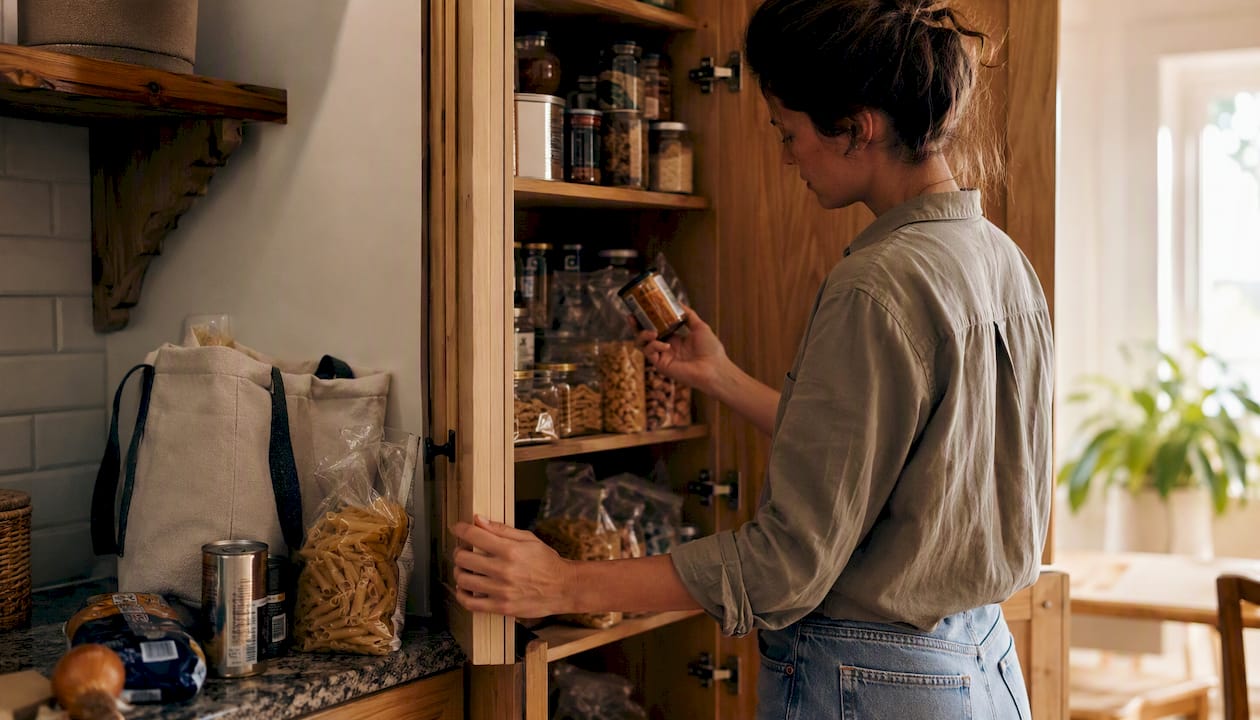
Before you open a store app or write a list, open every cabinet and check your fridge. Pull out what needs to be used soon — half a bag of lentils, a can of crushed tomatoes, frozen chicken thighs. Build at least two of your five dinners around what you already have. This single step eliminates duplicate purchases and cuts the "I forgot I had that" food waste that quietly inflates most grocery budgets.
Build a 7-day meal map
Plan five dinners, one leftovers night, and one flexible night (takeout, eating out, or a simple pantry meal). Keep lunches simple: leftovers from dinner, or a rotation of three easy builds (grain bowl, wrap, soup). Price as two of the highest-leverage habits for reducing grocery bills. A cooking planner guide can help you build this routine if you're starting from scratch.
Organize your list by store section
Group items by aisle: produce, proteins, dairy, frozen, pantry, and household. A section-organized list cuts your time in the store and reduces the chance of wandering into aisles you don't need, which is exactly where impulse buys happen.
- Write your list the night before your shopping day
- Note the quantity and size you need for each item
- Mark items that are flexible (can swap for store brand or frozen)
- Set a dollar target for the trip and keep the receipt
Pro Tip: Flip through your store's weekly ad before writing your meal plan, not after. Build two or three dinners around whatever protein or produce is on sale that week. This single reversal can drop your weekly spend noticeably without any extra effort.
How to read unit prices and buy smarter at the shelf
The shelf tag is where most shoppers leave money behind. The unit price, printed in small text on the tag's lower left corner, tells you the real cost per ounce, per count, or per pound. A 32-oz jar of pasta sauce priced at $3.49 costs about $0.11 per ounce. The 16-oz name-brand version at $2.79 costs $0.17 per ounce. That gap adds up across a full cart.
Where store brands save the most
AARP notes that frozen and store-brand options can stretch budgets without sacrificing nutrition, and the categories with the biggest savings are predictable:
- Pantry staples: flour, sugar, salt, cooking oil, vinegar
- Canned and frozen vegetables: nutritionally comparable to fresh, often 30–50% cheaper
- Dairy: milk, butter, shredded cheese, sour cream
- Dried pasta, rice, and beans
- Spices and baking basics
Name brands earn their price in a few categories, mostly snacks and condiments where flavor genuinely differs. Keep those if they matter to you. Switch everything else.
When bulk buying works and when it backfires
Bulk is worth it for shelf-stable staples you use every week: oats, rice, dried beans, canned tomatoes, olive oil. It backfires when you buy a 5-pound bag of spinach for a household of one, or a gallon of milk you can't finish before it turns. Fidelity's grocery guidance flags perishable bulk purchases as a common budget trap for smaller households.
Pro Tip: Retailers place the highest-margin products at eye level. Check the top and bottom shelves first — store brands and larger sizes almost always live there.
Which cashback apps actually help you spend less on groceries
Three apps do most of the heavy lifting: Ibotta, Flipp, and Fetch Rewards. Each works differently, and using all three together takes under five minutes per trip.
- Ibotta: Activate offers before you shop, then scan your receipt or link your loyalty card. Strong on national brands and some store brands. Pays out in cash via PayPal or gift cards.
- Flipp: A digital circular aggregator. It pulls weekly ads from your local stores so you can compare prices and clip digital coupons in one place. Best used during meal planning to spot deals before you write your list.
- Fetch Rewards: Scan any grocery receipt after the trip. No pre-activation needed. Earns points on almost everything, redeemable for gift cards. Lower per-item return than Ibotta, but zero friction.
How to stack savings without wasting time
The goal is to stack: store loyalty discount + digital coupon + cashback app on the same item. Most stores allow this. The Penny Hoarder recommends limiting yourself to 3–4 apps to keep the time cost reasonable. More than that and the return per minute drops fast.
Quick trip checklist:
- Check Flipp for this week's sales (during meal planning)
- Activate Ibotta offers for items on your list
- Scan your receipt in Fetch Rewards after checkout
- Redeem store loyalty points at checkout
Pro Tip: Set a 5-minute weekly calendar reminder to activate Ibotta offers before you leave for the store. Offers expire, and pre-activation is the step most people skip.
Where and when to shop to cut your grocery bill
Your store choice matters as much as your list. Different store types serve different shopping goals.
| Store type | Savings impact | Effort required | Best for | Cost/fees |
|---|---|---|---|---|
| Discount grocer (e.g., Aldi) | High | Low | Singles, couples, families | None |
| Conventional supermarket | Medium | Low | Weekly staples + loyalty deals | None |
| Warehouse/wholesale (e.g., Costco) | High on staples | Medium | Families, bulk buyers | Annual membership fee |
| Trader Joe's | Medium-high | Low | Unique private-label items | None |
Aldi prices run significantly below conventional supermarkets on most categories. The trade-off is a smaller selection and no brand-name options. Trader Joe's private-label products are strong on quality and price, especially for frozen meals, nuts, and specialty items. Costco makes sense for families buying large quantities of shelf-stable goods, but the membership fee only pays off if you shop there regularly.
Timing your trips for maximum savings
Most stores reset their weekly sales on Wednesday or Thursday. Shopping on those days gives you access to new deals before popular items sell out. For produce, the ERS/USDA interactive price tool shows which fruits and vegetables are cheapest by season, so you can plan around what's actually in season rather than what looks good in the display.
Online pickup is worth it when it prevents impulse buys. If you reliably overspend in-store, the pickup fee often costs less than what you'd add to the cart walking the aisles.
How to cut food waste and stretch what you already bought
Food waste is a stealth budget leak. The average American household throws away a meaningful portion of what it buys, which means every dollar saved at the register can be quietly lost at the trash can.
Use FIFO and a "use-it-first" shelf
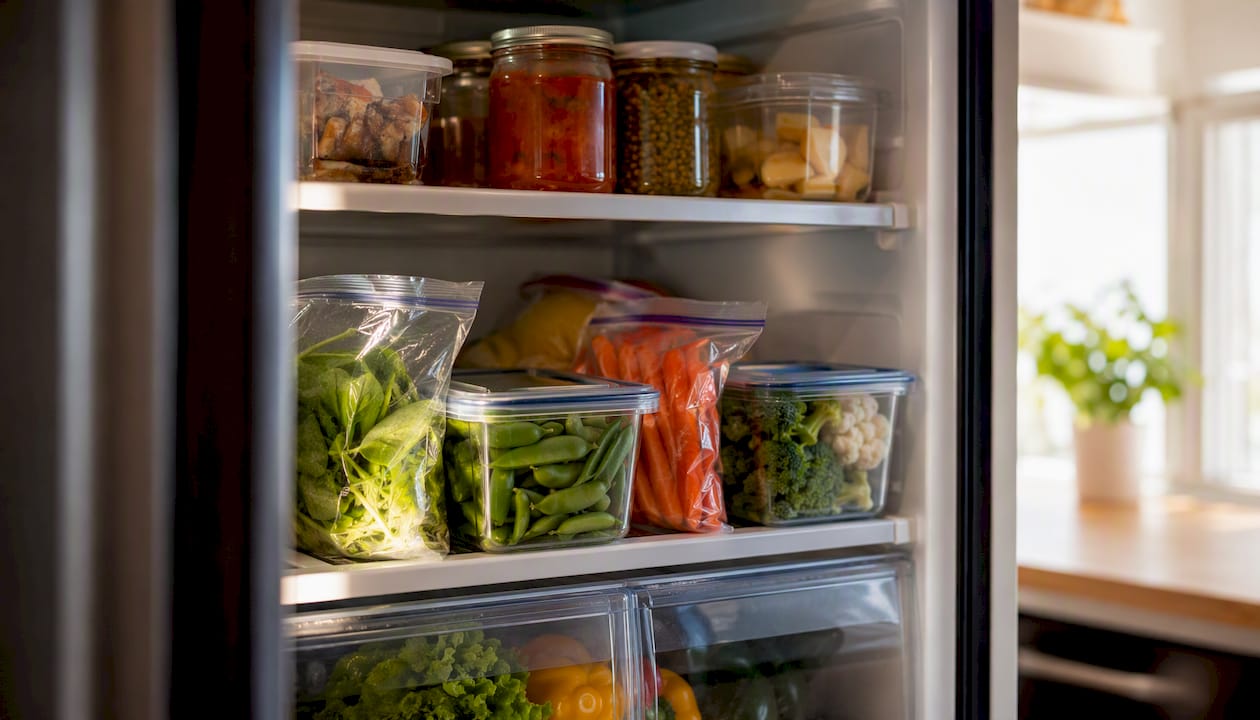
FIFO (first in, first out) means newer groceries go to the back, older ones come to the front. Dedicate one shelf in your fridge to items that need to be used within the next two days. When you open the fridge, that shelf is what you cook from first. It takes 30 seconds to set up and prevents the "I forgot about that" spoilage cycle.
What to freeze and how to portion it
Most proteins freeze well: chicken, ground beef, fish fillets, and pork. Bread, cooked grains, and most soups freeze cleanly too. The FDA's food storage guidance covers safe fridge and freezer timelines for common foods. Portion proteins into single-meal sizes before freezing so you thaw only what you need.
- Freeze ground beef in half-pound portions
- Slice bread before freezing so you can pull out two slices at a time
- Freeze cooked rice and beans in 1-cup portions for fast weeknight meals
Pro Tip: Label every freezer bag with the item name and date using a permanent marker. Without a date, you'll second-guess whether something is still good and often throw it out anyway.
Batch cooking one or two proteins on Sunday, then repurposing them across three meals, cuts both cooking time and per-meal cost. Sheet pan dinners are a practical way to batch-cook with minimal cleanup.
High-cost items to limit and affordable swaps that keep nutrition
Some grocery categories are priced for convenience, not nutrition. Recognizing them is the first step to spending less without eating worse.
High-cost traps:
- Pre-cut produce (broccoli florets, spiralized zucchini, diced onion) costs 2–3x the whole version
- Single-serve convenience foods (individual yogurt cups, snack packs, pre-portioned nuts) carry a significant per-unit premium
- Name-brand breakfast cereal, crackers, and snack chips
- Boneless, skinless chicken breasts vs. a whole chicken or bone-in thighs
Affordable swaps that hold up nutritionally:
- Dried beans and lentils instead of canned (cheaper per serving, just need soaking time)
- Whole chicken instead of parts — roast it, use the meat across two meals, simmer the carcass for stock
- Frozen fruit and vegetables instead of fresh out-of-season produce; AARP confirms frozen options preserve nutrition effectively
- Larger pasta and rice packages instead of small boxes
- Eggs as a primary protein two or three nights a week
For budget-conscious baking swaps that also cut sugar and cost, Bell's Protein Pantry's low-sugar baking guide covers practical ingredient substitutions worth bookmarking.
Keep one or two name-brand items you genuinely love. Deprivation budgeting doesn't stick. The goal is to swap the things you don't care about, not everything.
Why cooking skills multiply your savings: a 5-dinner sample plan
Knowing how to cook even five reliable dinners changes your relationship with your grocery budget. You stop buying ingredients that expire unused because you didn't know what to do with them. You start seeing a bag of dried lentils as three meals, not a confusing purchase.
Here is a practical 5-dinner week built around low-cost proteins and versatile ingredients:
| Dinner | Main protein | Approx. cost per serving |
|---|---|---|
| Sheet pan chicken thighs + roasted vegetables | Bone-in chicken thighs | ~$2.50 |
| Lentil soup with crusty bread | Dried lentils | ~$1.25 |
| Egg fried rice with frozen peas and carrots | Eggs | ~$1.50 |
| Black bean tacos with cabbage slaw | Canned black beans | ~$1.75 |
| Pasta with marinara and Italian sausage | Italian sausage | ~$2.75 |
Cost estimates are approximate and vary by region and store.
Grocery checklist for this sample week
Proteins: bone-in chicken thighs, 1 dozen eggs, 1 lb Italian sausage, 2 cans black beans, 1 cup dried lentils
Produce: 1 head cabbage, 2 bell peppers, 1 onion, 3 cloves garlic, 2 limes
Frozen: 1 bag peas and carrots, 1 bag mixed roasting vegetables
Pantry: pasta (1 lb), rice (2 cups), 1 jar marinara, taco seasoning, olive oil, chicken broth
Dairy/bread: 1 loaf crusty bread, shredded cheese
This list covers five dinners for two people and keeps lunch simple with leftovers. For family-sized versions of these meals, easy family dinner recipes offer tested variations. For single-serving households, quick dinner recipes for one show how to scale down without waste.
AdultingintheKitchen members get a weekly grocery checklist alongside five new recipes every week, so the planning work is already done for you.
The habit that makes all of this actually stick
The tactics in this article work. The harder question is why most people try them for two weeks and then drift back to their old patterns. The answer is almost never motivation. It's friction.
When cooking at home feels like a production, the drive-through wins by default. The fix isn't willpower. It's reducing the number of decisions and physical steps between you and a finished meal. That's what mise en place actually does: you prep your ingredients before you start cooking, so the act of cooking itself becomes fluid rather than chaotic.
My honest recommendation is a 15-minute Sunday prep session. Wash and chop two or three vegetables. Cook a pot of rice or grains. Portion out your proteins for the week. That's it. With that done, every weeknight dinner starts from a place of "I just need to cook this," not "I need to figure out what to cook, then find the ingredients, then prep everything." The activation energy drops, and the meal plan actually gets used.
Skill-building compounds this. Once you know how to properly sear chicken thighs or build a quick pan sauce, those techniques become automatic. You stop needing a recipe for every meal, which means you can cook confidently from whatever is on sale that week rather than buying specific ingredients for specific recipes. That flexibility is where the real long-term savings live.
AdultingintheKitchen helps you cut takeout costs for good
Meal plans, cashback apps, and store-brand swaps all help. But the biggest lever most people miss is the skill gap: when cooking feels hard, every other tactic eventually breaks down.
AdultingintheKitchen is a digital cooking membership built for beginners who want to stop spending on takeout and start cooking real meals with confidence. Members get the Adulting in the Kitchen Starter Pack (kitchen setup, tools guide, and grocery shopping checklist), five new recipes every week with clear skill-based instruction, and direct chef support when something goes wrong. The grocery checklists alone replace the planning work most people find exhausting.
If you're ready to make home cooking your default instead of your backup plan, explore the starter pack here and lock in your membership.
Your 7-day action plan to reduce grocery costs now
The fastest path to real savings is a short, prioritized list of actions you can complete this week.
- Do a pantry raid today. Write down what you already have. Build at least two dinners from it before buying anything new.
- Switch 10 staples to store brands on your next trip. Start with canned goods, pasta, rice, and dairy. Price.Review's grocery savings guide identifies this as one of the highest-leverage starter moves.
- Download Ibotta or Fetch Rewards before your next shopping trip. Activate offers, scan your receipt, and track what you earn over 30 days.
- Set a written spending target for each trip. Bring a list organized by store section and use a basket instead of a cart for short trips. Fidelity's research shows that cart size directly influences how much you spend.
- Freeze any protein you won't use within two days. Label it with the date. This one habit alone can eliminate a meaningful portion of weekly food waste.
Track your grocery receipts for 30 days. Most people are surprised by how quickly small, consistent changes add up.
Sources
- Price
- Grocery Budget Tips: How to Save Money on Groceries
- Grocery Shopping Tips to Help You Spend Less