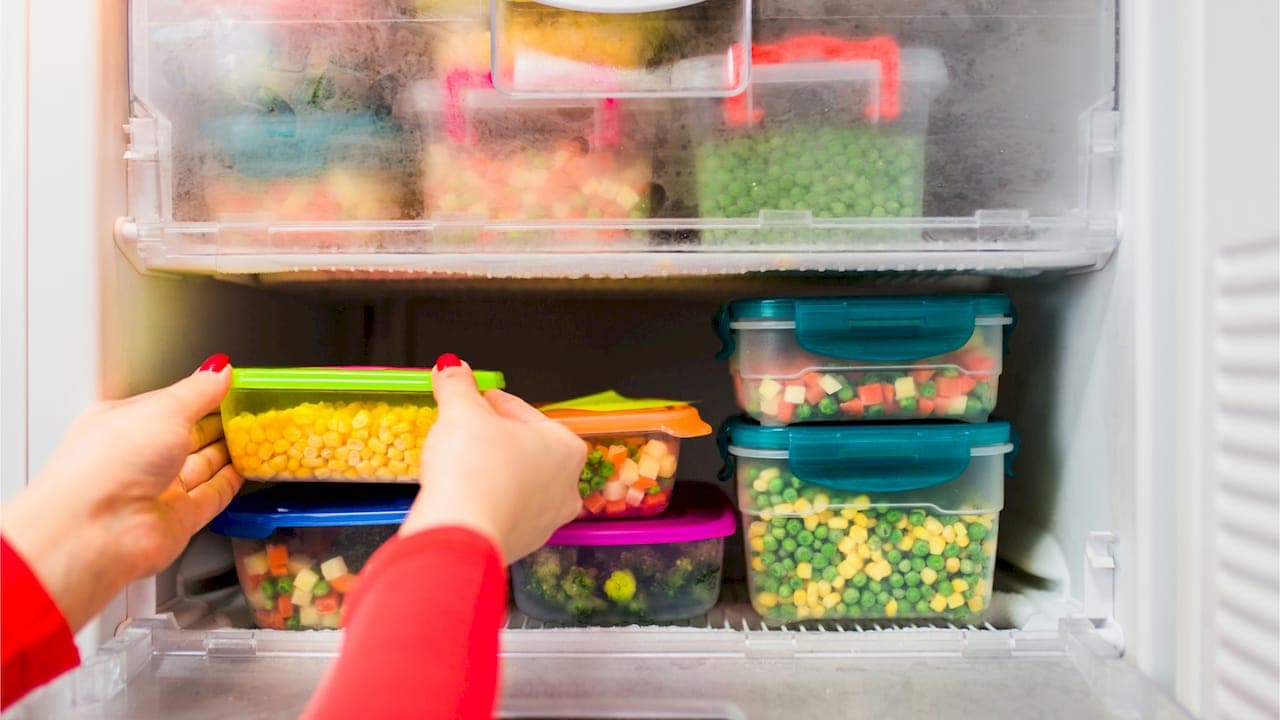
The most effective system for solo cooks is this: plan 3–4 dinners per week that each yield two servings, shop to overlap ingredients across those meals, and run one short batch-cook or freezer session per weekend. That gives you 6–8 ready servings, built-in nights off, and almost zero wasted produce. Less decision fatigue. Less guilt about the wilted spinach. And a fridge that actually makes sense on a Wednesday night.
Start tonight: Pick 3 dinners you genuinely want to eat this week. Choose one that freezes well (chili, soup, a grain bowl). Write a shopping list based only on those three meals. That’s the whole system in its first form.
The rest of this guide shows you how to build it out, stock your kitchen for it, and keep it running week after week without burning out.
Key Takeaways
Meal planning for one works best as a repeating weekly system: plan 3–4 dinners that each yield two servings, shop to your plan, and run one short batch session per week.
| Point | Details |
|---|---|
| Plan 3–4 dinners per week | Each dinner yields two servings, giving you 6–8 total servings and built-in nights off. |
| Shop to your plan, not to categories | Write exact quantities on your list and buy loose produce or bulk-bin grains to match your actual needs. |
| Batch cook and freeze the same night | Label containers with contents and date; cooked meals stay safe 3–4 days refrigerated or up to 2–6 months frozen. |
| Use the 5-4-3-2-1 rule to shop | Five pantry restocks, four produce items, three proteins, two dairy items, one treat keeps your cart focused. |
| AdultingintheKitchen | Provides weekly recipe drops, grocery checklists, and chef support to help you run this system with confidence. |
Table of Contents
-
How to batch cook, freeze, and store meals so they’re actually good later
-
Two ready-to-use sample weeks with grocery lists and prep timelines
-
What does the research say about planning fewer dinners and cooking in batches?
-
Ready to cook with a plan, a checklist, and a real chef in your corner?
How do you build a sustainable weekly meal plan for one?
The process takes about 15 minutes once you’ve done it a couple of times; for more ideas, check out this easy meal ideas for families resource to adapt simple dinners and component-based cooking. Here’s the exact sequence.
-
Look at your week first. Mark any nights you won’t cook: a work dinner, a friend’s place, a night you just want eggs and toast. Those are your nights off, and they belong in the plan on purpose.
-
Audit your fridge, freezer, and pantry. Nutritionists call this “shopping your kitchen” first, and it’s one of the highest-impact habits a solo cook can build. Use what’s already there before buying more.
-
Choose 3–4 dinner recipes that double well. Each should cleanly produce two servings. Think sheet-pan chicken thighs, a pot of lentil soup, or a simple stir-fry over rice. These are your quick and easy dinner recipes for one that become tomorrow’s lunch.
-
Plan breakfasts and lunches around stable staples. Oats, eggs, yogurt, and canned beans don’t spoil fast. Lunches mostly come from dinner leftovers, which is the whole point.
-
Schedule one batch or freezer session. A 60–120 minute power hour on Sunday afternoon can prep breakfasts, portion lunches, and get two dinners mostly done. That’s it.
Weekly decisions checklist:
-
Which 3–4 dinners do I actually want this week?
-
Which one freezes well (the freezer backup)?
-
What do I already have that needs to be used first?
-
How many servings do I need for lunches?
-
What’s my one produce run day?
Pro Tip: Use a cooking planner to write your weekly meals in a fixed slot, even just a notes app. The act of writing it down cuts impulse takeout orders significantly.
Component-based cooking makes this even easier. Instead of scaling a recipe to one serving (frustrating and imprecise), cook a full batch of one component: a pot of rice, a tray of roasted vegetables, a pan of seasoned ground turkey. Then mix and match across the week. The same roasted broccoli becomes a grain bowl on Monday and a wrap filling on Wednesday.
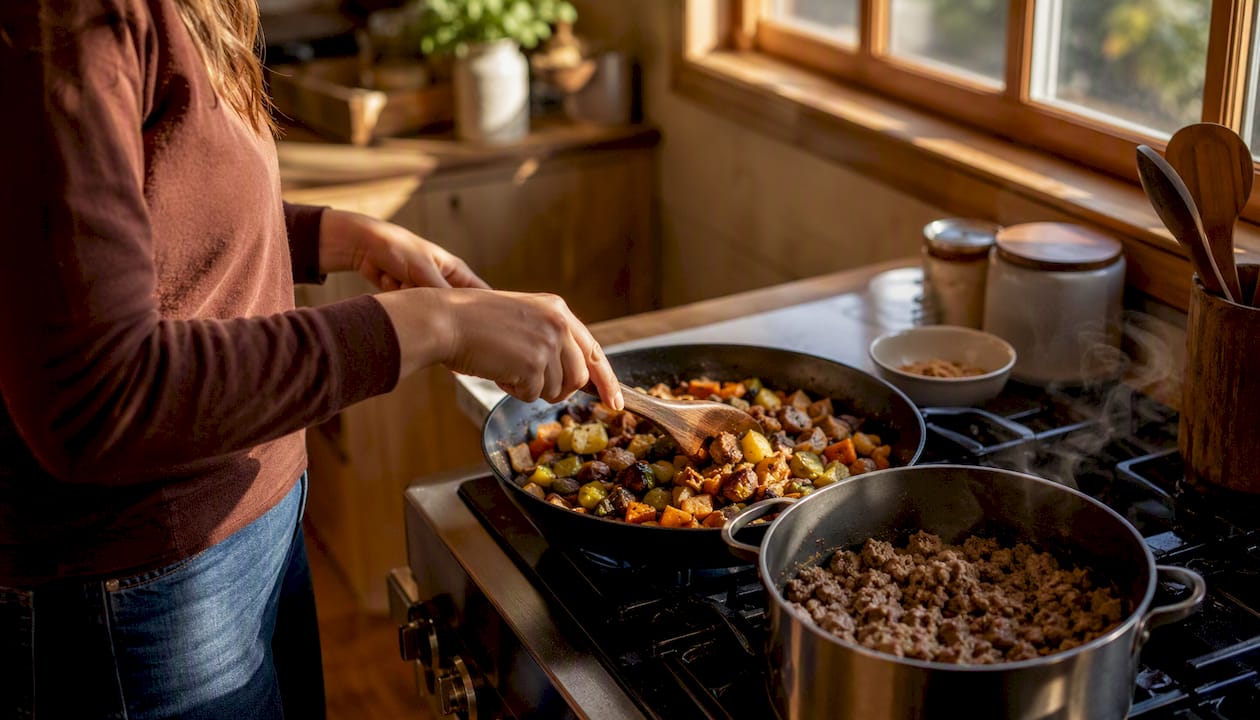
Smart shopping for one: what to buy, where, and how much
The single biggest waste driver for solo cooks isn’t bad recipes. It’s buying a full bunch of cilantro for one dish and watching the rest turn to slime. The fix is buying to your plan, not to a vague category.
Core buying tactics:
-
Buy loose produce at stores that allow it (many co-ops and natural grocers do). Two carrots, not a two-pound bag.
-
Use bulk bins for grains, nuts, and dried legumes. You can buy exactly 1/3 cup of quinoa if that’s all you need.
-
Choose frozen proteins and vegetables when fresh would go to waste. Frozen produce maintains nutritional quality and lets you pull out exactly one portion at a time.
-
Ask the butcher or deli counter to cut a single chicken breast or portion two ounces of sliced turkey. Most will do it without hesitation.
-
Plan to use fresh herbs at least twice across the week. If you can’t, buy dried or freeze the herb in olive oil in an ice cube tray.
The two-trip model works well for solo shoppers. Do a full weekly shop on Sunday for proteins, pantry staples, and shelf-stable items. Then a quick midweek run (10 minutes, five items) for fresh produce and dairy. This keeps greens from sitting in the fridge for seven days and reduces the “I’ll just order delivery” moment on Thursday.
Pro Tip: Build your shopping list directly from your 3–4 dinner recipes, not from memory. Write the exact quantity next to each item. “Spinach, 2 cups” beats “spinach” every time.
| Category | What to buy | Notes |
|---|---|---|
| Proteins | Chicken thighs, eggs, canned tuna, frozen shrimp | Buy individually frozen or single-pack portions |
| Grains | Rice, oats, pasta, quinoa | Bulk bin or smallest bag available |
| Produce | 2–3 fresh items per week max | Supplement with frozen for the rest |
| Pantry staples | Canned beans, diced tomatoes, broth, olive oil | These don’t spoil; stock once, restock as needed |
| Dairy/fridge | Greek yogurt, shredded cheese, one block of tofu | Buy smallest size unless you’ll use it twice |
Leaning on pantry staples like canned beans, rice, and jarred sauces combined with just one or two fresh perishables each week delivers real variety while keeping spoilage risk low. That’s the structural advantage of planning before you shop.
How to batch cook, freeze, and store meals so they’re actually good later
The cook-once-eat-twice rule is the engine of solo meal prep. Every dinner you make should default to two servings. Eat one that night. Pack or freeze the second.
Portioning and labeling:
-
Use single-serve glass or BPA-free plastic containers (2-cup capacity works for most meals).
-
Label every container with the contents and the date you made it. A piece of masking tape and a marker is all you need.
-
Freeze in flat layers when possible so meals thaw faster.
-
Rotate oldest containers to the front of the freezer. Treat it like a primary inventory system, not a graveyard.
What freezes well vs. what doesn’t:
| Freezes well | Avoid freezing |
|---|---|
| Chili, soups, stews | Dressed salads |
| Cooked grains (rice, quinoa) | Cooked pasta (gets mushy) |
| Roasted proteins (chicken, ground meat) | Eggs cooked in their shells |
| Burritos, stuffed peppers | Cream-based sauces (can separate) |
| Sheet-pan dinners (proteins + veg) | Potatoes (texture degrades) |
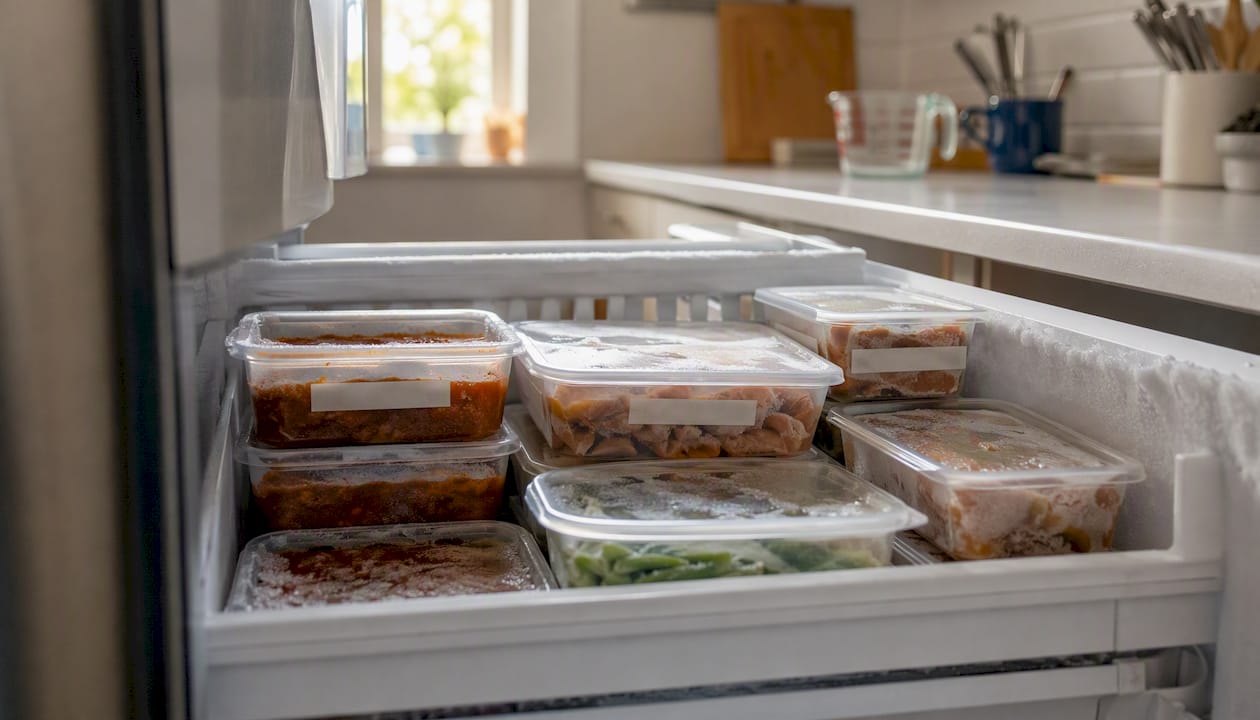
Reheating tips: Frozen meals reheat best with a splash of water or broth in the pan to restore moisture. Add fresh elements after reheating: a squeeze of lemon, fresh herbs, a drizzle of hot sauce. That small step makes a frozen meal feel like it was just cooked.
Food safety timelines matter here. According to Foodsafety, cooked leftovers stay safe in the refrigerator for 3–4 days and in the freezer for 2–4 months depending on the food type. Thaw frozen meals in the refrigerator overnight or under cold running water, never on the counter.
Freezer-first rule: If you’re not going to eat the second serving within two days, freeze it the same night you cook it. Don’t wait until it’s borderline.
Pro Tip: Pre-portion snacks (nuts, cut fruit, cheese cubes) right after your Sunday shop. It takes five minutes and removes the “I’ll just grab something” spiral that derails good weeks.
Two ready-to-use sample weeks with grocery lists and prep timelines
These two weeks are designed to be copied directly. Both assume basic pantry staples are already on hand (olive oil, salt, pepper, garlic, dried spices, canned beans, rice).
Sample Week A: quick pan meals with a freezer backup
Daily meals:
-
Monday: Dinner: lemon garlic chicken thighs + roasted broccoli (make 2 servings). Pack second serving for Tuesday lunch.
-
Tuesday: Lunch: Monday’s chicken + broccoli over rice. Dinner: scrambled eggs with sautéed peppers and toast (quick night).
-
Wednesday: Dinner: black bean tacos with shredded cabbage (make 2 servings). Pack second for Thursday lunch.
-
Thursday: Lunch: taco filling over rice bowl. Dinner: freezer meal (pulled from previous week’s batch).
-
Friday: Night off. Eggs, leftovers, or takeout.
-
Breakfast all week: Oats with banana and peanut butter, or Greek yogurt with granola.
Week A grocery list (fresh/perishable items only):
-
4 bone-in chicken thighs
-
1 head of broccoli
-
1 bag shredded cabbage (or half a small head)
-
1 bell pepper
-
1 lemon
-
1 banana
-
Eggs (6-pack)
-
Greek yogurt (single-serve containers)
Week A Power Hour (Sunday, 60 minutes):
-
Roast broccoli and cook chicken thighs (30 minutes, mostly hands-off).
-
Cook a pot of rice (20 minutes, hands-off).
-
Prep taco filling ingredients (chop, season, refrigerate) (10 minutes).
Sample Week B: four dinners with one batch-cooked meal
Daily meals:
-
Monday: Dinner: turkey and white bean chili (make 4 servings). Eat one, refrigerate one, freeze two.
-
Tuesday: Lunch: chili with cornbread or crackers. Dinner: quick shrimp stir-fry over rice (2 servings). Pack second for Wednesday lunch.
-
Wednesday: Lunch: shrimp stir-fry rice bowl. Dinner: baked salmon with roasted sweet potato (2 servings). Pack second for Thursday.
-
Thursday: Lunch: salmon + sweet potato. Dinner: leftover rice soup using leftover rice and canned broth (15 minutes).
-
Friday: Night off. Freezer chili or takeout.
-
Breakfast all week: Overnight oats prepped Sunday in 4 jars.
Week B grocery list (fresh/perishable items only):
-
1 lb ground turkey
-
1 lb frozen shrimp (individually frozen)
-
2 salmon fillets
-
2 sweet potatoes
-
1 bag frozen stir-fry vegetables
-
1 bunch green onions
-
4 eggs (for backup meals)
-
Milk or non-dairy milk (for oats)
Week B Power Hour (Sunday, 90 minutes):
-
Make the full pot of chili (40 minutes active + simmer).
-
Prep overnight oats in 4 jars (10 minutes).
-
Roast sweet potatoes (30 minutes, hands-off while chili simmers).
-
Portion and label chili containers (10 minutes).
A 1-hour prep session like this is genuinely enough to set up most of the week. The key is doing it before hunger hits, not during it.
Simple rules that make solo meal planning click
A few short frameworks help when the week feels complicated. These aren’t rigid systems; they’re mental shortcuts.
The 3–4 dinners rule
Plan 3–4 dinners per week, each yielding two servings. That’s 6–8 total dinner servings, which covers most weeknight meals with room for 2–3 nights off. Experts consistently recommend this range as the sweet spot for reducing waste without over-committing.
-
3 dinners = 6 servings = 3 nights cooking + 3 nights eating leftovers
-
4 dinners = 8 servings = 4 nights cooking + 4 nights eating leftovers (or freezing extras)
-
Nights off are built in, not improvised
The 3-3-3 framework
When choosing your weekly meals, aim for variety across three categories:
-
3 proteins: e.g., chicken, eggs, canned tuna
-
3 carbs: e.g., rice, oats, whole-wheat tortillas
-
3 fats/flavor bases: e.g., olive oil, peanut butter, avocado
Mix and match these nine items across your 3–4 dinners and you’ll naturally avoid eating the same meal twice while keeping your shopping list short.
The 5-4-3-2-1 grocery rule
A simple checklist for your weekly shop:
-
5 pantry staples to restock if low (canned beans, broth, pasta, olive oil, spices)
-
4 fresh produce items (pick what’s in season or on sale)
-
3 proteins (one fresh, one frozen, one shelf-stable like canned tuna or eggs)
-
2 dairy or refrigerated items (yogurt, cheese, or tofu)
-
1 treat or flavor upgrade (a new sauce, a good cheese, fresh herbs)
This structure keeps your cart focused and your bill predictable. Applied to Week A above: 5 pantry restocks, 4 produce picks (broccoli, cabbage, pepper, lemon), 3 proteins (chicken, eggs, beans), 2 dairy (yogurt, cheese), 1 treat (a good hot sauce).
How do you keep solo meal planning sustainable long-term?
The most common reason solo cooks abandon their plan isn’t lack of skill. It’s rigidity. A plan that demands seven home-cooked dinners will collapse by Wednesday. One that builds in flexibility survives for months.
Habits that keep the system running:
-
Schedule nights off deliberately. Pick 2–3 nights per week where dinner is a freezer meal, eggs and toast, or takeout. These aren’t failures; they’re part of the plan.
-
Use spice rubs and sauces to change flavors without extra shopping. The same chicken thigh becomes Mediterranean (lemon + oregano), Asian-inspired (soy + ginger), or Tex-Mex (cumin + chili powder) with pantry swaps alone.
-
Pre-wash and chop produce right after shopping. This single habit dramatically lowers weeknight friction. Washed, ready-to-cook vegetables get used. Unwashed ones get forgotten.
-
Keep a “pantry meal list” of 5 meals you can make entirely from shelf-stable ingredients. When the week goes sideways, you have a fallback that doesn’t require a store run.
Adapting for dietary preferences:
-
Vegetarian: Swap proteins to lentils, chickpeas, tofu, or tempeh. The 3-3-3 framework still applies.
-
Low-carb: Replace rice and pasta with cauliflower rice, zucchini noodles, or extra roasted vegetables. Sheet-pan meals work especially well here.
-
High-protein: Add a hard-boiled egg or a scoop of Greek yogurt to any meal. Prioritize proteins in your 5-4-3-2-1 shop.
Pro Tip: Invest in a few reliable basic cooking tools like a good chef’s knife, a 10-inch skillet, and a sheet pan. The right equipment makes two-serving cooking faster and less messy, which keeps motivation high.
What does the research say about planning fewer dinners and cooking in batches?
The evidence behind the 3–4 dinners approach is solid, and it comes from multiple directions.
Public-health research published in PMC links home cooking and meal planning to healthier dietary patterns and lower processed-food intake over time. Planning meals, even loosely, consistently outperforms reactive eating for both nutrition and cost.
On the waste side, the EPA’s research on food waste costs confirms that food waste imposes a real economic burden on American households. A freezer-first, buy-to-plan approach directly addresses that cost by reducing what gets thrown away.
The core principle: Cooking fewer dinners per week, each yielding two servings, is not a compromise. It is the most practical structure for solo cooks who want to eat well, waste less, and spend less time standing over a stove on a Tuesday night.
Food safety is the non-negotiable part of any batch-cooking system. The FoodSafety.gov cold storage charts are the authoritative reference for how long cooked foods stay safe. Cooked meat and poultry: 3–4 days refrigerated, 2–6 months frozen. Soups and stews: 3–4 days refrigerated, 2–3 months frozen. These windows are why labeling with dates matters every single time.
University extension programs, including resources from University of Nebraska-Lincoln’s food science team, offer tested guidance on portioning and shopping for one or two people, and their advice aligns with the system here: buy less, use more of what you buy, and plan before you shop.
Why cooking for one is actually a creative advantage
Solo cooking gets a bad reputation. People assume it’s sad, repetitive, or not worth the effort for just one person. That framing is wrong, and it’s worth pushing back on it.
When you cook for one, you answer to no one’s preferences but your own. You can eat Thai-spiced lentils three nights in a row because you love them. You can try a new cuisine without negotiating. You can keep your fridge stocked with exactly what you want and nothing you don’t. That’s not a limitation. It’s a level of culinary freedom most people never get.
The real challenge isn’t motivation or skill. It’s the absence of a system. Without a repeating structure, solo cooking defaults to reactive decisions: staring at a half-empty fridge at 7 PM, ordering delivery, and feeling vaguely guilty about it. The 3–4 dinners system solves that by removing the daily decision entirely. You already know what’s for dinner. You already have the ingredients. The only question is whether you want to eat it now or pull the frozen version.
AdultingintheKitchen was built for exactly this moment: when you’re ready to stop defaulting to takeout and start building real confidence in the kitchen, one week at a time.
Ready to cook with a plan, a checklist, and a real chef in your corner?
Knowing the system is one thing. Having someone walk you through it, week by week, with recipes already chosen and a grocery list already built, is something else entirely.
AdultingintheKitchen gives you exactly that. Members get five new recipes every week, grocery store checklists built around those recipes, and direct chef support when something goes sideways. The Starter Pack covers kitchen setup, essential tools, and the foundational skills that make solo cooking fast and satisfying. No guessing what to buy. No wondering if you’re doing it right. Just real food, real guidance, and a plan you can follow tonight.
If you’re ready to cook with confidence and stop defaulting to the drive-thru, start with the AdultingintheKitchen Starter Pack and see what a structured weekly plan actually feels like.
Sources
These are the authoritative references behind the system in this article. Each one is worth bookmarking.