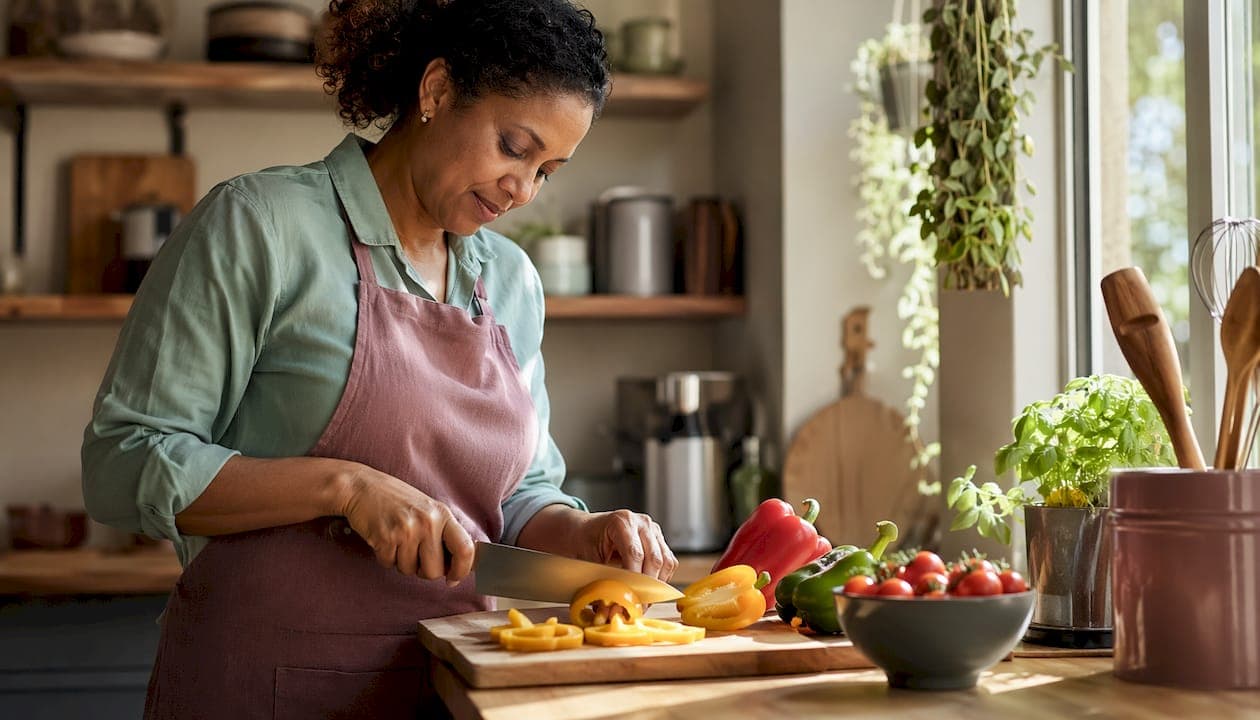
If you're just getting started in the kitchen, you don't need 50 tools. You need the right ones. Here's a quick-reference list of the cooking utensils and their uses that matter most for beginners, so you can get cooking without second-guessing every purchase.
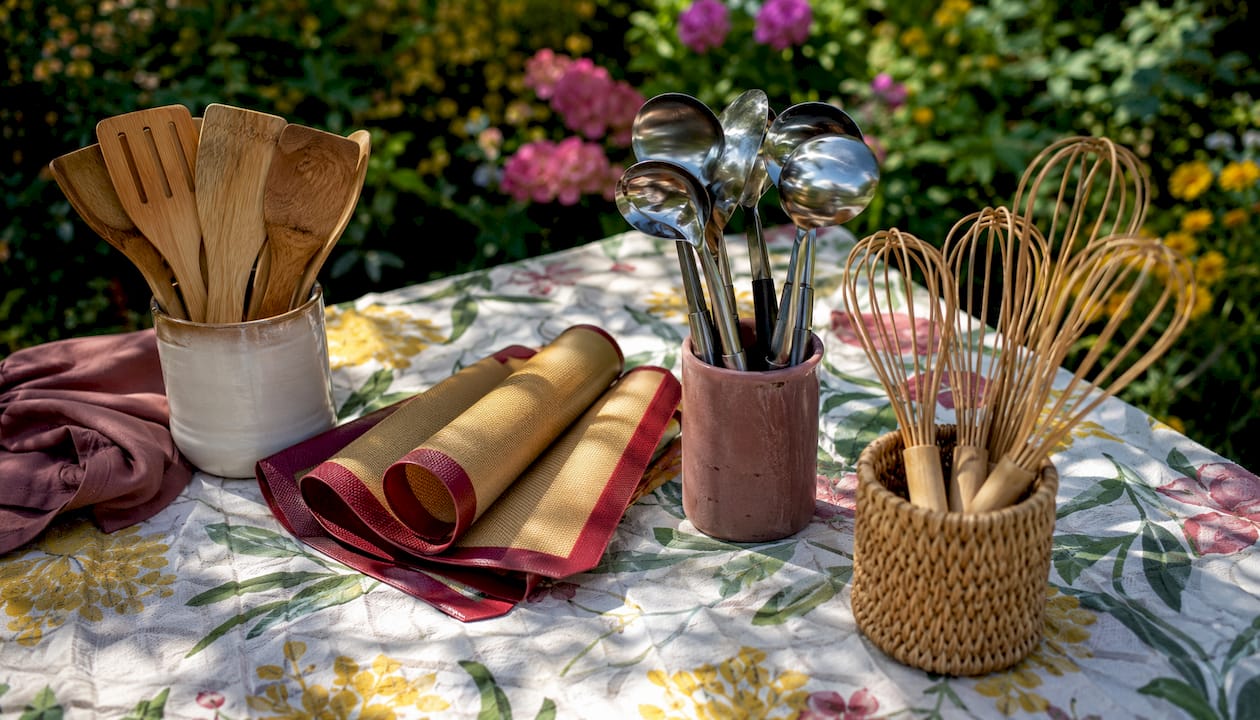
| Tool | One-Line Use | Buy First? |
|---|---|---|
| Chef's knife (8") | Chops, slices, and dices almost everything | ✅ Yes |
| Paring knife | Peels and trims small fruits and vegetables | Later |
| Cutting board | Protects your counter and keeps food stable | ✅ Yes |
| Instant-read thermometer | Checks internal temps for meat, fish, and oil | ✅ Yes |
| Kitchen scale | Measures ingredients by weight for accuracy | ✅ Yes |
| Measuring cups and spoons | Portions dry and liquid ingredients | ✅ Yes |
| Silicone spatula/scraper | Folds, stirs, and scrapes bowls and pans | ✅ Yes |
| Tongs | Flips, grabs, and plates hot food safely | ✅ Yes |
| Ladle or slotted spoon | Serves soups, sauces, and drains solids | Later |
| Mixing bowls (set of 3) | Holds, combines, and preps ingredients | ✅ Yes |
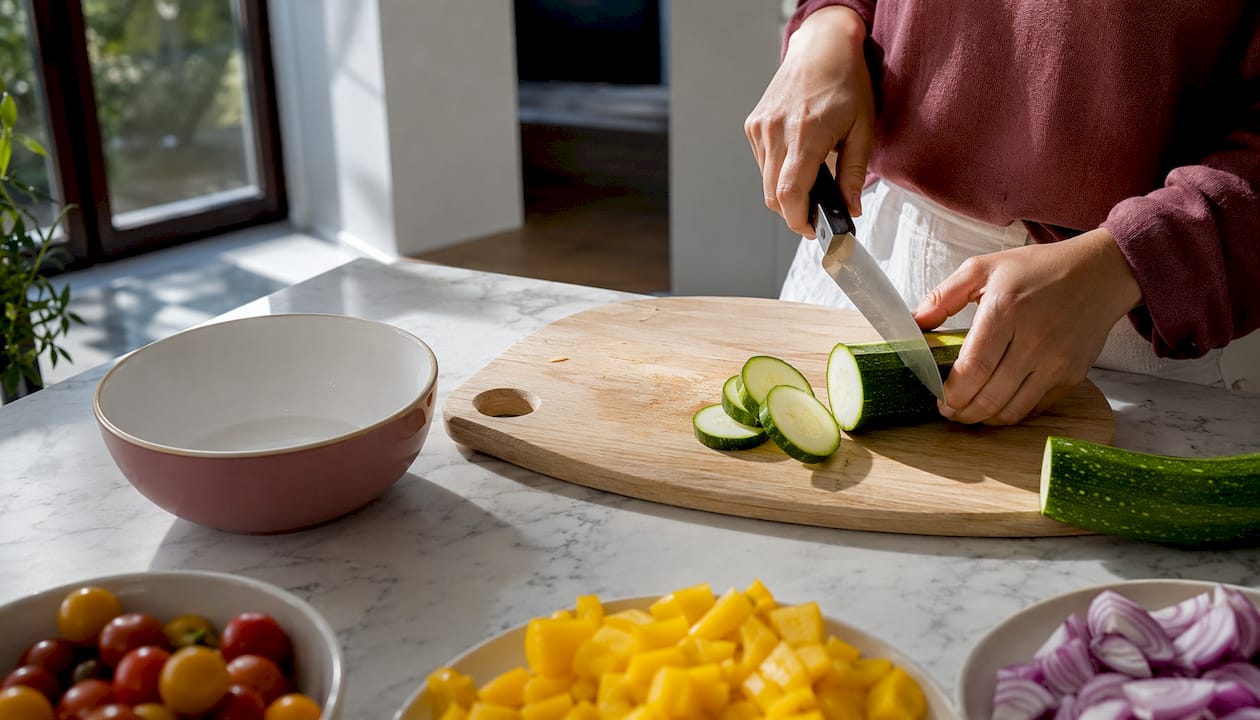
Start here if you're buying nothing else yet: a good chef's knife, an instant-read thermometer, and a kitchen scale will improve your cooking faster than any other three purchases. According to Serious Eats, a kitchen scale is one of the most underrated beginner tools because it removes the guesswork from measuring. The Wikipedia consensus on food preparation utensils confirms that knives, cutting boards, mixing bowls, spatulas, tongs, and measuring tools form the agreed-upon baseline for home cooking.
Table of Contents
- What are the most useful cooking utensils and their uses by category?
- Why the material of your kitchen tools matters more than you think
- How to choose the right kitchen tools when you're just starting out
- How to care for your kitchen tools so they last for years
- Safety basics and common beginner mistakes to avoid
- The tools that experts say make the biggest difference for beginners
- Key Takeaways
- The tools that actually changed how I cook
- Ready to cook with confidence? Here's how Adultingwithfood helps
- Useful sources
What are the most useful cooking utensils and their uses by category?
You don't have to learn everything at once. Organizing your kitchen tools by task makes it much easier to know what you have, what you need, and what can wait. For a visual reference with photos, check out this beginner's guide to kitchen utensils from Adultingwithfood.
Prep and cutting tools
- Chef's knife (8"): Your single most-used tool. A chef's knife covers 80–90% of cutting needs for most home cooks. Buy first.
- Paring knife: Handles small, precise work like peeling apples or deveining shrimp. Buy later.
- Cutting board (wood or plastic, a size that keeps food stable and protects your counter): Keeps food stable and protects your counter. Buy first. Use separate boards for raw meat and produce.
- Vegetable peeler: Strips skins from carrots, potatoes, and cucumbers in seconds. Buy first.
- Box grater: Grates cheese, zests citrus, and shreds vegetables. Buy first.
Measuring and mixing tools
- Dry measuring cups (set): Scoops and levels flour, sugar, and grains. Buy first.
- Liquid measuring cup (2-cup, glass): Reads fluid ounces and milliliters accurately. Buy first.
- Measuring spoons (set): Portions small amounts of spices, baking powder, and salt. Buy first.
- Kitchen scale: Weighs ingredients for consistent results. A kitchen scale with 1 g resolution is sufficient for most day-to-day cooking; 0.1 g resolution is useful mainly for precise baking. Buy first.
- Mixing bowls (set of 3, stainless steel): Holds prepped ingredients, batters, and salads. Buy first.
- Whisk: Blends eggs, dressings, and batters smooth. Buy first.
Cooking and serving tools
- Silicone spatula: Folds, stirs, and scrapes without scratching nonstick pans. Buy first.
- Fish spatula (thin, slotted): Flips delicate proteins like fish fillets and pancakes cleanly. Buy later.
- Tongs (12", locking): Grabs, flips, and plates hot food without burning your hands. Buy first.
- Ladle: Serves soups, stews, and sauces in controlled portions. Buy first.
- Slotted spoon: Lifts solids out of liquid (pasta, poached eggs, blanched vegetables). Buy first.
- Wooden spoon: Stirs thick sauces and braises without scratching most surfaces. Buy first.
Baking tools
- Baking sheet (rimmed, half-sheet): Roasts vegetables, bakes cookies, and toasts bread. Buy first.
- 9x13" baking dish (glass or ceramic): Casseroles, brownies, and sheet cakes. Buy later.
- Rolling pin: Rolls out dough for pie crusts, pizza, and cookies. Buy later.
- Pastry brush: Glazes pastries and brushes butter onto bread. Buy later.
- Cooling rack: Lets air circulate under baked goods so they don't go soggy. Buy later.
Small specialty tools
- Instant-read thermometer (thermocouple type): Checks internal temperature of meat, poultry, and fish in 1–3 seconds; much faster and more accurate than bimetallic dial models. Buy first.
- Can opener: Opens canned tomatoes, beans, and broth. Buy first.
- Colander: Drains pasta and rinses produce. Buy first.
- Mandoline slicer: Produces uniform slices for gratins and salads faster than freehand knife work. Buy later, once you're comfortable with knife skills.
- Microplane zester: Grates hard cheese, ginger, and citrus zest finely. Buy later.
Pro Tip: You don't need every tool on this list before you cook your first meal. Start with the "Buy first" items and add specialty tools as specific recipes call for them.
Why the material of your kitchen tools matters more than you think
The material a utensil is made from affects how long it lasts, whether it's safe with your cookware, and how easy it is to clean. Here's a plain-language breakdown.
| Material | Best Uses | Dishwasher Safe? | Notes |
|---|---|---|---|
| Stainless steel | High-heat tasks, cast iron, stirring acidic sauces | Usually yes | Durable, non-reactive, long-lasting |
| Silicone | Nonstick pans, folding batters, scraping bowls | Yes | Heat-resistant; won't scratch |
| Wood | Stirring soups, sauces, braises | No | Hand-wash only; cracks and warps in dishwasher |
| Carbon steel | High-heat searing, wok cooking | No | Needs seasoning; rusts if not dried immediately |
| Plastic (low-grade) | Cold prep, light stirring | Varies | Avoid near high heat; can melt or leach |
| Nonstick-coated | Eggs, pancakes, delicate proteins | No (usually) | Use silicone or wood only; metal scratches coating |
The core matching rule is simple: use silicone or wood on nonstick cookware, and stainless steel or metal tools for cast iron and stainless steel pans. Metal utensils on a nonstick surface will scratch the coating and shorten the pan's life significantly.
Wood is warm, gentle, and great for stirring. The catch is that it absorbs moisture and odors over time, so it needs hand-washing and occasional oiling. Silicone is the most beginner-friendly material overall: it's heat-safe, non-scratching, easy to clean, and works with every type of cookware.
Stainless steel tools are the most durable option for high-heat cooking. They won't melt, warp, or absorb flavors. For anything involving a very hot pan or an open flame, stainless is the right call. Avoid low-grade plastics for anything near heat. Even if a plastic spoon doesn't melt visibly, repeated exposure to high temperatures can degrade it faster than you'd expect.
How to choose the right kitchen tools when you're just starting out
Shopping for kitchen tools gets confusing fast. Here's a practical buying framework that keeps you from overspending on gadgets you won't use.
1. Ask: do I actually need this?
Before buying any tool, ask whether a recipe you already cook (or want to cook) specifically requires it. If the answer is no, skip it for now. Beginner guides often list 50 or more tools, but the practical approach is to start with a prioritized subset and add specialty items as your cooking grows.
2. Spend more on precision tools, less on everything else
Cheap utensils work fine for holding, stirring, and containing. Where you should spend more is on tools where accuracy changes the outcome: your knife, your thermometer, and your scale. A $15 wooden spoon stirs just as well as a $60 one. A $10 thermometer that reads 10 degrees off will ruin a steak.
3. Know the minimum specs that actually matter
- Chef's knife: 8" (200–230 mm) blade. Shorter knives feel safer but limit your cutting motion. Longer blades are harder to control for beginners.
- Kitchen scale: 1 g resolution for general cooking. If you bake bread or pastry, 0.1 g resolution is worth the small extra cost.
- Instant-read thermometer: Choose a thermocouple model. Thermocouple thermometers read in 1–3 seconds; bimetallic dial models take 15–30 seconds and are less accurate. The speed difference matters when you're checking a thin chicken breast or a piece of fish.
- Cutting board: At least 12" x 18". Anything smaller and food falls off the edge.
- Mixing bowls: A set of three (small, medium, large) in stainless steel covers almost every prep task.
4. Budget tiers for core items
| Tool | Budget ($) | Mid-Range ($$) | Worth Investing ($$+) |
|---|---|---|---|
| Chef's knife | $20–$40 | $50 | $100+ (forged, full tang) |
| Instant-read thermometer | $15 | $30–$50 | $50+ (Thermoworks-style) |
| Kitchen scale | $10–$20 | $25 | $40+ (0.1 g precision) |
| Cutting board | $10–$20 | $25 | $50+ (end-grain wood) |
| Silicone spatula set | $8–$15 | $15–$30 | Not necessary to spend more |
5. Red flags when shopping
- Loose rivets on knife handles (a hygiene and safety problem)
- Thin, flexible knife blades that flex when you press them
- Plastic handles with no heat-resistance rating
- Utensils with visible seams or crevices where food can hide
- Nonstick coatings that feel rough or uneven out of the box
For a deeper look at how to organize what you buy, the most efficient kitchen layout guide from Adultingwithfood walks through setup from scratch.
How to care for your kitchen tools so they last for years
Good tools last a long time when you treat them right. Most beginner mistakes come down to two things: putting things in the dishwasher that shouldn't go there, and not drying tools before storing them.
Daily habits
- Rinse and dry knives immediately after use. Never leave them soaking in water.
- Hand-wash wooden spoons and wood-handled tools every time. Dishwashers and high heat damage wood handles and certain nonstick coatings, even when labeled dishwasher-safe.
- Dry stainless steel tools before storing to prevent water spots and rust.
- Store knives on a magnetic strip or in a knife block, never loose in a drawer where the blade dulls against other metal.
Monthly checks
- Hone your chef's knife with a honing steel before or after each use (honing realigns the edge; it doesn't remove metal). Check whether the blade still cuts cleanly through a sheet of paper. If it tears instead of slices, it's time to sharpen.
- Inspect silicone tools for cracks or tears. A cracked spatula can harbor bacteria.
- Check wooden spoon handles for splinters or deep cracks. Sand lightly and rub with food-safe mineral oil if needed.
Annual maintenance
- Have your chef's knife professionally sharpened or use a whetstone (a 1000/3000 grit combination stone works for most home cooks).
- Re-season cast iron pans and carbon steel tools with a thin layer of neutral oil after oven-heating.
- Oil wood cutting boards and handles with food-safe mineral oil or beeswax conditioner.
Pro Tip: To test your instant-read thermometer's accuracy, fill a glass with ice water and stir for 30 seconds. Insert the probe. It should read 32°F (0°C). If it reads more than 2°F off, recalibrate it using the calibration nut on the back of the probe, or replace it.
Safety basics and common beginner mistakes to avoid
Most kitchen injuries and cooking failures are preventable. Here are the ones that come up most often for beginners, and what to do about them.
Knife safety
- Always curl your fingers into a "claw" grip when holding food. Your knuckles guide the blade; your fingertips stay tucked.
- A dull knife is more dangerous than a sharp one. It slips off food instead of cutting through it. A sharp blade causes about 3–5 times less cell damage and gives you more control.
- Use a damp paper towel or a non-slip mat under your cutting board. A board that slides is a board that causes cuts.
- Never catch a falling knife. Step back and let it drop.
Thermometer use
- Insert the probe into the thickest part of the protein, away from bone. Bone conducts heat and gives a false high reading.
- Don't rely on color alone to judge doneness. Pink chicken can be safe; gray chicken can be undercooked. Use your thermometer every time until you have a feel for it.
- Safe internal temperatures: chicken and turkey 165°F, pork 145°F, ground beef 160°F, fish 145°F.
Cross-contamination
- Use separate cutting boards for raw meat and produce. Color-coded boards (red for meat, green for vegetables) make this automatic.
- Wash your hands for at least 20 seconds after handling raw poultry or meat.
- Never put cooked food back on a plate that held raw meat.
Hot oil and heat safety
- Add food to hot oil gently, away from you, to avoid splatter.
- Never fill a pan more than halfway with oil for frying.
- Keep a lid nearby when cooking with oil. If a pan catches fire, slide the lid over it and turn off the heat. Never use water on a grease fire.
What to do if something goes wrong
- If you cut yourself: Apply firm pressure with a clean cloth, elevate your hand, and hold for several minutes. For deep cuts, seek medical attention.
- If food is undercooked: Return it to the pan or oven immediately. For poultry or pork, don't guess. Check the temperature again before serving.
The tools that experts say make the biggest difference for beginners
Most beginner cooks spread their budget across too many small gadgets. The tools that actually move the needle are fewer than you'd think.
The top four priority purchases, backed by culinary educators and cooking resources, are:
- Chef's knife — A sharp, well-balanced 8" chef's knife handles the majority of prep work. Because a dull blade causes several times more cell damage to food, a quality knife also improves the flavor and texture of what you cook, not just the speed.
- Instant-read thermocouple thermometer — This single tool eliminates the most common beginner failure: undercooked or overcooked protein. With a 1–3 second read time, you can check a chicken thigh mid-cook without losing heat.
- Kitchen scale — Weight measurements are more accurate than volume for most ingredients. A scale with 1 g resolution is enough for everyday cooking and removes the inconsistency that comes from loosely packed measuring cups.
- Silicone spatula and tongs — Together, these two tools cover most of what you do at the stove: folding, stirring, flipping, and plating. They're inexpensive, durable, and work with every type of cookware.
"Investing in one high-quality chef's knife and a reliable instant-read thermometer yields bigger gains than many small gadgets. Beginners often mistake convenience for quality." — The Complete Guide to Kitchen Tools, ada.cooking
Once you have these four tools, the next step is to use them. Pick two or three easy beginner recipes that require only these basics and cook them repeatedly until the tools feel natural in your hands. Repetition builds confidence faster than buying more gear.
For tools that help with plating and food presentation once you're past the basics, food presentation tips from professional chefs show how tongs, offset spatulas, and simple techniques can make home-cooked meals look restaurant-quality.
Key Takeaways
A chef's knife, an instant-read thermometer, and a kitchen scale are the three tools that most reliably improve beginner cooking results, and they should be your first purchases.
| Point | Details |
|---|---|
| Buy precision tools first | Spend more on your knife, thermometer, and scale; save on stirring and serving tools. |
| Match material to cookware | Use silicone or wood on nonstick; stainless steel or metal on cast iron and stainless pans. |
| Hand-wash wood and nonstick | Dishwashers shorten the life of wood handles and nonstick coatings, even labeled ones. |
| Keep knives sharp | A sharp blade is safer and produces better-tasting food by causing about 3–5 times less cell damage. |
| Adultingwithfood Starter Pack | The Starter Pack teaches you which tools to buy first and how to use them in real weekly recipes. |
The tools that actually changed how I cook
Most beginner cooking advice focuses on what to buy. What it skips is why the right tool changes the experience of cooking itself.
A dull knife doesn't just slow you down. It makes prep feel hard, which makes you less likely to cook at all. A thermometer doesn't just prevent undercooked chicken. It removes the anxiety that makes beginners hover over the stove, second-guessing every decision. These tools don't just make cooking easier. They make it feel possible.
The conventional wisdom says to start with a "full kitchen kit." The smarter move is to start with three tools, learn them deeply, and add from there. A beginner who knows their chef's knife, their thermometer, and their scale can cook almost anything. A beginner with 40 gadgets and no confidence can't cook much at all.
What Adultingwithfood teaches through the Starter Pack and weekly recipe drops is exactly this: which tools matter, how to use them in real recipes, and how to build skills one meal at a time. The grocery checklists and chef support remove the other two barriers that stop most beginners, not knowing what to buy and not knowing who to ask when something goes wrong.
You don't need a perfect kitchen. You need the right three tools and a reason to use them tonight.
Ready to cook with confidence? Here's how Adultingwithfood helps
Knowing which tools to buy is step one. Knowing what to do with them is where most beginners get stuck. That's exactly the gap Adultingwithfood fills.

The Adultingwithfood membership gives you a Starter Pack that tells you which tools to buy first, five new recipes every week that use those exact tools, and grocery checklists so you know what to pick up before you cook. Real chef support means you can ask questions and get answers, not just watch a video and hope for the best.
Here's what you get as a member:
- Starter Pack — kitchen setup guide, tool list, and grocery basics to get you cooking from day one
- Weekly recipe drops — five beginner-friendly recipes every week, built around the tools you already have
- Chef support — real answers from a real chef when you're stuck, via email
If you're tired of defaulting to takeout because cooking feels uncertain, this is the structured help that changes that. Get your Starter Pack and start cooking meals you're proud of.
Useful sources
These are the primary sources used throughout this article. Each one is worth bookmarking if you want to go deeper on any topic covered here.
- The Complete Guide to Kitchen Tools — ada.cooking: Covers knife selection, thermometer types, material matching, and the case for minimalism in a beginner kitchen. One of the most thorough free resources available.
- What Are the Best Kitchen Utensils? — de Buyer: Practical guidance on material selection, care rules, and why hand-washing matters more than the label says.
- The Best Kitchen Essentials, Tested and Reviewed — Serious Eats: Hands-on testing of beginner kitchen gear with clear recommendations on what's worth buying and what isn't.
- 50 Essential Kitchen Tools and Their Uses — Natural Kitchen School: A longer reference list useful for identifying specialty tools once you've covered the basics.
- List of Food Preparation Utensils — Wikipedia: A broad reference for tool names and categories, useful for identifying unfamiliar items.