Seven categories will carry you through your first two weeks of real cooking: pantry staples, one or two proteins, durable produce, dairy, a handful of frozen backups, and a short spice and condiment lineup. That combination is enough to cook a dozen different weeknight meals without a second store run. Build your cart from these groups first, and use the checklist below to shop it in one trip.
TL;DR:
- Most beginner cooks can rely on around twenty staple ingredients, two or three proteins, and a basic produce selection to prepare a variety of meals.
- Shopping with a pre-organized list by store layout saves time and reduces impulse buys, making it easier to stick to budget.
- Planning three dinners, two lunches, and one breakfast in advance helps minimize decision fatigue and prevents unnecessary extra purchases.
- Choosing frozen vegetables and larger bulk packages of rice and pasta lowers costs and extends shelf life without sacrificing quality.
- Proper storage, such as keeping greens unwashed and potatoes in dark cool places, significantly reduces food waste during the first weeks of cooking.
- ✓Adulting in the Kitchen Starter Pack
- ✓Weekly recipe drops with 5 new recipes
- ✓Grocery store checklists
- ✓Real chef support
Table of Contents
- Grocery List for Beginners: Pantry, Fridge, and Freezer Staples
- The Actionable Grocery Checklist to Take With You
- A Simple Meal-Planning Rule That Kills Decision Fatigue
- Budget and Smart Shopping Tips for a New Kitchen
- How to Store Groceries So They Actually Last
- Sample First-Week Meals and Exact Shopping Quantities
- Why AdultingintheKitchen Built This Checklist the Way We Did
- Buying Produce in Season Without Overspending
- Reading Food Labels Without Getting Overwhelmed
- Adjusting the List for Different Diets and Restrictions
- Basic Tools You Need to Actually Cook This List
- What Actually Matters Here, and What Doesn't
- Sources
Grocery List for Beginners: Pantry, Fridge, and Freezer Staples
Every beginner kitchen runs on the same short list of workhorses. You do not need forty ingredients to cook well. You need about twenty that combine in different directions, plus enough proteins and produce to keep meals from getting boring by Wednesday.
Pantry staples:
- Rice (white or brown)
- Pasta (one short shape, one long shape)
- Rolled oats
- Canned tomatoes (diced or crushed)
- Canned beans (black or pinto)
- All-purpose flour
- Sugar
- Cooking oil (vegetable or avocado)
- Vinegar (white or apple cider)
- Peanut butter
Proteins:
- Eggs, one dozen
- Chicken thighs, boneless and skinless, since they're forgiving on cook time and cheaper than breasts
- Canned tuna
- Tofu or dried lentils, if you're leaning plant-based some nights
Getting roughly the right amount of protein matters more than most beginners realize. Adults generally need about 0.8 grams of protein per kilogram of body weight, or 0.36 grams per pound, spread across the day. That works out to somewhere around 50 to 70 grams daily for most adults, which two eggs at breakfast and a palm-sized chicken thigh at dinner covers without much thought.
Dairy and refrigerated:
- Milk or a plant-based alternative
- Plain yogurt
- Butter
- A shreddable cheese, like cheddar or mozzarella
Produce:
- Onion, garlic, potatoes, carrots, since these keep for weeks
- One bag of leafy greens
- Bell pepper
- Apples or bananas
Freezer:
- A bag of mixed vegetables
- Frozen fruit for smoothies or oatmeal
- Frozen chicken or fish fillets as a backup protein
Spices and condiments:
- Salt, black pepper, garlic powder
- Soy sauce, hot sauce
- Olive oil
- Ketchup and mustard
That's the full starter set. It looks long written out, but most of it fits in one cart pass, and almost none of it expires before you get to use it.
The Actionable Grocery Checklist to Take With You
Walking into a store with a scattered list wastes time and money. Walking in with a list sorted the way the store is laid out saves both. Shopping the perimeter first, where the fresh sections tend to sit, and working inward toward the center aisles is a habit worth building from day one, according to grocery-tour guidance from the Mayo Clinic Health System.
Here's how to organize the trip, in order:
- Produce: onion, garlic, potatoes, carrots, bell pepper, one bag of leafy greens, apples or bananas
- Meat and deli: 2 pounds chicken thighs, 1 dozen eggs
- Dairy: milk, plain yogurt, butter, shreddable cheese
- Center aisles: 1 pound pasta, rice, oats, 2 cans tomatoes, 1 can beans, flour, sugar, oil, vinegar, peanut butter, soy sauce, hot sauce, ketchup, mustard
- Frozen: mixed vegetables, frozen fruit, frozen fish or chicken fillets
- Household: paper towels, dish soap, trash bags
Those quantities are sized for one or two people through a full week, with enough left in the pantry for a second week of overlap.
Before you shop, do a two-minute check of what you already have. Skip anything still sitting in your cabinet, and treat this checklist as a living document you edit as your habits change, not a fixed script.
Pro Tip: Take a photo of your pantry and fridge shelves before you leave the house. It's faster than trying to remember whether you already have flour, and it stops you from buying a third bottle of soy sauce.

A Simple Meal-Planning Rule That Kills Decision Fatigue
The 3-2-1 rule turns a grocery list into an actual week of food: plan three dinners, two lunches, and one breakfast before you shop, then buy only what those six meals need. Planning meals in advance gives every ingredient a job, which is exactly the mechanism the Food and Agriculture Organization points to when it comes to cutting household food waste.
Here's how that maps onto the checklist above:
- Dinner 1: garlic butter pasta with frozen broccoli
- Dinner 2: chicken stir-fry with rice and mixed vegetables
- Dinner 3: quesadillas with cheese, beans, and bell pepper
- Lunch (both days): egg fried rice using leftover rice
- Breakfast: oatmeal with frozen fruit, or eggs on toast
Notice how few new ingredients each meal actually needs. Rice, chicken, and eggs each show up in at least two meals, which is the whole point. Planning this way before you shop, rather than wandering the aisles hoping for inspiration, is what keeps a $60 cart from turning into $90 of half-used impulse buys.
Budget and Smart Shopping Tips for a New Kitchen
Store brands cost less and taste nearly identical for staples like canned tomatoes, pasta, rice, and oats. Save name brands for the few items where flavor differences actually register, like condiments or coffee. A small pantry kit built around eight or nine basics, rice, pasta, oil, salt, pepper, garlic powder, soy sauce, and hot sauce, can get a new cook through the first two weeks on a modest budget.
A few more habits that actually move the needle:
- Buy rice and pasta in the largest bag you'll use within a couple of months. Price per pound drops fast at bigger sizes.
- Check unit price, not shelf price. A bigger box isn't always cheaper per ounce.
- Choose frozen vegetables over fresh when you're not cooking them within two or three days. They're already prepped and won't wilt in your crisper drawer.
- Only pay extra for pre-cut produce when your schedule genuinely has no room for ten minutes of chopping.
- Run the two-minute pantry check before every trip, and shop with your list sorted by aisle. Fewer backtracks mean fewer "oh, I'll just grab this too" moments.
The World Health Organization's benchmark of 400 grams of fruit and vegetables daily, about three servings, is a useful gut check when you're standing in produce deciding how much to buy. If your cart doesn't hit that rough target across the week, add one more vegetable before you leave.
How to Store Groceries So They Actually Last
Half of grocery waste isn't bad shopping. It's bad storage. Leafy greens last longer unwashed until the day you use them; washing early traps moisture that speeds up rot. Root vegetables like potatoes and onions belong in a cool, dark cabinet, not the fridge. Bananas ripen faster next to other fruit, so keep them separate if you want a slower burn. Dairy stays coldest and most stable on a middle shelf, not the door, where temperature swings every time it opens.
Frozen items deserve more credit than beginners give them. Frozen vegetables and fruit are already washed and cut, which erases the prep-time excuse that keeps a lot of new cooks from cooking at all. Reach for frozen anything you won't use within two or three days of buying it fresh.
A few habits worth building early:
- Portion and freeze cooked leftovers the same day you make them, not three days later when they're already borderline.
- Label freezer bags with the date, since "frozen" doesn't mean "forever."
- Keep a running mental note of what's about to turn, and build tomorrow's meal around it instead of the other way around.
- Store coffee beans in an airtight container away from light and heat if you're keeping a bag around; the same freshness principles that apply to specialty coffee apply to most pantry goods.
Pro Tip: Freeze chicken thighs in single-meal portions the day you buy them if you won't cook them within two days. Thawing one portion overnight beats thawing a whole two-pound package and refreezing part of it.
Sample First-Week Meals and Exact Shopping Quantities
Five recipes, reusing the same core ingredients, get you through a full week without repeating a single dinner twice. That's the real trick beginners miss: mastering a handful of meals that share ingredients is far more efficient than chasing five completely different recipes with five separate shopping lists.
- Garlic butter pasta with broccoli (15 minutes): boil pasta, toss in melted butter, minced garlic, and frozen broccoli, finish with black pepper.
- Chicken stir-fry with rice (20 minutes): sear diced chicken thighs, add mixed frozen vegetables, splash with soy sauce, serve over rice.
- Egg fried rice (10 minutes): use leftover rice from the night before, scramble in eggs, add a dash of soy sauce and any leftover vegetables.
- Quesadillas (10 minutes): shredded cheese and canned beans folded into a tortilla, crisped in a dry pan.
- Breakfast burritos (15 minutes): scrambled eggs, cheese, and diced bell pepper wrapped in a tortilla, good for batch-making on Sunday.
| Item | Quantity (1 to 2 people) |
|---|---|
| Eggs | 1 dozen |
| Chicken thighs | 2 pounds |
| Pasta | 1 pound |
| Rice | 2 cups uncooked |
| Canned tomatoes | 2 cans |
| Canned beans | 1 can |
| Mixed frozen vegetables | 1 bag |
| Shreddable cheese | 1 pound |
| Tortillas | 1 pack |
Each recipe leans on ingredients already sitting in your cart from the checklist above. You'll notice you're not buying anything special for any single meal. That overlap is what makes a first-week list workable instead of overwhelming, and it's the same reason easy beginner recipes tend to repeat a short list of staple ingredients rather than introducing something new every night.
Why AdultingintheKitchen Built This Checklist the Way We Did
This list was created to help beginners avoid the common obstacle of being unsure what to grab in the store and missing an essential ingredient at home, by pairing a kitchen setup guide with grocery checklists so the first shopping trip matches the first week of cooking.
Subscribers receive new recipe drops weekly, built around overlapping-ingredient logic, plus chef support when a recipe doesn't turn out as expected. None of that replaces your own judgment in the store. It just shortens the distance between "I bought groceries" and "I made something I'm proud of."
Buying Produce in Season Without Overspending
Produce priced at its peak season costs less and tastes noticeably better, because it hasn't traveled far or spent weeks in cold storage. Berries in early summer, citrus in winter, and squash in fall are the clearest examples: buy them out of season and you're paying more for less flavor.
A quick way to shop smart without memorizing a seasonal chart: check what's stacked highest and priced lowest in the produce section that week. Grocery stores tend to promote whatever they're getting the most of locally, which usually lines up with what's actually in season.
Local farmers markets are worth a visit even as a beginner, not because they're always cheaper, but because they concentrate what's fresh right now in one place. If a market isn't convenient, frozen produce is a reliable stand-in year-round. Vegetables and fruit are typically frozen within hours of harvest, which locks in nutrients close to peak freshness regardless of the calendar.
One habit worth building early: buy durable produce like onions, carrots, and potatoes in larger quantities regardless of season, since they store for weeks. Save the smaller, more careful purchases for delicate items like berries or leafy greens that spoil fast no matter when you buy them. That split keeps your cart flexible and your fridge from filling up with things that go bad before you get to them.
Reading Food Labels Without Getting Overwhelmed
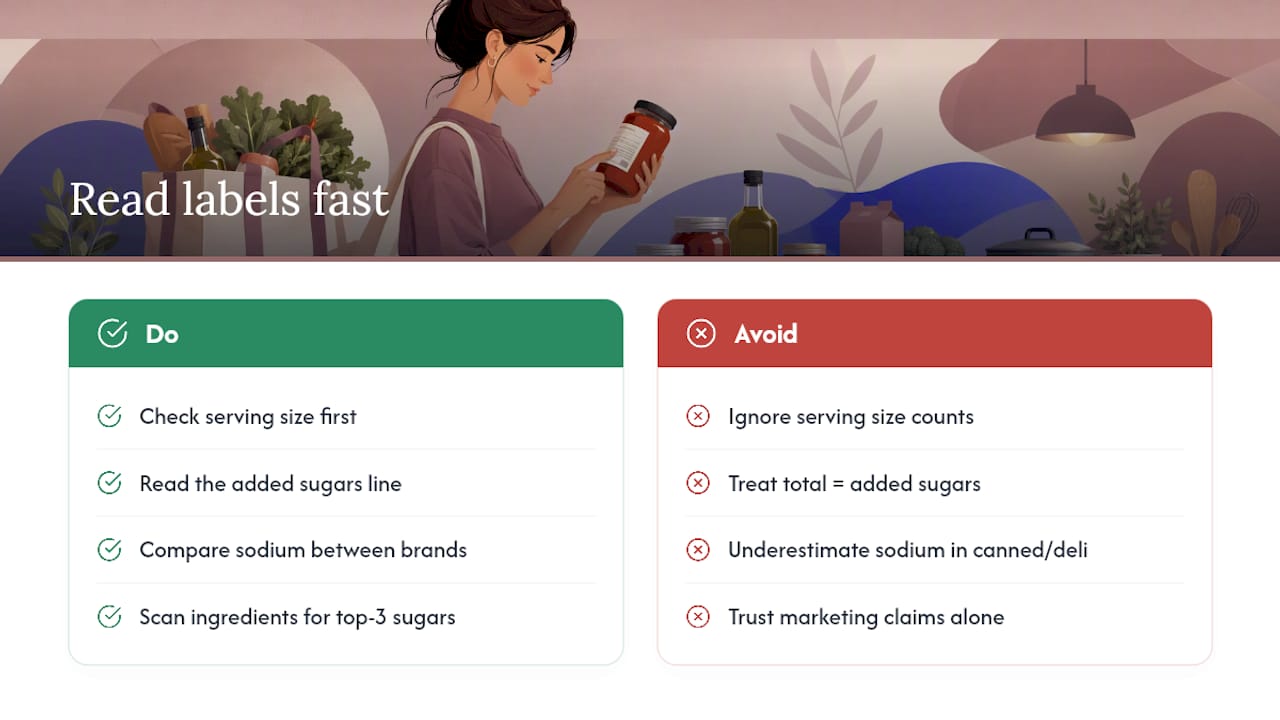
Three numbers matter more than the rest of the label: serving size, added sugars, and sodium. Everything else is useful context, but those three tell you the most in the least time.
Serving size comes first because every other number on the label is based on it. A package that looks like one portion but lists two servings will quietly double the sugar, sodium, and calorie counts if you eat the whole thing, which is exactly what most people do with a bag of chips or a bottle of juice.
Added sugars are separated from total sugars on most labels now, which matters because fruit and dairy naturally contain sugar that doesn't need the same scrutiny. Focus on the "added sugars" line specifically when comparing two similar products, like two brands of yogurt or granola.
Sodium sneaks into more foods than people expect, especially canned goods, deli meat, and frozen meals. Comparing the sodium line between two canned tomato brands often reveals a bigger gap than the price tag does.
The ingredient list backs up what the nutrition panel shows. Ingredients are listed by weight, heaviest first, so if sugar or a sugar variant shows up in the first three ingredients, treat that as a sweet food regardless of how it's marketed. This habit takes an extra fifteen seconds per item and pays off every time you're choosing between two similar products on the shelf.
Adjusting the List for Different Diets and Restrictions
The starter checklist above is a base, not a fixed menu, and every category on it has an easy substitution if you're eating differently than the default. That's the entire point of treating a grocery list as something you edit, not something you follow word for word.
Plant-based or vegetarian: Swap chicken thighs for tofu, lentils, or canned chickpeas. Keep eggs and dairy if you're vegetarian rather than vegan; swap milk for a fortified plant-based alternative and butter for a plant-based spread if you're going fully plant-based.
Gluten-free: Replace wheat pasta with a rice or corn-based version, and swap all-purpose flour for a gluten-free blend. Rice, potatoes, oats labeled gluten-free, and most produce and proteins on the base list already work without changes.
Dairy-free: Swap milk, yogurt, and cheese for oat, soy, or almond-based versions. Read labels here specifically, since some plant-based cheeses skip the protein that dairy versions provide.
Lower budget, higher protein needs: Lean harder on eggs, canned beans, and canned tuna, all of which deliver protein at a lower cost per gram than most fresh meat.
The categories stay the same: pantry, protein, produce, dairy, frozen, spices. Only the specific items inside each category shift.
Basic Tools You Need to Actually Cook This List
A grocery list is only half the equation. You need a handful of tools to turn those ingredients into food, and the good news is the list is short. A chef's knife and a cutting board handle nearly every prep task you'll face this week, from dicing onions to slicing chicken.
One large pot covers pasta, rice, and boiling anything else, while a wide skillet or sauté pan handles stir-fries, eggs, and quesadillas. A set of measuring cups and a spoon keep your rice-to-water ratio and baking measurements honest, and a can opener is easy to forget until the moment you need it. Round it out with a colander for draining pasta, a mixing bowl or two, and basic sheet pans if your oven sees regular use.
None of this requires a full set of specialty gear. Beginners often overbuy equipment before they've figured out what they actually cook most. Start with the short list above, cook through your first few weeks, and let your actual habits tell you what to add next.
What Actually Matters Here, and What Doesn't
Most grocery advice for beginners overweights the wrong thing: it obsesses over which exact brand of olive oil to buy while glossing over the part that actually determines success, which is whether you planned meals before you shopped at all. The research on meal planning backs this up plainly: knowing what you're cooking before you enter the store is what prevents waste, not which specific pantry items you chose.
The conventional advice also tends to overwhelm beginners with forty-item lists that assume a stocked kitchen already. A first-week list should be short enough to shop in one trip and specific enough that you know exactly why each item is there. If you can't name the meal an ingredient belongs to, it probably doesn't belong in week one.
Prioritize the planning step over the shopping step. Buy fewer things on purpose rather than more things just in case, and let your actual cooking habits, not a generic checklist, decide what earns a permanent spot in your kitchen.
If you want that planning done for you, along with weekly recipes built the same way, AdultingintheKitchen's membership picks up right where this checklist leaves off.
— Bill
Sources
- Healthy diet (WHO)
- Food and Agriculture Organization — meal planning guidance
- Grocery store tour: shopping the perimeter (Mayo Clinic Health System)
- How much protein do you need every day (Harvard Health Publishing)