Most pantry staples keep for months to years past their printed date, and some never truly go bad. Sugar, salt, and honey last indefinitely when kept dry. Canned goods hold their quality for about 12 to 18 months if high-acid (tomatoes, fruit) and 2 to 5 years if low-acid (meats, most vegetables), as long as the can is undamaged. The one rule that matters more than any date: those labels tell you about peak quality, not safety, with infant formula the only legal exception. Trust the can, the smell, and your senses over the stamp.
TL;DR:
- Most pantry staples, including white rice and dried beans, last many years if stored properly, but brown rice and whole wheat flour have shorter shelf lives due to natural oils.
- Storage conditions like heat, moisture, oxygen, and pests significantly shorten food longevity, with temperature control and airtight packaging being especially effective.
- Canned low-acid foods can remain safe for up to five years, but once opened, should be refrigerated and consumed within a week; high-acid cans are best within 12 to 18 months.
- Signs of spoilage such as bulging cans, leaks, rust, off-odor, mold, or pests should prompt immediate disposal without tasting or smelling.
- Organizing pantry with FIFO rotation, proper packaging, and maintaining cool, dry environments can extend the shelf life of staples and prevent unnecessary waste.
Table of Contents
- Shelf Life of Pantry Staples: The Printable Cheat Sheet
- How Do Storage Conditions Change How Long Food Lasts?
- Why Do Canned Goods, Grains, and Oils Last So Differently?
- What Are the Warning Signs You Should Never Ignore?
- Smart Habits That Stretch Every Staple Further
- Where This Guide's Numbers Come From
- Why a Pantry Cheat Sheet Builds Real Kitchen Confidence
- Turn Your Pantry Staples Into Actual Dinners
- Sources
- FAQ
Shelf Life of Pantry Staples: The Printable Cheat Sheet
Here's the reference chart worth taping inside a cabinet door. These ranges assume cool, dry storage around 50 to 70°F and reflect quality windows backed by USDA/FSIS shelf-stable food guidance and land-grant extension research. Actual life depends heavily on how the food was packaged and where it sits in your kitchen.
| Pantry Staple | Unopened Shelf Life | After Opening / Cooked |
|---|---|---|
| Canned high-acid foods (tomatoes, fruit) | about a year to a year and a half | 3 to 7 days refrigerated |
| Canned low-acid foods (meat, soup, most veggies) | 2 to 5 years | 3 to 4 days refrigerated |
| White rice | 4 to 5 years in original bag | 25+ years in Mylar with oxygen absorbers |
| Brown rice | several months up to about a year | Refrigerate or freeze to extend |
| Dry pasta | 1 to 2 years | 3 to 5 days cooked, refrigerated |
| White flour | 6 to 12 months pantry | Freeze for 1 to 2 years |
| Whole wheat flour | 1 to 3 months pantry | Freeze for 6 to 8 months |
| Sugar (white or brown) | indefinite if dry | indefinite if dry |
| Salt | indefinite | indefinite |
| Honey | indefinite (may crystallize) | indefinite |
| Cooking oils (vegetable, olive) | 1 to 2 years unopened | 3 to 6 months after opening |
| Nut butters | 6 to 9 months pantry | 2 to 3 months once opened |
| Powdered milk | 18 months to 2 years | 3 months once opened |
| Dried beans | 2 to 3 years for best quality | Cook times increase with age |
| Jerky (commercial, sealed) | 1 to 2 years | 1 to 2 weeks once opened |
| Ground spices | 2 to 3 years for potency | Same, flavor fades gradually |
| Whole spices | 3 to 4 years | Same, flavor fades slower than ground |
| Coffee (ground) | 3 to 5 months for peak flavor | 1 to 2 weeks once opened, airtight |
| Ketchup, mustard | 1 year unopened | 6 months refrigerated after opening |
| Mayonnaise | Check label, typically shorter | 2 months refrigerated after opening |
A few of those numbers deserve context. White rice can stretch past 25 years in Mylar bags packed with oxygen absorbers, but the same bag left in its store packaging on a warm shelf behaves nothing like that. Brown rice sits at the opposite end because its bran layer holds natural oils that turn rancid within months, not years. And specialty shelf-stable items like MREs or retort-pouched meals can last around seven years at a steady 60°F, proving that temperature does more to extend or shrink shelf life than almost any other factor.
How Do Storage Conditions Change How Long Food Lasts?
Four forces decide whether a pantry staple thrives for years or turns the corner in months: heat, moisture, oxygen, and pests. Every one of them is manageable with cheap fixes, and ignoring even one can cut a food's useful life in half.
- Heat speeds up chemical breakdown in oils, fats, and even dry starches, so a pantry shelf above 85°F ages food faster than a cool basement or interior closet.
- Moisture invites mold and clumping in sugar, flour, and dried beans, and it's the single fastest way to ruin an otherwise long-lasting staple.
- Oxygen oxidizes fats and oils, which is why nut butters and whole grain flour go rancid while white sugar and salt do not.
- Pests find their way into paper bags and thin plastic far more easily than into sealed glass or heavy-duty containers.
NDSU Extension recommends storing canned goods around 65°F, noting that higher temperatures reduce shelf life significantly. That's a meaningful gap: a pantry near a stove or on a sun-facing wall can run 15 to 20 degrees hotter than one on an interior wall, which is enough to shave real time off a can's useful life.
Packaging matters almost as much as temperature. Original sealed packaging protects food adequately for its printed window. Airtight glass or BPA-free plastic containers add a meaningful buffer against moisture and pests for everyday kitchen use. Mylar bags paired with oxygen absorbers are the serious upgrade, capable of multiplying a grain's shelf life several times over, and vacuum sealing splits the difference, cutting oxygen exposure without the bulk of long-term prepper gear.
Statistic to remember: the same can of low-acid vegetables that lasts 2 to 5 years at a stable 65°F can lose quality noticeably faster when stored above a running oven or dishwasher, where heat cycles repeatedly through the cabinet.
Why Do Canned Goods, Grains, and Oils Last So Differently?
The chart above only tells half the story. Understanding why each category behaves the way it does helps you make smarter calls when something looks or smells slightly off.
Canned goods: acid is the dividing line
High-acid canned foods like tomatoes, citrus, and pickled vegetables keep their best quality for about 12 to 18 months because acidity slows bacterial activity but doesn't stop the can's interior lining from slowly degrading. Low-acid canned foods, including most meats, soups, and plain vegetables, can remain safe for 2 to 5 years as long as the can itself stays intact, since FSIS shelf-stable guidance treats an undamaged seal as the real determining factor, not the calendar. Once you open a can, refrigerate the contents and use them within 3 to 7 days depending on the food. Never store leftovers in the can itself. Transfer them to a covered container instead.
Grains and pasta: refined beats whole every time
White rice and dry pasta are refined, meaning the oil-rich bran and germ layers have been stripped away. That's why white rice lasts 4 to 5 years in its bag while brown rice manages only 6 to 12 months before its natural oils start to turn. For long-term stockpiling, Mylar bagging with oxygen absorbers turns white rice into a decades-long staple, but that step only pays off if you're building a genuine long-term reserve rather than restocking weekly groceries.
Flours: freeze the whole grain versions
White flour holds up reasonably well in a sealed bag for 6 to 12 months at room temperature. Whole wheat flour is a different animal. Its natural oils go rancid within a few months on the shelf, so freezing extends usable life to 6 to 8 months. If flour smells sour, musty, or faintly like paint, that's rancidity talking. Toss it.
Oils and nut butters: trust your nose
Cooking oils oxidize gradually even when sealed, which is why an unopened bottle of vegetable oil lasts 1 to 2 years but drops to 3 to 6 months once air gets in. Nut butters follow a similar arc. A rancid oil or nut butter smells sharp, almost like crayons or old paint, well before it looks different. That aroma test is more reliable than any printed date.

Spices and coffee: a quality issue, not a safety one
Ground spices and coffee rarely become unsafe with age. They lose potency and flavor instead. Whole spices outlast ground versions by a wide margin because less surface area is exposed to air. If your paprika smells like dust rather than paprika, it won't hurt you. It just won't do much for dinner either.
Sweeteners: crystals are not spoilage
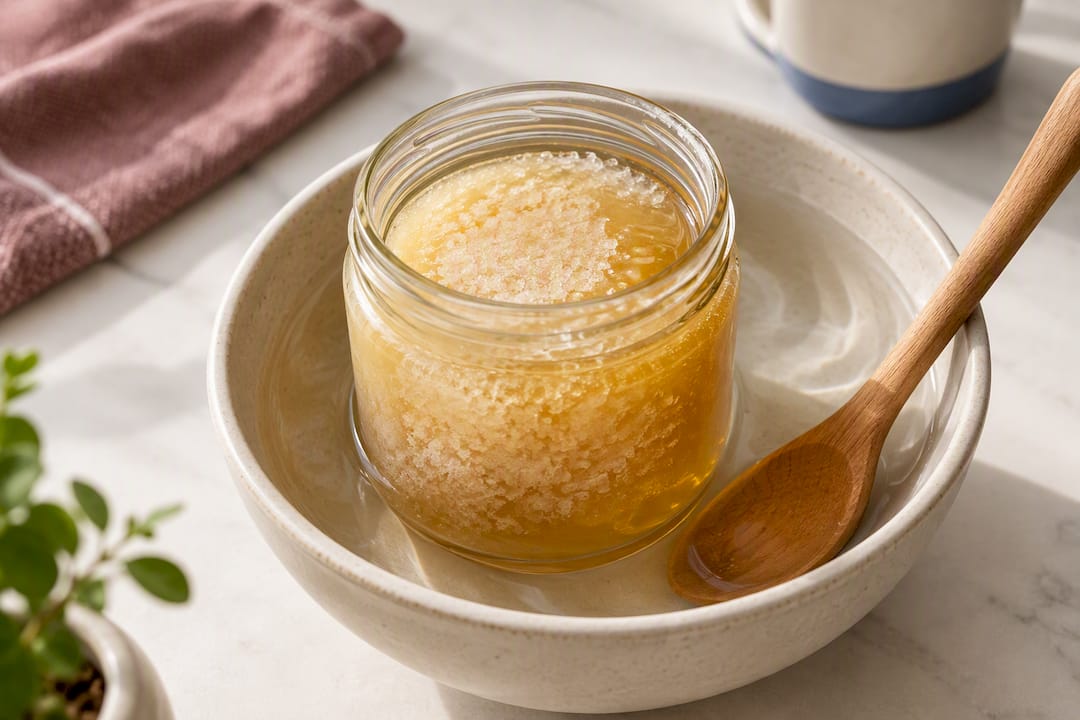
Honey crystallizing in the jar is a physical change, not a sign it has gone bad, and gently warming the jar restores it. Sugar and salt, kept dry, effectively never expire.
Legumes and jerky: age changes cooking, not always safety
Dried beans stay safe well past their best-quality window, but older beans take noticeably longer to soften and cook evenly. Commercial jerky, produced under controlled curing and drying conditions, holds a reliable 1 to 2 year shelf life sealed. Home-dehydrated jerky carries more risk since moisture content and curing consistency vary batch to batch, so treat homemade versions with shorter, more conservative timelines.
What Are the Warning Signs You Should Never Ignore?
Some spoilage signs mean "use it soon." Others mean "throw it out right now, no exceptions." Knowing the difference protects your health and your grocery budget.
Discard immediately, no tasting, no smelling first:
- A can that bulges, leaks, or spurts liquid when opened.
- Rust or dents concentrated along a can's seam rather than its flat panel, since seam damage compromises the seal itself.
- Any off-odor that smells sour, sulfurous, or simply wrong compared to the food's normal scent.
- Visible mold on grains, flour, nuts, or dried fruit, even a small spot.
- Live insects, larvae, or webbing inside a bag of flour, rice, or beans.
If a can looks even slightly suspicious, don't taste it to check. Dispose of the contents where pets and other people can't access them, then wash the surrounding cabinet or counter with hot, soapy water. When you do open a can safely, move any unused portion into a proper container right away. Never leave food sitting in the open can, even in the fridge.
Pro Tip: Keep a permanent marker near your pantry shelf. When something raises a small doubt but isn't an obvious discard case, jot today's date on the container. If it's still sitting there unopened in another six months, that's your answer.
Smart Habits That Stretch Every Staple Further
A little organization beats any single storage gadget. These habits cost nothing and pay off every week.
- Practice FIFO (first in, first out): write the purchase date on new items with a marker and always move older stock to the front of the shelf, a rotation habit extension guidance consistently recommends.
- Learn to read Julian codes. Many manufacturers stamp a plant code plus a three-digit day-of-year instead of a plain date, so a code like "047" means the 47th day of the year, not February 4.
- Transfer opened bags to airtight containers, but leave unopened cans and factory-sealed bags in their original packaging until you need them. That seal is doing real work.
- Freeze flour, nuts, and any oil-rich grain you won't use within a couple months. A chest freezer or even spare freezer drawer space adds years to whole wheat flour and shelled nuts.
- Keep pantry shelves away from the stove, dishwasher, or any sun-facing window, since heat cycling ages food faster than steady cool storage ever will.
Pro Tip: A $10 set of clip-top glass jars does more for your pantry's longevity than any single "prepper" gadget. Consistency in temperature and moisture control beats specialty packaging for everyday cooking.
For a deeper look at cutting waste before it starts, a guide to reducing food waste walks through label literacy and portion planning in more detail, and pairing it with a solid grocery shopping checklist keeps you from overbuying items that will outlast your interest in cooking them.
Where This Guide's Numbers Come From
Every range in the chart above traces back to federal food safety guidance and land-grant extension research, not guesswork. The FSIS shelf-stable food safety page and its food product dating guidance anchor the canned-goods and date-label sections. NDSU Extension's food storage guide informs the temperature and rotation advice, and the Grow & Store shelf-life reference supports the grain and long-term packaging comparisons.
This guide pairs those official windows with kitchen-level advice you can actually act on today. For food safety fundamentals beyond the pantry, including how to handle leftovers and avoid cross-contamination, AdultingintheKitchen's food safety basics primer and safe leftover storage guide cover the gaps this article doesn't.
Why a Pantry Cheat Sheet Builds Real Kitchen Confidence
Knowing exactly how long your rice, canned tomatoes, and honey will keep removes one of the biggest hidden barriers to cooking at home: fear of getting it wrong. When you're not second-guessing every can in the cupboard, you stop reaching for delivery apps on nights when you're not sure what's still good.
Print this chart, tape it inside a cabinet door, and pair it with a rotation habit and a solid grocery checklist. That combination turns a chaotic pantry into a reliable meal source, which is exactly the kind of small, repeatable win that makes cooking at home feel less like a chore and more like a skill you're actually building.
— Bill
Turn Your Pantry Staples Into Actual Dinners
Knowing how long your rice and canned tomatoes last solves half the problem. The other half is knowing what to cook with them on a random Tuesday. A digital cooking membership gives you weekly recipe drops with 5 new recipes built around real grocery staples, grocery store checklists that stop you from overbuying, and direct chef support when you're staring at a pantry full of ingredients with no plan.

If you're the type who reaches for delivery because cooking feels like guesswork, this membership replaces that guesswork with a system: a Starter Pack to set up your kitchen right, weekly recipes that put pantry staples to actual use, and someone to ask when a recipe doesn't go as planned. For seasonal inspiration on stretching pantry basics into full meals, Wild Foodz's holiday meal prep guide is worth a look too.
Membership runs $5 per month. Join the Founder's Club and get your first weekly recipe drop this week.
Sources
- Shelf-Stable Food Safety | FSIS
- Food Storage Guide (FN579) — NDSU Extension
- Food Storage Shelf Life Guide — Grow & Store
FAQ
What Pantry Staples Last the Longest?
Sugar, salt, and honey top the list because they're indefinite when kept dry, and white rice can last 4 to 5 years in its original bag or 25+ years in Mylar with oxygen absorbers. Dried beans and dry pasta also hold their quality for years under proper storage.
Can You Eat 10-Year-Old Canned Soup?
It depends entirely on the can's condition, not the date on the label. Low-acid canned foods like soup can remain safe for 2 to 5 years with an intact can, so a 10-year-old can is well past its best-quality window and carries real risk. If the can shows any bulging, rust on the seam, or leaking, discard it without opening or tasting it.
What Is the 5 4 3 2 1 Rule for Groceries?
This isn't an official USDA or extension food safety standard, and definitions of it vary widely across cooking blogs. Rather than rely on an unverified shortcut, use the category-specific ranges in the shelf-life chart above, which come directly from federal and extension guidance.
What Two Foods Never Expire?
Honey and salt are the two most commonly cited foods that last indefinitely when stored dry and free of contamination, and sugar behaves the same way. Honey may crystallize over time, but that's a physical change, not spoilage, and warming the jar restores its texture.
Do Best By and Use By Dates Mean the Same Thing?
No. Best By indicates peak quality, while Use By is closer to a recommendation for best taste or texture, and neither one is a federally required safety indicator except for infant formula. For everything else on your shelf, judge safety by the can or package condition and your own senses, not the printed date.