A slow cooker is the easiest tool in your kitchen for "dump and go" dinners once you follow three rules: the right liquid amount, the correct layering order, and a temperature check before you serve. Follow those, and you're ready to start with pot roast or pulled chicken tonight. Thaw your meat first and confirm it hits 165°F before you dig in.
TL;DR:
- Thaw meat thoroughly and check that it reaches 165°F before serving to prevent bacterial growth from the danger zone.
- Use a layering order with root vegetables at the bottom, meat in the middle, and delicate ingredients on top to ensure even cooking.
- Keep the slow cooker between 50% and 75% full with 1/2 to 1 cup of liquid per pound of meat for optimal safety and results.
- Stick to tough, fatty cuts like chuck roast or pork shoulder for best results and avoid delicate proteins or pasta that can disintegrate.
- Start with simple, forgiving recipes like pot roast, pulled chicken, or chili to build confidence while mastering basic techniques.
Table of Contents
- How to Use a Slow Cooker Step by Step
- Why Do Slow Cooker Safety Rules Actually Matter?
- What Should Beginners Cook (and What Should They Skip)?
- Three Starter Recipes That Are Nearly Impossible to Mess Up
- How Do You Fix a Slow Cooker Meal That Went Wrong?
- What Size Slow Cooker Should a Beginner Buy?
- Keeping Your Slow Cooker Clean and Working Longer
- How Do You Adjust Cooking Times for Different Recipes?
- Is Slow Cooking Actually Better Than Other Methods?
- A Simple Three-Step Plan to Build Slow Cooker Confidence
- Ready for More Than Just Pot Roast?
- Where to Learn More
- Sources
How to Use a Slow Cooker Step by Step
Every good slow cooker meal starts before you even plug it in. Thaw your meat completely (never toss frozen chunks in, more on that shortly), and cut vegetables into roughly uniform pieces so they cook at the same rate. Browning meat in a skillet first is optional, but it's worth the five extra minutes when you want real depth of flavor instead of a pale, boiled taste.
Layering matters more than most beginners realize:
- Dense root vegetables (potatoes, carrots, onions) go on the bottom, closest to the heat source.
- Meat goes in the middle.
- Delicate ingredients go on top, added later if they cook fast.
This order improves even cooking and tenderness, since root vegetables need the most direct heat and soft ingredients scorch or turn to mush if they sit at the bottom for eight hours.
Pro Tip: Reduce the liquid you'd normally use in a stovetop version of a recipe. A slow cooker traps every bit of steam instead of letting it evaporate, so a soup that needed 4 cups on the stove might only need 2 or 3 here.
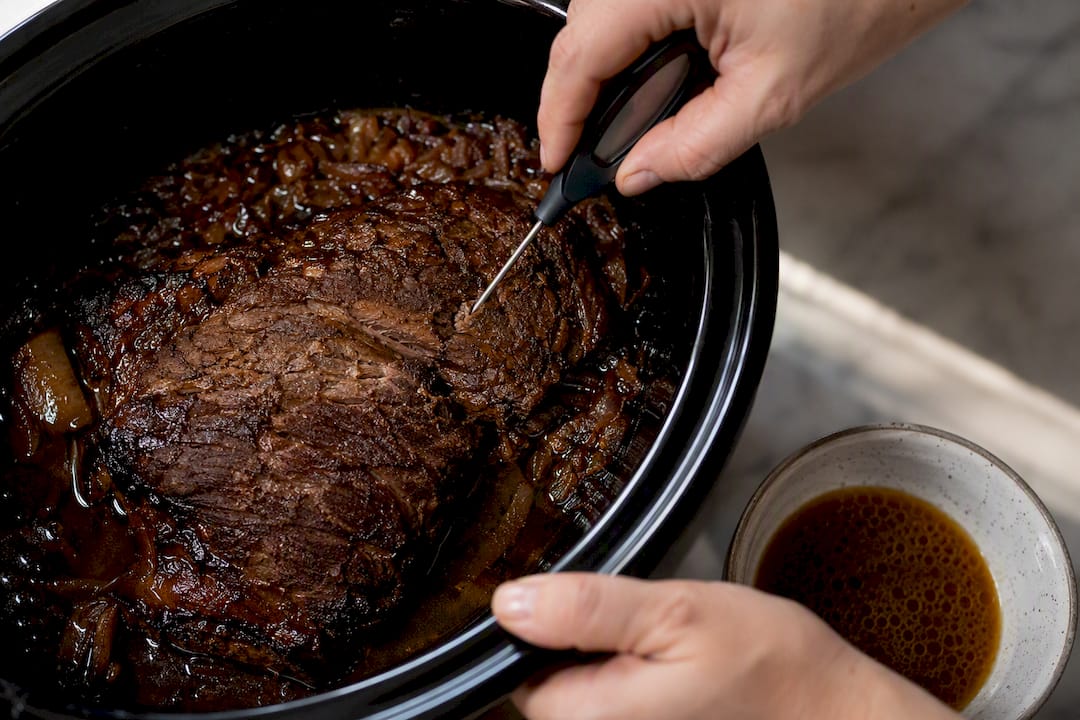
Fill your cooker between 50% and 75% of capacity, using 1/2 to 1 cup of liquid per pound of meat as your starting ratio. As for settings, Low and High reach the same final temperature, they just take different paths there. Low generally means 8 to 10 hours; High cuts that to 4 to 6. When your dish is close to done, probe the thickest part of the meat with a food thermometer and look for 165°F.
Why Do Slow Cooker Safety Rules Actually Matter?
Slow cookers operate between roughly 170°F and 280°F, a range low enough to tenderize tough cuts over hours but high enough to eventually kill bacteria, as long as you give it the chance.
That's exactly why thawing matters. A large frozen roast or chicken breast can sit in the "danger zone" for hours before the cooker's slow, gentle heat catches up, giving bacteria plenty of time to multiply. FSIS guidance is direct on this point: thaw meat in the refrigerator before it goes anywhere near the cooker.
A few more rules worth locking in:
- Refrigerate leftovers within two hours of cooking, never leave them sitting on the counter overnight.
- Reheat leftovers to 165°F on the stove or in the microwave, not just "warm."
- Keep the cooker 50% to 75% full, no more, so heat circulates and nothing bubbles over the rim.
Grab a basic food thermometer if you don't already own one. It's the cheapest insurance policy in your kitchen drawer.
What Should Beginners Cook (and What Should They Skip)?
Some ingredients were basically built for the slow cooker. Others fall apart, dry out, or turn to paste if you leave them in for six hours.
Reach for these:
- Chuck roast or other tougher, fattier cuts (the collagen breaks down into rich, silky texture)
- Pork shoulder
- Bone-in chicken thighs
- Soups, stews, and chili
- Dried or canned beans and hearty grains like barley
Skip or adapt these:
- Lean chicken breast, which dries out fast without enough fat or liquid
- Delicate fish, which disintegrates long before dinnertime
- Pasta, which turns to mush unless you add it in the last 20 minutes
- Dairy, which curdles if it cooks for hours instead of being stirred in during the final 30 to 60 minutes
Pro Tip: Add umami-rich ingredients like tomato paste, soy sauce, or Worcestershire sauce at the start, but save bright acids like lemon juice or vinegar and fresh herbs for the last few minutes. Hours of cooking mutes brightness, so a splash at the end wakes the whole dish back up.
Three Starter Recipes That Are Nearly Impossible to Mess Up
You don't need a cookbook's worth of recipes to feel confident. You need three that work every single time.
- Pot roast. Brown a 3 to 4 pound chuck roast if you have five extra minutes, then layer potatoes and carrots on the bottom, the roast on top, and pour in about 1.5 to 2 cups of broth. Cook 8 to 10 hours on Low or 4 to 6 on High, and check that the thickest part reaches a safe internal temperature before you shred or slice it.
- Pulled chicken. Boneless, skinless thighs are the most forgiving cut you can buy. Add them with a cup of barbecue sauce or salsa, cook 4 to 6 hours on Low, then shred with two forks and stir in a little extra sauce. This one is genuinely hard to ruin.
- Simple chili. Use canned beans instead of dried ones to skip the soaking step, and go lighter on liquid than you think you need since nothing evaporates in here. Brown your ground beef or turkey first for flavor, dump everything in, and cook 6 to 8 hours on Low. If it's thinner than you like at the end, stir in a cornstarch slurry and cook uncovered on High for 15 minutes.
Pro Tip: Pot roast and pulled chicken are the two recipes most consistently recommended for a first attempt, because they're nearly impossible to overcook and forgive almost any liquid mistake.
If you want a broader base of easy wins before you branch out, building basic kitchen skills alongside your slow cooker practice pays off fast.
How Do You Fix a Slow Cooker Meal That Went Wrong?
Watery sauce is the most common complaint, and it's almost always a liquid or thickening problem, not a cooking-time problem. Stir in a cornstarch slurry (1 tablespoon cornstarch mixed with 1 tablespoon cold water) during the last 15 to 20 minutes on High, or puree about 2 cups of the cooked vegetables and stir them back in for a thicker, richer body.
- Dry meat: switch to a fattier cut next time, or shred what you have and stir it back into the sauce to rehydrate.
- Undercooked vegetables: cut them smaller next time, or move them closer to the bottom where the heat concentrates.
- Constant lid-lifting: every peek can add 20 to 30 minutes to your total cook time because you're letting trapped steam and heat escape. Trust your timer and your thermometer instead of your eyes.
What Size Slow Cooker Should a Beginner Buy?
A 5 to 6 quart model fits most households and lines up neatly with the 50% to 75% fill guidance for a typical family-sized recipe. Bigger isn't better if you're cooking for one or two people, you'll just end up underfilling it and fighting uneven results.
Michigan State University Extension's guidance favors simplicity for anyone still learning the ropes: a basic manual model or a simple programmable one with just Low, High, and Warm settings.
- Skip the specialty modes (yogurt, sous vide, rice) until you've mastered the fundamentals.
- Look for a removable stoneware insert you can wash separately.
- Check that the lid seals well and the handles stay cool enough to grab safely.
- Dishwasher-safe parts save you real time on a Tuesday night.
Keeping Your Slow Cooker Clean and Working Longer
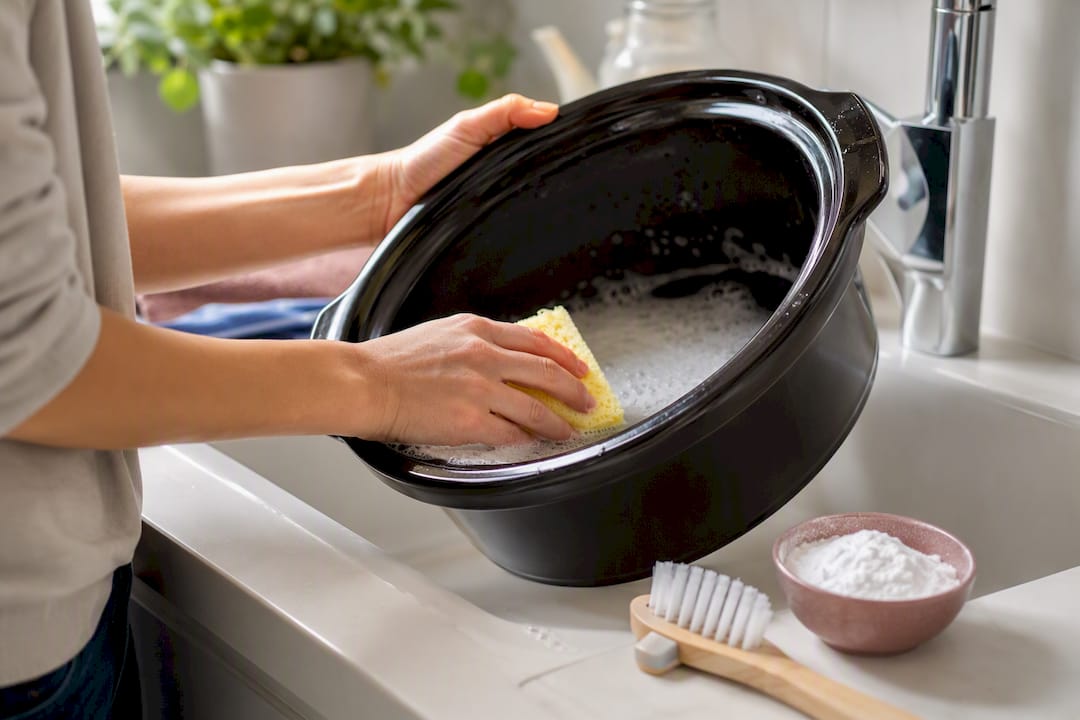
Most slow cooker inserts are ceramic or stoneware, and most are dishwasher-safe, but check your manual since a few brands recommend hand washing only. Either way, let the insert cool completely before you run cold water over it. A hot stoneware crock dropped into a cold sink can crack from the temperature shock, and that's an expensive mistake for something so avoidable.
For stuck-on food, skip the metal scouring pad. Soak the insert in warm, soapy water for 15 to 20 minutes first, then use a soft sponge or a nylon brush. Baked-on grease around the rim usually lifts with a paste of baking soda and water left to sit for a few minutes.
The base unit with the heating element should never go in water. Wipe it down with a damp cloth, and make sure it's completely dry before you store it or plug it back in.
A few habits keep your machine running well for years:
- Check the cord for fraying or damage every few months, especially if you store it by wrapping the cord tightly around the base.
- Store the lid slightly ajar or the unit uncovered between uses so it doesn't develop a musty smell.
- Avoid sudden temperature changes, letting the insert cool on the counter before refrigerating leftovers protects both the crock and your food.
Treat your slow cooker the way you'd treat any workhorse appliance. A little care after each use means it's still doing the heavy lifting years from now.
How Do You Adjust Cooking Times for Different Recipes?
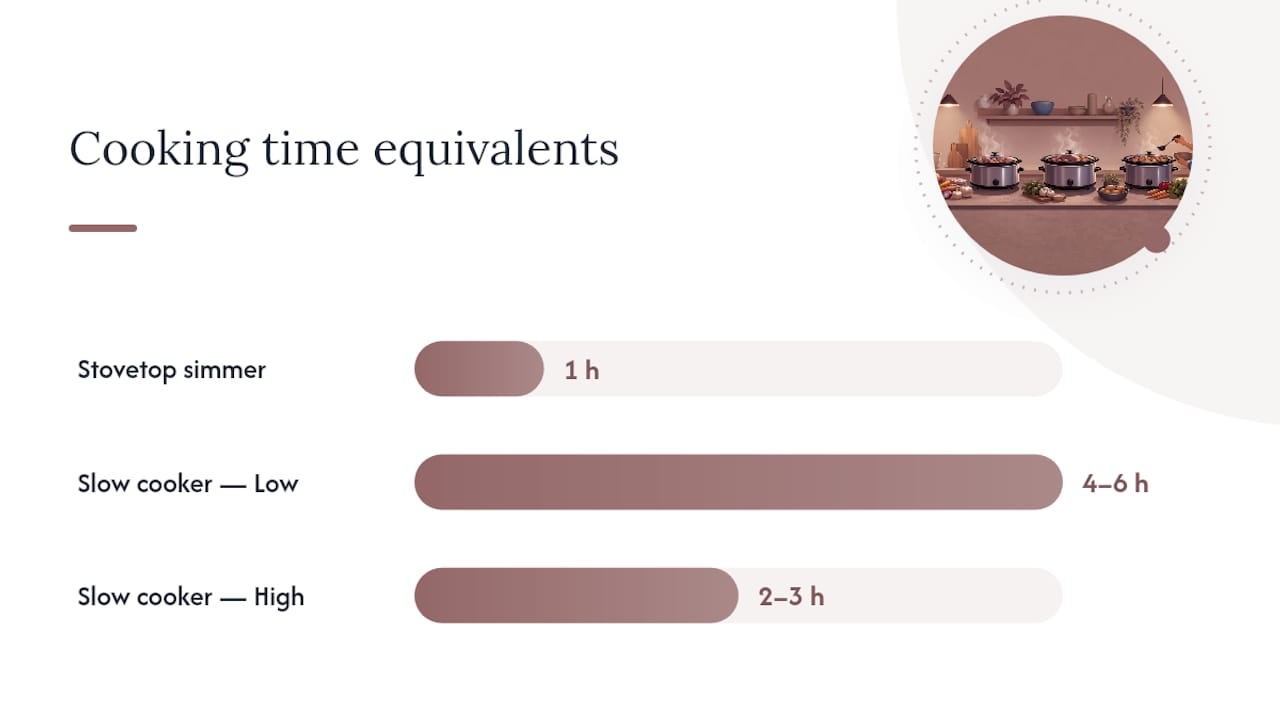
Most stovetop and oven recipes weren't written with a slow cooker in mind, which means the times printed on the box or in Grandma's handwritten card need translating. As a rough rule, one hour of active stovetop simmering equals about 4 to 6 hours on Low or 2 to 3 hours on High in a slow cooker.
Cut size changes the math too. Smaller, more uniform pieces cook faster and more evenly than one giant hunk of meat, so if a recipe calls for a whole roast but you're short on time, cubing it into 2 inch pieces can shave an hour or more off the total.
Altitude and cooker age play a role as well. Older slow cookers sometimes run cooler than new ones as heating elements wear down, so if your pot roast routinely needs an extra hour beyond what a recipe promises, that's normal for an older machine, not a sign you're doing something wrong.
The safest approach for any new recipe: start checking at the low end of the suggested time range with your food thermometer, then add time in 30 minute increments rather than guessing high and ending up with mush. Once you've made a dish two or three times, you'll know your specific machine's rhythm and can stop checking so often.
Is Slow Cooking Actually Better Than Other Methods?
Slow cooking wins on convenience in a way almost no other method can match. You load it in the morning, walk away for eight hours, and come home to dinner that's ready, no stirring, no watching, no risk of burning something while you're out running errands.
It also excels with tough, inexpensive cuts of meat. Chuck roast and pork shoulder would turn leathery on a grill or in a quick sauté, but hours of low, moist heat break down connective tissue into something tender and rich. That's a real cost advantage if you're feeding a family on a budget.
The tradeoffs are real too. You lose the browned, caramelized crust you'd get from a cast-iron skillet or an oven roast, unless you take the extra step of browning first. Texture control is looser overall, delicate proteins like fish or lean poultry breast simply don't belong in this method. And a slow cooker won't reduce a sauce the way an open stovetop pot will, which is exactly why the liquid ratio rules matter so much.
Think of it as a specialist tool, not a replacement for your whole kitchen. For tough cuts and hands-off dinners, it's hard to beat. For a quick seared steak or a crisp-skinned piece of salmon, reach for the stovetop instead.
A Simple Three-Step Plan to Build Slow Cooker Confidence
Every beginner burns something or ends up with soup that's too thin the first time. That's not failure, that's just the learning curve, and it evens out fast once you've got one win under your belt.
Here's the plan: pick one recipe this week, pot roast or pulled chicken are your best bets. Run it once, exactly as written, and pay attention to how your specific machine cooks. Next time, adjust the liquid or timing based on what you noticed. That's it, that's the whole system. The Starter Pack and weekly recipe drops are designed around this same idea: small, repeatable wins beat overwhelming ambition, making it easier to plan meals with services like Yumzi that simplify recipe saving and weekly dinner inspiration.
— Bill
Ready for More Than Just Pot Roast?
Once you've nailed your first pulled chicken, the real question becomes what's next, and that's exactly where a lot of beginners stall out. There are memberships designed to bridge the gap between "I can follow one recipe" and "I actually know how to cook." Instead of hunting for random recipes online and hoping they turn out, these programs offer a structured Starter Pack, weekly recipe drops, and grocery checklists that take the guesswork out of shopping.

What makes membership different from just googling another recipe is the support built around it. When your chili turns out too watery or your roast comes out tougher than expected, chef support means you've got someone to ask, not just another forum thread with conflicting advice. That's the kind of ongoing feedback loop that turns "I made one good meal" into "I actually know how to cook now."
If you're ready to stop guessing and start building real skills, check out the AdultingintheKitchen membership and see what your first week of recipe drops could look like.
Where to Learn More
For food safety specifics, the USDA's slow cooker guidance and FSIS thawing rules are the authoritative sources. For technique, Food & Wine's slow cooker rules offer solid flavor guidance.
Sources
- Cook slow, save time: Four important slow cooker food safety tips — USDA
- 7 ways to make slow cooker meals better than ever — Perdue
- Slow cookers and food safety — FSIS (USDA)