Start with 12 spices and you can cook 90% of what you actually crave: kosher salt, black peppercorns, garlic powder, onion powder, smoked or sweet paprika, ground cumin, dried oregano, red pepper flakes (or cayenne), cinnamon, ground ginger, bay leaves, and one all-purpose blend like Italian seasoning or chili powder. That's your starter spice rack essentials list, and it works because it covers salty, savory, smoky, spicy, and sweet without asking you to buy 30 jars you'll use once and forget.
This list is intentionally small. A core of 8 to 12 versatile spices hits the sweet spot between "I can actually season my food" and "half my jars are going stale before I finish them." You don't need a wall of exotic jars to cook well. You need the right dozen, used often.
Here's your move: buy these first, in small containers or from the bulk bin at your grocery store. You're building a working kitchen tool, not a spice museum.
- Kosher salt (and black peppercorns, its constant partner)
- Garlic powder and onion powder
- Smoked or sweet paprika
- Ground cumin
- Dried oregano
- Red pepper flakes or cayenne
- Cinnamon
- Ground ginger
- Bay leaves
- One blend: Italian seasoning or chili powder
Key Takeaways
A starter spice rack of 12 versatile essentials, bought in small quantities and stored away from heat and light, covers most everyday cooking without waste or buyer's remorse.
| Point | Details |
|---|---|
| Start with 12 spices | Salt, pepper, garlic powder, onion powder, paprika, cumin, oregano, red pepper flakes, cinnamon, ginger, bay leaves, and one blend cover most cooking. |
| Buy whole when practical | Peppercorns and cumin seed last longer whole; grind fresh for noticeably better flavor. |
| Store away from heat and light | A cool, dark, airtight cabinet preserves potency far longer than a rack next to the stove. |
| Watch shelf life | Whole spices last 2 to 4 years; ground spices hold flavor for roughly 6 to 24 months. |
| Season in stages | Toast or bloom spices early in cooking, then taste and adjust before adding more salt or heat. |
Table of Contents
- What These Essential Spices Taste Like and How to Use Them
- Buying Spices Smart: Whole vs. Ground, and Where to Shop
- Storage and Shelf Life: Keeping Your Spices Fresh
- Setting Up a Spice Rack That Actually Works
- Spice Combos That Make Cooking Easier Right Away
- Why Learning to Cook with Spices Changes Everything
- The Overrated Spice Kit and What Beginners Should Do Instead
- Sources
What These Essential Spices Taste Like and How to Use Them
Knowing a spice's name doesn't help you if you don't know what to do with it. Here's what each one brings to the table, and where you'll actually reach for it.
-
Kosher salt. This is your foundation, full stop. It's less salty by volume than table salt and easier to pinch and control, which matters when you're still learning how much is "enough." Use it in everything: pasta water, roasted vegetables, scrambled eggs, marinades. Buy the coarse, flaky kind, not the iodized shaker.
-
Black peppercorns. Sharp, a little woody, with real bite. Pre-ground pepper loses its punch fast, so a $10 pepper grinder pays for itself within weeks. Use it on literally anything savory: eggs, steak, roasted potatoes, salad dressing.
-
Garlic powder. Mellower and sweeter than fresh garlic, with none of the chopping. It dissolves into sauces, rubs, and marinades where fresh cloves would burn or clump. Great on popcorn, roasted chicken, and homemade fries.
-
Onion powder. Works as garlic powder's quiet partner, adding a savory backbone to soups, dry rubs, and burger mix. It's the ingredient that makes a dish taste "seasoned" without anyone identifying why.
-
Smoked or sweet paprika. Smoked paprika brings a campfire depth that transforms roasted potatoes, eggs, and stews. Sweet paprika is milder and mostly adds color and gentle warmth to deviled eggs, goulash, and chicken. Either works, but smoked earns its place first for versatility.
-
Ground cumin. Earthy, slightly nutty, a little bitter if overdone. This is the backbone of tacos, chili, curries, and roasted carrots. A little goes a long way, so start with a half teaspoon and build up.
-
Dried oregano. Pungent and slightly bitter, oregano is the workhorse of Italian and Greek cooking. Toss it into tomato sauce, pizza, roasted vegetables, or a quick vinaigrette. Rub dried leaves between your fingers before adding them to wake up the oils.
-
Red pepper flakes or cayenne. Flakes give texture and a slow burn; cayenne is finer and hits faster. Both work on pizza, pasta, stir fries, and eggs. Start with a pinch. You can always add more, but you can't take heat back out.
-
Cinnamon. Warm and sweet, cinnamon isn't just for baking. It rounds out chili, adds depth to Moroccan and Indian dishes, and makes oatmeal taste like dessert. Ground is fine here since you'll use it often enough to keep it fresh.
-
Ground ginger. Sharp, warm, a little peppery. It's essential in baking (gingerbread, spice cake) but also brightens stir fries and marinades when fresh ginger isn't on hand. Note that fresh and ground ginger are not interchangeable one-to-one, so adjust to taste.
-
Bay leaves. These don't get eaten. They simmer in soups, stews, and rice to add a subtle, herbal backdrop, then get fished out before serving. One or two leaves per pot is plenty.
-
Italian seasoning or chili powder. Blends are the beginner's shortcut. One jar of Italian seasoning (oregano, basil, thyme, rosemary) covers most Italian-American cooking. Chili powder (a blend, not straight ground chiles) does the same for Tex-Mex. Blends like these let you season a whole dish with one shake instead of five.
Pro Tip: Toast whole cumin or coriander seeds in a dry pan for 60 seconds before grinding. The heat releases oils that pre-ground versions lose weeks ago, and the flavor difference is obvious the first time you try it.
Once these 12 are working for you, expand into baking-specific spices: nutmeg, allspice, and cloves for holiday baking, plus turmeric and coriander if you're cooking more global dishes. Those are worth owning, just not on day one.
Buying Spices Smart: Whole vs. Ground, and Where to Shop
Whole spices last longer because their oils stay locked inside the seed or pod until you grind them. Whole spices retain their flavor compounds far longer than pre-ground versions, which start losing potency the moment they're cracked open. Peppercorns, cumin seed, and coriander seed are worth buying whole if you own even a basic $10 grinder or mortar and pestle. Paprika, cinnamon, garlic powder, and onion powder are fine pre-ground since grinding them yourself isn't practical.
A simple rule: buy what you'll use within 6 to 18 months. Ground spices lose punch faster, so buy small jars of anything you use rarely. Whole spices hold up longer, so buying a bigger bag of whole peppercorns or cumin seed makes sense if you're grinding fresh each time.
Culinary editors generally recommend buying spices based on how often you'll actually cook with them rather than grabbing a pre-packaged starter kit. Kits look convenient, but they often include jars you'll never open twice, and the "convenience" costs you freezer-shelf space and stale flavor down the line.
Where you buy matters less than how fast the store moves inventory:
- Bulk bins at co-ops or health food stores let you buy exactly the amount you need, often for less money per ounce.
- Ethnic grocers (Middle Eastern, Indian, Latin American markets) tend to sell fresher, higher-turnover spices at lower prices than supermarket brand names.
- Supermarkets work fine for common essentials, but check the "packed on" date if listed. High turnover matters more than the label on the jar.
- Online spice purveyors are worth it for specialty items you can't find locally, though shipping costs add up if you're only buying one or two jars.
Storage and Shelf Life: Keeping Your Spices Fresh
Spices have three enemies: heat, light, and moisture. Store them in a cool, dark, dry cabinet or drawer in airtight containers, away from the stove. That cute rack mounted next to your range top is actually cooking your spices every time you turn on a burner.
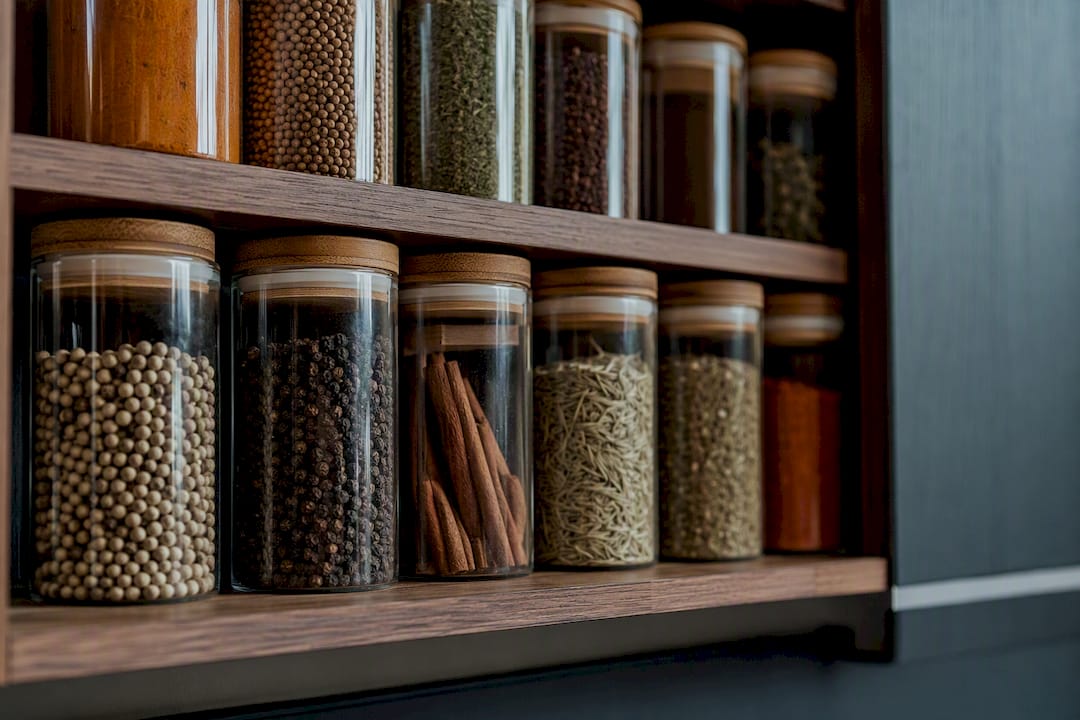
Shelf life depends on form. Whole spices (peppercorns, cumin seed, cinnamon sticks) last a few years. Ground spices (paprika, cinnamon, cumin) hold their punch for up to a couple of years. Dried herbs like oregano and thyme sit in the middle, usually good for about a year before they lose their flavor.
Here's the fast way to check if a spice is done:
- Smell it. If it smells like almost nothing, it's dead weight. Replace it.
- Look at the color. Faded, dull color usually means faded flavor too.
- Rub a pinch between your fingers. Fresh spices release a noticeable aroma; stale ones barely register.
If a spice fails the test, don't force it into another six months of cooking. Toss it, repack the rest into a labeled airtight jar with the date you opened it, and rotate your stock so older jars get used first.
Pro Tip: Write the purchase date on masking tape and stick it to the jar lid. It takes ten seconds and saves you from guessing whether that cumin has been sitting there since last spring or since two Thanksgivings ago.
Setting Up a Spice Rack That Actually Works
Where you put your spices determines whether you use them or forget them. Three setups work well for beginners, each with trade-offs.
A tiered countertop rack puts everything at eye level, which is great for quick grabs mid-recipe but exposes jars to light and stove heat if placed too close to the range. A shallow drawer with uniform jars keeps spices dark and cool, ideal for freshness, though it takes a little more effort to see labels from above. A wall-mounted rail with magnetic tins saves counter space in small kitchens but works best away from direct sunlight or a hot stove.
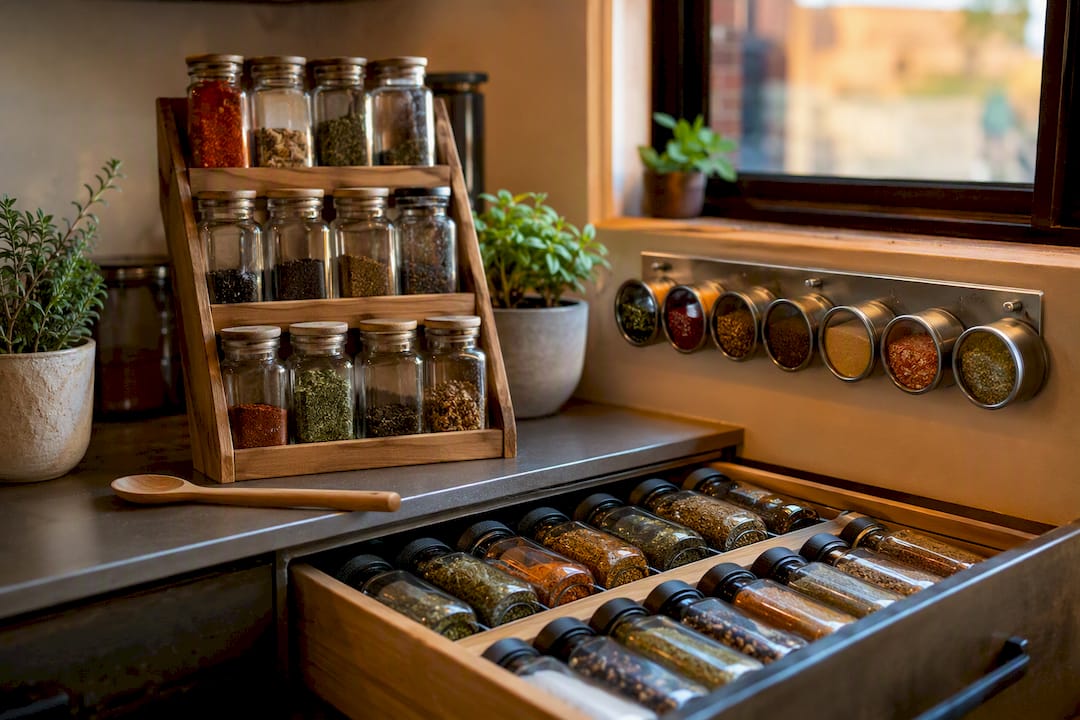
Whatever setup you choose, label every jar with its contents and the date opened, and arrange by how often you use them rather than alphabetically. Most-used jars (salt, pepper, garlic powder) go front and center; bay leaves and specialty spices can sit in back.
Quick shopping checklist:
- Uniform 4-ounce jars (glass holds up better than plastic over time)
- A label maker or masking tape and a marker
- A basic pepper grinder or microplane if you're buying any whole spices
Spice Combos That Make Cooking Easier Right Away
You don't need to memorize flavor theory to season well. Just know a few combos and when to add them.
- Tex-Mex: cumin, chili powder, garlic powder, a pinch of cayenne. Great on tacos, beans, and roasted vegetables.
- Italian: oregano, garlic powder, red pepper flakes. Stir into tomato sauce or sprinkle on pizza.
- Curry bridge: cumin, ginger, a little cinnamon. Not a real curry, but a fast approximation for stir fries and lentils.
- BBQ rub: paprika, garlic powder, onion powder, black pepper, a touch of cayenne. Rub onto chicken or pork before roasting.
- Warm baking trio: cinnamon, ginger, a pinch of nutmeg (once you add it). Oatmeal, muffins, roasted sweet potatoes.
- Pizza and pasta topper: oregano, red pepper flakes, garlic powder.
Toast dry spices in a pan or bloom them in warm oil at the start of cooking for deeper flavor; add fresh herbs and delicate spices near the end so they don't cook off. Start with a pinch, taste, then adjust, especially with salt and pepper, since it's easy to overdo both before the dish is even finished.
Pro Tip: Season in stages and taste as you go instead of dumping everything in at once. You can always add more spice, but you can't remove it once it's in the pot.
Why Learning to Cook with Spices Changes Everything
Learning your spice rack essentials by heart isn't about memorizing a list. It's about tasting a dish you cooked and realizing you know exactly why it worked. That's the whole idea behind Food Flavor Profiles: A Home Cook's Guide, which walks through how spices build the flavor combinations you already crave from takeout.
AdultingintheKitchen built its entire membership around that same principle: teaching beginners what to actually buy, how to set up a kitchen that works, and how to turn a handful of ingredients into a meal you're proud of. Members get:
- A Starter Pack that maps directly to a first spice rack and pantry setup
- Weekly recipe drops with 5 new recipes that put your spices to immediate use
- Grocery store checklists so you're not guessing in the seasoning aisle
- Real chef support when a recipe doesn't turn out the way you expected
If you want structured help beyond a list of jars, AdultingintheKitchen's membership walks you through the whole kitchen, not just the spice rack.
The Overrated Spice Kit and What Beginners Should Do Instead
Most beginners get talked into buying too much, too fast. A 20-jar starter kit sounds thorough, but half those jars sit untouched until they're flavorless, and by then you've wasted money twice: once buying them, once replacing them. The research on this is consistent. A small, focused core covers most home cooking, and the spices you'll actually use are the ones tied to food you already crave, not the ones that looked impressive on a shelf.
The advice to "buy whole and grind fresh" gets repeated everywhere, but it's overrated for half your rack. Garlic powder, onion powder, and paprika don't benefit from a grinder. Save that effort for peppercorns and cumin, where the difference is obvious.
What matters most is picking spices tied to dishes you cook weekly, storing them somewhere cool and dark, and replacing the ones that have gone flat. Skip the 20-jar kit. Build slowly, cook often, and let your own kitchen tell you what to buy next.
Sources
- Must-have spices for your kitchen — Bon Appétit
- These are the 12 essential spices every kitchen should have — Food & Wine
- Must-have essential spices for every kitchen — Betty Crocker