Build your work lunch around one simple template: a protein, a fiber-rich carbohydrate, and produce. Nutrition professionals point to this exact protein + carb + produce formula because it keeps you full past 3 p.m. and costs less than takeout. Three picks to start this week: a reheatable lentil soup, a cold sesame noodle bowl that needs zero microwave time, and a 10-minute black bean and quinoa bowl.
- Reheatable: Lentil soup, portioned into single servings
- No-microwave: Cold sesame noodle bowl with edamame
- 10-minute assemble: Black bean and quinoa bowl
Pro Tip: Pick one lunch from each category and rotate them weekly. You'll never run out of options, and you'll never have to think hard on a Tuesday morning.
These three cover almost every workday scenario, whether you've got a full kitchen at the office or nothing but a desk drawer.
Key Takeaways
Work lunches succeed long term when they follow the protein, fiber-rich carbohydrate, and produce template and rely on batched components instead of daily cooking.
| Point | Details |
|---|---|
| Use the core template | Build every lunch around a protein, a fiber-rich carb, and produce for lasting fullness. |
| Batch five components weekly | Cook one protein, one grain, two roasted veggies, and one raw veggie to mix all week. |
| Match format to storage life | Soups and burritos freeze well; assembled grain bowls should stay fridge-only. |
| Follow food safety timelines | Keep prepped lunches in the fridge 3 to 4 days and never leave food out over 2 hours. |
| Get a structured weekly system | AdultingintheKitchen's Starter Pack and weekly recipe drops remove the guesswork from batch prep. |
Table of Contents
- 12 Quick Work Lunch Ideas With Storage and Reheat Notes
- Make-Ahead Meals That Scale for Days, Not Just One Lunch
- Cold Lunches for Desks Without a Microwave
- 10-Minute Lunches You Can Throw Together Fast
- Packing, Storage, and Reheating: Safety and Cost Guidance
- Your Weekly Build-a-Bowl System
- Snacks and Sides That Round Out Your Lunch
- Realistic Habits That Actually Stick
- A Faster Way to Learn This System for Good
- Frequently Asked Questions
- Sources
12 Quick Work Lunch Ideas With Storage and Reheat Notes
You don't need 12 new recipes. You need 12 reliable options you can rotate so lunch stops being a daily decision. Here's a working list, organized so you can grab what fits your morning.
Reheat-friendly mains:
- Turkey chili — freezes well; reheats in 2 minutes in a microwave-safe container; prep time 25 minutes for a batch of four.
- Vegetarian lentil soup — keeps 4 days in the fridge; reheat stovetop or microwave; 20 minutes prep.
- Chicken and rice grain bowl — reheats evenly if rice is slightly undercooked initially; 15 minutes using pre-cooked chicken.
- Beef and broccoli stir-fry over rice — reheats best with a splash of water to prevent dryness; 20 minutes prep.
Cold or no-heat options:
- Chickpea salad sandwich — mash chickpeas with mustard and celery; keeps 3 days refrigerated; no reheat needed.
- Mediterranean grain bowl (farro, cucumber, feta, olives) — tastes better cold; 15 minutes to assemble from prepped components.
- Soba noodle salad with peanut sauce (gluten-free if using buckwheat soba) — pack sauce separately; holds 3 days.
- Caprese wrap — keep tomatoes separate until lunchtime to avoid a soggy wrap.
10-minute assembly:
- Black bean and quinoa bowl — delivers roughly 20 grams of protein plus solid magnesium and potassium, built from pre-cooked grains in under 10 minutes.
- Rotisserie chicken and hummus wrap — 5 minutes flat if the chicken is already shredded.
- Tuna and white bean salad (dairy-free) — canned tuna, canned beans, olive oil, lemon; no cooking required.
- Leftover roasted vegetable and grain bowl — repurpose last night's sheet-pan dinner; check out sheet pan dinner ideas that produce lunch-ready leftovers by design.
Pro Tip: Keep one vegan or vegetarian option and one gluten-free option in permanent rotation. It saves you from scrambling when a coworker's dietary need suddenly becomes your problem at the potluck.
Make-Ahead Meals That Scale for Days, Not Just One Lunch
Batch cooking only works if you pick formats that actually hold up. Soups, grain bowls, and casseroles behave differently in storage, and knowing the difference saves you from a freezer full of mystery containers.
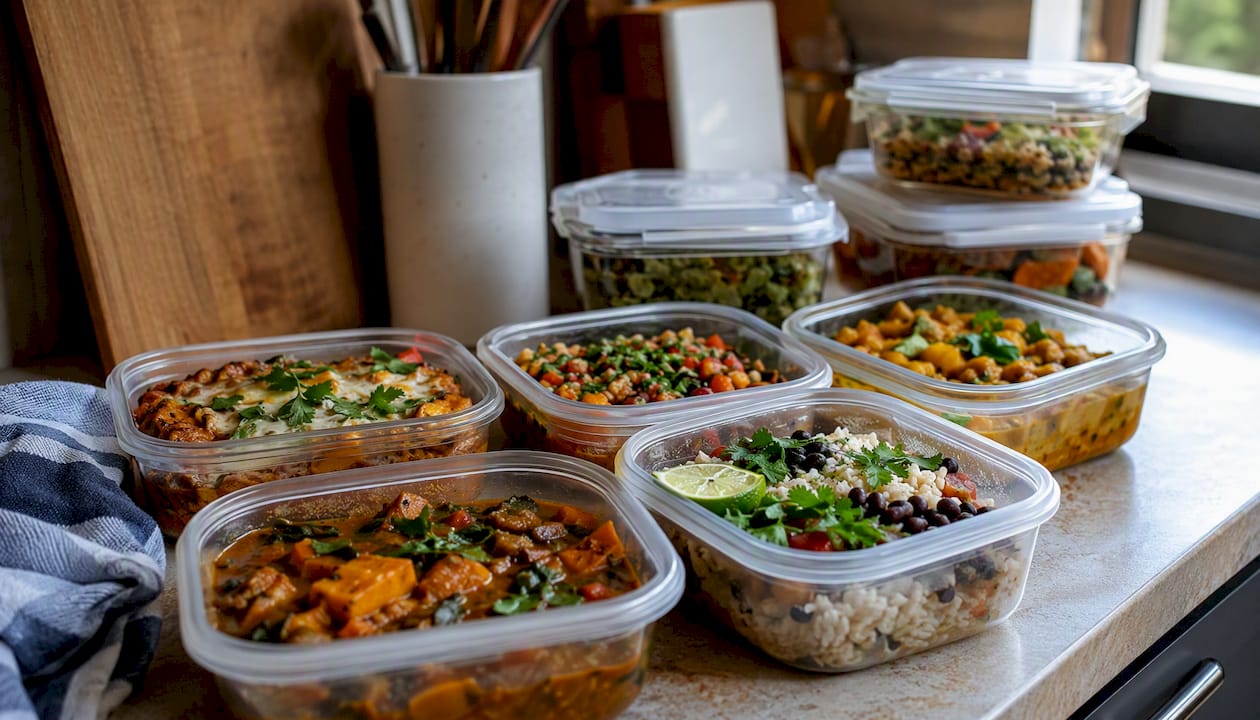
Soups and burritos freeze the best because liquid and starch hold their texture. Grain bowls with fresh vegetables lose their crunch in the freezer, so keep those as fridge-only, prep-once-eat-for-days meals instead. A leftover-rice soup is a smart way to stretch dinner into three more lunches; this leftover rice soup guide walks through three versions that reheat cleanly.
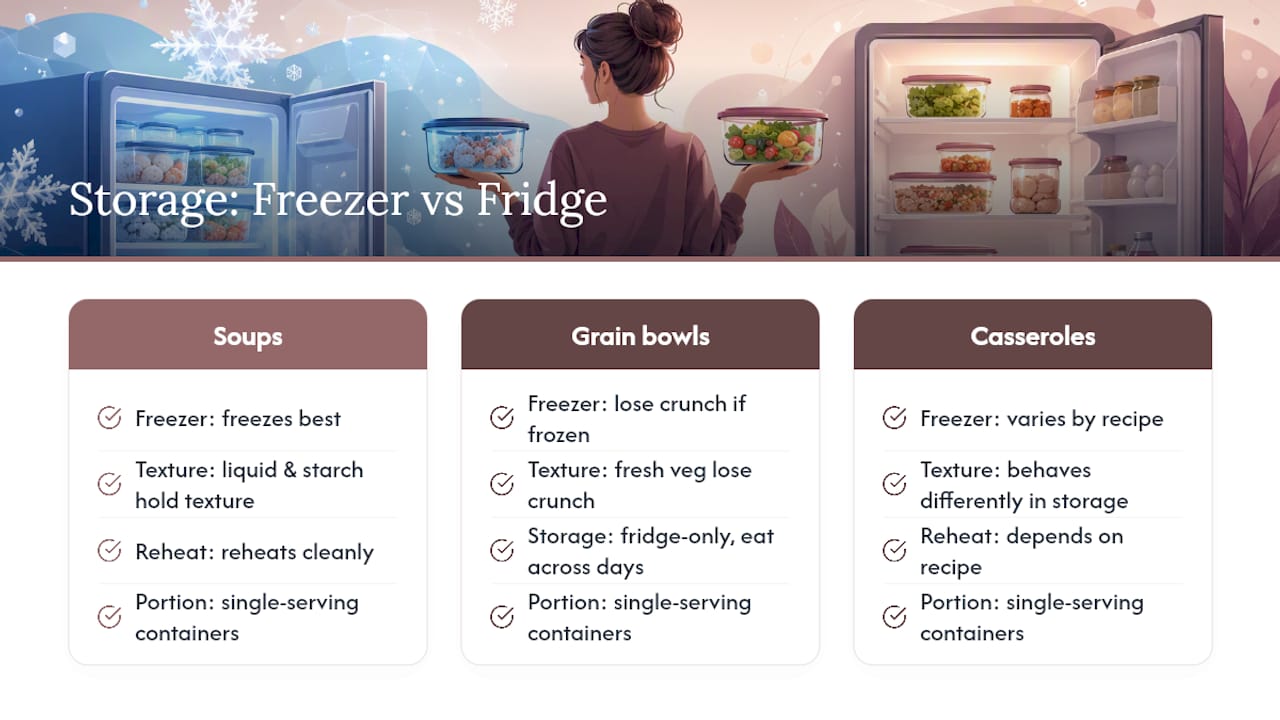
Pro Tip: Portion into single-serving containers the moment food cools, not the moment you feel like dealing with dishes. A simple rule: if a recipe makes 8 servings, that's 8 separate containers, not one big tub you'll dig through with a fork all week.
Cold Lunches for Desks Without a Microwave
No microwave doesn't mean no options. Bento-style boxes with compartments let you separate wet and dry ingredients so nothing gets soggy by noon. Pack hard-boiled eggs, hard cheeses, canned fish, cooked chickpeas, or cured meats alongside an ice pack, a strategy that works well when a fridge isn't available either. Chilled grain bowls, pasta salads, and marinated bean salads often taste better after sitting overnight, since the flavors have time to settle.
- Layer dressing at the bottom of a jar or container, greens on top, to prevent wilting.
- Pack tomatoes, cucumbers, and other watery vegetables in a separate small container.
- Use a thermos for anything meant to stay cold past lunchtime.
Pro Tip: Toast bread the night before if you're making a sandwich for the next day. It creates a slight barrier that resists sogginess far better than plain bread.
10-Minute Lunches You Can Throw Together Fast
Some mornings, 10 minutes is all you get. Lean on shortcuts: rotisserie chicken, canned beans, pre-cooked grains, frozen vegetables, and pre-washed greens do most of the work for you.
- Grab a container and add a base of pre-cooked rice or quinoa.
- Top with shredded rotisserie chicken or drained canned beans.
- Add a handful of frozen (thawed) or fresh vegetables.
- Drizzle a pre-portioned dressing or sauce on top or pack it separately.
Night-before checklist: wash greens, portion dressings into small containers, cook any grain that needs more than 5 minutes. Morning-of checklist: assemble everything into a multi-compartment container, add protein, grab an ice pack if needed.
Reheat only the grain or protein portion if the meal includes raw greens, so you're not microwaving lettuce into a wilted mess.
Packing, Storage, and Reheating: Safety and Cost Guidance
Most prepped lunches stay safe in the fridge for 3 to 4 days. Anything headed for the freezer holds for 1 to 3 months, depending on the format, and should thaw in the fridge overnight before reheating rather than sitting on a counter all morning.
Statistic Callout: A balanced lunch built around protein, fiber-rich carbs, and produce is the framework nutrition professionals recommend for keeping meals filling without overcomplicating the shopping list.
Statistic Callout: Sticking to staples with long shelf lives like dried beans, rice, and frozen vegetables, then reusing them across multiple lunches, is one of the most reliable ways to cut your weekly grocery cost.
- Never leave a packed lunch at room temperature for more than 2 hours.
- Use an insulated bag with an ice pack anytime your workplace lacks a fridge.
- Reheat leftovers to steaming hot all the way through, not just warm on the edges.
- Buy dried beans and rice in bulk. They're cheaper per serving than almost anything canned or fresh.
Your Weekly Build-a-Bowl System
Cooking five different meals a week burns you out fast. Batch five components instead, and recombine them into different lunches all week. This build-and-recombine approach is what separates people who meal prep successfully from people who quit after two weeks.
- Roast one protein (chicken thighs, tofu, or chickpeas).
- Cook one grain (rice, farro, or quinoa) in bulk.
- Roast two vegetables (whatever's cheapest that week).
- Prep one raw vegetable (shredded cabbage or carrots hold up well).
- Make two dressings so you're not eating the same bowl five days straight.
Sunday shopping list: one protein, one grain, four vegetables, ingredients for two dressings. Total prep time runs about 90 minutes for a full week of lunches.
Pro Tip: Rotate your dressings and toppings, not your whole recipe. A lemon tahini dressing one week and a spicy peanut sauce the next turns the same base ingredients into two completely different meals. A cooking planner can help you map this out so Sunday prep doesn't eat your whole afternoon.
Snacks and Sides That Round Out Your Lunch
A main dish isn't always enough to get you through a 3 p.m. slump. Pair your lunch with something that adds crunch, fiber, or a little extra protein without much effort.
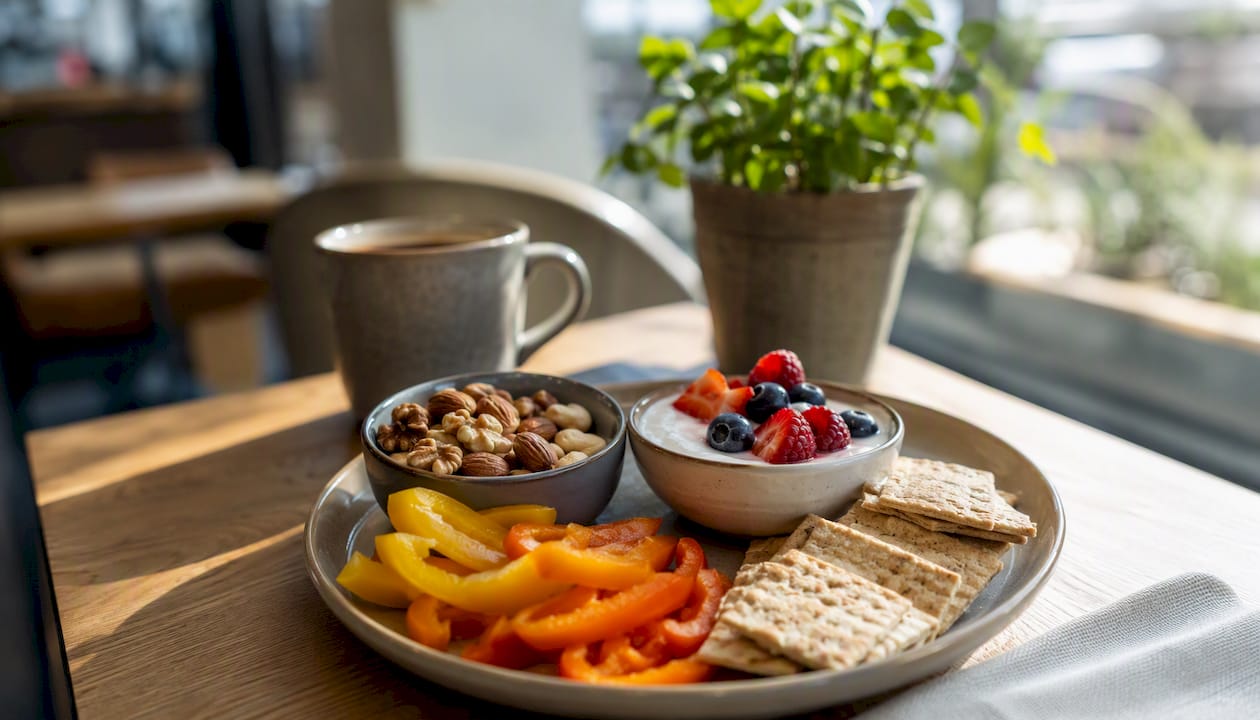
Fresh fruit, baby carrots with hummus, roasted chickpeas, or a small handful of nuts all travel well and need zero prep beyond portioning. Greek yogurt with a drizzle of honey works as a light side if you have fridge access, while individual nut-butter packets or whole-grain crackers hold up fine without one. If you're trying to skip the vending machine altogether, healthier swaps for junk food cravings are worth keeping in a desk drawer for the afternoons when a granola bar just won't cut it.
Keep a small stash of shelf-stable backups at your desk: crackers, a jar of nut butter, dried fruit. These aren't meant to replace lunch, but they'll save you from a $15 delivery order on the day your morning falls apart.
Realistic Habits That Actually Stick
Most people don't fail at meal prep because they lack recipes. They fail because they try to reinvent lunch every single week. Pick two lunches you'll repeat, keep an emergency stash at your desk, and block off 60 to 90 minutes on a weekend for batch cooking. That's it.
Pro Tip: When you're bored of a recipe, swap one ingredient instead of hunting for a brand-new one. Swap chicken for chickpeas, rice for farro. The system stays the same; only the flavor changes.
A Faster Way to Learn This System for Good
Figuring out which proteins hold up in the fridge, which grains freeze well, and how to build a week of lunches from five batched components takes real trial and error, usually a few wasted groceries along the way. AdultingintheKitchen skips that guesswork with a Starter Pack, weekly recipe drops, and grocery checklists built around exactly this kind of batch cooking, plus real chef support when your lentil soup turns out watery or your grain bowl needs a flavor fix. Instead of piecing together lunch strategy from scattered blog posts, you get a structured weekly system delivered to you, with someone to ask when a recipe doesn't go as planned. If you're ready to stop guessing your way through Sunday prep, check out the Adulting in the Kitchen Starter Pack and get your first set of recipes and checklists this week.
Frequently Asked Questions
What are some easy work lunch ideas that don't need reheating? Chickpea salad sandwiches, Mediterranean grain bowls, and soba noodle salads with the dressing packed separately all taste good cold and travel well.
How long can a packed lunch sit in the fridge before it's unsafe? Most prepped lunches stay safe for 3 to 4 days when refrigerated, and freezer-friendly formats like soup or burritos last 1 to 3 months.
What's a quick lunch idea for someone with only 10 minutes? A black bean and quinoa bowl comes together in under 10 minutes and delivers around 20 grams of protein using pre-cooked grains and canned beans.
How do I keep meal prep from getting boring? Batch a small set of components (one protein, one grain, a couple of vegetables) and rotate two or three dressings so the same base ingredients taste different each day.
What should I pack if I don't have access to a microwave or fridge? Bento-style boxes with hard-boiled eggs, hard cheeses, cured meats, or canned fish paired with an ice pack keep food safe and satisfying without any appliances.
Sources
- Create your plate | BWH Nutrition and Wellness Hub
- HH25_RecipeCard_Black-Bean-Quinoa-Bowl.pdf
- 25 Lunch Ideas for Work (No Microwave or Fridge Needed!) – Instacart
- 21 Delicious Lunch Ideas You Can Prep Once and Eat for Days | The Kitchn
- Cheap healthy lunch ideas for work – EatingWell
- Healthy On the Go Packable Lunch Ideas | OXO