Three moves make budget cooking work: plan meals that share ingredients, stretch every protein into two or three dishes, and batch-cook once instead of scrambling nightly. Planning alone can cut grocery spending by 20 to 30 percent, and the USDA Thrifty Food Plan puts a realistic weekly floor at $60 to $75 for one adult. Tonight, write a one-page plan and check what's already in your pantry before you buy anything else.
TL;DR:
- Planning meals that share ingredients and batch-cooking can reduce weekly grocery costs by up to 30 percent, helping stay within realistic budgets like $60 to $75.
- Focus on anchor proteins, quick assemblies, and use-it-up nights to maximize ingredient overlap and minimize shopping trips or waste.
- Comparing unit prices regularly and choosing store brands for staples can save significant money, especially when combined with weekly ad scans and bulk buying for non-perishables.
- Stocking basic pantry staples such as rice, dried beans, eggs, canned tomatoes, and frozen vegetables enables preparing diverse, affordable meals without frequent grocery runs.
- Applying cost-effective cooking techniques like braising, roasting, staged seasoning, and batch cooking improves flavor and value of inexpensive ingredients.
Table of Contents
- 10 Budget Cooking Tips You Can Use This Week
- How Do You Build a Weekly Meal Plan That Saves Money?
- What's the Smartest Way to Shop for Cheap Groceries?
- What Pantry Staples Should Every Budget Cook Stock?
- Which Cooking Techniques Make Cheap Ingredients Taste Better?
- How Do You Store Food to Waste Less and Spend Less?
- What Does a Sample Budget Week of Meals Look Like?
- How Bill and AdultingintheKitchen Teach These Habits
- A Candid Note on Realistic Progress
- Cook Like You Mean It, Without the Guesswork
- Primary Sources and Further Reading
- Sources
- FAQ
10 Budget Cooking Tips You Can Use This Week
You don't need a full system overhaul to start saving. These moves work whether you're feeding yourself or a whole household, and most take less time than scrolling a delivery app.
- Write a one-page meal plan. Fifteen minutes on paper prevents the $40 "what's for dinner" grocery run driven by hunger and panic.
- Shop the center aisles first. Rice, beans, oats, and pasta anchor cheap meals and rarely spoil.
- Buy frozen vegetables over fresh when you're not cooking that day. Frozen produce holds nutrients just as well and won't rot in the crisper drawer, per Harvard's nutrition guidance.
- Pick one versatile protein for the week. A whole chicken or a bag of dried lentils can anchor four different dinners.
- Batch-cook a pot of rice or grains on Sunday. One cooking session, five nights of side dishes.
- Compare unit price, not shelf price. The bigger bag isn't always cheaper per ounce.
- Choose store brands for pantry staples. Canned tomatoes and dried beans taste nearly identical to name brands at a fraction of the cost.
- Plan one "use-it-up" night per week. Turn wilting vegetables and odd leftovers into a stir-fry or soup before they hit the trash.
- Check the weekly ad before you shop, not after. Five minutes of scanning can reshape your whole menu around what's discounted.
- Cook double portions on busy nights. Tomorrow's lunch is already done.
Small habits compound fast. Miss one week and you're back to convenience spending; stack a few of these consistently and the savings show up on the receipt.
How Do You Build a Weekly Meal Plan That Saves Money?
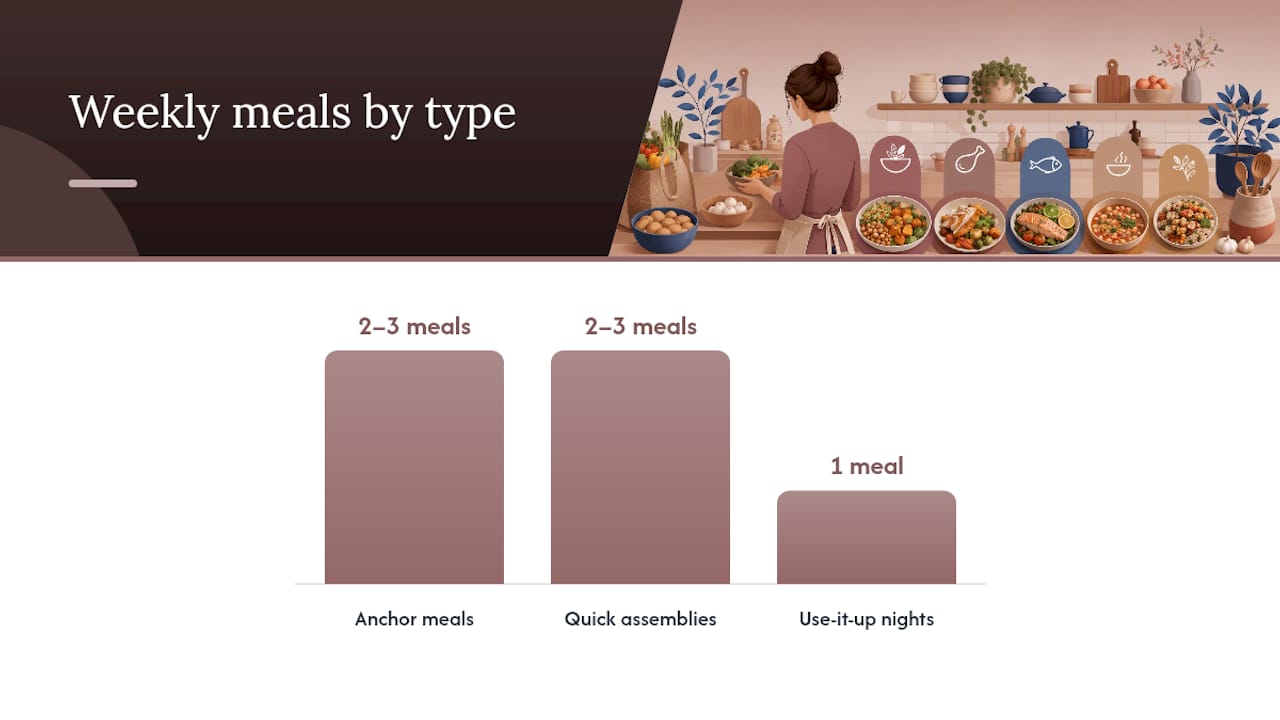
The simplest planning system chefs use on tight budgets breaks the week into three meal types instead of seven separate recipes. This is the framework behind most working-budget meal planning, and it's the reason planners spend less without eating the same thing every night.
- Anchor meals (2 to 3 per week): a roasted chicken, a pot of chili, a tray of baked lentils. These take the most effort but generate the most leftovers.
- Quick assemblies (2 to 3 per week): grain bowls, tacos, or fried rice built from whatever's left of the anchor meal plus pantry staples.
- Use-it-up nights (1 per week): whatever vegetables, bread ends, or half-used cans need to disappear before they spoil.
The math behind this is simple but easy to miss. One roasted chicken gives you a dinner, then shredded meat for tacos the next night, then a stock simmered from the bones for soup on night four. Three to four meals, one shopping trip, one protein purchase.
To build your plan, sit down for 15 to 20 minutes with a blank sheet. List your anchor proteins first, then brainstorm two quick assemblies that reuse them, then look at what's aging in your fridge for the use-it-up slot. Write your grocery list only after the plan exists, not before. Shopping without a plan is how you end up with three bags of spinach and no dinner idea.
Pro Tip: Save every bone and vegetable scrap in a freezer bag. Once it's full, simmer it into stock. You'll turn food you were about to toss into the base for next week's soup, for free.
What's the Smartest Way to Shop for Cheap Groceries?
Unit price is the single most useful number on a grocery shelf, and most shoppers ignore it. It tells you the cost per ounce or per unit, which is the only fair way to compare a small bag against a bulk one.
- Do the unit-price math before assuming bulk is cheaper. A jumbo bag of rice is only a deal if you'll use it before it goes stale or attracts pantry moths.
- Buy bulk only for staples you already use weekly, like oats, dried beans, or pasta, since bulk savings evaporate if food spoils before you eat it.
- Check the weekly ad and loyalty app before building your list, not after you're standing in the aisle.
- Default to store brands for canned and dried goods where the ingredient list is nearly identical to name brands.
- Skip pre-chopped vegetables, individually wrapped snacks, and single-serve anything. Convenience packaging routinely doubles the per-unit cost.
Comparing unit prices and scanning the weekly ad only pays off when you do it every single week rather than occasionally. One-off bargain hunting doesn't move your monthly total much. A repeated habit does.
If you want a printable version of this process, our grocery shopping checklist walks through the same steps in a format you can keep on your phone.
What Pantry Staples Should Every Budget Cook Stock?
A short list of staples unlocks dozens of meals, and most of them cost less than $0.40 per serving for the base ingredient, based on USDA cost data. Stock these first, then build your weekly plan around whatever's on sale.
- Rice, oats, and pasta: the cheapest calorie base in most grocery stores, and each holds for months unopened.
- Dried beans and lentils: a full pot costs pennies per serving and delivers protein and fiber that canned versions can't match at the same price.
- Eggs: fast, cheap, and flexible enough to be dinner, breakfast, or a protein topper for a grain bowl.
- Canned tomatoes: the base for soups, sauces, and chili, and one of the few canned goods that tastes better than fresh out of season.
- Frozen vegetables: a backup that never wilts, so you always have something green to add to a pan.
- Onions, garlic, and a basic spice rack: the flavor foundation that turns bland staples into something you actually want to eat.
Buy the shelf-stable items in modest bulk when they're on sale, since they won't spoil waiting in your pantry. Rotate perishables like eggs and frozen vegetables on a weekly cadence instead, replacing only what you used. Once your shelves hold these basics, a grocery trip becomes about topping off rather than starting from zero — and using a garden expense tracker for home gardeners can help you compare gardening costs to grocery savings if you grow some of your own food.
Which Cooking Techniques Make Cheap Ingredients Taste Better?
Technique matters more than ingredient cost. A $3 bag of dried beans, cooked well, beats a $9 pre-made side dish every time, and the skills that get you there aren't complicated.
Braising turns tough, inexpensive cuts of meat into something tender by cooking them low and slow in liquid. Brown a cheap cut in a pot, add broth or canned tomatoes, cover, and let it sit on low heat for two to three hours. You'll get restaurant-style depth from a cut of meat that costs half as much as a premium one.
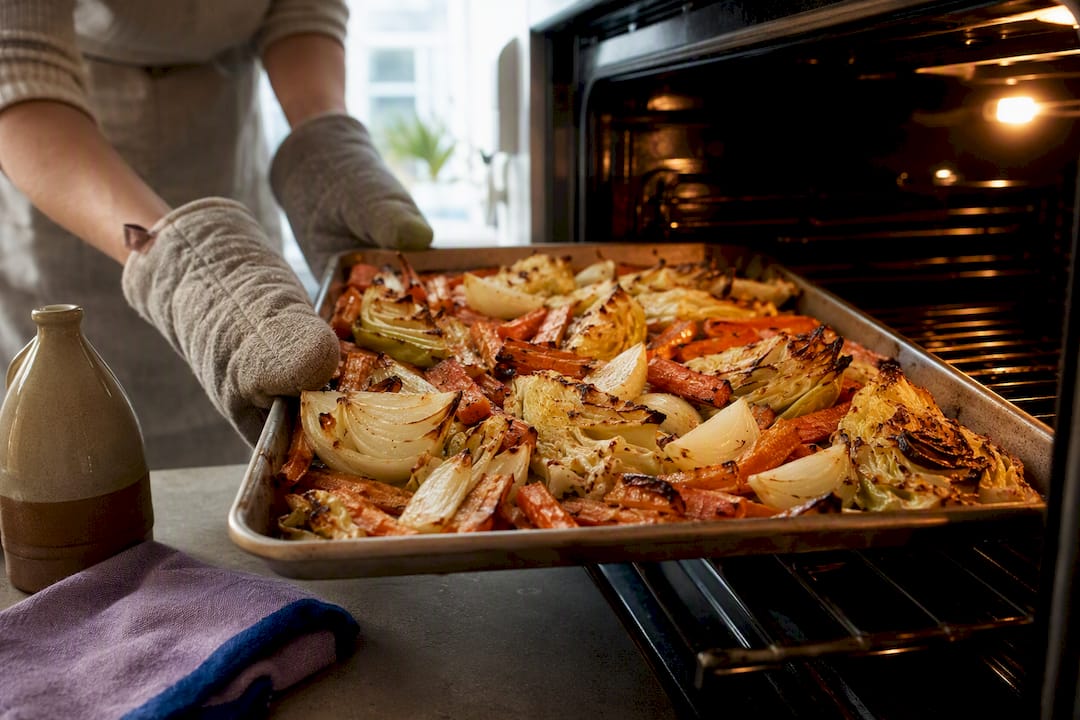
High-heat roasting concentrates flavor in vegetables that would otherwise taste watery. Toss carrots, onions, or cabbage with oil, spread them on a sheet pan, and roast at 425°F until the edges char. That caramelization is where the flavor lives.
Seasoning in stages rather than all at once builds complexity without buying anything new. Salt while cooking, taste, then finish with acid, a squeeze of lemon or a splash of vinegar, right before serving.
Batch cooking grains and beans on one day means five dinners get built from the same base, which cuts both cost and decision fatigue during the week, according to chef-tested budget frameworks.
- Braise a chuck roast on Sunday, then use it in tacos, sandwiches, and a stir-fry through Wednesday.
- Roast a full sheet pan of mixed vegetables and fold leftovers into eggs, grain bowls, or pasta.
- Cook a big pot of beans once, then season it three different ways across the week: cumin and lime one night, smoked paprika the next.
Pro Tip: Never throw out chicken bones, shrimp shells, or the parmesan rind at the bottom of the bag. Simmered into stock or a pot of beans, they add restaurant-level depth for zero extra cost.
How Do You Store Food to Waste Less and Spend Less?
Storage mistakes quietly drain more money than bad shopping ever does. A wilted bag of spinach or a forgotten container of rice is cash straight in the trash, and simple freezing and portioning habits reverse that fast.
- Refrigerate leafy greens, berries, and dairy immediately; keep tomatoes, potatoes, onions, and bananas on the counter, since cold actually degrades their texture and flavor.
- Freeze bread the day you buy it if you won't finish it in three days, then toast slices straight from frozen.
- Portion cooked meals into single servings before freezing, so you're not thawing a giant block for one bowl of chili.
- Label everything with the freeze date, since "best by" dates on packaging usually reflect peak quality, not safety, and most frozen food stays safe well past that date.
- Build one use-it-up night into your weekly plan to absorb odds and ends before they turn.
Our guide on reducing food waste breaks down exact fridge and freezer timelines if you want the full reference. The short version: portion, label, freeze early, and let your use-it-up night do the cleanup.
What Does a Sample Budget Week of Meals Look Like?
Here's a full seven-night plan built on the anchor, quick-assembly, use-it-up structure, designed to land close to the $1.70 to $2.00 per serving range that ingredient-overlap planning can achieve.
- Monday: Roast a whole chicken with onions and carrots (anchor meal).
- Tuesday: Shredded chicken tacos with cabbage slaw (quick assembly).
- Wednesday: Chicken and rice soup using the carcass for stock (quick assembly).
- Thursday: Big pot of lentil curry (anchor meal).
- Friday: Lentil curry over rice with fried eggs on top (quick assembly).
- Saturday: Vegetable fried rice using odds and ends from the fridge (use-it-up night).
- Sunday: Baked pasta with canned tomatoes and whatever cheese is left (quick assembly).
At roughly $40 for a household of two eating dinner all seven nights, that lands close to $2.85 per serving before lunches or breakfasts, in line with the SummitPlate under $2 model once you account for higher local prices. Cooking for one? Cut proportions in half and freeze the extra lentil curry and soup in individual containers. Our meal planning for one guide covers exact scaling ratios if you're shopping solo.
How Bill and AdultingintheKitchen Teach These Habits
I've spent years watching beginner cooks either burn out on ambition or thrive on small, repeatable systems.. The pattern that works every time is the one in this article: plan, overlap, batch cook.
The membership program offers resources such as a starter pack to help set up your kitchen and pantry, weekly recipe collections designed around ingredient overlap, grocery checklists to simplify shopping, and chef support to answer substitution questions in real time. If you want a running start, try building your first one-page plan this week using the anchor and quick-assembly structure above.
A Candid Note on Realistic Progress
Perfection isn't the goal here. Consistency is. Pick one habit, either meal planning or batch cooking, and run it for three weeks before adding the next. Measure success by how often you skipped a delivery app, not by how flawless your grocery list looked.
— Bill
Cook Like You Mean It, Without the Guesswork
AdultingintheKitchen is the beginner-friendly alternative to figuring all of this out alone through trial, error, and wasted groceries. 
Instead of guessing what to buy or how to stretch a chicken into three meals, you get the Starter Pack to set up your kitchen right, weekly recipe drops with five new recipes built for ingredient overlap, grocery checklists that turn shopping into a five-minute task, and real chef support when a recipe goes sideways. Every habit covered in this article, planning, batch cooking, smart pantry stocking, is exactly what the membership walks you through step by step, with a real person answering your questions instead of a forum thread from 2019.
Ready to stop rebuilding your grocery list from scratch every week? Join AdultingintheKitchen and get your Starter Pack today.
Primary Sources and Further Reading
- Harvard Nutrition Source: budget eating strategies backed by public health research.
- Prevention's dietitian guide: protein-swap and waste-reduction advice.
- SummitPlate's $2 meal plan: a tested example of overlap-based cooking.
Sources
- Strategies for Healthy Eating on a Budget — Harvard T.H. Chan School of Public Health
- A Dietitian Explains How to Eat Well on a Budget — Prevention
FAQ
What Is the 5-4-3-2-1 Rule for Groceries?
Definitions vary across sources, but the version most commonly used describes a rough ratio for a weekly grocery list: roughly 5 vegetables, 4 fruits, 3 proteins, 2 grains, and 1 treat. It's a loose guideline for balance, not a strict budget formula.
How Do You Survive on $20 a Week for Food?
Surviving on $20 a week means leaning almost entirely on the cheapest staples: rice, oats, dried beans, eggs, and frozen vegetables, all of which run under $0.40 per serving for the base ingredient. Batch-cook a large pot of beans or lentils at the start of the week and stretch it across multiple meals with different seasonings to avoid repetition fatigue.
Is $100 a Month Enough for Groceries?
For one adult, a very low budget below the USDA Thrifty Food Plan's floor of $60 to $75 per week might be possible with disciplined staple-based cooking and minimal food waste, but it leaves little room for fresh produce or protein variety.
Is $200 a Month Enough for Groceries for One Person?
Yes, a budget close to the USDA Thrifty Food Plan benchmark for a single adult is realistic with a planned, overlap-based menu. Following the anchor, quick-assembly, and use-it-up structure in this article makes such a budget comfortable rather than restrictive.
Does AdultingintheKitchen Help With Budget Meal Planning?
Yes. AdultingintheKitchen's weekly recipe drops and grocery checklists are built around the same ingredient-overlap and batch-cooking principles covered here, with real chef support if you get stuck adapting a recipe to what's on sale.