
Stock two oils and most of your cooking questions solve themselves: extra-virgin olive oil for dressings, drizzling, and low to medium-heat cooking, plus a neutral refined oil (refined avocado, canola, or light olive) for high-heat searing and frying. That combination covers heart-healthy fat, real flavor, and heat stability without a cabinet full of half-used bottles going rancid.
- EVOO: salad dressings, roasted vegetables, finishing pasta, medium-heat sautéing
- Refined neutral oil: searing steak, stir-frying, pan-frying, high-heat roasting
One caveat worth remembering before you shop: oil is still fat, and even the healthiest bottle in your pantry adds up fast in a recipe that calls for a quarter cup. Portion matters as much as which bottle you grab. If you're deep-frying regularly, have a nut allergy in the house, or love a specialty oil like toasted sesame or walnut, you'll want the exceptions covered later in this cooking oils guide.
TL;DR:
- A small, well-chosen pair of oils—extra-virgin olive oil for flavor and medium heat, plus a refined neutral oil for high-heat cooking—can meet most kitchen needs efficiently.
- Oxidation rate and nutrient retention matter more under heat than smoke point alone, so select oils with low oxidation rates like EVOO, even if their smoke points are lower.
- Measuring oil portions carefully is essential because a tablespoon contains about 120 calories, which adds up quickly in everyday recipes.
- Store oils in a cool, dark place and use opened EVOO within three to six months to prevent rancidity and preserve flavor and nutrients.
- Partially hydrogenated oils contain trans fats and should be avoided entirely, regardless of their current popularity or label claims.
Table of Contents
- Cooking Oils Guide: What Each Bottle Is Actually Good For
- What Fats in Cooking Oil Mean for Your Heart
- Smoke Point Isn't the Whole Story
- Storing Oil So It Doesn't Go Rancid
- Build a Pantry That Doesn't Waste Money
- Matching Oil to the Cooking Method
- Why Trust This Guide
- The Nutrients Hiding in Your Oil Beyond Fat
- Pairing Oils With Cuisine and Flavor
- Key Takeaways
- An Editorial Take on Choosing Oil Without the Overwhelm
- Sources
Cooking Oils Guide: What Each Bottle Is Actually Good For
Walk down the oil aisle and you'll see a dozen options competing for your cart. Most home cooks only need to understand a handful well.
Extra-virgin olive oil (EVOO) is cold-pressed, unrefined, and carries the most flavor and antioxidants of the olive oil family. Use it for dressings, dips, and roasting vegetables at moderate temperatures. Light or refined olive oil has a milder taste and higher heat tolerance, making it a reasonable stand-in when you want an olive-oil flavor at higher temperatures.
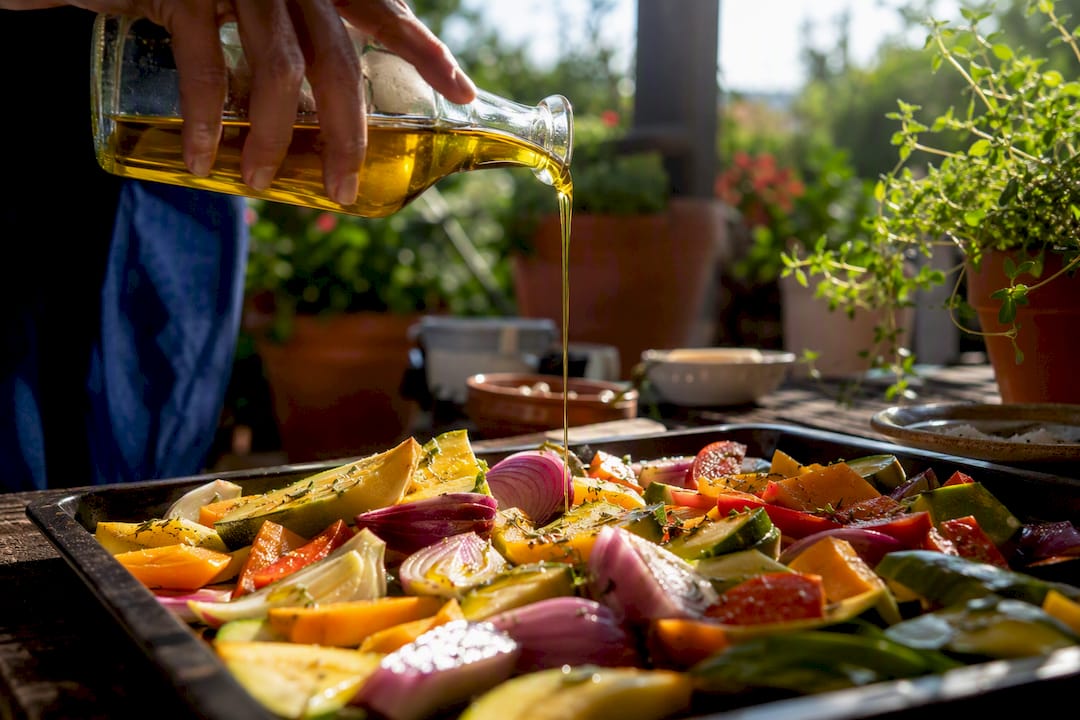
Avocado oil comes in refined (neutral, high smoke point, great for searing) and unrefined (grassy, best for finishing) versions. Canola and vegetable oil are budget-friendly neutral workhorses for baking and everyday sautéing. Sunflower oil, especially high-oleic varieties, behaves more like olive oil under heat because of its higher monounsaturated fat content.
Peanut oil is prized for frying because of its high smoke point and subtle nuttiness, but keep it out of any kitchen serving guests with peanut allergies. Even trace cross-contact can trigger a reaction, so label-read carefully if you buy it. Sesame oil splits into two jobs: refined sesame oil for cooking, and toasted sesame oil (used a few drops at a time) for finishing Asian dishes. Grapeseed oil is light and neutral, decent for baking and quick sautéing. Coconut oil brings a distinct flavor and firms up at room temperature. Walnut and hemp oils are delicate, nutrient-rich, and strictly for drizzling, never heating.
On labels, "cold-pressed" and "extra-virgin" signal minimal processing and stronger flavor; "refined" and "light" mean more processing, milder taste, and a higher smoke point.
What Fats in Cooking Oil Mean for Your Heart
Every cooking oil is a blend of three fat types: saturated, monounsaturated (MUFA), and polyunsaturated (PUFA). The ratio determines both how the oil behaves under heat and what it does inside your body.
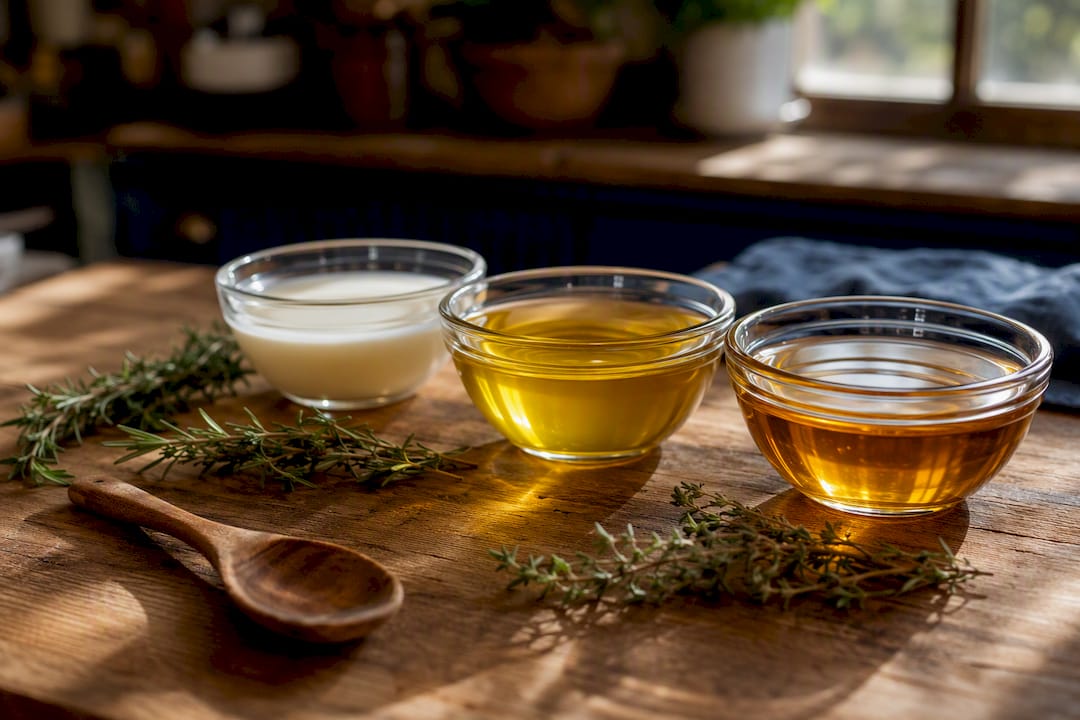
Coconut oil and palm oil lean heavily saturated. Olive, avocado, and high-oleic sunflower oils are MUFA-rich. Corn, soybean, and regular sunflower oils skew polyunsaturated. Peer-reviewed nutrition research shows that replacing saturated fats with unsaturated plant oils improves cardiovascular risk markers like LDL cholesterol, and the American Heart Association backs this swap as a population-level strategy for heart health. EVOO specifically has been linked to lower LDL and higher HDL cholesterol, driven partly by its polyphenol antioxidants.
One label term deserves a hard stop: "partially hydrogenated oil." That phrase signals trans fat, and the FDA has flagged it as an ingredient to avoid, even though it's largely been phased out of U.S. food products.
Pro Tip: A tablespoon of any oil runs about 120 calories, regardless of how "healthy" the label sounds. Measure your dressing instead of eyeballing it, and you'll save real calories over a week of meals.
- Saturated fat: solid at room temp, use sparingly
- MUFA (olive, avocado): heart-supportive, good all-around choice
- PUFA (corn, soybean, sunflower): useful but more prone to oxidation at high heat
Smoke Point Isn't the Whole Story
Smoke point tells you the temperature where an oil starts to burn and smoke, but it's not the full picture of how an oil performs under heat. The real risk at high temperatures is oxidation, the chemical breakdown that creates lipid oxidation products (LOPs), compounds linked to inflammation when consumed repeatedly.
Here's the twist most guides skip: EVOO has a comparatively low smoke point, yet its oxidation rate is also low, so it holds up better than you'd expect for many sauté and roast tasks. Meanwhile, some refined polyunsaturated oils have a higher smoke point but oxidize faster at the same temperature. Smoke point alone can mislead you.
A simple way to shop by heat level:
- Low heat / no heat (dressings, dips, drizzling): EVOO, walnut oil, unrefined avocado oil
- Medium heat (sautéing, roasting): EVOO, light olive oil, high-oleic sunflower oil
- High heat (searing, stir-frying, frying): refined avocado oil, refined peanut oil, refined canola oil
For deep frying, use fresh oil and don't reuse it more than once or twice. Repeated heating accelerates LOP formation, and that buildup is exactly what you're trying to avoid by cooking at home in the first place.
Pro Tip: If your frying oil smells sharp, soapy, or "off" after one use, toss it. Reused oil breaks down fast, and the flavor payoff isn't worth the tradeoff.
Storing Oil So It Doesn't Go Rancid
Oil is sensitive to three things: heat, light, and air. Keep bottles in a cool, dark cabinet away from the stove, not on a sunny counter where it looks pretty but degrades faster. Dark glass bottles or metal tins protect oil better than clear plastic, and a tight-fitting cap matters more than most people realize.
- Unopened oils generally last 1 to 2 years past bottling
- Opened EVOO and vegetable oils are best used within 3 to 6 months
- Nut oils (walnut, hemp) go rancid faster and should live in the fridge after opening
- Coconut oil is more stable at room temperature thanks to its saturated fat content
Rancid oil smells sharp, waxy, or like old crayons instead of fresh and mild. If it smells off, don't cook with it, no matter how expensive the bottle. Check the label for "best by" dates and whether it's refined or unrefined, since unrefined oils tend to have a shorter shelf life.
Build a Pantry That Doesn't Waste Money
You don't need eight bottles of oil crowding your cabinet. You need two, maybe three, sized to how often you actually cook.
- Buy a medium bottle of EVOO (about 500ml) you'll finish within a few months, not a giant warehouse-size jug that oxidizes before you're halfway through
- Buy a smaller bottle of refined neutral oil (canola, refined avocado, or light olive) for high-heat tasks
- Add a third specialty oil only if you cook a specific cuisine regularly, like toasted sesame for stir-fries or peanut oil for occasional frying
- Store infrequently used oils (walnut, hemp, unrefined sesame) in the fridge to stretch their life
- Check your shelf before every grocery run rather than restocking oils you already have
This keeps your kitchen simple and your grocery budget focused on ingredients that actually matter for the meal you're cooking, not oils quietly expiring in the back of a cabinet.
Matching Oil to the Cooking Method
Different techniques put different demands on oil, and matching the right one to the job is where a lot of home cooks get stuck.
For sautéing and roasting, EVOO or high-oleic sunflower handles moderate heat fine. For high-heat searing (think a cast-iron steak or a hot wok), swap in your refined neutral oil since it tolerates higher temperatures without smoking or breaking down as fast. For dressings and finishing, EVOO's flavor and antioxidants are the whole point, so save it for the bowl, not the pan. For baking, neutral oils like canola or vegetable oil won't compete with other flavors in the recipe.
- Eggs and delicate sautés: EVOO or light olive oil, medium heat
- Stir-fries and sheet-pan dinners: refined avocado or canola oil
- Vinaigrettes and marinades: EVOO, unrefined avocado, or walnut oil
- Baking: neutral canola or vegetable oil
One practical swap worth remembering: frying in large volumes of oil raises the calorie count of a dish regardless of which oil you choose, so leaning on an air fryer or oven roasting cuts oil use without sacrificing crispiness. And if a recipe calls for a specific oil amount, our guide on how much oil to use for rice is a useful gut-check for portioning correctly. Once you're comfortable with these pairings, practicing the actual technique matters just as much as the oil. Our beginner's guide to sautéing walks through the motion step by step.
Why Trust This Guide
Knowing which oil to grab is only half the battle. Applying it confidently at the stove, at the right heat, with the right technique, is where AdultingintheKitchen's membership actually helps. The Starter Pack gets your kitchen set up correctly from day one, weekly recipe drops put these oil choices into real dishes, and chef support means you can ask a real person whether that pan is hot enough before you pour.
- Starter Pack: kitchen setup and basic tools guidance
- Weekly recipes: five new dishes that apply these oil rules in practice
- Chef support: real answers when a recipe doesn't behave the way you expected
The Nutrients Hiding in Your Oil Beyond Fat
Fat composition gets most of the attention, but oils carry other nutrients worth knowing about. EVOO is rich in polyphenols, plant compounds with antioxidant properties tied to its cardiovascular benefits, and that's part of why dietitians favor it over more heavily processed oils. Unrefined, cold-pressed oils generally retain more of these micronutrients than their refined counterparts, since refining strips out flavor compounds along with some of the vitamins and antioxidants.
Vitamin E, a fat-soluble antioxidant, shows up in meaningful amounts in oils like sunflower, safflower, and wheat germ. Walnut and hemp oils bring omega-3 fatty acids to the table, another reason they're worth keeping around for finishing even though they can't handle heat. Sesame oil contains lignans, compounds studied for their antioxidant activity, which is part of why a few drops of toasted sesame oil do more than just add flavor to a stir-fry.
The tradeoff is real: refining an oil for a higher smoke point and longer shelf life usually means sacrificing some of these micronutrients. That's not a reason to avoid refined oils entirely, since they serve a real purpose for high-heat cooking, but it's a good argument for keeping an unrefined, cold-pressed oil in rotation for the dishes where it won't be heated past its limits. Think of your refined oil as the workhorse and your unrefined EVOO as the nutrient boost you add at the end.
Pairing Oils With Cuisine and Flavor
Oil is a flavor ingredient, not just a cooking medium, and matching it to the right cuisine changes a dish more than most home cooks expect. Mediterranean cooking leans on EVOO for nearly everything, from roasting vegetables to dressing a simple tomato salad, because its grassy, peppery notes are part of the cuisine's identity.
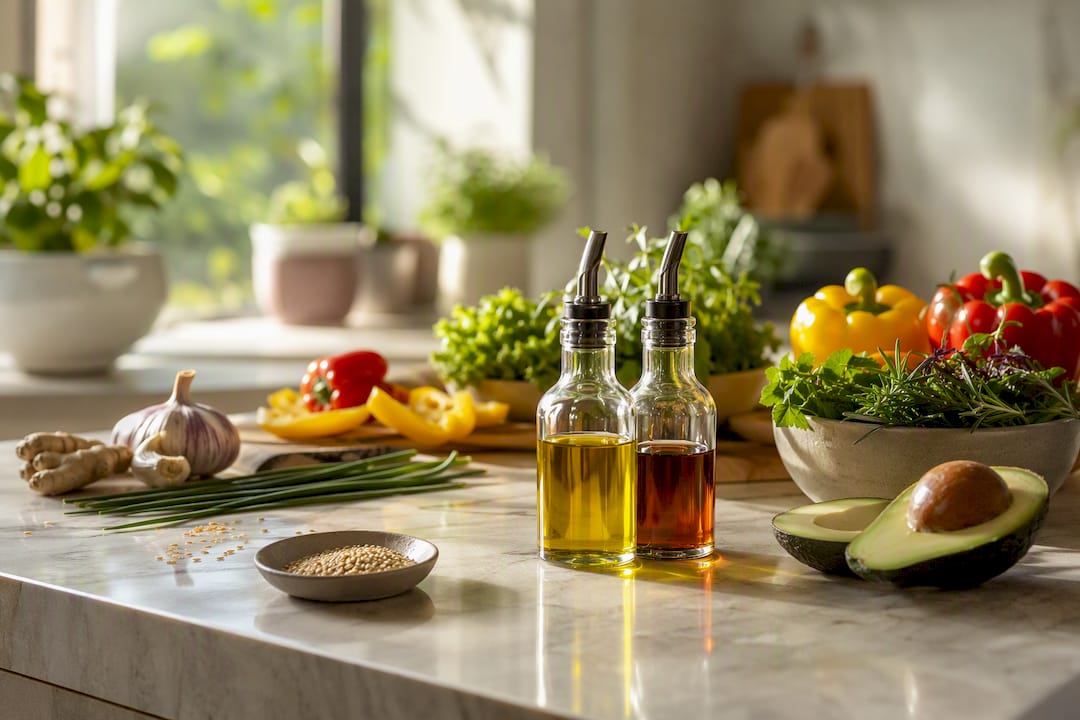
Asian cooking often calls for toasted sesame oil as a finishing touch, added at the very end of a stir-fry rather than used to cook it, since heat destroys its delicate nutty aroma fast. Peanut oil shows up frequently in Southeast Asian and Chinese frying for its high heat tolerance and mild sweetness, though again, skip it entirely in any kitchen with a peanut allergy. Neutral oils like canola or vegetable oil are the right call anywhere you want the other ingredients, garlic, herbs, spices, to lead the flavor without competition.
Coconut oil brings a natural sweetness that suits Thai curries and certain baked goods, but its distinct flavor can clash with a dish that wasn't designed around it. Walnut oil pairs beautifully with roasted root vegetables and fall salads, especially alongside apples or blue cheese. The rule of thumb: expensive, flavorful oils belong where you'll actually taste them raw or barely warmed, and neutral oils belong wherever heat and other ingredients are doing the flavor work.
Key Takeaways
A two-oil pantry, extra-virgin olive oil for flavor and low to medium heat plus a refined neutral oil for high heat, covers nearly every cooking need while minimizing waste and rancidity risk.
| Point | Details |
|---|---|
| Build a two-oil pantry | Stock EVOO for dressings and medium heat, plus a refined neutral oil for searing and frying. |
| Smoke point isn't everything | Oxidation rate matters too; EVOO's low oxidation rate makes it stable despite a lower smoke point. |
| Watch portion size | A tablespoon of any oil runs about 120 calories, so measure rather than pour freely. |
| Store oil away from heat and light | Keep bottles in a cool, dark cabinet and use opened EVOO within 3 to 6 months. |
| Skip partially hydrogenated oils | This label term signals trans fat and should be avoided entirely. |
An Editorial Take on Choosing Oil Without the Overwhelm
The conventional advice on cooking oil treats smoke point like gospel and ignores oxidation almost entirely. That gap is where most home cooks get steered wrong, buying an oil with an impressive number on the label while ignoring how it actually behaves in a hot pan over time. The research is clear enough: stability under real cooking conditions matters more than a single number printed on packaging.
What's overrated is the pursuit of an ever-expanding oil collection. A dusty bottle of specialty walnut oil bought for one recipe two years ago isn't a sign of a sophisticated pantry, it's wasted money and a rancidity risk. What's underrated is discipline: two well-chosen oils, used correctly and replaced before they go stale, will outperform a cluttered shelf every time.
If you take one thing from this guide, let it be this: buy less, buy smarter, and taste your oil occasionally to make sure it's still good. That habit alone solves more kitchen problems than any specialty bottle ever will.
— Bill
Sources
- Choosing and Using Cooking Oils: What To Use and When
- PMC review on dietary fats and cardiovascular disease
- U.S. Food and Drug Administration — trans fat and partially hydrogenated oils guidance