Yes, you can absolutely cook well on an electric stove, and it comes down to three habits: preheat your burners and oven before you start, choose flat, heavy-bottom cookware, and plan around slower response times instead of fighting them. Electric stoves come in three types, coil, smooth-top radiant, and induction, and each behaves a little differently. One quick safety note before you touch anything: many surfaces stay dangerously hot well after you've switched them off.
TL;DR:
- Using flat, heavy-bottom cookware like cast iron or thick stainless steel ensures even heat transfer and prevents hot spots on electric stoves.
- Preheating burners and ovens before cooking is essential, especially because electric elements respond slowly and residual heat can cause burns.
- Most electric ranges operate on a dedicated 240-volt circuit, requiring proper wiring and possibly professional installation before use.
- Switching off a burner does not mean it is immediately cool; surfaces can stay hot for several minutes, increasing burn risks for beginners.
- Effective cleaning depends on the stove type, with non-abrasive wipes for glass surfaces and careful re-seating of coil elements after cleaning.
Table of Contents
- What Are the Different Types of Electric Stoves?
- How Do You Use the Controls on an Electric Stove?
- Which Cookware Actually Works Best on Electric Stoves?
- How Should You Clean and Maintain an Electric Stove?
- What Safety Mistakes Do Beginners Make Most Often?
- What Are Some Quick Techniques to Practice Right Away?
- How AdultingintheKitchen Helps You Master These Basics
- Why Most Electric Stove Advice Misses the Point
- Sources
- FAQ
What Are the Different Types of Electric Stoves?
Not all electric stoves heat the same way, and knowing which one is sitting in your kitchen changes how you should cook on it. Here's the breakdown:
- Coil stoves use an exposed resistive element, the classic spiral you can see glowing orange. They're the most old-school and least expensive option, but they also lose the most heat to the surrounding air instead of your pan.
- Smooth-top radiant stoves hide a ribbon-style element under a glass or glass-ceramic surface. You get an easier surface to wipe down, but the glass itself has to heat up before your pan does, which adds a beat of lag.
- Induction stoves skip resistive heating entirely. They generate a magnetic field that heats the cookware directly, which is why the cooktop itself stays cool to the touch even while your pan is ripping hot.
That last point matters more than it sounds. Induction converts roughly 85 to 90 percent of its electrical energy directly into heat, according to ENERGY STAR, while coil and radiant elements lose more energy warming the air and the cooktop itself before that heat ever reaches your food.
There's also a wiring reality worth knowing before you buy or move into a place with an electric range: most full-size electric ranges run on a dedicated 240 volt circuit, not the standard 120 volt outlets used for small appliances. That's why you can't just plug a new range into any wall socket. If you're installing one for the first time, this is the detail that determines whether an electrician needs to get involved before dinner ever gets made.
How Do You Use the Controls on an Electric Stove?
Electric stove dials look simple, but the numbers 1 through 9 don't mean what most beginners assume. Here's how to actually operate one with confidence:
- Understand what the dial really controls. Most resistive cooktops use duty-cycle controls, meaning the element cycles on and off rather than holding one continuous temperature. A setting of 4 doesn't mean "medium heat" so much as "on 40 percent of the time," which explains why a simmer can drift hotter or cooler than expected.
- Preheat before you commit food to the pan. Turn the burner on while you're still chopping vegetables or measuring ingredients, not the moment you're ready to cook. Electric elements take real time to climb to temperature, and starting early removes the guesswork.
- Preheat the oven fully before baking or roasting. Give it the full 10 to 15 minutes most ranges need to reach the set temperature, since electric ovens tend to swing a bit as they cycle to hold that number.
- Watch for indicator lights or surface glow to confirm heat. Most ranges have a small light that stays on while the burner is active, and coil elements will visibly redden. Use those cues instead of guessing.
- Plan for residual heat, not instant cooling. Turning a knob to "off" doesn't stop the heat immediately. Consumer Reports notes that electric elements respond more slowly than gas flames in both directions, so a pot can keep simmering for a minute or two after you've dialed down.
Which Cookware Actually Works Best on Electric Stoves?
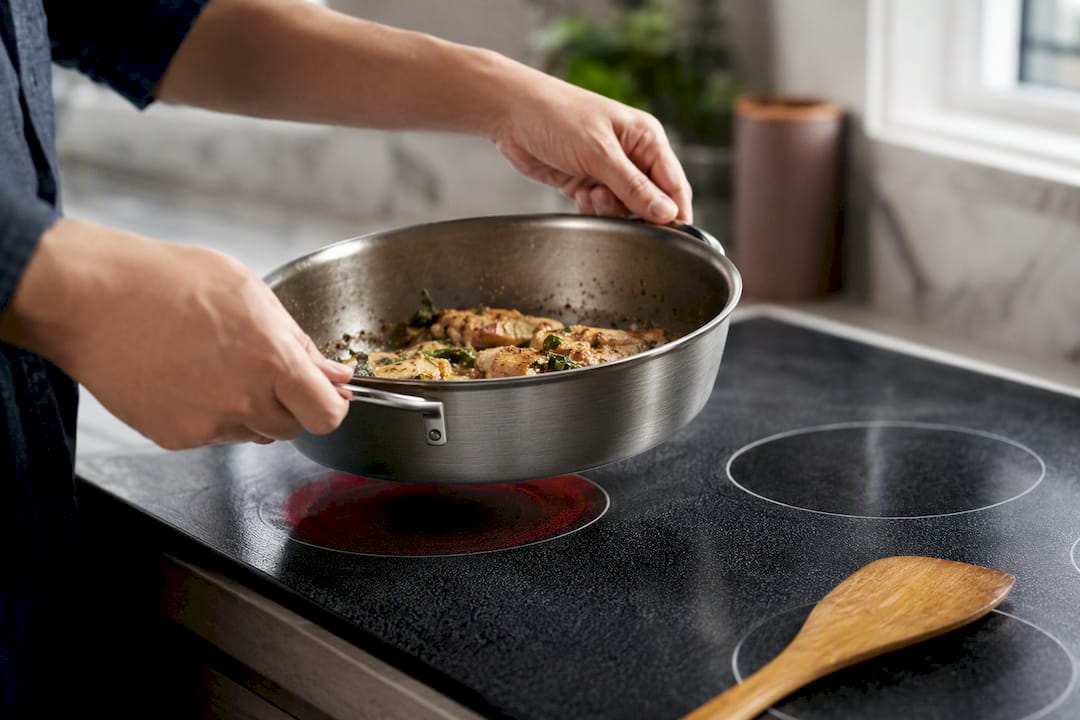
Warped or thin pans are the number one reason food cooks unevenly on an electric stove, because a bowed bottom loses direct contact with the heating surface and creates cold spots right where you need consistent heat. Flat, heavy-bottom cookware, cast iron and thick magnetic stainless steel especially, sits flush against coil or radiant surfaces and holds heat evenly across the whole pan.
- Cast iron and heavy stainless steel distribute heat well and resist warping over years of use.
- Thin aluminum pans heat fast but warp easily and are the most common source of hot spots on smooth tops.
- Copper cookware without a magnetic base won't work on induction at all, regardless of how good it performs on gas.
If you're shopping for pans and want a shortlist that fits any electric cooktop, our guide on stainless steel basics walks through what to buy and how to season it properly.
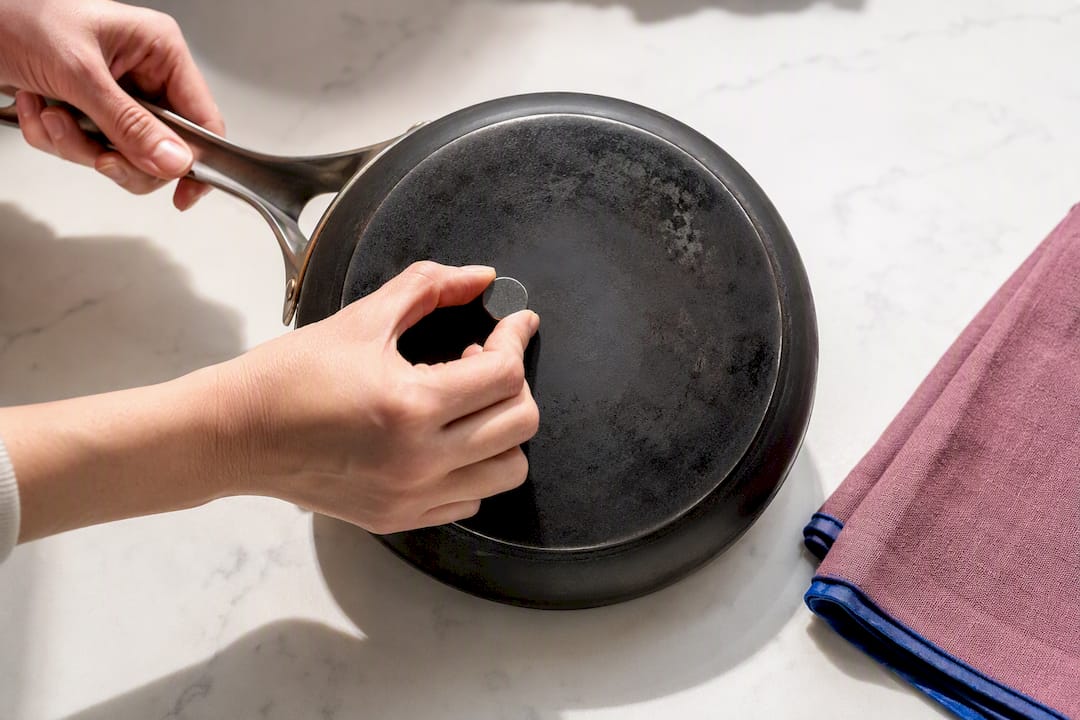
Testing induction compatibility takes ten seconds: stick a refrigerator magnet to the bottom of the pan. If it grabs firmly, the pan will work. If it slides off or doesn't stick at all, that pan stays in the cabinet for induction cooking.
For heat control, chefs recommend a two-step move: crank the burner to high for the first minute or two to get a strong initial sear, then dial back once the pan's surface has caught up. Keeping a second, unlit burner nearby also lets you slide a pan off the hot zone entirely instead of waiting for the element to cool down on its own.
Pro Tip: Keep a cold burner free at all times. Moving a pan to it, rather than turning the dial down, is the fastest way to stop overcooking on an electric stove.
How Should You Clean and Maintain an Electric Stove?
Cleaning method depends entirely on which type of cooktop you own, and using the wrong approach can scratch or damage the surface permanently.
- Coil stoves: Lift the elements out of their sockets and pull the drip pans free for a proper soak and scrub. Check that each element is seated firmly in its socket afterward, since a loose connection can cause uneven heating or a burner that won't turn on at all.
- Glass-ceramic smooth-tops: Stick to non-abrasive cleaners and a nylon pad for daily wiping. For burnt-on food, a single-edged razor blade scraper held at a low angle lifts residue without gouging the glass, as long as you keep the blade flat against the surface.
- Induction: Wipe down the same way you would a glass-ceramic top, but you'll deal with less baked-on residue since the cooktop itself never gets hot. Still avoid dragging cast iron across the surface, since it scratches just as easily as any other glass top.
For anyone dealing with lingering cooking smells beyond the stove itself, this guide on removing cooking odors from fabric covers the kind of cleanup that spreads past the kitchen.
What Safety Mistakes Do Beginners Make Most Often?
The single biggest mistake new electric stove owners make is assuming a burner that's turned off is automatically cool. It isn't, and that assumption causes more kitchen burns than almost anything else.
- Never touch a surface until you've confirmed it's cool. Check the indicator light and give glass-ceramic tops several extra minutes past when you'd expect a gas burner to have cooled.
- Avoid thermal shock on glass-ceramic surfaces. Never place a cold pan straight onto a hot glass top, and never pour cold water onto a hot burner surface. Both actions can crack the glass outright, and once it cracks, the whole cooktop usually needs replacing.
- Treat a tripped breaker as a warning, not a nuisance. Unplug any other appliances sharing that circuit before resetting it. If the breaker trips again, call a licensed electrician rather than resetting it repeatedly.
Residual heat is the quiet danger here. A coil element can stay hot enough to cause a serious burn for several minutes after you've switched it off, and glass-ceramic surfaces hold that heat even longer because the glass itself retains warmth. If you're new to judging safe temperatures more broadly, from stovetop surfaces to the food itself, our guide to safe cooking temperatures is worth bookmarking.
What Are Some Quick Techniques to Practice Right Away?
You don't need advanced skills to get real results on an electric stove tonight. These three techniques cover most of what a beginner cooks in a given week.
- Boiling pasta: Cover your pot with a lid to trap heat and cut down on the time it takes to reach a boil. If you own an electric kettle, use it to preheat your water first, then pour that hot water straight into the pot instead of starting from cold tap water.
- Searing meat or vegetables: Preheat your pan on high for one to two minutes before anything touches it, then drop the heat slightly once the sear starts to avoid scorching the outside before the inside cooks through.
- Simmering sauces or rice: On most resistive dials, a setting around 2 or 3 holds a gentle simmer, though duty-cycle cycling means you should check every few minutes rather than walking away entirely. Keeping a lid on helps stabilize the temperature and prevents scorching on the bottom.
If rice is still intimidating, our step-by-step guide to making rice on the stovetop breaks the timing down so you're not guessing.
Pro Tip: Start your burner the moment you begin prepping, not when the pan hits the stove. By the time you've chopped an onion, the element is usually caught up and ready.
If you're planning meals ahead of a busy week, this roundup of meal prep strategies for home cooks pairs well with electric stove timing, since batching tasks around preheat windows saves real time.
How AdultingintheKitchen Helps You Master These Basics
Reading about preheat windows and duty-cycle dials only gets you so far. The confidence comes from repetition, and that's exactly what AdultingintheKitchen builds into its membership. The Starter Pack walks new cooks through kitchen setup from scratch, so you're not guessing which pan belongs on which burner. Weekly recipe drops deliver five new recipes designed for real skill-building, paired with grocery checklists that take the guesswork out of shopping.
Real chef support means you can ask a genuine follow-up question when a recipe doesn't go as planned, instead of digging through forum comments at 6 p.m. with a hot pan in front of you.
Here's one small exercise to try tonight: preheat a pan on high for 90 seconds, drop in a sliced onion, and listen for that first real sizzle. That single motion, patience before contact, is the habit that fixes most beginner mistakes on an electric stove.
Ready to build on it? Explore AdultingintheKitchen's membership and get real chef guidance for the next recipe you attempt.
Why Most Electric Stove Advice Misses the Point
Most guides to electric stoves read like appliance manuals: wattage specs, circuit diagrams, feature comparisons. None of that helps you the first time a pan starts smoking because you assumed the burner would cool as fast as it heated.
The real skill gap isn't understanding what an electric stove is. It's unlearning gas-stove instincts, the assumption that turning a dial down means instant relief, or that any pan works on any surface. Electric cooking rewards patience and planning over reflexes. That's a different kind of cooking intelligence, and it's teachable in an afternoon, not a semester.
Where conventional advice falls short is treating cookware and technique as separate topics. They're not. A warped pan on a perfectly preheated burner still cooks unevenly, and the best technique in the world can't save food from a poorly seated coil element. Beginners should prioritize cookware first, then build technique on top of it, not the reverse.
Start with one habit: preheat before you commit. Everything else on an electric stove gets easier once that instinct is automatic.
— Bill
Sources
- ENERGY STAR: Induction Cooking Tops (consumer-facing guidance)
- Thumbtack guide: How to clean an electric stove top
- Consumer Reports: How to cook like a chef on an electric range
FAQ
What should you never do on an electric stove?
Never touch a burner or glass cooktop assuming it's cool just because it's switched off, and never place a cold pan or pour cold water on a hot glass-ceramic surface, since the sudden temperature change can crack it.
How do you use an electric stove for the first time?
Turn the burner on before you start prepping so it has time to reach temperature, confirm it's hot using the indicator light or visible glow, then place a flat, heavy-bottom pan on it and preheat the pan itself for a minute or two before adding food.
What should you look for when buying an electric stove?
Decide between coil, smooth-top radiant, or induction based on efficiency and cleaning preference, since induction converts roughly 85 to 90 percent of its energy directly into heat while confirming your kitchen has the dedicated 240 volt circuit most full-size ranges require.
What are common problems with electric stoves?
The most common issues are uneven cooking from warped cookware, slow temperature response that catches beginners off guard, and burners that don't heat evenly because a coil element isn't seated properly in its socket after cleaning.