Cooking causes most home fires, and the single most effective habit is simple: stay with your food, and be ready to smother a grease fire with a metal lid. U.S. fire departments responded to an estimated 170,000 home cooking fires in 2021, and unattended equipment was the leading factor in a significant share of them. If a small grease fire flares up on your stovetop, here's exactly what to do:
- Slide a metal lid or cookie sheet over the pan and turn off the burner.
- Leave the lid in place until the pan cools completely.
- If flames grow bigger than the pan or start climbing, get everyone out and call 911 from outside.
You don't need to memorize a manual — but these holiday meal prep tips for busy home cooks can help you stay organized and focused, reducing the risk of unattended cooking fires. You need three or four habits that become automatic, and that's what the rest of this guide is going to build for you.
Key Takeaways
Staying with your pan and covering a grease fire with a metal lid prevents and stops more kitchen fires than any extinguisher or gadget.
| Point | Details |
|---|---|
| Stay with high-heat cooking | Unattended equipment causes a large share of home cooking fires, so never walk away from an active burner. |
| Smother, don't douse | Cover a grease fire with a metal lid or cookie sheet and turn off the heat; never use water. |
| Keep tools within reach | Store baking soda, a metal lid, and a working extinguisher near the stove, not in a far cabinet. |
| Choose the right extinguisher | A Class K extinguisher handles grease fires best; Class B or A-B-C multipurpose is an acceptable alternative. |
| Know when to evacuate | If fire grows beyond the pan or appliance, leave immediately and call 911 from outside. |
Table of Contents
- Kitchen Fire Safety Habits To Build Before You Cook
- What To Do When Different Kitchen Fires Start
- Which Fire Extinguisher Belongs In Your Kitchen
- Small Habits That Lower Your Kitchen's Fire Risk
- When To Evacuate And What Happens After A Fire
- How AdultingintheKitchen Builds Safety Into Every Recipe
- What Beginners Get Wrong About Kitchen Fire Safety
- Sources
Kitchen Fire Safety Habits To Build Before You Cook
Most kitchen fires are preventable with a handful of routines you repeat every time you cook, not with fancy equipment. Here's the priority order that matters most, starting with the habit that saves the most kitchens:
- Stay with your pan. High-heat cooking (frying, searing, anything with oil) means you don't walk away, not even for a minute. For slow simmers or oven roasts, set a timer so you never lose track of time.
- Clear a 3-foot kid- and pet-free zone around the stove, and turn pot handles inward so nobody bumps them and nothing gets pulled down.
- Move flammables out of reach. Dish towels, food packaging, and paper towels have no business sitting near an active burner, and loose sleeves or sweatshirt strings are a bigger hazard than most cooks realize.
- Heat oil gradually. Rushing oil to temperature is how smoke points get crossed without warning. Pat food dry before it hits the pan, since wet food in hot oil is a common trigger for dangerous splatter.
- Keep your tools within arm's reach: baking soda, a metal lid or cookie sheet, and a working fire extinguisher. If they're in a drawer three steps away, they're too far.
- Clean grease buildup on a schedule. Stovetop, range hood filter, and the space behind your appliances collect grease residue that ignites faster than a clean surface.
Owning the right cookware makes several of these habits easier to follow. A well-fitted metal lid or dedicated cookie sheet belongs on your counter, not buried in a cabinet.
Pro Tip: If you're too tired, distracted, or impaired to focus, skip the stove that night. Presence, not skill, is what stops most cooking fires before they start.
What To Do When Different Kitchen Fires Start
Every appliance fire behaves differently, and the wrong instinct (grabbing water, yanking a pan off the burner) can make things dramatically worse. Ranges and cooktops account for more than half of home cooking-fire incidents, so start there.
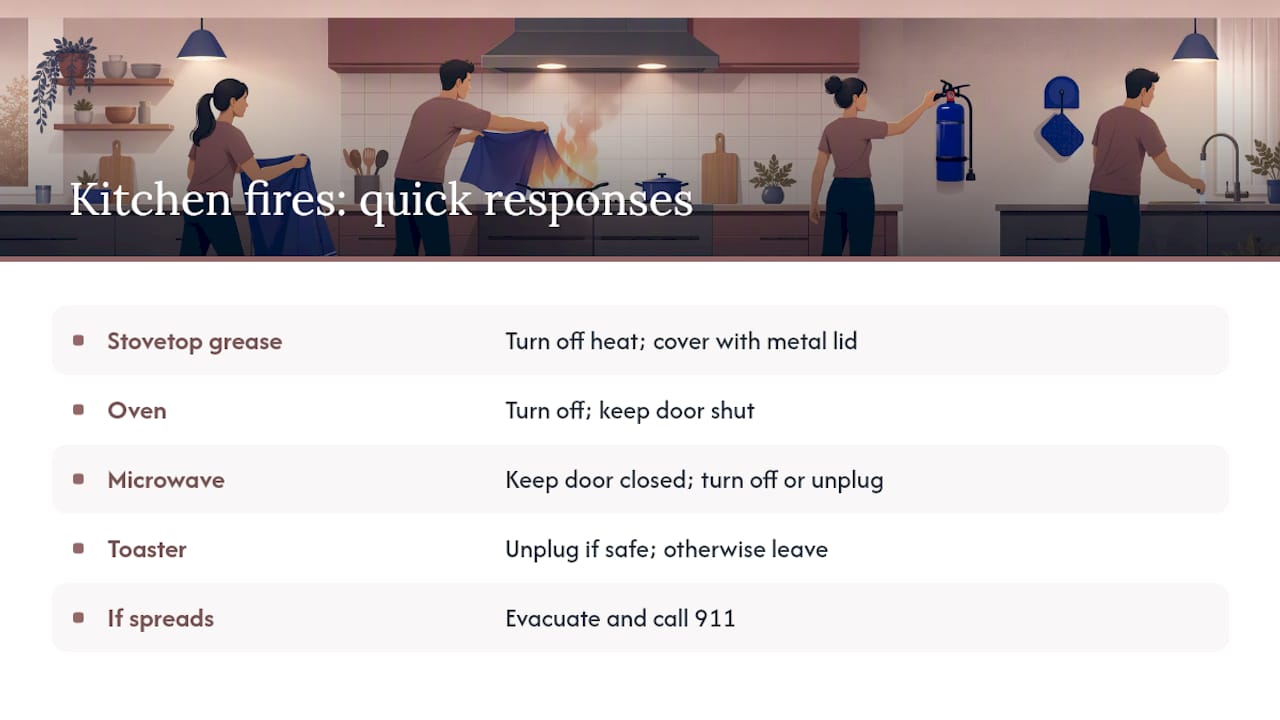
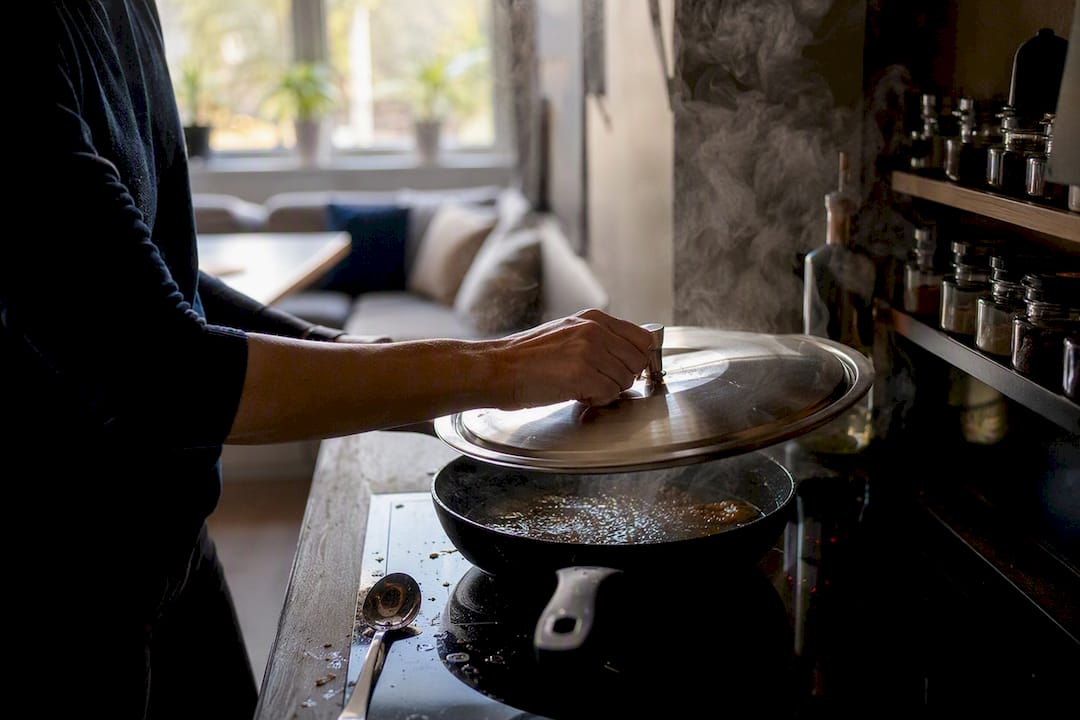
Stovetop grease fire: Turn off the heat immediately, then cover the pan with a metal lid or cookie sheet and leave it alone. Never pour water on burning oil. Water flashes to steam instantly and can throw burning grease across the kitchen. Skip flour and baking powder too. Both can react unpredictably with flame; baking soda or salt works for very small flare-ups, but only a metal lid reliably smothers a real grease fire. Just as important: don't move the pan. Carrying a burning pan to the sink is one of the most common ways a small fire turns into a spreading one.
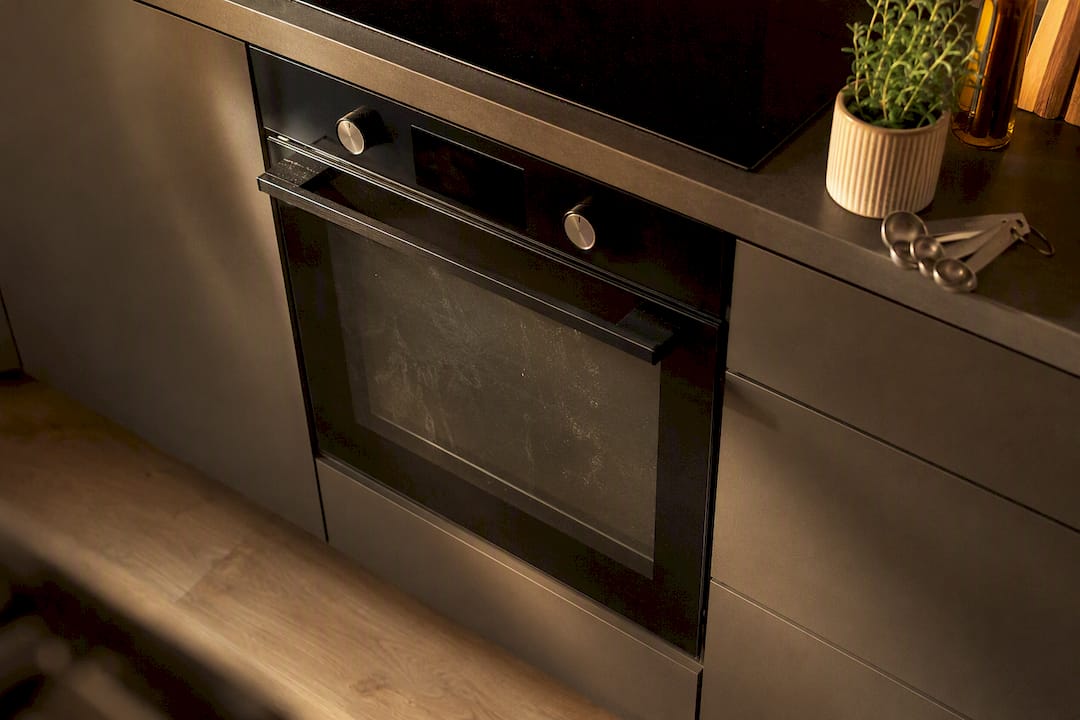
Oven fire: Turn the oven off and keep the door shut. Starving the fire of oxygen usually puts it out on its own within a few minutes.
Microwave fire: Keep the door closed, hit the off button or unplug it if it's safely reachable, and wait until everything stops smoking before you open it.
Toaster or countertop appliance fire: If you can unplug it from a safe distance without reaching over flames, do it. If not, leave it and get out.
The decision rule that matters most: if a fire grows larger than the pan or spreads past the appliance that started it, stop trying to handle it yourself. Evacuate and call 911.
Which Fire Extinguisher Belongs In Your Kitchen
For deep-fat frying and heavy grease use, a Class K extinguisher is the right tool. It's designed specifically to cool burning oil and prevent it from reigniting after the flames go out, which ordinary extinguishers can't do as reliably. If you don't have one, a Class B or multipurpose A-B-C extinguisher is an acceptable home alternative. Improvising with baking soda on a large fire or trying to douse it with anything other than a proper extinguisher can make things worse.
When you do need to use one, remember PASS:
- Pull the safety pin.
- Aim low, at the base of the fire, not at the flames themselves.
- Squeeze the handle slowly and evenly.
- Sweep side to side until the fire is out.
Stand back a comfortable distance (a few feet) and be ready to retreat if the fire doesn't respond quickly.
Where you keep it matters almost as much as which one you buy. Store your extinguisher near the kitchen exit so it's reachable on your way out, not tucked inside a cabinet you'd have to dig through under pressure. A commonly recommended size for home kitchens is a moderate-sized unit manageable for most adults: big enough to matter, light enough for most adults to control.
Pro Tip: Check the pressure gauge monthly and look for dents, corrosion, or a stuck pin. Most home extinguishers need replacing every 5 to 12 years depending on the model, so check the manufacturer's tag.
Small Habits That Lower Your Kitchen's Fire Risk
A few routine checks do more for kitchen fire safety than any single piece of equipment. Test smoke alarms monthly and place one on every level of your home, including just outside the kitchen, per CPSC guidance.
- Wipe down your stovetop, oven interior, range hood filter, and toaster regularly. Grease buildup ignites faster than a clean surface.
- Keep baking soda and your metal lid within reach of the stove, not stored across the kitchen.
- Never store paper towels, oven mitts, or other flammables directly above or beside the stove.
- Keep a clear, unobstructed path from your stove to the nearest exit, and know where your extinguisher lives.
Small layout fixes like these pair well with a smarter overall kitchen setup that keeps your cooking zone open and your tools close.
When To Evacuate And What Happens After A Fire
Life safety comes before property every time. If you're unsure whether you can control a fire, or it's already spreading, get out immediately.
- Leave the kitchen, close doors behind you to slow the spread, and call 911 once you're safely outside.
- Don't go back in for any reason until firefighters tell you it's safe. Take photos of damage for insurance once you're cleared to return.
- Throw out any food that was exposed to flame, smoke, or extinguishing chemicals. Smoke residue and chemical exposure can make food unsafe even if it looks fine.
- Ventilate the space, wash salvageable cookware thoroughly, and call a restoration professional if there's structural or smoke damage beyond a simple wipe-down.
Pro Tip: The most common mistake in a real kitchen fire isn't panic, it's the opposite: cooks stay too long trying to fight something that's already beyond a small extinguisher's reach.
How AdultingintheKitchen Builds Safety Into Every Recipe
Safe habits stick best when they're baked into how you already cook, not bolted on as a separate lecture. That's the thinking behind the AdultingintheKitchen Starter Pack and weekly recipe drops.
- Grocery checklists point you toward the right tools, including a proper metal lid, before you're standing at a hot stove wondering what to grab.
- Weekly recipes are paced step by step, so you're never rushing oil to temperature or walking away mid-fry.
- Real chef support means you can ask a real person about safe cooking temperatures or oil handling before a small mistake becomes a bigger one.
- Beginner-focused instruction builds the "stay with your pan" habit into your muscle memory from week one.
— Bill
What Beginners Get Wrong About Kitchen Fire Safety
Most fire safety advice is written for people who already know their way around a kitchen, and it shows. Guides jump straight to extinguisher classes and inspection schedules while skipping the habit that actually prevents fires in the first place: staying present while you cook. That's backwards for a beginner.
The truth the data supports is almost boring. Unattended equipment causes more fires than bad technique, faulty wiring, or cheap cookware combined. You don't need to master a fire extinguisher's PASS method to be safe in your kitchen. You need to set a timer, clear the counter around your stove, and know where your metal lid lives before oil ever hits the pan.
Where conventional advice falls short is treating prevention and response as equally weighted. They're not. A beginner who builds three or four boring habits, staying by the pan, keeping a lid within reach, testing the smoke alarm, will avoid more fires than one who memorizes extinguisher instructions but still walks away from a frying pan to check their phone. Start with the habits. The tools matter, but only after the habits are already in place.
— Bill
Sources
- Usfa
- Kitchen Fires | Food Safety | Illinois Extension
- Safety with cooking equipment | NFPA
- Recipe for Safer Cooking | CPSC