The fastest way to start cooking at home is to pick two or three simple recipes and cook them on repeat until they feel automatic. You don't need a fancy setup. A basic five-tool kit and a short pantry list are enough to get real meals on the table. Skill comes from repetition, not from expensive gear, and you don't have to figure it all out alone.
TL;DR:
- Beginners should focus on mastering two or three simple recipes through repetition to develop instinct and confidence in core techniques.
- A basic kit should include a sharp chef's knife, a stable cutting board, a nonstick skillet, a medium saucepan, and a rimmed baking sheet, with most other items secondhand or optional.
- The five foundational cooking techniques to learn are sautéing, roasting, simmering, frying eggs, and layering seasoning throughout the process.
- Sticking to a small set of repeatable recipes, such as sheet pan chicken or garlic butter pasta, helps build skill faster than constantly trying new dishes.
- Structured programs and a systematic approach, including mise en place and proper planning, significantly speed up learning and reduce kitchen stress.
Table of Contents
- Essential Tools and Pantry to Start Cooking at Home
- What Cooking Techniques Should Beginners Learn First?
- Easy Starter Recipes That Build Real Skills
- Workflow: Mise En Place, Timing, and Cleanup
- Grocery Shopping and Pantry Strategy for Beginners
- Your 4-Week Plan to Build a Real Cooking Habit
- How Adulting in the Kitchen Supports Beginners
- What One Repeated Recipe Taught Me About Cooking
- Ready for Structured Support? Join Adulting in the Kitchen
- Sources
- FAQ
Essential Tools and Pantry to Start Cooking at Home
You need less than you think to start cooking at home. A functional beginner kitchen doesn't require a drawer full of gadgets. Experts recommend starting with a short list of essential tools that cover almost every basic meal.
Here's your real starter kit:
- A chef's knife. One good, sharp knife handles 90% of your chopping, slicing, and dicing.
- A cutting board. Get one that won't slide around on your counter.
- A nonstick skillet. For eggs, sautéed vegetables, and quick weeknight proteins.
- A medium saucepan. For rice, pasta, sauces, and soups.
- A rimmed baking sheet. For roasting vegetables, chicken, or sheet pan dinners.
Buy the knife new. A dull, cheap knife is more dangerous than a sharp one, since it slips instead of cutting cleanly. Everything else can come secondhand, from a thrift store, or from a hand-me-down box a graduating roommate left behind. Skip the 12-piece cookware sets. You'll use two pans and let the rest collect dust.
For pantry basics, stock enough for three to five days: olive oil, salt, black pepper, garlic, onions, rice or pasta, canned beans, and a couple of proteins you already like. That's enough to build a rotation of meals without a big grocery bill.
Pro Tip: Keep a small notebook or phone note of what you already own before you shop. Most new cooks buy duplicate spatulas and skip the can opener.
For a deeper breakdown of what to buy first, this equipment checklist walks through each item, and if you're furnishing a whole kitchen from scratch, this first apartment guide covers what to prioritize on a tight budget.
What Cooking Techniques Should Beginners Learn First?
Most everyday meals come down to five core moves. Master these and you can cook hundreds of dinners without ever opening a new cookbook.
- Sautéing. Cook small, cut pieces of food quickly in a little oil over medium high heat, stirring often. Practice it on onions and peppers until they soften and turn golden.
- Roasting. Cook food in the oven, usually at 400 to 425 degrees, until it browns and cooks through. Practice on a sheet pan of chopped potatoes, carrots, and broccoli tossed in oil.
- Simmering. Keep liquid at a gentle bubble, not a hard boil. Practice with a pot of rice, or a simple tomato sauce, watching how the heat setting changes the bubble size.
- Frying an egg. It sounds small, but it teaches heat control faster than almost anything else. Practice until you can get a set white and a soft yolk without a rubbery edge.
- Seasoning as you go. Professional cooks season in layers throughout the cooking process instead of dumping salt on at the end. Practice tasting and adjusting at each stage of a dish, not just the finish.
Run through each technique two or three times a week rather than trying to knock them all out in one weekend. Progress shows up in three ways: your prep gets faster, your seasoning starts tasting balanced without a recipe telling you exact amounts, and you stop feeling nervous standing at the stove.
Pro Tip: Cook the same vegetable sauté four nights in a row using a different seasoning each time. You'll learn more about heat and salt in one week than in a month of random recipes.
Easy Starter Recipes That Build Real Skills
A small recipe set beats a long one. Repeating the same handful of dishes trains your hands and your palate faster than jumping to something new every night.
- Sheet pan chicken thighs and vegetables (roasting, 45 minutes): Toss chicken and chopped vegetables in oil, salt, and pepper, then roast on one pan.
- Garlic butter pasta with canned tomatoes (simmering, 25 minutes): Sauté garlic, add crushed tomatoes, simmer while your pasta cooks.
- Fried rice with whatever vegetables you have (sautéing, 20 minutes): Use day-old rice, a scrambled egg, and quick-cooking vegetables.
- Scrambled or fried eggs with toast (egg technique, 10 minutes): Your fastest way to practice heat control daily.
- One-pan roasted salmon and asparagus (roasting, 20 minutes): A near-foolproof introduction to cooking fish.
- Black bean and rice bowls (simmering plus assembly, 20 minutes): Canned beans, rice, and any toppings you like on hand.
Cooking the same recipe several times in a row is how you develop heat control and seasoning instinct without thinking about it. The starter recipe collection is built around this exact idea, small, repeatable dishes that layer skills over time.
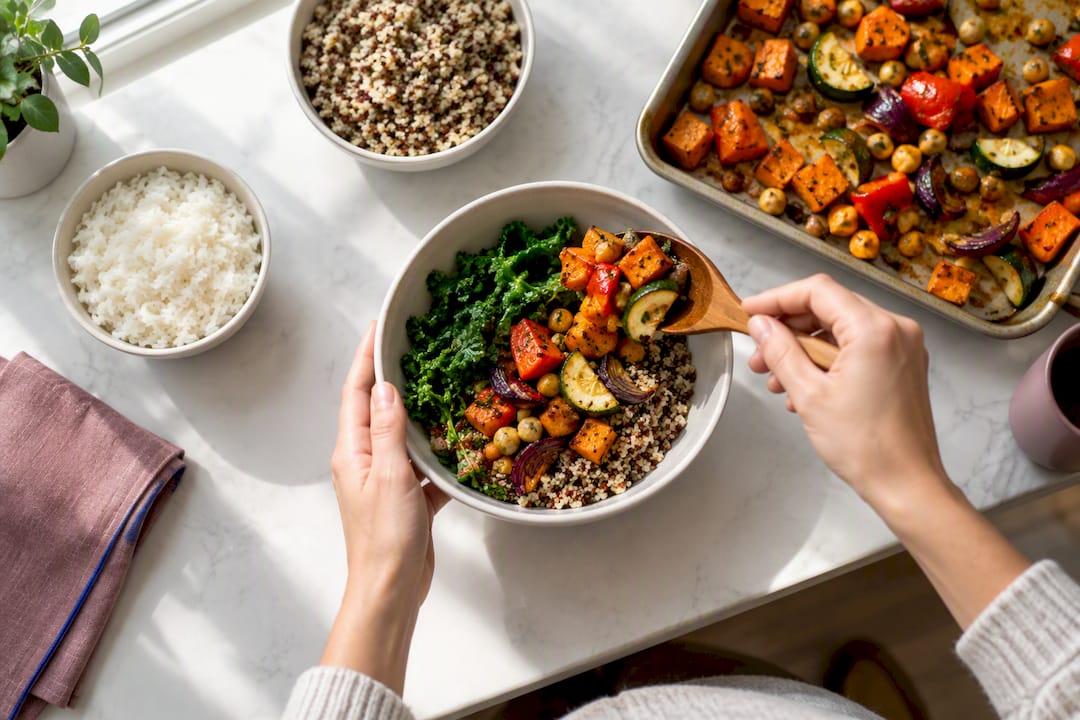
Swap ingredients as your pantry changes. Out of chicken thighs? Use chicken breast or tofu. No asparagus? Use green beans or broccoli. Cook double portions on purpose. Leftover roasted vegetables turn into a grain bowl the next day, and extra rice becomes tomorrow's fried rice.
Workflow: Mise En Place, Timing, and Cleanup
Most kitchen stress comes from disorganization, not difficulty. Mise en place, the practice of prepping and organizing everything before you turn on the stove, is the single habit that changes cooking from chaotic to calm.
Before you cook anything, read the entire recipe first, then work through this sequence:
- Measure out every ingredient you'll need.
- Chop and prep everything before turning on any heat.
- Preheat your oven or pan while you finish prepping.
- Line up your pans, bowls, and utensils in the order you'll use them.
- Set a timer for anything roasting or simmering unattended.
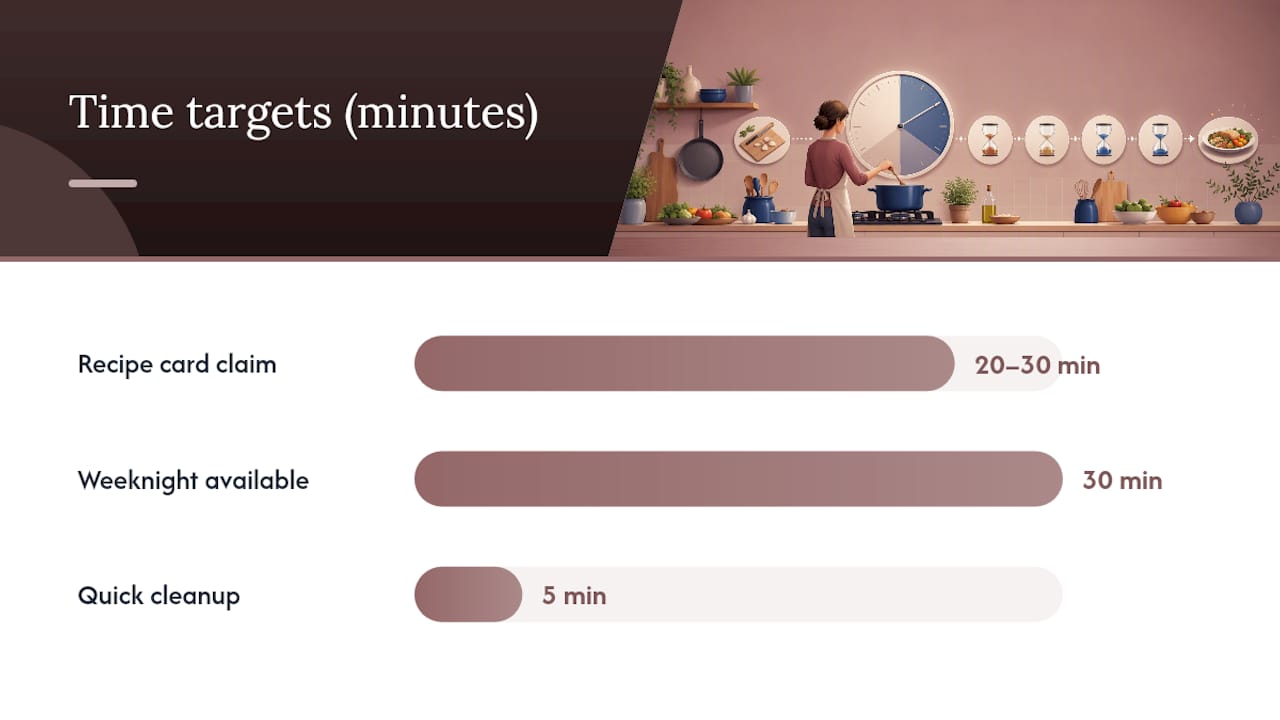
Statistic Callout: Beginners should budget a realistic amount of time that may be longer than recipe cards suggest for a new, nontrivial recipe, not the 20 to 30 minutes a recipe card might promise. That gap is where most new cooks give up, thinking they're slow when they're actually right on schedule.
If you only have 30 minutes on a weeknight, choose something you've already made a few times, not something new. Save new recipes for nights when you have breathing room. Clean as you go: wash a cutting board while something simmers, wipe counters while the oven preheats. A five-minute wipe-down after dinner beats a sink full of dishes waiting for you at 10 p.m. For a step-by-step method on reading a recipe properly before you start, this three-pass reading guide breaks it down clearly.
Grocery Shopping and Pantry Strategy for Beginners
Smart shopping is half of learning to cook well. Plan for three to five days at a time instead of one giant weekly haul that half spoils before you get to it.
- Layer your plan: buy fresh vegetables and proteins for the first two days, then rely on frozen and canned staples for the rest of the stretch.
- Frozen vegetables hold their nutrients nearly as well as fresh and cost less, especially out of season.
- Canned beans and tomatoes are cheaper than dried or fresh and last for months in the pantry.
- Buy proteins in bulk when on sale, then portion and freeze what you won't use in two days.
- Repurpose leftovers on purpose: extra roasted vegetables go into eggs or grain bowls, leftover rice becomes fried rice, and extra shredded chicken goes into a quick soup.
Store dry goods like rice, pasta, and beans in airtight containers so they last longer and stay easier to find. If pantry clutter is part of your problem, a well-organized pantry door setup can make a small kitchen feel far more functional, especially in tight apartment layouts.
Your 4-Week Plan to Build a Real Cooking Habit
Structure turns good intentions into an actual habit. Beginners tend to improve faster by repeating a small set of overlapping recipes rather than chasing something new every single night.
- Week 1: Pick two or three recipes from your starter set and cook each one twice. Focus purely on following the steps in order.
- Week 2: Cook the same recipes again, but this time pay attention to seasoning at each stage instead of only at the end.
- Week 3: Add one new recipe that uses a technique you've already practiced, like a new sauté or a different roasted vegetable combination.
- Week 4: Cook your original recipes from memory, without the recipe card in front of you, and add a second new dish.
Check in with yourself weekly. Ask: is prep getting faster? Does the seasoning taste balanced without measuring exactly? Do you feel less nervous standing at the stove? Those three answers matter more than how many new recipes you've tried.
Pro Tip: Resist the urge to cook something new every night. Perfectionism and recipe-hopping are the two fastest ways beginners burn out before month two.
How Adulting in the Kitchen Supports Beginners
Learning alone means guessing your way through mistakes. AdultingintheKitchen shortens that curve with structure built specifically for people starting from zero. Members receive a starter pack, weekly recipe drops, grocery checklists, and chef support designed to help them learn how to cook with more confidence.
Instead of hunting the internet for a recipe that might work, you get a curated set delivered weekly, a grocery list that matches it, and a real chef to ask when something goes wrong mid-recipe.....
What One Repeated Recipe Taught Me About Cooking
Early on, the recipe that stuck with me wasn't fancy. It was a simple sautéed vegetable and rice bowl I made four nights in a row, because I was too intimidated to try anything else. By night three, I stopped measuring the salt and started tasting instead. That's the whole lesson: pick one low-stakes recipe, cook it until it's boring, and you'll walk away with real instincts, not just a finished plate. Try it this week with whatever's already in your fridge.
— Bill
Ready for Structured Support? Join Adulting in the Kitchen
Figuring out tools, techniques, and a repeat-recipe rotation on your own works, but it's slower and lonelier than it needs to be. AdultingintheKitchen is built specifically for beginners who want a shortcut past the trial-and-error phase, with a starter kit list, a weekly plan, and a real person to ask questions when a recipe doesn't go right.
If you're just starting to cook for yourself, the Founder's Club Membership gets you the Starter Pack, five new recipes every week, matching grocery checklists, and direct chef support, all for $5 per month. That's built for exactly the stage you're at: assembling a minimal kit, learning core techniques, and repeating a small set of recipes until they feel natural. Head over and check out the Founder's Club Membership to get your first set of recipes and your grocery checklist this week.
Sources
- Get a sharp knife, season properly and don’t do too much at once: how to start cooking | The Guardian
- Learn to cook at home | Academy of Nutrition and Dietetics
- If You Literally Never Cook, Start Here | Eater
- Tips for becoming a more confident and more frequent home cook | The Seattle Times
FAQ
How Should a Beginner Start Cooking?
Start by choosing two or three simple recipes, gathering a minimal five-tool kit, and cooking those recipes on repeat for a couple of weeks. Focus on one technique at a time, like sautéing or roasting, rather than trying to master everything at once. Structured programs like AdultingintheKitchen pair this approach with weekly recipes and grocery checklists to make the first month easier.
What Is the 60 to 90 Minute Guideline for New Cooks?
It's the realistic amount of time beginners should budget for a new, nontrivial recipe, rather than the 20 to 30 minutes a recipe card often implies. This timing guideline accounts for slower chopping, double checking steps, and cleanup, all of which speed up with practice.
What Is the Oldest Food Still Eaten Today?
Bread and porridge made from grains rank among the oldest foods still commonly eaten, with evidence of early grain-based cooking going back thousands of years. This isn't central to learning modern home cooking, but it's a reminder that the basic techniques you're practicing, like simmering grains, are some of the oldest cooking methods in human history.
What Are the Most Important Habits for Beginner Cooks?
The habits that matter most are reading a full recipe before starting, prepping ingredients ahead of time (mise en place), seasoning in layers instead of only at the end, and repeating a small set of recipes until they feel automatic. Prepping ingredients ahead of time is widely considered the single most effective habit for reducing kitchen stress.
Does Cooking at Home Actually Improve What You Eat?
Yes. Home-cooked meals are associated with eating more fruits, vegetables, and fiber, along with lower saturated fat and salt intake compared to takeout and delivery. That nutritional shift is one of the strongest reasons to build a consistent home cooking habit, beyond saving money.