Yes, beginners can absolutely batch cook, and you don't need a free Saturday to do it. A session using the component method (protein, grain, vegetables, sauce cooked separately, then mixed and matched) hands you a week of fast, varied meals. If your schedule is tight, a 30-minute starter version still gets you halfway there.
TL;DR:
- Batch cooking speeds up meal prep with minimal time, usually around 30 to 90 minutes, creating multiple meals from a few ingredients.
- Using shallow containers and common kitchen tools, beginners can efficiently store and reheat components without advanced equipment.
- Storing cooked foods properly and cooling hot dishes quickly prevents foodborne illnesses, with cooked grains and proteins lasting several days in the fridge.
- Two simple sauces can diversify meals made from the same base ingredients, keeping batch-cooked food interesting throughout the week.
- Focusing on core components like proteins, grains, and vegetables allows quick assembly of various dishes such as bowls, tacos, or fried rice.
Table of Contents
- What Is Batch Cooking for Beginners, and Why Does It Work?
- What Equipment Do You Actually Need to Batch Cook?
- How Do You Build a Batch Cooking Game Plan?
- What Does a Beginner's 90-Minute Batch Cooking Session Look Like?
- Which Foods Freeze and Reheat Well?
- How Do You Store and Reheat Batch-Cooked Food Safely?
- What Are Some Easy Ways to Use Batch-Cooked Components?
- How Adulting in the Kitchen Supports New Batch Cooks
- A Few Honest Words on Making Batch Cooking Stick
- Ready for More Than a Solo Session?
- Sources
What Is Batch Cooking for Beginners, and Why Does It Work?
Batch cooking means cooking building blocks in bulk, not full dinners. You roast a tray of chicken thighs, cook a pot of rice, steam some broccoli, and whisk up a sauce, then combine them differently every night. That's different from traditional meal-prep, where you cook five identical dinners and eat the same bowl on repeat until you're sick of it.
The component method wins because it multiplies variety instead of multiplying boredom. According to BBC Good Food's guide to batch cooking, planning around components rather than finished dishes saves both time and money while keeping meals interesting across the week. For a beginner, that translates into real, tangible wins:
- Fewer weeknight decisions, since the "what's for dinner" panic is already solved
- Lower grocery costs, because you're buying in bulk and using what you buy
- Less food waste, since ingredients get used across multiple meals instead of going stale
- Better choices overall, because tired-you reaches for a ready component instead of a delivery app
What Equipment Do You Actually Need to Batch Cook?
You don't need a fully outfitted kitchen. Six basics get you through your first month:
- Two rimmed sheet pans (for roasting proteins and vegetables at the same time)
- One large pot (for grains, beans, or a quick soup)
- One sharp chef's knife
- A sturdy cutting board
- A set of shallow, airtight containers
- Labels and a marker (painter's tape works fine)
Glass containers in the 1 to 2 cup range with locking lids are worth the small extra cost. They're microwave-safe, don't stain from tomato sauce, and stack cleanly so your fridge doesn't turn into a game of Jenga. A rice cooker or Instant Pot is a nice add-on later, but it's not required to start. Our basic cooking tools guide breaks down what's worth buying first if you want a deeper checklist.
Pro Tip: Buy shallow containers, not deep ones. Shallow containers cool food faster and reheat more evenly, which matters more than you'd think for both safety and taste.
How Do You Build a Batch Cooking Game Plan?
Think in four repeatable steps, not four separate recipes. This is the framework behind most component-based batch cooking, and it's the fastest way to learn how to batch cook without a script.
- Pick one or two proteins. For one person, plan on about 1 to 1.5 pounds of chicken, ground turkey, or tofu for the week; double it if you're feeding two.
- Cook a grain or starch. A big pot of rice, farro, or quinoa keeps well for days. Spread it on a sheet pan to cool quickly before you store it.
- Roast or steam two vegetables with different textures. Something crisp (broccoli, green beans) and something soft (roasted sweet potato, sautéed peppers) keeps meals from feeling repetitive.
- Make one or two sauces. A tahini-lemon dressing and a quick tomato-chili sauce can turn the exact same chicken into two completely different dinners.
Once everything is cooked, portion it into your containers and label each one with the contents and date. A single 90-minute session built this way typically produces 8 or more mixed meals for the week. Pair it with our cooking planner guide if you want help mapping out which combos go where.
What Does a Beginner's 90-Minute Batch Cooking Session Look Like?
Here's a realistic timeline, minute by minute, based on the same session structure most batch cooking guides recommend:
- 0 to 10 minutes: Preheat the oven, start rice or grains on the stove, and season your protein.
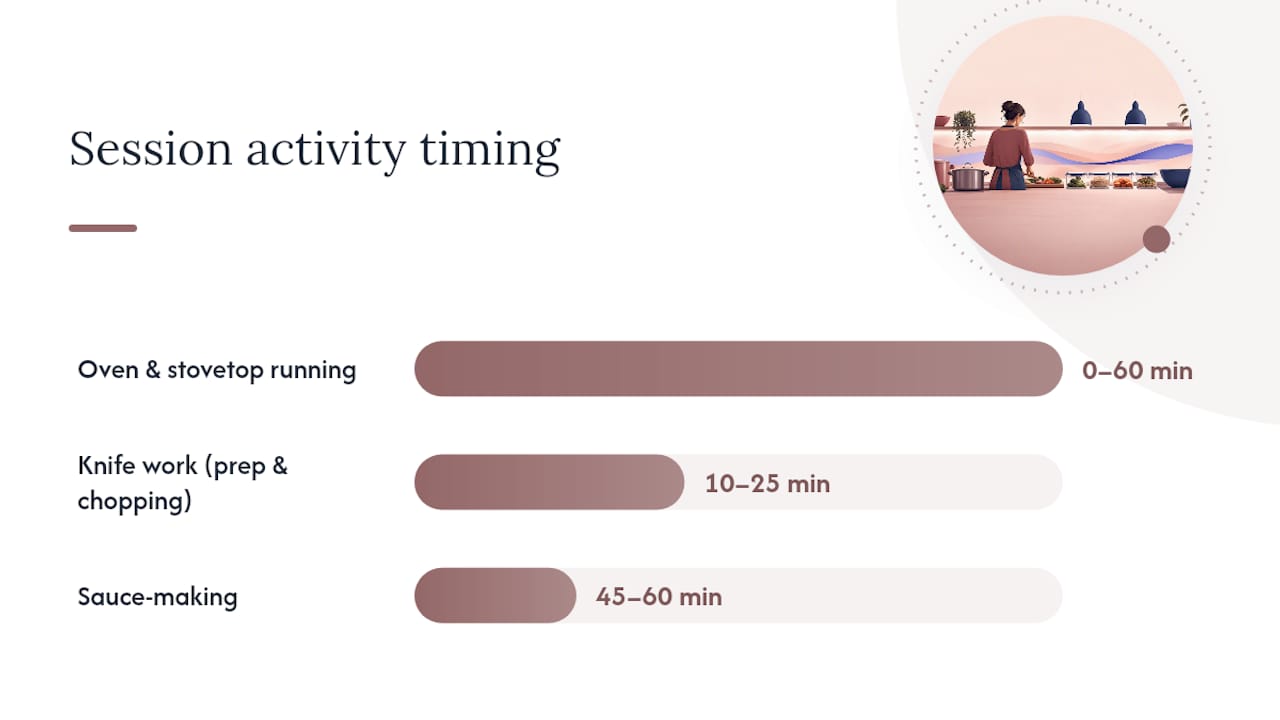
- 10 to 25 minutes: Chop vegetables while the grain simmers. Get everything organized with your mise en place setup so nothing scrambles later.
- 25 to 45 minutes: Roast protein and vegetables on separate sheet pans. Grains should be finishing around this point.
- 45 to 60 minutes: Make your sauces while everything else cooks passively in the oven.
- 60 to 75 minutes: Pull everything out, let it cool slightly, then portion into containers.
- 75 to 90 minutes: Label containers, wipe down surfaces, and get hot food into the fridge.
Short on time? A 60-minute version drops one vegetable and one sauce. A 30-minute starter session focuses on just a protein and a grain, which is still enough to cover a few dinners.
Pro Tip: Do your knife work and sauce-making while the oven and stovetop are running. Idle hands during a batch session usually mean a longer session than it needs to be.
Which Foods Freeze and Reheat Well?
Some ingredients get better after a few days in the fridge. Others fall apart. Knowing the difference saves you from tossing food you were excited about a week earlier.
Batch these with confidence:
- Cooked grains and legumes (rice, farro, black beans, lentils)
- Stews, curries, and chili
- Roasted root vegetables (carrots, sweet potatoes, potatoes)
- Shredded or diced cooked meats
- Hard-boiled eggs
- Sturdy sauces like tomato, chili, or peanut
Avoid batching these:
- Dressed salads (the greens turn to mush)
- Delicate fish (texture breaks down fast)
- Fried foods (they lose their crunch entirely)
- Cream- or egg-based sauces (they can separate or curdle)
- Avocado (it browns and turns watery)
The rule of thumb from BBC Good Food's batch cooking advice: if a food actually improves with a day or two of resting, like a stew or a curry, it's a great batch candidate. If it's delicate and meant to be eaten the moment it's made, prep it fresh instead.
How Do You Store and Reheat Batch-Cooked Food Safely?
Food safety is where most beginners lose points they didn't know were on the board. The biggest one: cooling hot food too slowly.
- Spread hot food across shallow containers or a sheet pan instead of piling it into one deep container.
- Get food into the fridge within two hours of cooking, per Michigan State University Extension's guidance on cooling hot food, which flags slow cooling as a common cause of bacterial growth.
- Cooked proteins generally hold for 3 to 4 days in the fridge and up to about 3 months in the freezer; cooked rice is best used within a few days.
- Reheat food to a safe internal temperature and try to reheat it only once. A splash of water and a covered pan on the stovetop, or a quick blast in the oven, brings back texture better than the microwave alone.
- If you're marinating proteins ahead of time, USDA guidance on marinating meat and poultry sets clear limits on how long is safe before cooking.
Label everything with the date it was made, and practice a first-in, first-out habit: newer containers go to the back, older ones move to the front where you'll actually see them. Our guide on storing leftovers safely covers this in more depth if you want a printable checklist.
What Are Some Easy Ways to Use Batch-Cooked Components?
The real magic of batch cooking for beginners shows up here: the same five components can become six or more completely different meals.
- Grain bowl: grain, roasted vegetables, protein, sauce, done in under five minutes.
- Tacos: shredded protein, warmed tortillas, whatever vegetables you have, a squeeze of lime.
- Quick soup: broth, grain or beans, chopped vegetables, protein, simmered for ten minutes.
- Frittata: eggs, leftover roasted vegetables, a bit of protein, baked until set.
- Fried rice: day-old rice, a scrambled egg, diced vegetables, a splash of soy sauce.
- Overnight oats: not from your savory batch, but a great use of five spare minutes the night before for breakfast coverage.
Two sauce formulas do most of the heavy lifting. A tahini-lemon dressing (tahini, lemon juice, water, a pinch of salt) leans Mediterranean. A quick tomato-chili sauce (canned tomatoes, garlic, chili flakes, simmered ten minutes) leans Mexican or Italian depending on what you pair it with. Rotating between two sauces like these is one of the simplest ways to keep the same base ingredients from feeling repetitive by Thursday.
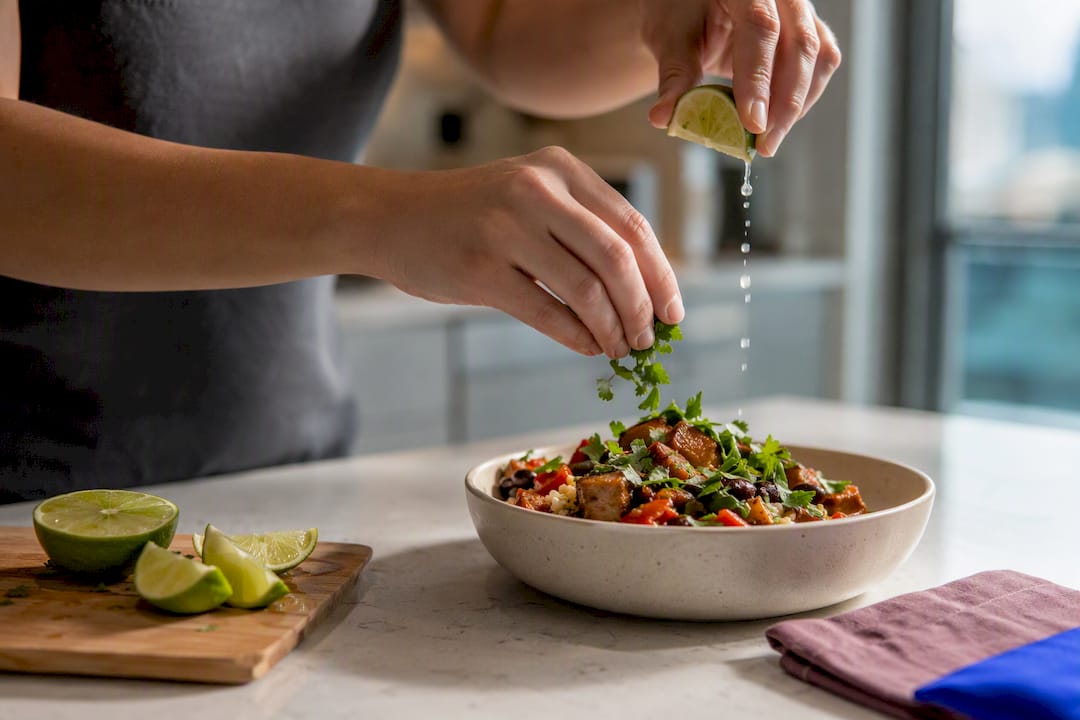
Pro Tip: A squeeze of fresh lime or a handful of chopped herbs right before serving does more to "refresh" a three-day-old meal than any reheating trick.
How Adulting in the Kitchen Supports New Batch Cooks
Learning how to batch cook is easier with a system behind you. A starter pack, weekly recipe drops, and grocery store checklists solve common beginner problems: setting up a usable kitchen, shopping without guessing, and knowing what to actually cook. Real chef support fills in the gaps a blog post can't. Our easy recipes for beginners guide is a solid next stop if you want more skill-building before diving in.
A Few Honest Words on Making Batch Cooking Stick
Start smaller than you think you need to. One protein and one grain done well beats four components done sloppily, and a half-finished batch session still counts as a win. Rotate your two sauces so week three doesn't taste like week one, and pull one fresh element midweek if something's starting to look tired. Keep newer containers in the back of the fridge and older ones up front, where you'll actually see them before they go bad.
— Bill
Ready for More Than a Solo Session?
Batch cooking gets you a full week of meals from one afternoon in the kitchen, but building the habit long term is easier with backup. This membership gives you what a single blog post can't: weekly recipe drops that keep your components fresh, grocery checklists so shopping stops being a guessing game, and real chef support when a recipe doesn't turn out the way you pictured it.
This article gives you the framework to start tonight. The membership is there if you want someone in your corner while you build the habit, week after week, without losing momentum by week three. Check out Adulting in the Kitchen to see what the Starter Pack includes and get your first batch cooking session mapped out for you.
Sources
- Batch cooking for beginners — BBC Good Food
- All-Clad blog — Small batch comfort foods for cozy nights in
- Michigan State University Extension — Cooling hot food: do it right to prevent bacterial growth
- NutriFYI — Batch Cooking Guide