
A good college student grocery list starts with where you will cook. In a dorm with a mini-fridge and a microwave, you need shelf-stable foods, a few cold items, and things that work without a stove. In an apartment, you can add fresh produce, eggs, chicken, pasta, and basic cooking oils and spices. Below you will find both lists, the cheap staples that stretch into several meals, a one-page shopping method, and the food safety rules that keep your groceries from going to waste.
TL;DR
- Shop for your setup. Dorm lists lean on oatmeal, nut butter, canned beans, and microwave-friendly foods. Apartment lists add fresh produce, eggs, chicken, pasta, rice, and spices.
- Build every meal from a grain, a protein, and a vegetable. It beats a plain pack of instant noodles.
- Check what you own, then write the list by store section. You buy only what you need and waste less.
- Pick foods that do double duty and last. Beans, rice, canned goods, frozen produce, eggs, and oats cover a lot of meals.
- Keep the fridge at 40°F or below. Cool leftovers fast and eat them within 3 to 4 days.
Table of Contents
- Start With Your Kitchen, Not the Store
- The Basic Framework: Five Food Groups
- The Dorm Room Grocery List
- The Apartment Grocery List
- Cheap Staples That Make Several Meals
- Quick Breakfasts, Meals, and Snacks You Can Actually Make
- How to Shop Smart and Spend Less
- Store Food Safely in a Dorm or Small Kitchen
- Our Perspective: Cook More Than You Think You Can
- Get Chef Support With Your First Lists
- A Sample First Week
- FAQ
- Sources
Start With Your Kitchen, Not the Store
Most grocery lists for students fail for one reason: they ignore what you can actually cook with. A list full of raw chicken and fresh spinach is useless if you have a microwave and half a shelf.
The University of Cincinnati's college grocery guide draws this line clearly. Its dorm lists emphasize instant oatmeal, cereal, nut butter, canned soup, beans, tuna or chicken, crackers, bars, microwave meals, popcorn, rice cakes, and shelf-stable milk. Its apartment lists add fresh produce, eggs, chicken, tofu, ground turkey, pasta, rice, sauces, oils, spices, and condiments.
Ask yourself three questions before you shop:
- Do I have a fridge, a mini-fridge, or only a shelf?
- Do I have a microwave, a stove, or both?
- How many of my meals will I eat on campus with a meal plan, and how many will I make myself?
Your answers decide which of the lists below you use. If you want a more detailed first-week plan, our guide to grocery shopping for college students walks through shopping once and eating three to five meals from it.
The Basic Framework: Five Food Groups
Before the specific items, here is the skeleton. USDA's MyPlate grocery shopping tips point you toward fruits, vegetables, grains, protein foods, and dairy or fortified soy alternatives. Every list in this article follows that pattern, so if you ever forget what to buy, ask whether your cart has something from each group.
A simple rule helps: at each meal, pair a grain, a protein, and a vegetable or fruit. Rutgers' healthy dorm cooking guide (EATING 101) shows that a microwave-only setup can support balanced meals when you combine those three, instead of relying on plain instant noodles.
The Dorm Room Grocery List
This list assumes a mini-fridge, a microwave, and limited storage. Western Kentucky University's dietitian guide to stocking your dorm room groups dorm foods into dry storage and mini-fridge items. We use the same split.
Dry storage (no fridge needed)
- Instant oatmeal or old-fashioned oats
- Cereal
- Peanut butter or another nut butter
- Canned beans
- Canned tuna or canned chicken
- Canned soup
- Instant rice or microwave rice cups
- Whole wheat crackers, rice cakes, and popcorn
- Trail mix and snack bars
- Shelf-stable milk
- Tortillas or bread
- Pasta and jarred tomato sauce (if you have access to a shared kitchen)
- Coffee or tea, if that is your morning routine
Mini-fridge items
- Yogurt
- Cheese, either sticks or blocks
- Eggs (if you can cook them safely in your setup)
- Hummus
- Baby carrots, cucumbers, and bagged salad
- Apples, oranges, and berries
- Milk
Freezer items (if your mini-fridge has a freezer)
- Frozen vegetables that steam in the bag
- Frozen fruit for smoothies
- A few microwave meals for the nights you are out of energy
A small freezer fills up fast. Buy two or three bags of vegetables, not ten.
The Apartment Grocery List
With a full kitchen, you stop buying everything in single-serve form and start buying ingredients. That is where the savings and the skills come in.
| Category | What to buy |
|---|---|
| Produce | Bananas, apples, onions, potatoes, carrots, broccoli, spinach, tomatoes, peppers |
| Protein | Eggs, chicken breasts or thighs, ground turkey, tofu, canned or dried beans and lentils |
| Grains | Rice, pasta, oats, bread, tortillas |
| Dairy and alternatives | Milk or fortified soy milk, yogurt, shredded cheese |
| Pantry | Cooking oil, salt, pepper, garlic powder, chili powder, canned tomatoes, tomato paste |
| Freezer | Frozen vegetables, frozen fruit, a bag of chicken or fish fillets |
| Condiments | Soy sauce, hot sauce, mustard, salsa |
If this is your first kitchen, our first apartment grocery list shows how to shop in layers so you build your pantry over a few trips instead of one expensive one. And if you are still deciding what pots and pans to own, start with 10 kitchen essentials for your first apartment.
Cheap Staples That Make Several Meals
The smartest foods on a student budget do more than one job and last in storage. The University of Wyoming Extension's Healthy Eating on a College Budget guide recommends choosing foods you can use in multiple meals, and prioritizing long-lasting items such as beans, rice, canned goods, and frozen foods.

Utah State University's Meal Prep Manual lists low-cost building blocks: canned fish, eggs, beans or lentils, yogurt, frozen vegetables and fruit, bananas, apples, instant oatmeal, bread, rice noodles, nuts or nut butter, chia seeds, and tomato paste. It suggests combining them into smoothies, tuna salad on toast, or noodle bowls with vegetables and eggs.
Here is how a handful of staples turns into a week of food:
- Eggs: scrambled for breakfast, fried on rice for dinner, boiled for snacks.
- Rice: a base for beans and vegetables, a side for chicken, or a quick fried rice with an egg and frozen peas.
- Canned beans: tossed into quesadillas, soup, pasta, or a rice bowl.
- Frozen vegetables: steamed in the microwave, stirred into noodles, or added to scrambled eggs.
- Oats: hot oatmeal with fruit, or overnight oats in the fridge.
- Bananas: breakfast, snack, smoothie, or topping for peanut butter toast.
For a deeper look at the economics, see our breakdown of the US grocery budget for one, which includes a weekly plan.
Quick Breakfasts, Meals, and Snacks You Can Actually Make
A list only helps if the food becomes meals. These ideas come from university dietitian guides and use the items above.
Breakfast
Rutgers suggests a microwave omelet with peppers and cheese, or yogurt with granola and berries (EATING 101). Western Kentucky University adds oatmeal with peanut butter and fruit (stocking your dorm room).
Lunch and dinner
The same WKU guide suggests turkey-and-cheese sandwiches, quesadillas, rice bowls with tofu and cucumbers, and pasta with tomato sauce and vegetables. Rutgers points to microwave vegetables and beans over instant rice as a fast, balanced option.
A simple template: pick one grain, one protein, one vegetable, and one flavor (salsa, soy sauce, hot sauce, or a spice). Rice, black beans, frozen corn, and salsa is a complete bowl in about five minutes.
Snacks
WKU's guide also suggests yogurt parfaits, apple slices with sunflower-seed butter, hummus with pretzels and carrots, tortilla chips with guacamole, and rice cakes with peanut butter and banana. Each pairs something filling with something fresh, which keeps you full longer than a bag of chips.
Want five dinners built from one shopping trip? Try our grocery list for beginners.
How to Shop Smart and Spend Less
The list is only half the job. How you shop decides whether $60 turns into a week of meals or a drawer of forgotten food.
Use a one-page method
- Check what you already have. MyPlate says to begin with the refrigerator, freezer, and pantry (Grocery Shopping tips).
- Plan a few meals. Three or four dinners plus breakfast and snack staples is plenty.
- Organize the list by store section or food group. MyPlate notes this keeps you focused so you buy only what you need.
- Shop about once a week. The Wyoming guide recommends limiting trips, since every extra trip is another chance to impulse buy.
Our complete grocery shopping checklist is a printable or editable version of this method.
Cut the price tag
MyPlate recommends comparing brands and prices, using store brands, coupons, and loyalty programs, and buying foods on sale and in season. The Wyoming guide adds comparing nutrition labels for saturated fat, trans fat, sodium, and sugar, which is how you spot that the cheaper cereal is also the sugar bomb.
Utah State suggests using bulk sections, reduced-price sections, student food pantries, and community food pantries. Many campuses have a pantry, and using it is smart budgeting, not something to be embarrassed about.
Buying loose produce also helps, because you pick exactly how many apples or peppers you will eat. A set of reusable produce bags makes that easy to do on every trip.
For more, read our practical checklist for saving money on groceries and our budget cooking tips. Sharing an apartment? A roommate meal planning system can split staples and cut duplicate purchases.
Store Food Safely in a Dorm or Small Kitchen
Small spaces and shared fridges make food safety easy to forget. The basics are simple, and the USDA's Food Safety and Inspection Service states them clearly:
- Keep the refrigerator at 40°F or below and the freezer at 0°F or below.
- Refrigerate perishables within 2 hours, or within 1 hour if it is above 90°F outside (think of a hot car after the store).
- Put leftovers in shallow containers so they cool quickly.
- Use most cooked leftovers within 3 to 4 days, and reheat them to 165°F.
FSIS also points out that you cannot see, smell, or taste harmful bacteria, so "it looks fine" is not a test. A cheap fridge thermometer and a food thermometer are worth having.
If you cook in a microwave, the FDA's safe food handling guidance says to cover food, stir, rotate, and let it stand for even heating. It also says a food thermometer is the reliable way to confirm safe temperatures for meat, poultry, seafood, and egg products. Rutgers adds to use approved appliances and microwave-safe containers, and to watch food as it heats.
Our Perspective: Cook More Than You Think You Can
We talk with beginners all the time, and the pattern is the same. They do not lack willpower. They lack a map. They walk into a store without a plan, buy a mix of snacks and one ambitious ingredient, and order delivery by Wednesday.
Here is what we believe makes the difference:
- Start small. Ten items you know how to use beat forty you do not.
- Repeat ingredients. Cooking the same rice, eggs, and beans in different ways builds skill faster than chasing new recipes every night.
- Learn one technique at a time. Scrambling eggs well, cooking rice properly, and roasting vegetables cover more meals than most students expect.
- Treat the grocery list as part of the recipe. The right shopping list is half of a good dinner.
You do not need a perfect kitchen or a culinary background. You need a short list, a few reliable meals, and someone to answer your questions when something goes sideways. That is why we built our membership around kitchen setup, grocery checklists, and real chef support.
— Bill
Get Chef Support With Your First Lists
If you want more than a list, our membership gives you a structured way to learn. Members get the Adulting in the Kitchen Starter Pack, weekly recipe drops with 5 new recipes, grocery store checklists, and real chef support so you can ask questions as you cook. The Founder's Club Membership is $5 per month.
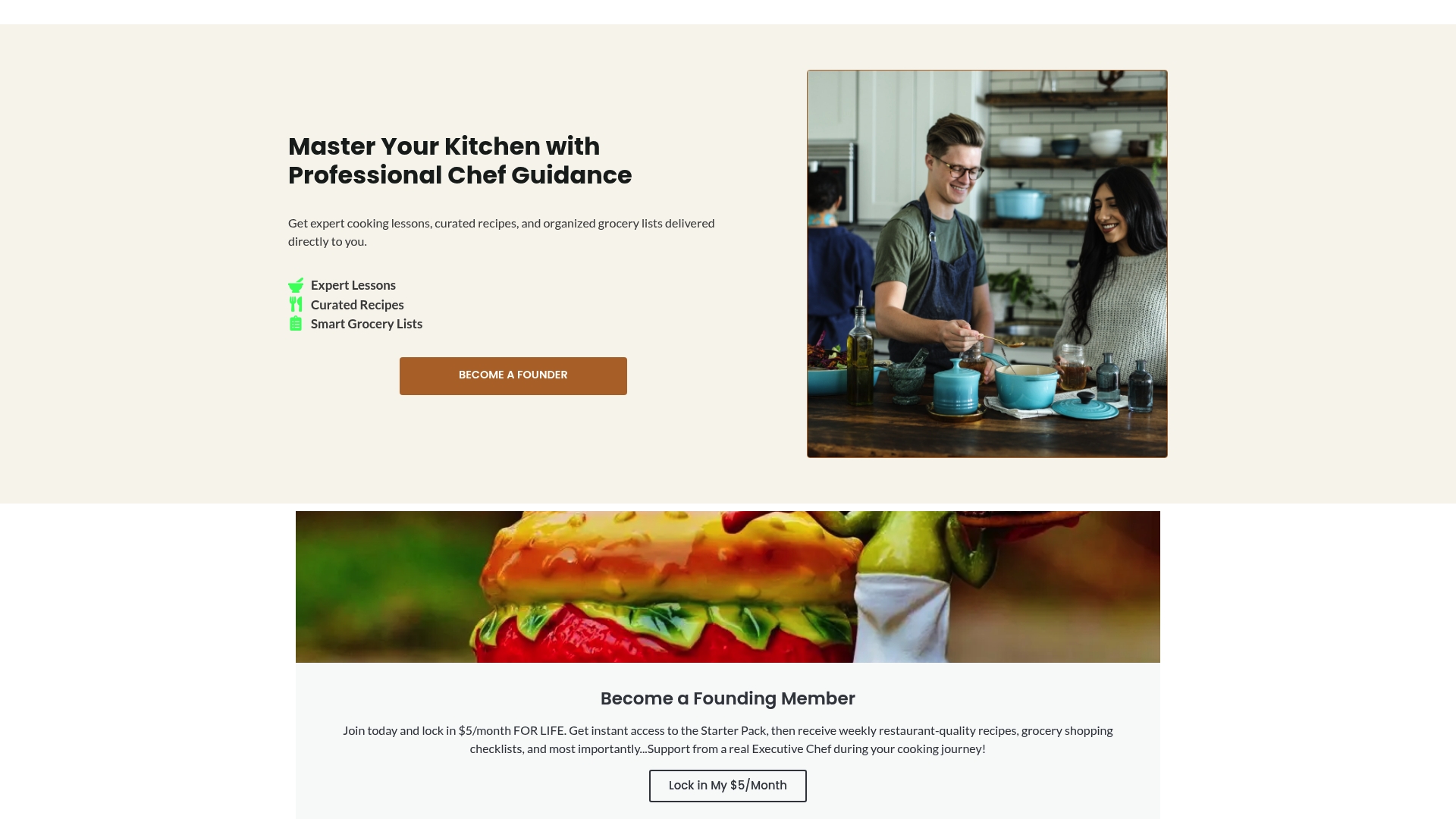
It is built for people who are new to feeding themselves: college students, recent grads, first-apartment renters, and parents who want a practical resource for a kid heading out on their own. Join Adulting in the Kitchen and start turning your grocery list into meals you are proud of.
A Sample First Week
Here is how the apartment list becomes seven days of food for one person, without a complicated plan.
| Meal | Monday to Wednesday | Thursday to Sunday |
|---|---|---|
| Breakfast | Oatmeal with banana and peanut butter | Scrambled eggs on toast with fruit |
| Lunch | Rice bowl with beans, frozen corn, and salsa | Quesadilla with cheese and peppers |
| Dinner | Pasta with tomato sauce and frozen broccoli | Chicken or tofu with rice and roasted vegetables |
| Snack | Yogurt with fruit | Apple with nut butter, or popcorn |
Notice how few ingredients repeat across the whole table. That is the point. If you want a freezer-first approach for cooking for one, our grocery shopping for one system uses ten items to cover three to five meals.
FAQ
What should a college student buy on a tight budget?
Focus on foods that last and work in many meals: eggs, rice, oats, beans, canned fish, frozen vegetables, bananas, bread, and peanut butter. Choose store brands and buy seasonal produce. Those staples cover breakfast, lunch, and dinner for far less than convenience foods.
What can I eat in a dorm with only a microwave?
You can make oatmeal, microwave omelets, quesadillas, rice bowls with beans and steamed vegetables, and yogurt parfaits. Combine a grain, a protein, and a vegetable so the meal is balanced. Cover food, stir halfway, and let it stand so it heats evenly.
How much should I spend on groceries each week?
It depends on your city, your meal plan, and how much you cook. Our guide to the US grocery budget for one breaks down monthly ranges and a weekly plan. Start by tracking what you spend for two weeks, then adjust.
How long do leftovers last in a mini-fridge?
Most cooked leftovers are good for 3 to 4 days if your fridge stays at 40°F or below. Cool them in shallow containers and reheat to 165°F before eating. When in doubt, throw it out.
Should I shop every day or once a week?
Once a week is a good default. University of Wyoming Extension recommends limiting trips and shopping from a list and meal plan, which cuts impulse buys. Keep a small top-up trip for fresh items such as milk or bananas if you need it.
Sources
- Grocery Shopping tips, USDA MyPlate
- College grocery list guide, University of Cincinnati
- Meal Prep Manual, Utah State University
- Healthy Eating on a College Budget guide, University of Wyoming Extension
- EATING 101 healthy dorm cooking, Rutgers
- Stocking your dorm room, Western Kentucky University
- Food Safety Basics, USDA FSIS
- Safe Food Handling, FDA