Shop for 3 to 5 meals at a time using a 10-category core list, lean on frozen and canned backups, and buy the smallest practical package instead of a family size. Expect small, frequent trips rather than one giant haul, with extras portioned and frozen the day you get home. Some cooking memberships build their beginner resources around this exact rhythm because it matches how one person actually eats.
TL;DR:
- Buying protein in small portions or asking the butcher to split larger cuts prevents waste and matches one-person meal needs.
- Purchasing frozen vegetables and pantry staples in bulk or small quantities extends freshness and minimizes food waste.
- Planning three dinners with ingredient overlap, and using leftovers for lunches, streamlines shopping and reduces impulse buying.
- Keeping perishables visible and portioning ingredients immediately upon unpacking minimizes spoilage and simplifies meal prep.
- Weekly grocery budgets typically range from $45 to $65, dictated by the level of convenience and inclusion of pre-made or ready-to-eat items.
Table of Contents
- Grocery Shopping for One: The Core 10-Item List
- Meal Planning for One: The Solo Shopping Formula
- Fresh, Frozen, or Canned: Choosing the Right Format
- Storage and Portioning: Making Groceries Effortless
- Sample Weekly Grocery Lists and Budgets
- Why Beginners Succeed With a Simple System
- A Cook's Honest Take on Shopping Solo
- Ready for More Structure? Try Adulting in the Kitchen
- Sources
- FAQ
Grocery Shopping for One: The Core 10-Item List
You don't need a cart full of groceries to eat well for a week. You need ten categories covered, each chosen for a specific job. A core 10-item grocery list for one typically includes:
- One fruit for snacking or breakfast (apples and bananas hold up best; berries spoil fast).
- One raw vegetable you eat uncooked, like carrots or cucumber.
- One cookable vegetable for dinners, such as broccoli, zucchini, or a bag of frozen mixed veg.
- One protein, bought in a size that matches one to two weeks of meals, not a bulk pack meant for four.
- One starch, like rice, pasta, or potatoes, chosen for how well it reheats.
- One legume, canned beans or lentils, cheap and shelf-stable.
- One dairy or refrigerated staple, eggs, cheese, or single-serve yogurt.
- One breakfast item that doesn't depend on the rest of the list.
- One pantry staple, a sauce or spice blend that turns plain ingredients into a different meal.
- One wildcard, something new or seasonal that keeps the week from feeling repetitive.
Package size matters more for one person than for a family of four. Buy proteins in the smallest tray available, or ask the butcher counter to split a larger cut. Frozen vegetables beat fresh when you can't finish a full bag before it wilts. For staples like rice or oats, bulk bins let you scoop exactly the amount you'll use instead of committing to a five-pound bag. A ready-made grocery shopping checklist makes this even faster to repeat every week.
Meal Planning for One: The Solo Shopping Formula
The mistake most solo shoppers make isn't buying too much. It's buying without a plan for how ingredients connect. Successful grocery shopping for one person means planning actual meals, not days on a calendar, and choosing ingredients that show up in more than one dish.
Here's a simple formula to build your list around:
- Pick 3 dinners first. Each one should share at least one ingredient with another, like a roasted chicken thigh that becomes tacos on night one and a grain bowl on night three.
- Assign each ingredient a role. Every dinner needs a base (rice, pasta, greens), a protein, a vegetable, and a flavor element (sauce, spice, citrus). Buying by role, not by recipe, is what makes overlap possible.
- Cover lunches with leftovers, not new purchases. Cook slightly larger portions at dinner and box the extra for the next day's lunch.
- Pick one breakfast that repeats all week so you're not managing five different breakfast ingredients.
- Leave one or two slots open. Don't commit every item on your list to a specific meal. Those uncommitted ingredients absorb whatever changes midweek and stop you from making an impulse buy to "fix" a meal that didn't work out.
This is close to what The Solo Spoon calls buying 2 to 3 vegetables, 1 to 2 proteins, and 1 to 2 bases that combine across meals. The overlap is the entire point. A tortilla, a can of beans, and a bag of frozen peppers can become tacos, a burrito bowl, and a quesadilla, three different meals from three ingredients.
Fresh, Frozen, or Canned: Choosing the Right Format
The freshness clock is the biggest waste trap for one person. A five-day-old bag of spinach doesn't care that you live alone; it wilts on the same schedule either way. The fix is matching format to how fast you'll actually use something.
- If a perishable item won't get eaten within 3 to 5 days, buy the smallest fresh size or choose frozen instead.
- Pantry staples that don't spoil, rice, canned tomatoes, dried pasta, are fine to buy in bulk since shelf life isn't the constraint.
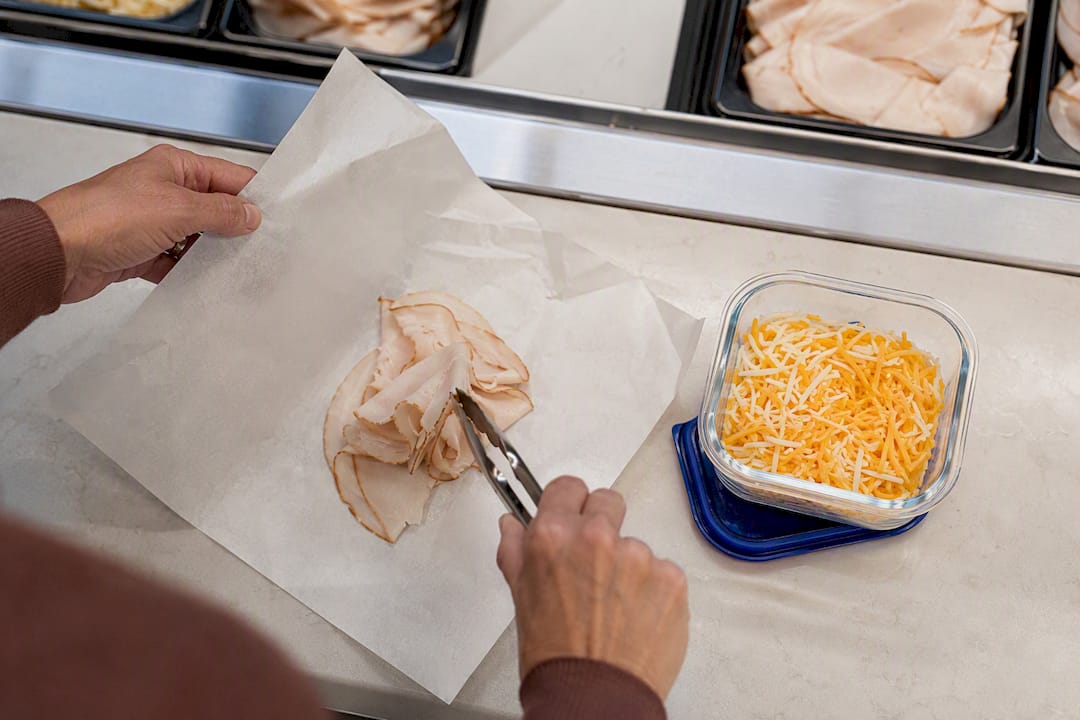
- Deli counters and bulk bins let you buy the exact ounce or pound you need instead of a prepackaged amount sized for a bigger household.
- Frozen peppers, onions, and stir-fry blends hold their nutrition and skip the chopping, which matters on a weeknight when cooking for one already feels like more effort than it's worth.
- Canned beans and single-serve yogurt cups cost a little more per unit but eliminate the guilt of tossing half a container.
Frozen vegetables and proteins, along with bulk bins and deli counters, are practical tools for buying exactly what you need instead of what the package happens to contain. Frozen isn't a backup plan here. It's often the smarter first choice, since it locks in peak freshness and lets you thaw one portion at a time.
Pro Tip: Check the deli counter before the produce aisle. A quarter pound of sliced turkey or a half pound of shredded cheese from the deli almost always beats a big prepackaged block you'll only use a third of.
Storage and Portioning: Making Groceries Effortless
Groceries don't waste themselves on the drive home. They waste sitting in a fridge where nothing is visible and nothing is prepped. A short unpacking routine fixes most of it.
- Unpack everything before you put anything away. Sort perishables into two piles: "use in the next 1 to 2 days" and "freeze or store longer term."
- Set up a use-first zone. Keep it at eye level in the fridge, front and center, so the item you're most likely to forget is the one you see every time you open the door. An Instacart guide on grocery habits notes this single visibility trick prevents most produce from silently wilting in a back drawer.
- Portion proteins immediately. Split chicken breasts or ground beef into single-meal packets before freezing, so you're not thawing a full pound to cook one serving.
- Freeze cooked grains flat. Flash-cool rice or quinoa, then freeze it in flat zip bags. It reheats in minutes and takes up almost no freezer space.
- Label everything with the date. A piece of tape and a marker turns "mystery freezer bag" into a meal you'll actually plan around instead of ignoring for six months.
This routine is the difference between a freezer that's a second pantry and a freezer that's a graveyard. Our guide to reducing food waste walks through the same workflow in more detail if you want to build the habit properly.
Sample Weekly Grocery Lists and Budgets
A realistic grocery budgeting for one person usually lands between roughly $45 to $65 per week, depending on your city and how many meals you actually cook versus order in. Someone eating in every night on basics sits at the low end; someone mixing in convenience items or eating out a couple of times a week sits closer to the top.
Budget list (around $45 to $50): eggs, oats, canned beans, frozen mixed vegetables, chicken thighs, rice, one onion, one bag of frozen berries, canned tomatoes, a jar of peanut butter.
Balanced list (around $55 to $60): ground turkey, a bag of spinach, sweet potatoes, Greek yogurt, whole grain bread, a rotisserie chicken (used across three meals), frozen shrimp, a block of cheese, canned chickpeas, one seasonal fruit.
Convenience-leaning list (around $60 to $65): pre-cut vegetables, deli meat, a small bag of salad kit, single-serve hummus cups, frozen pre-portioned salmon, microwave rice pouches, string cheese, a rotisserie chicken, canned soup, one treat item.
Swap in a rotisserie chicken across two or three meals and you shave dollars off the protein line every single week. A practical checklist for saving money on groceries walks through more of these swaps if you're trying to push toward the lower end of that range without feeling like you're eating worse for it.
Why Beginners Succeed With a Simple System
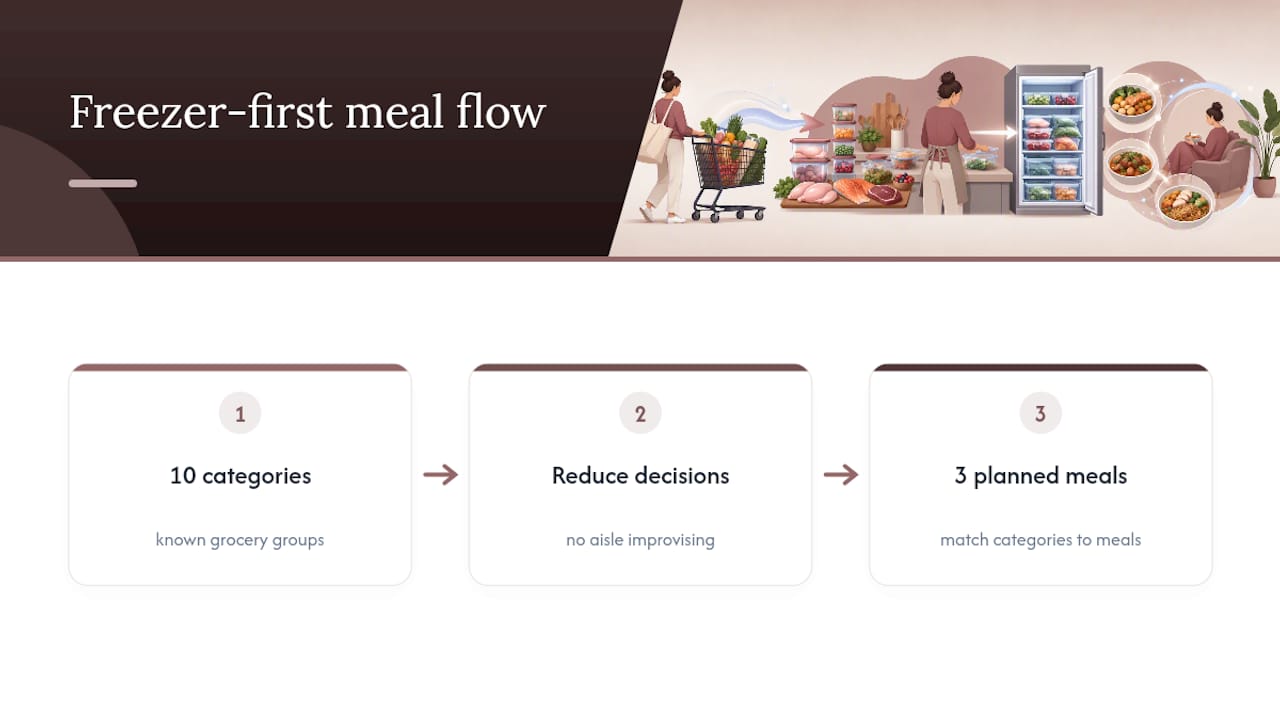
The system above works because it removes decision fatigue. You're not standing in the aisle improvising; you're filling ten known categories and matching them to three meals you already picked. This strategy is typical for beginner cooking education programs.
Some cooking memberships offer starter packs, weekly recipe drops, and grocery store checklists to provide that structure instead of making you invent it from scratch. Real chef support can help you know whether frozen shrimp will work in a recipe designed for fresh. Pair this list with a meal planning system for one and a rotation of quick dinners for one, and the whole week runs on autopilot.
A Cook's Honest Take on Shopping Solo
Nobody cooks dinner every single night, and pretending otherwise sets people up to quit. Some nights are cereal or a frozen meal, and that's fine as long as your freezer has real food in it for the other nights. Two habits pay off fast: freeze half a loaf of bread the day you buy it, and pack cooked rice into flat zip bags before you're tempted to just eat the whole pot. Pick a system that survives a bad week, not one that only works when everything goes perfectly.
— Bill
Ready for More Structure? Try Adulting in the Kitchen
Building a repeatable grocery system is one skill. Turning those ingredients into meals you're actually proud of is another. Some memberships for beginner cooks aim to close that gap by offering starter packs, weekly recipe drops, grocery checklists, and direct chef support when a recipe doesn't turn out as expected.
It is designed for absolute beginners who want structure and someone to ask when a technique doesn't make sense on the first try, not people who already know their way around a kitchen. If the ten-category list and Solo Shopping Formula above sounded useful but you want the recipes and checklists already built for you, check out the membership details and see what the current Starter Pack includes.
Sources
- Grocery List for One Person: What to Buy, How Much, and How to Actually Use It All
- 10-Item Grocery List for One
- Grocery Shopping for One: How to Save Money and Reduce Waste as a Solo Shopper | Mealift Blog
FAQ
What is a typical grocery list for one person?
A typical list covers ten categories: fruit, a raw vegetable, a cookable vegetable, protein, starch, legume, a dairy staple, a breakfast item, a pantry staple, and one wildcard item for variety.
How do I grocery shop for a single person without wasting food?
Plan 3 to 5 meals before you shop, buy the smallest practical package or frozen version of perishables, and portion proteins and grains into the freezer the same day you unpack.
What is a realistic grocery budget for a single person?
Most solo shoppers spend roughly $45 to $65 per week, with the lower end reflecting mostly home-cooked basics and the higher end reflecting more convenience items.
What is the 5-4-3-2-1 grocery rule?
Definitions of this rule vary across sources, and no single authoritative version applies specifically to solo shopping. The core 10-category list covered above is the more reliable framework for building a balanced cart for one.
Does AdultingintheKitchen help with grocery shopping for beginners?
Yes. The membership includes grocery store checklists alongside weekly recipe drops and chef support, specifically designed to help beginners shop and cook with less guesswork.