
Your first apartment grocery list needs eight essentials before anything else: cooking oil, kosher salt, black pepper, eggs, bread, one versatile protein, one bag of frozen vegetables, and dish soap. Buy those on day one, then build outward in layers: pantry staples first, refrigerator basics next, spices and sauces after that, and your protein-and-grain backbone last. Stock the minimum, cook a few meals, and expand only once you know what you'll actually use.
TL;DR:
- Stock small quantities of essential pantry items like olive oil, vinegar, salt, and pepper to avoid waste and ensure freshness for the first week.
- Focus on refrigerator staples such as eggs, milk or plant-based alternatives, cheese, and yogurt, buying smaller amounts to prevent spoilage.
- Choose frozen chicken thighs, canned beans, tuna, and rice or pasta as reliable, long-lasting proteins and grains for quick, versatile meals.
- Limit spices to a core list including garlic powder, onion powder, paprika, cumin, oregano, chili powder, and red pepper flakes to maximize flavor without clutter.
- Shop in layered trips—first for pantry basics, then refrigerator staples, and finally for proteins and grains—to control costs and prevent food waste.
Table of Contents
- Day-One Pantry Staples: What To Buy First and Why
- Refrigerator Staples and Quick Breakfast Wins
- Protein and Grain Backbone That Actually Keeps
- Spices, Sauces, and Condiments That Cover Almost Everything
- Frozen and Convenience Items for Moving Week
- Household Essentials for Storage and Cleanup
- How To Shop In Layers Without Overspending
- Printable Grocery Checklist by Aisle
- Shopping Around Dietary Restrictions and Preferences
- Meal Planning Basics for Your First Week
- Basic Kitchen Tools You Need Before You Cook
- How To Minimize Food Waste in a Small Kitchen
- Shopping Smart for Small Kitchens and Tight Storage
- Why Starting Small Builds Real Kitchen Confidence
- Adulting in the Kitchen: Guided Grocery Lists and Real Chef Support
- Sources
- FAQ
Day-One Pantry Staples: What To Buy First and Why
Your day-one pantry is the small stack of items that make almost every recipe possible. Skip these and you'll be stuck ordering delivery your first night, which defeats the entire point of setting up a real kitchen.
The Kitchn groups a strong first-week strategy into four buckets: day-one pantry, refrigerator staples, spices and sauces, and a protein-and-grain backbone. Start with the pantry bucket, since it touches nearly everything else you'll make.
Here's what belongs in your cart before anything fancy:
- A bottle of olive oil for dressings and finishing, plus a neutral oil like canola or vegetable for higher-heat cooking
- Kosher salt (it's easier to control by hand than table salt)
- Black pepper, whole peppercorns if you have a grinder, pre-ground if you don't
- A bottle of vinegar (white or apple cider works for almost any use)
- Coffee or tea, whichever gets you moving in the morning
Buy standard bottle sizes for the oil, salt, and vinegar since none of them spoil quickly. Coffee is the one item here worth buying small at first. A pound goes stale before most new cooks finish it, so grab the smaller bag until you know your routine.
Pro Tip: Keep your oil away from the stove and out of direct sunlight. Heat and light break it down faster, which is why that bottle sitting next to your burner tastes duller after a month.
Refrigerator Staples and Quick Breakfast Wins
Your refrigerator should handle breakfast and snacks without you thinking twice. That means a short list of staples that don't need a recipe to become a meal.
Buy eggs, milk or a milk alternative, butter, a sturdy cheese like cheddar, plain yogurt, and a small amount of fresh fruit or greens. That's it for the first trip. Skip the big bag of spinach and the giant fruit bowl. EatRight's shopping guidance points out that new cooks routinely overbuy fresh produce that spoils before they get to it, so buy smaller quantities until you know how fast you actually eat through greens and fruit.
- Eggs (a dozen, scrambled or fried, cover breakfast for a week)
- Milk or a plant-based alternative for coffee, cereal, or cooking
- Butter for toast, eggs, and pan sauces
- A block of cheddar or another sturdy cheese that melts well
- Plain yogurt with a bit of fruit or honey
- One small bag of greens or a couple of pieces of fresh fruit
If the fresh greens wilt faster than you expected, a bag of frozen spinach or mixed vegetables is a reliable backup that won't go bad on you mid-week.
Protein and Grain Backbone That Actually Keeps
Proteins and grains are what turn your pantry into real dinners, and the trick for a first apartment is picking versions that survive a slow week without spoiling.
Frozen chicken thighs are the smartest starting protein for most beginners. They're more forgiving on the grill or in a pan than fresh chicken breast, and they're usually cheaper per pound. Canned tuna, canned beans, and eggs round out a protein lineup that never expires on a tight schedule. Rice, pasta, and microwaveable grain pouches give you a base to build every dinner around.
- Frozen chicken thighs (buy a family pack, freeze in smaller portions)
- Canned tuna, packed in water or oil depending on your taste
- Canned beans (black, pinto, or chickpea, whatever you'll actually eat)
- A dozen eggs, doing double duty for breakfast and dinner
- White or brown rice, dry or in microwaveable pouches
- A box of pasta, any shape you like
Two easy recipe triggers to memorize: a rice bowl with canned beans, a fried egg, and hot sauce, or pasta tossed with a jarred sauce and a handful of shredded cheese. Both take under 20 minutes and use ingredients that sit in your pantry for weeks.
Pro Tip: Government nutrition guidance lists eggs and canned fish among the most convenient protein sources for balancing your diet without much prep. Keep both stocked, and you'll rarely be stuck for a fast meal.
Spices, Sauces, and Condiments That Cover Almost Everything
You don't need a spice rack with 20 jars to cook well. You need a short, smart list that stretches across every protein and grain you already bought.
Start with garlic powder, onion powder, paprika, cumin, dried oregano, chili powder, and red pepper flakes. Add soy sauce, hot sauce, and a jarred pasta sauce or salsa, and you can flavor nearly any combination of rice, pasta, chicken, or eggs without hunting for a specific recipe.
- Garlic powder and onion powder for almost any savory dish
- Paprika and cumin for depth in rice bowls, eggs, or beans
- Dried oregano and chili powder for pasta and Mexican-style meals
- Red pepper flakes for a quick heat boost
- Soy sauce for stir-fries and marinades
- Hot sauce for eggs, tacos, and anything that needs a kick
- One jarred pasta sauce and one jarred salsa
Buy the small jars first. Bulk spice containers look like a deal, but most go stale before a new cook works through them, and a small jar of cumin costs less than the regret of tossing a large one six months later.
Frozen and Convenience Items for Moving Week
Moving week is chaos, and frozen food is what keeps you from ordering takeout every single night while boxes are still stacked in the hallway.
Stock frozen vegetables, a bag of frozen fruit for smoothies, and a couple of frozen protein options beyond your fresh chicken thighs. Add one or two frozen entrees as a genuine backup, not a daily habit. Instacart's first-apartment guidance recommends leaning on frozen proteins and vegetables specifically because they hold up through the disorganized first week better than anything fresh.
- Frozen mixed vegetables or a couple of single-veggie bags
- Frozen fruit for smoothies or quick desserts
- A backup frozen protein, like shrimp or ground turkey
- One or two frozen entrees for the nights nothing else is unpacked
- A microwaveable rice or grain pouch for instant sides
- A jarred sauce you can pour over anything frozen and call it dinner
Frozen items also control portions automatically. You scoop out what you need and the rest stays good for weeks, which beats fresh produce dying in the crisper drawer while you're still hunting for the box with your plates in it.
Household Essentials for Storage and Cleanup
Groceries are only half the job. Without the right containers and cleaning basics, your first apartment kitchen turns into a mess of half-used ingredients and dishes piling up in the sink.
Buy a set of food storage containers, resealable bags, aluminum foil, and plastic wrap. On the cleaning side, grab dish soap, a sponge, a multipurpose cleaner, trash bags, and paper towels.
- Storage containers for leftovers and prepped ingredients
- Resealable bags for freezer portions and snacks
- Aluminum foil and plastic wrap for covering dishes
- Dish soap and a sponge for daily cleanup
- A multipurpose cleaner for counters
- Trash bags sized for your kitchen can
- Paper towels for spills and quick wipe-downs
If your kitchen is tight on cabinet space, buy containers now but hold off on specialty tools like a dedicated bread box or a large spice organizer. Those can wait until you know how you actually cook.
Pro Tip: Bon Appétit's starter kit advice suggests skipping specialty gadgets entirely until you understand your own habits. The same logic applies to storage. Buy flexible containers before anything built for one specific food.
How To Shop In Layers Without Overspending
The single biggest mistake new apartment cooks make is trying to buy everything in one trip. A layered approach spreads the cost and keeps your fridge from filling up with food that spoils before you touch it.
Shop your day-one pantry first, then your refrigerator staples, then spices and sauces, then your protein-and-grain backbone. This mirrors The Kitchn's four-category strategy and gives you a natural stopping point at each trip instead of one overwhelming cart.
- Trip one: day-one pantry (oil, salt, pepper, vinegar, coffee) plus eggs and bread
- Trip two: refrigerator basics (milk, cheese, yogurt, small produce) once you know your fridge space
- Trip three: proteins and grains (chicken thighs, rice, pasta, canned goods) as your weekly cooking rhythm settles in
Buy shelf-stable items like rice, pasta, and canned beans in bulk since they never expire on a tight timeline. Lean on frozen chicken or shrimp over fresh cuts for your first few weeks, and check your grocery store's app for weekly deals before you commit to a brand. Small savings add up fast when you're furnishing an entire kitchen at once.
Pro Tip: Apartment List's cost data suggests budgeting a moderate weekly amount after your initial stocking trip, though your actual number depends heavily on where you live and how you eat. For more ways to trim that number, a practical grocery savings checklist walks through specific tactics beyond the basics here.
Printable Grocery Checklist by Aisle
A checklist organized by aisle beats a checklist organized by recipe, especially on moving day when you're racing the clock before the store closes. Keep it tight, roughly 30 to 40 items, so you're not standing in an aisle second-guessing every choice.
| Aisle | Items to grab |
|---|---|
| Produce | Bananas, one bag of greens, garlic, onions |
| Dairy/Refrigerated | Eggs, milk, butter, cheddar, yogurt |
| Pantry/Grains | Rice, pasta, bread, oats |
| Canned/Packaged | Canned beans, canned tuna, canned tomatoes |
| Frozen | Mixed vegetables, frozen fruit, chicken thighs |
| Condiments/Spices | Olive oil, salt, pepper, soy sauce, hot sauce, jarred sauce |
| Household | Dish soap, trash bags, storage containers, paper towels |
Cross off anything you know you won't eat (no point buying yogurt if you never touch the stuff) and add one comfort snack to the list. Moving day is stressful enough without denying yourself the bag of chips you actually want. For a version you can edit and reprint every week, a full shopping checklist gives you a template to build from.
Shopping Around Dietary Restrictions and Preferences
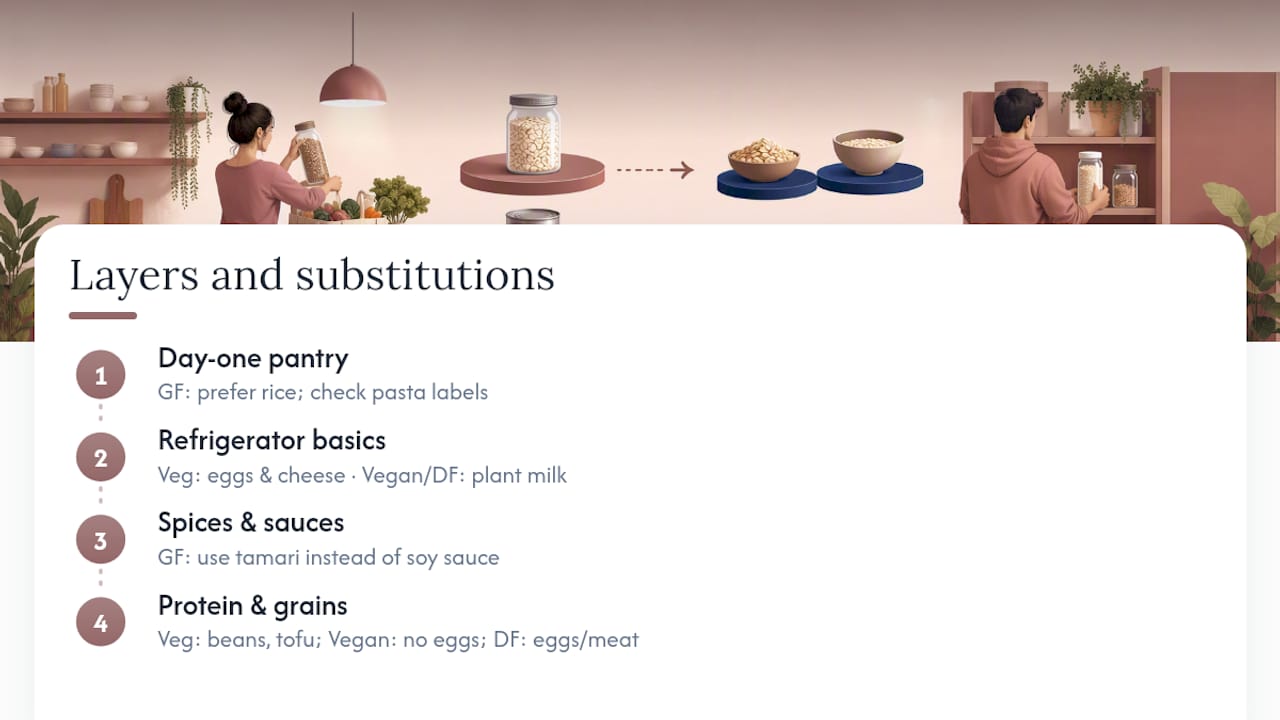
None of this list works if it ignores what you can actually eat. The layering strategy holds up fine for vegetarian, vegan, gluten-free, or dairy-free shoppers. Only the specific items inside each layer change.
If you're vegetarian, swap frozen chicken thighs for canned beans, lentils, and tofu as your protein backbone, and lean harder on eggs and cheese for the refrigerator layer. Vegan shoppers should skip the eggs, milk, and butter entirely and look for a plant-based milk, a neutral oil for cooking fat, and nutritional yeast or a vegan cheese alternative if you want that melted-cheese texture on pasta.
Gluten-free cooking means checking labels on soy sauce (tamari is the usual swap) and pasta, and leaning on rice as your primary grain instead of wheat-based options. Dairy-free shoppers can follow the same plant-milk substitution as vegan shoppers, but they can still buy eggs and meat if those fit their diet.
The core structure never changes: day-one pantry, refrigerator basics, spices, and a protein-and-grain backbone. You're just filling each slot with what actually works for your body and your ethics. Write your restrictions on your checklist before you shop, not while you're standing confused in the cereal aisle.
Meal Planning Basics for Your First Week
A grocery list without a rough meal plan turns into random ingredients that never quite become dinner. You don't need a spreadsheet. You need three or four meals in mind before you shop, built around what you're already buying.
Think in combinations, not full recipes. Rice plus canned beans plus a fried egg is a meal. Pasta plus jarred sauce plus shredded cheese is a meal. Frozen chicken thighs, roasted with paprika and cumin, alongside rice and frozen vegetables, is a full dinner using items already on your list.
Plan for repetition in week one. Cook a big batch of rice or pasta once, then use it across two or three different meals with different proteins and sauces. That single move cuts both your prep time and your dish-washing load in half, which matters more than it sounds like when your kitchen still smells like cardboard boxes.
Leave one night open for leftovers or a frozen entree.
Basic Kitchen Tools You Need Before You Cook
Your grocery list is only useful if you have the tools to turn ingredients into food. Beginners tend to either buy too little (one dull knife, no cutting board) or too much (a drawer full of gadgets that never leave their box).
Start with one good chef's knife, a cutting board, a large skillet, and a medium pot with a lid. Add a set of measuring cups and spoons, a spatula, tongs, and a wooden spoon. Round it out with a colander for draining pasta and a couple of mixing bowls.
Bon Appétit's starter kit guidance singles out an instant-read thermometer as a surprisingly high-impact first purchase. It costs less than a takeout order and takes the guesswork out of whether your chicken thighs are actually done, which solves the single biggest fear new cooks have about cooking meat at home.
Skip the air fryer, the stand mixer, and the specialty pasta maker for now. You'll know within a month whether you cook enough to justify them. If you want a deeper breakdown of what earns a spot on your counter versus what can wait, a minimal kitchen setup guide walks through exactly that trade-off.
How To Minimize Food Waste in a Small Kitchen
Food waste is the quiet budget killer in a first apartment. It's not one big mistake, it's small ones: the spinach that wilts, the half-used can of tomatoes, the bread that goes stale before you finish the loaf.
Buy produce in the smallest quantity the store offers, especially in your first month, and lean on frozen vegetables and fruit when you're not confident you'll eat something fresh in time. Freeze extra portions of cooked rice, pasta, or chicken thighs the same day you cook them rather than letting them sit in the fridge for a week.
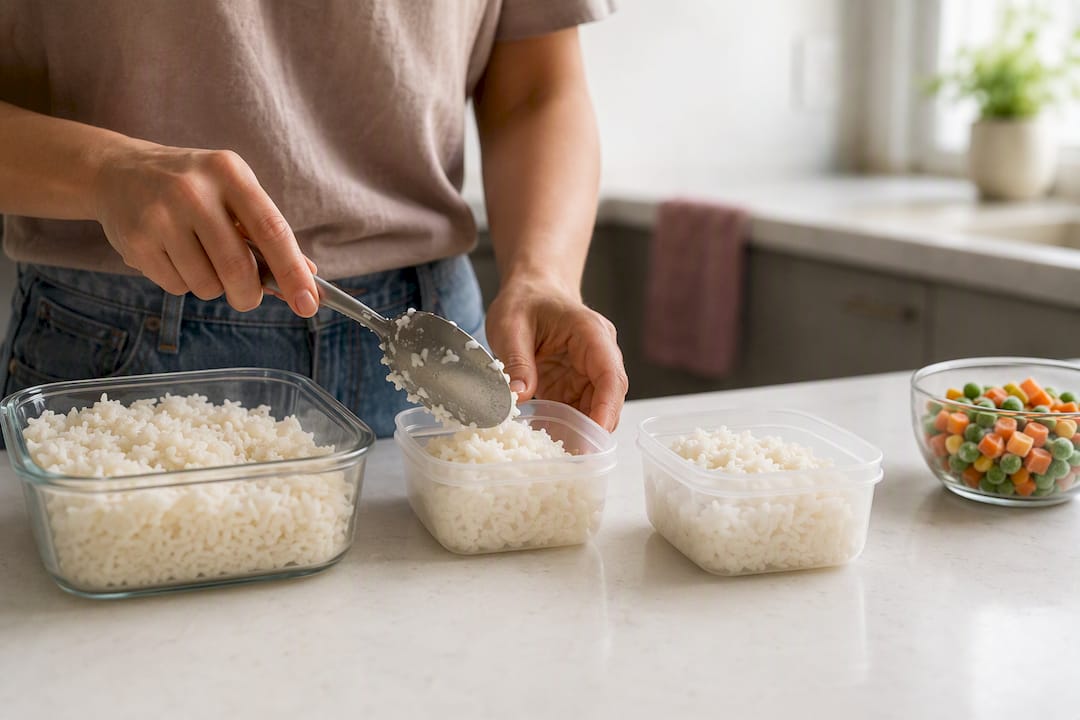
Label leftovers with the date you made them. It sounds small, but a container with a date on it gets eaten. A container without one gets pushed to the back of the fridge and forgotten until it's a science experiment. When a can only needs half its contents for tonight's recipe, transfer the rest to a sealed container immediately instead of leaving it in the open can.
If you're prepping ahead, batch a few freezer-friendly meals during a slower weekend so weeknight decisions get easier and less food sits around getting ignored. A guide on prepping freezer meals covers how to build a rotation that actually gets used instead of forgotten behind the ice trays.
Shopping Smart for Small Kitchens and Tight Storage
A studio kitchen with two cabinets and half a countertop changes how you should shop. Buying in bulk sounds efficient until that 10-pound bag of rice has nowhere to go.
Buy shelf-stable staples in moderate quantities rather than warehouse-club sizes unless you genuinely have the cabinet space. A resealable container that stacks vertically beats a bulky box every time. Use your freezer door and small bins to keep spices and condiments upright and visible, since digging through a cluttered cabinet is how half your ingredients end up forgotten and expired.
Prioritize versatile items that pull double duty. One neutral oil instead of three specialty oils. One sturdy cheese instead of a whole cheese drawer. This keeps your grocery list, and your actual cabinet space, from overflowing. If counter space is especially tight, a cutting board that stores vertically and a single large skillet that handles most stovetop cooking will save you more room than any specialty gadget.
Skip anything that requires its own dedicated appliance until you've confirmed you'll use it weekly, not just once during a moving-week impulse buy. Small kitchens punish clutter fast, and the fastest way to avoid it is buying only what earns its spot on the counter.
Why Starting Small Builds Real Kitchen Confidence
Buying every ingredient you can think of on day one doesn't teach you to cook. Repeating three or four simple recipes with the same core pantry does. Pick three meals from this list, cook them multiple times in your first two weeks, and you'll learn knife skills, timing, and seasoning far faster than if you'd scattered your budget across 40 unfamiliar ingredients.
Master a rice bowl, a pasta dish, and a roasted chicken thigh dinner before expanding. Those three teach almost every foundational skill you'll reuse for years.
— Bill
Adulting in the Kitchen: Guided Grocery Lists and Real Chef Support
This checklist gets you through your first shop, but staying consistent past week one is where most new cooks stall out. That's the gap AdultingintheKitchen closes for less than a night of takeout costs.
Members get a starter pack to set up their kitchen properly, weekly recipe drops with new recipes built around approachable ingredients, grocery store checklists that update as your skills grow, and chef support when a recipe doesn't go the way you expected. Instead of guessing what to buy every week or falling back on delivery apps out of decision fatigue, you get a structured plan and someone to answer your actual cooking questions. If this grocery list got you stocked, the membership is the next step toward actually knowing what to do with everything in your cart. Check out what's included and start your first weekly recipe drop today.
Sources
- The Kitchn — The Essential "First Week" Grocery List for Your New Home
- Bon Appétit — Starter kit guidance for first apartments
- Instacart Ideas — First Apartment Grocery List
- Apartment List — First Apartment Grocery List and Kitchen Essentials
FAQ
What groceries should I buy for my first apartment?
Start with cooking oil, kosher salt, pepper, eggs, bread, one protein like frozen chicken thighs, and one bag of frozen vegetables, then layer in refrigerator staples, spices, and grains over your first two weeks.
What is the 5-4-3-2-1 rule for groceries?
There's no single agreed-upon version of this rule in nutrition or grocery planning, so treat any specific breakdown you see online with caution rather than as an official standard.
Is $200 a month enough for groceries for one person?
It can be, depending on your location and diet. Apartment List's cost guidance puts a common weekly range after your initial stocking trip that can correspond to a moderate monthly budget, varying based on personal factors.
What are the essentials I need to buy for my first apartment?
Beyond food, you need basic cookware (a knife, skillet, and pot), food storage containers, and cleaning supplies like dish soap and trash bags, alongside the layered grocery list of pantry, fridge, and protein staples covered above.
How much should I spend on my very first grocery trip?
Expect your first trip to cost more than a normal week since you're stocking pantry basics and household items at once. Budget for that upfront cost, then expect weekly spending to drop once your kitchen is set up.